
Global HER2+ Gastric Cancer Market
 |
Pages:
240
|
Pages:
240
Global HER2+ Gastric Cancer Market Size, Share, By Stage (Stage I, Stage II, Stage III, Stage IV), By Therapy (Targeted Therapy [HER2-directed therapies], Immunotherapy, Chemotherapy, Combination Therapy), By End-User (Hospitals and Specialty Clinics, Ambulatory Surgery Centers, Oncology Clinics, Ots), and By Region (North America, Europe, Asia-Pacific, Latin America, Middle East, and Africa), Analysis and Forecast 2025-2035
REPORT COVERAGE
Global
Market Snapshot
- Market Size (2025): USD 731.4 Million
- Projected Market Size (2035): USD 2874.1 Million
- Compound Annual Growth Rate (CAGR): 14.67%
- Largest Regional Market: North America
- Fastest Growing Region: Asia Pacific
- 3rd Largest Region: Europe
- Base Year: 2025
- Historical Period: 2021–2024
- Forecast Period: 2025–2035
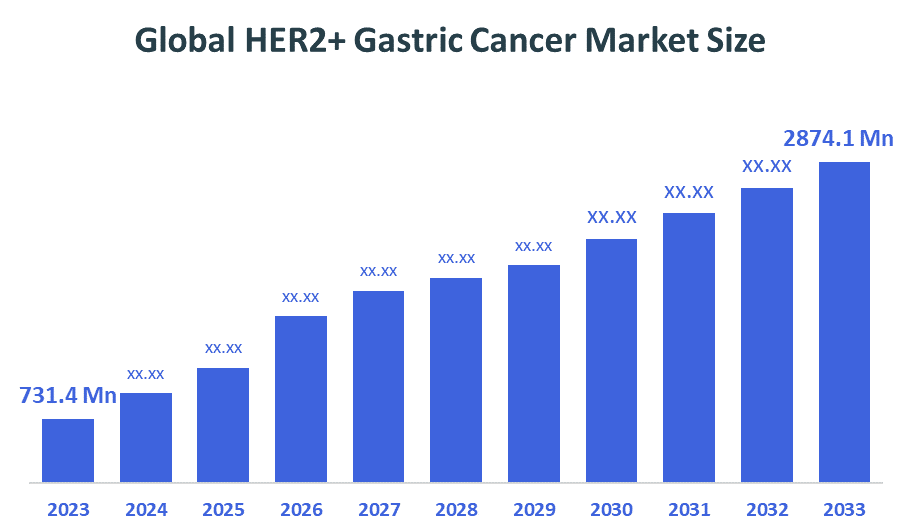
According to Decision Advisors, the Global HER2+ Gastric Cancer Market Size is expected to grow from USD 731.4 million in 2025 to USD 2874.1 million by 2035, at a CAGR of 14.67% during the forecast period 2025-2035. Rising gastric cancer incidence, increasing HER2 testing adoption, and growing demand for targeted therapies are driving the market. Advancements in antibody drug conjugates, expanding immunotherapy combinations, improving healthcare infrastructure, and increasing awareness of precision oncology further accelerate global HER2+ gastric cancer market growth.
Market Overview/ Introduction
The global HER2+ gastric cancer market refers to the industry focused on the diagnosis, treatment, and management of gastric cancer cases that overexpress the human epidermal growth factor receptor 2 (HER2) protein. HER2 is a biomarker that promotes aggressive tumor growth and is identified through specialized diagnostic testing, enabling the use of targeted therapies that improve treatment outcomes compared to conventional chemotherapy. The market scope includes diagnostic technologies such as immunohistochemistry and in situ hybridization, along with treatment options including targeted therapies, antibody drug conjugates, immunotherapy combinations, and chemotherapy. It covers various stages of disease management across hospitals, oncology clinics, and specialty care centers globally. Increasing adoption of precision medicine, rising incidence of gastric cancer, and expansion of HER2 testing are key factors shaping market development. Future opportunities in this market are driven by advancements in next generation sequencing, expansion of antibody drug conjugates, and ongoing clinical trials exploring novel combination therapies. Growing healthcare investments in emerging economies and increasing awareness of early diagnosis are expected to further enhance patient access and support long term market growth.
- Korean National Cancer Screening Program (KNCSP), providing government-funded biennial gastric cancer screening (endoscopy or UGIS) for individuals aged ≥40 years.
- China Government-funded programs such as Upper Gastrointestinal Cancer Early Detection (UGCED), CanSPUC, and Early Diagnosis and Treatment of Cancer Project, offering free or subsidized screening for high-risk populations.
- Global guidelines promoting population-based Helicobacter pylori screen-and-treat strategies for gastric cancer prevention, supporting early detection, standardized screening implementation, and reduction of global disease burden.
- Japan Municipal-level public health screening schemes under the Health Promotion Act, supporting periodic gastric cancer screening through local government funding and implementation.
Notable Insights: -
- North America holds the largest regional market share of approximately 56% in the global HER2+ gastric cancer market.
- Asia Pacific is the fastest growing region in the global HER2+ gastric cancer market, accounting for approximately 48% share.
- Europe is the third largest region in the global HER2+ gastric cancer market, accounting for approximately 39% share.
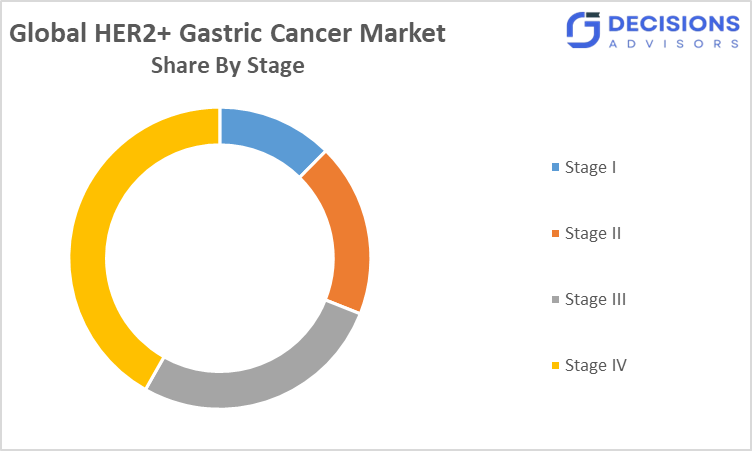
- By stage, the stage IV segment held a dominant position with approximately 41.8% in terms of market share in 2025.
- By therapy type, the targeted therapy (HER2-directed therapies) segment is the dominating, accounting for over 39.2% of the global market share in 2025.
- By end-user, hospitals and specialty clinics segment is the dominating, accounting for over 47.1% of the global market share in 2025.
- The compound annual growth rate of the global HER2+ gastric cancer market is 14.67%.
- The market is likely to achieve a valuation of USD 2874.1 million by 2035.
What is role of technology in grooming the market?
Technology plays a critical role in grooming the global HER2+ gastric cancer market by enabling early diagnosis, precise patient selection, and advanced treatment outcomes. Innovations in biomarker testing, next-generation sequencing, and digital pathology improve the accuracy of HER2 detection, ensuring appropriate therapy selection. The development of antibody-drug conjugates and targeted biologics has significantly enhanced treatment efficacy and survival rates. Additionally, AI-driven diagnostics, real-world data analytics, and clinical trial optimization technologies are accelerating drug development and regulatory approvals. Telemedicine and digital health platforms are further improving patient access to specialized oncology care, thereby supporting overall market growth.
How is Recent Developments Helping the Market?
Recent developments such as advancements in targeted therapies, expansion of antibody-drug conjugates (ADCs), and increasing integration of immunotherapy combinations are supporting the growth of the global HER2+ gastric cancer market. In recent years, multiple clinical trials have demonstrated improved survival outcomes with therapies such as trastuzumab deruxtecan and pembrolizumab combinations, highlighting strong innovation in precision oncology. The demand for advanced biologics is rising, supported by increasing HER2 testing rates and broader adoption of personalized treatment approaches. Additionally, expansion of clinical trials and regulatory approvals across major markets is accelerating patient access to novel therapies. Technological advancements in biomarker diagnostics and growing investment in oncology research are further improving treatment outcomes and driving market expansion.
Market Drivers
The global HER2+ gastric cancer market is driven by the increasing incidence of gastric cancer, rising adoption of HER2 biomarker testing, and growing demand for targeted therapies. The expansion of antibody-drug conjugates and immunotherapy combinations is significantly improving treatment efficacy, supporting market growth. Developed regions such as North America lead in terms of revenue due to advanced healthcare infrastructure, early diagnosis, and strong reimbursement frameworks, while Asia Pacific contributes significantly due to high disease prevalence and large patient population. Increasing awareness of precision oncology, continuous pipeline advancements, and growing clinical trial activity are further accelerating market development globally.
Restrain
The global HER2+ gastric cancer market is restrained by high therapy costs, limited diagnostic access, and variability in HER2 testing accuracy. Stringent regulatory approvals, adverse effects of biologics, and low awareness in developing regions further restrict growth. Additionally, healthcare infrastructure gaps, late diagnosis, pricing pressures, and competition from alternative therapies collectively limit overall market expansion.
Competitive Analysis:
The report offers the appropriate analysis of the key organizations/companies involved within the global HER2+ gastric cancer market, along with a comparative evaluation primarily based on their product of offering, business overviews, geographic presence, enterprise strategies, segment market share, and SWOT analysis. The report also provides an elaborative analysis focusing on the current news and developments of the companies, which includes product development, innovations, joint ventures, partnerships, mergers & acquisitions, strategic alliances, and others. This allows for the evaluation of the overall competition within the market.
Top Companies in Global HER2+ Gastric Cancer Market
- F. Hoffmann-La Roche Ltd
- AstraZeneca plc
- Daiichi Sankyo Company Limited
- Merck & Co., Inc.
- Bristol Myers Squibb Company
- Pfizer Inc.
- Takeda Pharmaceutical Company Limited
- Seagen Inc.
- MacroGenics, Inc.
- Genentech, Inc.
Government Initiatives
|
Country |
Key Government Initiatives |
|
Japan |
Nationwide gastric cancer screening program under the Health Service Law for the Aged (since 1983), later upgraded to endoscopy-based screening every 2-3 years with government support, enabling early detection and improved survival outcomes. |
|
China |
National cancer control policies under Health China 2030 focusing on early diagnosis, screening expansion, and biomarker-based treatment approaches. |
Market Segmentation
The global HER2+ gastric cancer market share is classified into stage, therapy type, and end?user.
- The Stage IV segment dominated the global HER2+ gastric cancer market in 2025, and is projected to grow at a substantial CAGR of approximately 41.8% during the forecast period.
Based on stage, the global HER2+ gastric cancer market is divided into stage I, stage II, stage III, and stage IV. Among these, the stage IV segment dominated the global HER2+ gastric cancer market in 2025, with an approximately 41.8% share. This dominance is due to the high proportion of patients diagnosed at advanced stages. Advanced cases require intensive treatment, frequent hospital visits, and HER2-targeted therapies, contributing to its leading share globally.
- The Targeted Therapy (HER2-directed therapies) segment dominated the global HER2+ gastric cancer market in 2025, and is projected to grow at a substantial CAGR of approximately 39.2% during the forecast period.
Based on therapy, the global HER2+ gastric cancer market is divided into targeted therapy (HER2-directed therapies), immunotherapy, chemotherapy, and combination therapy. Among these, the targeted therapy segment dominated the global HER2+ gastric cancer market in 2025, with an approximately 39.2% share. This dominance is driven by the proven clinical efficacy of trastuzumab and trastuzumab deruxtecan, the rising adoption of HER2 testing in oncology, ongoing expansion of HER2-targeted therapy pipelines, and increasing physician preference for precision medicine in advanced gastric cancer treatment globally.
- The Hospitals and Specialty Clinics segment dominated the global HER2+ gastric cancer market in 2025, and is projected to grow at a substantial CAGR of approximately 47.1% during the forecast period.
Based on end-user, the global HER2+ gastric cancer market is divided into hospitals and specialty clinics, ambulatory surgery centers, oncology clinics, and others. Among these, the hospitals and specialty clinics segment dominated the global HER2+ gastric cancer market in 2025, with an approximately 47.1% share. This dominance is because most HER2+ treatments require inpatient or closely supervised outpatient care, access to specialized oncology diagnostics, infusion facilities, trained staff, advanced therapeutics, and ongoing monitoring, which positions hospitals and specialty clinics as the primary treatment sites worldwide.
What is the Reason of the Region Dominance?
The dominance of certain regions in the global HER2+ gastric cancer market is primarily driven by high gastric cancer incidence, advanced healthcare infrastructure, widespread adoption of HER2 testing, and early access to targeted therapies. Regions such as North America lead the market due to significant patient populations, strong clinical trial networks, and well-established oncology centers. Rapid urbanization, rising healthcare awareness, and expanding access to precision medicine further support market growth. Additionally, strong pharmaceutical presence, availability of HER2-directed therapies, and supportive reimbursement frameworks contribute to regional dominance.
Strategies to Implement for Growth of the Market in Non-Leading Regions
Growth in non-leading regions can be supported through strategic investments in healthcare infrastructure, awareness programs, and expanding oncology services. Companies can increase market penetration by introducing affordable HER2 testing programs, targeted therapy access initiatives, and locally adapted treatment protocols that align with regional patient needs. Expanding partnerships with hospitals, oncology clinics, and research institutions can improve treatment accessibility and adoption. Additionally, awareness campaigns focusing on early detection, precision oncology, and patient education can further drive market uptake. Investment in local clinical trials, training programs for healthcare professionals, and collaborations with governmental health initiatives may also strengthen market presence and accelerate growth.
Regional Segment Analysis of the HER2+ Gastric Cancer Market
- North America (U.S., Canada, Mexico)
- Europe (Germany, France, U.K., Italy, Spain, Rest of Europe)
- Asia-Pacific (China, Japan, India, Rest of APAC)
- South America (Brazil and the Rest of South America)
- The Middle East and Africa (UAE, South Africa, Rest of MEA)
North America is anticipated to hold the largest share of the HER2+ Gastric Cancer market over the predicted timeframe.
North America is anticipated to hold the largest share of the global HER2+ gastric cancer market over the predicted timeframe. This market is accounting for approximately 56% of the total market share. The dominance of this market is driven by advanced healthcare infrastructure, widespread adoption of HER2 testing, high uptake of targeted therapies like trastuzumab deruxtecan, and strong reimbursement support. Countries such as the United States dominate the global HER2+ gastric cancer market, with early diagnosis, extensive clinical trials, and strong oncology networks contributing to the high market value.
Asia Pacific is expected to grow at a rapid CAGR in the HER2+ Gastric Cancer market during the forecast period. It is the fastest-growing region because the region itself holds approximately 48% of the market share, driven by high gastric cancer incidence in China, Japan, and South Korea, increasing HER2 testing, growing healthcare access, and rising adoption of targeted therapies. Large patient populations, government screening programs, and increasing awareness of precision oncology support the accelerated market growth.
Europe is the 3rd largest region to grow in the spirit market during the region. This market is accounting for approximately 39% of the total market share. It is because Europe has well-established oncology infrastructure, early adoption of HER2-targeted therapies, and high awareness of precision medicine. Countries such as Germany, France, and the UK give strong contribution. The region is a massive hub for advanced treatment protocols and clinical research, driving high-value therapy adoption even if patient volume growth is moderate.
Future Market Trends in Global HER2+ Gastric Cancer Market: -
- Innovation in Targeted Therapies & ADCs
Next-generation HER2-directed therapies, including trastuzumab deruxtecan (Enhertu) and emerging bispecific antibodies, are expected to drive sustained innovation, enhance clinical efficacy, and expand treatment options across key regions.
- Expansion of Companion Diagnostics & Precision Oncology
Widespread HER2 testing and advanced biomarker-driven strategies will improve patient stratification, early treatment initiation, and adoption of precision medicine approaches, broadening the addressable patient population globally.
- Pipeline Diversification & Combination Strategies
Combination regimens of HER2-targeted therapies with immunotherapies or chemotherapy are gaining momentum, potentially reshaping treatment standards and expanding therapy lines.
Recent Development
- In January 2026, Enhertu was approved by China’s NMPA specifically for second-line treatment of HER2+ metastatic gastric/GEJ cancer, reinforcing targeted therapy dominance and pipeline growth in emerging markets.
- In March 2025, the FDA granted traditional approval to Keytruda (pembrolizumab) in combination with trastuzumab and chemotherapy for first-line treatment of adults with locally advanced unresectable or metastatic HER2+ gastric/GEJ adenocarcinoma expressing PD-L1 (CPS ≥1), driving adoption of immunotherapy combinations globally.
- In August 2024, Enhertu received regional approval in China for locally advanced or metastatic HER2+ gastric/GEJ cancer, highlighting market expansion and adoption of ADCs across Asia-Pacific.
- In January 2021, the FDA approved Enhertu (trastuzumab deruxtecan) for adults with unresectable locally advanced or metastatic HER2+ gastric or gastroesophageal junction (GEJ) adenocarcinoma after prior trastuzumab-based therapy, establishing ADCs as a key treatment in the global HER2+ gastric cancer market.
Market Segment
This study forecasts revenue at global, regional, and country levels from 2020 to 2035. Decision Advisor has segmented the global HER2+ gastric cancer market based on the below-mentioned segments:
Global HER2+ Gastric Cancer Market, By Stage
- Stage I
- Stage II
- Stage III
- Stage IV
Global HER2+ Gastric Cancer Market, By Therapy
- Targeted Therapy (HER2-directed therapies)
- Immunotherapy
- Chemotherapy
- Combination Therapy
Global HER2+ Gastric Cancer Market, By End-User
- Hospitals and Specialty Clinics
- Ambulatory Surgery Centers
- Oncology Clinics
- Others
Global HER2+ Gastric Cancer Market, By Regional Analysis
- North America
- US
- Canada
- Mexico
- Europe
- Germany
- UK
- France
- Italy
- Spain
- Russia
- Rest of Europe
- Asia Pacific
- China
- Japan
- India
- South Korea
- Australia
- Rest of Asia Pacific
- South America
- Brazil
- Argentina
- Rest of South America
- Middle East & Africa
- UAE
- Saudi Arabia
- Qatar
- South Africa
- Rest of the Middle East & Africa
Frequently Asked Questions (FAQ)
Q. What factors determine patient eligibility for HER2-targeted therapies in gastric cancer?
A. Patient eligibility depends on HER2 biomarker testing accuracy, tumor classification, and clinical staging. Proper identification ensures effective use of targeted therapies and improves treatment outcomes in eligible patient populations.
Q. How do antibody-drug conjugates enhance treatment effectiveness in this market?
A. Antibody-drug conjugates deliver cytotoxic agents directly to cancer cells through targeted mechanisms, improving precision and reducing damage to healthy tissues, thereby enhancing therapeutic efficacy and patient outcomes.
Q. What challenges affect the adoption of HER2 testing globally?
A. Limited diagnostic infrastructure, lack of standardized protocols, and variability in testing accuracy across regions restrict widespread adoption, impacting patient identification and access to targeted therapies.
Q. How do biosimilars influence competition in the HER2+ gastric cancer market?
A. Biosimilars introduce cost-effective alternatives to branded biologics, increasing treatment accessibility, intensifying market competition, and supporting broader adoption of HER2-targeted therapies across price-sensitive regions.
Check Licence
Choose the plan that fits you best: Single User, Multi-User, or Enterprise solutions tailored for your needs.
We Have You Covered
- 24/7 Analyst Support
- Clients Across the Globe
- Tailored Insights
- Technology Tracking
- Competitive Intelligence
- Custom Research
- Syndicated Market Studies
- Market Overview
- Market Segmentation
- Growth Drivers
- Market Opportunities
- Regulatory Insights
- Innovation & Sustainability
Report Details
| Scope | Global |
| Pages | 240 |
| Delivery | PDF & Excel via Email |
| Language | English |
| Release | Mar 2026 |
| Access | Download from this page |