
Global Hormonal Contraceptive Market
 |
Pages:
250
|
Pages:
250
Global Hormonal Contraceptive Market Size, Share, and COVID-19 Impact Analysis, By Product (Pills, Injectable, Vaginal Rings, Intrauterine Devices, Implants, and Others), By Hormones Type (Combined Hormonal Contraceptive, and Progestin - Only Contraceptive), By Distribution Channel (Hospital Pharmacy, Retail Pharmacy, Online Channel, Public Channel & NGOs, and Others), and By Region (North America, Europe, Asia-Pacific, Latin America, Middle East, and Africa), Analysis and Forecast 2025-2035
REPORT COVERAGE
Global
Global Hormonal Contraceptive Market Size Insights Forecasts to 2035
- The Global Hormonal Contraceptive Market Size Was Estimated at USD 18.04 Million in 2024
- The Market Size is Expected to Grow at a CAGR of around 4.19 % from 2025 to 2035
- The Worldwide Hormonal Contraceptive Market Size is Expected to Reach USD 28.34 Million by 2035
- North America is expected to grow the fastest during the forecast period.
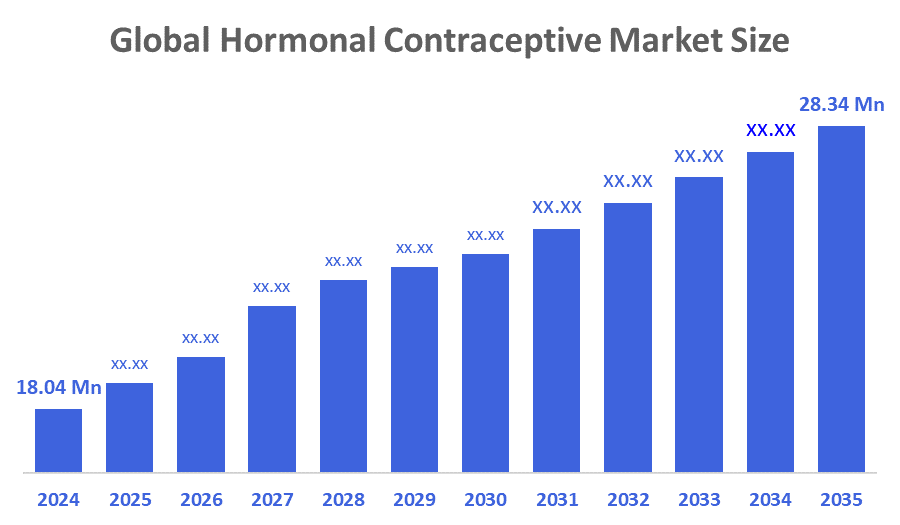
According to a research report published by Decisions Advisors and Consulting, The Global Hormonal Contraceptive Market Size Was Worth Around USD 18.04 Million In 2024 And Is Predicted To Grow To Around USD 28.34 Million By 2035 With A Compound Annual Growth Rate (CAGR) Of 4.19 % From 2025 To 2035. The factors driving the industry's growth include rising awareness of hormonal contraceptive methods in emerging economies, growing investments by major players for the R&D of novel contraceptive devices, and supportive initiatives by various governments to increase access to contraceptive products.
Market Overview
The hormonal contraceptive market is referred to as a healthcare sector that includes drugs that prevent conception by using artificial hormones. They hinder fertilisation and implantation by thickening cervical mucus, preventing ovulation, and changing the uterine lining. Moreover, with the growing popularity of hormonal contraceptives as a dependable form of birth control and the growing knowledge of family planning and reproductive health, the global market for hormonal contraceptives is expanding rapidly. Additionally, there is a growing focus on women's health and empowerment, government laws and programs that support access to contraception, and an increase in the prevalence of sexually transmitted diseases (STIs), all of which promote preventive measures.
For instance, with 44.1 million [37.6–53.4 million] deaths to date, HIV remains a significant global public health concern. HIV-related causes claimed the lives of 4,90,000-8,20,000 individuals worldwide in 2024. By the end of 2024, there were roughly 40.8 million [37.0–45.6 million] persons living with HIV (PLHIV), and 1.3 million [1.0–1.7 million] new HIV infections worldwide. The most impacted area is the WHO African Region.
The College of Sexual and Reproductive Healthcare (CoSRH) welcomed Scotland’s Women’s Health Plan: Phase Two (2026–2029), emphasising the importance of equitable access to sexual and reproductive healthcare and committing to support its implementation through clinical guidance, training, and advocacy. The alignment of CoSRH, RCOG, and government priorities suggests strong collaborative potential for achieving ambitious goals like cervical cancer elimination and improved gynaecology services.
Report Coverage
This research report categorizes the hormonal contraceptive market based on various segments and regions, forecasts revenue growth, and analyzes trends in each submarket. The report analyses the key growth drivers, opportunities, and challenges influencing the hormonal contraceptive market. Recent market developments and competitive strategies, such as expansion, product launch, development, partnership, merger, and acquisition, have been included to draw the competitive landscape in the market. The report strategically identifies and profiles the key market players and analyzes their core competencies in each sub-segment of the hormonal contraceptive market.
Driving Factors
The sector is predicted to increase as more people become aware of the different ways to avoid getting pregnant. Guidelines for the use of hormonal contraceptives, such as implants, intrauterine devices, and progestogen injectables, were provided by the WHO for women who were at higher risk of HIV, which contributed as a new market opportunity. Market trends indicate a move toward novel hormonal contraceptives, such as long-acting reversible contraceptives (LARCs), and an increase in demand for handy and customised choices, like hormonal patches and oral contraceptives. Additionally, as healthcare infrastructure grows and economic conditions improve, hormonal contraceptives are more readily available in emerging economies. In both developed and developing nations, increased usage is being fueled by growing government attempts to provide access to contraceptives and advancements in healthcare infrastructure. Growing awareness campaigns and educational initiatives are pushing women to think about safer and more effective birth control options, which is driving up demand.
Victoria’s Community Pharmacist Program has expanded to include two additional hormonal contraceptives and a treatment for impetigo, broadening the range of medicines available directly through pharmacists without a doctor’s prescription. Victoria’s decision to add more contraceptives and an impetigo treatment to its Community Pharmacist Program reflects a shift toward pharmacist-led primary care, improving accessibility and easing pressure on the healthcare system.
Restraining Factors
The market spread of hormonal contraceptives is hindered by high costs, negative side effects, cultural resistance, and little awareness. Despite growing demand for family planning solutions, accessibility is further hampered by regulatory obstacles and unequal healthcare infrastructure, which slows adoption.
Market Segmentation
The hormonal contraceptive market share is classified into product type, hormonal type, and distribution channel.
- The pills segment accounted for the largest market share in 2024 and is projected to grow at a substantial CAGR over the forecast period.
Based on the product type, the hormonal contraceptive market is segmented into pills, injectables, vaginal rings, intrauterine devices, implants, and others. Among these, the pills segment accounted for the largest market share in 2024 and is projected to grow at a substantial CAGR over the forecast period. The segment's rise is ascribed to its easy and straightforward administration, readily accessible products, greater awareness of the tablets in comparison to long-acting reversible devices, and a higher efficiency of approximately 99% in timely ingestion. Additionally, market growth is anticipated to be aided by increasing penetration in developing nations.
For instance, the first hormone-free male birth control pill, YCT-529, has successfully cleared its initial human safety trial, showing no hormonal side effects and paving the way for further efficacy studies. This breakthrough could expand contraceptive options beyond condoms and vasectomies.
- The combined hormonal contraceptive segment accounted for the highest market share in 2024 and is projected to grow at a substantial CAGR over the forecast period.
Based on the hormonal type, the hormonal contraceptive market is divided into combined hormonal contraceptive, and progestin - only contraceptive. Among these, the combined hormonal contraceptive segment accounted for the highest market share in 2024 and is projected to grow at a substantial CAGR over the forecast period. This is because it prevents pregnancy through two distinct processes, increasing success rates. The segment's increase can be explained by the decreased risk of pregnancy. Furthermore, compared to progestin-only pills, these contraceptives are linked to a decreased risk of acne.
For instance, Low-dose estrogen combined hormonal contraceptives (CHCs) with shortened hormone-free intervals (e.g., 24/4 or 24/2/2 regimens) reduce breakthrough bleeding and increase rates of amenorrhea compared to traditional 21/7 formulations. For some women, amenorrhea is a desired outcome, while others may find it concerning.
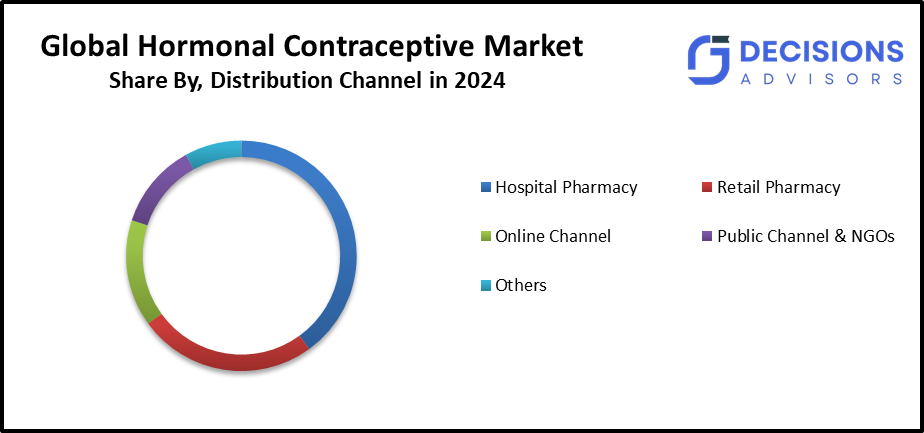
- The hospital pharmacy segment accounted for the highest market revenue in 2024 and is anticipated to grow at a significant CAGR during the forecast period.
Based on the distribution channel, the hormonal contraceptive market is divided into hospital pharmacy, retail pharmacy, online channel, public channel & NGOS, and others. Among these, the hospital pharmacy segment accounted for the highest market revenue in 2024 and is anticipated to grow at a significant CAGR during the forecast period. The growing access to healthcare and a growing emphasis on comprehensive reproductive health services in clinical settings are driving this expansion. As part of larger patient care and counseling initiatives, hospital pharmacists are playing an increasingly important role in the distribution of hormonal contraceptives.
Regional Segment Analysis of the Hormonal Contraceptive Market
- North America (U.S., Canada, Mexico)
- Europe (Germany, France, U.K., Italy, Spain, Rest of Europe)
- Asia-Pacific (China, Japan, India, Rest of APAC)
- South America (Brazil and the Rest of South America)
- The Middle East and Africa (UAE, South Africa, Rest of MEA)
Asia Pacific is anticipated to hold the largest share of the hormonal contraceptive market over the predicted timeframe.
Asia Pacific is anticipated to hold the largest share of the hormonal contraceptive market over the predicted timeframe. The market for hormonal contraceptives is expanding quickly in the Asia-Pacific area due to growing healthcare spending, growing economic growth, and growing awareness of reproductive health. Moreover, their sizable populations and expanding access to healthcare services, such as those in nations like China and India, make significant contributions. Besides, as family planning is encouraged by public health campaigns and educational activities, the market is likewise witnessing an increase in demand for contemporary methods of contraception. Additionally, the growing healthcare infrastructure and economic advancement improve market accessibility and acceptance. The dynamic growth of the hormonal contraception industry in Asia-Pacific is also attributed to government backing and an increasing emphasis on women's health.
In February 2026, Daiichi Sankyo Healthcare will launch Japan’s first over-the-counter (OTC) emergency contraceptive pill, NorLevo (levonorgestrel). This marks a historic shift in reproductive health access, allowing women to obtain the morning-after pill directly from pharmacies without a prescription.
North America is expected to grow at a rapid CAGR in the hormonal contraceptive market during the forecast period. The regional market is growing because of its sophisticated healthcare system, high level of family planning awareness, and wide range of contraceptive alternatives. Moreover, due to their robust healthcare systems, active research and development, and significant consumer expenditure on healthcare items, the United States and Canada have the largest market shares. Further, its widespread access to and use of hormonal contraceptives are also facilitated by government programs and universal insurance coverage. North America is positioned as the highest leader in market growth and development due to its extensive distribution network and ongoing innovation in contraceptive technology.
Viatris announced four major regulatory milestones in December 2025, highlighting progress across its global pipeline: FDA approval of a generic Sandostatin LAR Depot, FDA acceptance of a contraceptive patch NDA, FDA clearance of an IND for MR-146 in eye disease, and Japan’s acceptance of a pitolisant NDA for sleep apnea.
Competitive Analysis:
The report offers the appropriate analysis of the key organizations/companies involved within the hormonal contraceptive market, along with a comparative evaluation primarily based on their product offering, business overviews, geographic presence, enterprise strategies, segment market share, and SWOT analysis. The report also provides an elaborative analysis focusing on the current news and developments of the companies, which includes product development, innovations, joint ventures, partnerships, mergers & acquisitions, strategic alliances, and others. This allows for the evaluation of the overall competition within the market.
List of Key Companies
- AbbVie Inc.
- Allergan plc
- Bayer AG
- Celgene Corporation
- GlaxoSmithKline plc
- HRA Pharma
- Johnson & Johnson
- Merck & Co., Inc.
- Mithra Pharmaceuticals
- Mylan N.V.
- Novartis AG
- Pfizer Inc.
- Procter & Gamble Co.
- Reddy's Laboratories Ltd.
- Others
Key Target Audience
- Market Players
- Investors
- End-users
- Government Authorities
- Consulting and Research Firm
- Venture capitalists
- Value-Added Resellers (VARs)
Recent Development
- In February 2026, Organon signed an exclusive global licensing agreement with Sebela Pharmaceuticals for MIUDELLA, the first FDA-approved hormone-free copper intrauterine device (IUD) in the U.S. in 40 years. The deal includes a $27.5 million upfront payment and could reach over $532 million with milestones and royalties.
- In December 2023, Daré Bioscience reported positive interim Phase III results for Ovaprene, its investigational monthly hormone-free intravaginal contraceptive. They are marking a major step toward offering women a non-hormonal, FDA-approved alternative. This trial is the first of its kind for a monthly hormone-free contraceptive in the U.S.
Market Segment
This study forecasts revenue at global, regional, and country levels from 2020 to 2035. Decisions Advisors has segmented the hormonal contraceptive market based on the below-mentioned segments:
Global Hormonal Contraceptive Market, By Product Type
- Pills
- Injectable
- Vaginal Rings
- Intrauterine Devices
- Implants
- Others
Global Hormonal Contraceptive Market, By Hormone Type
- Combined Hormonal Contraceptive
- Progestin - Only Contraceptive
Global Hormonal Contraceptive Market, By Distribution
- Hospital Pharmacy
- Retail Pharmacy
- Online Channel
- Public Channel & NGOs
- Others
Global Hormonal Contraceptive Market, By Regional Analysis
- North America
- US
- Canada
- Mexico
- Europe
- Germany
- UK
- France
- Italy
- Spain
- Russia
- Rest of Europe
- Asia Pacific
- China
- Japan
- India
- South Korea
- Australia
- Rest of Asia Pacific
- South America
- Brazil
- Argentina
- Rest of South America
- Middle East & Africa
- UAE
- Saudi Arabia
- Qatar
- South Africa
- Rest of the Middle East & Africa
Frequently Asked Questions (FAQ)
1. What are long-acting reversible contraceptives (LARCs) and how are they influencing the hormonal contraceptive market?
Long-acting reversible contraceptives (LARCs) are birth control methods that provide effective pregnancy prevention for extended periods without requiring frequent user action. These include hormonal intrauterine devices (IUDs) and implants that can last for several years. Their convenience, high efficacy, and reduced risk of user error are driving adoption globally, especially among women seeking reliable and low-maintenance contraceptive options. As awareness grows, LARCs are expected to significantly influence future market demand.
2. How do hormonal contraceptives help in managing conditions beyond pregnancy prevention?
Hormonal contraceptives are widely used not only for birth control but also for managing several medical conditions. These include regulating menstrual cycles, reducing menstrual pain (dysmenorrhea), treating acne, managing endometriosis symptoms, and controlling heavy menstrual bleeding. Because of these additional therapeutic benefits, hormonal contraceptives are often prescribed as part of broader women’s health management strategies.
3. What role do digital health platforms and telemedicine play in hormonal contraceptive distribution?
Digital health platforms and telemedicine services are transforming contraceptive access by enabling online consultations and prescriptions. Through telehealth services, women can receive medical advice, obtain prescriptions, and purchase contraceptives through online pharmacies without visiting a clinic. This model improves accessibility, particularly in remote or underserved areas, and supports the growth of the online distribution channel segment in the market.
4. How is the demand for male contraceptive options affecting the hormonal contraceptive industry?
The emergence of male contraceptive research, including hormone-free male birth control pills and hormonal injections, is expanding the reproductive health landscape. While these products are still largely in development, they represent a shift toward shared responsibility in contraception. Their future approval could diversify the contraceptive market and complement existing female-focused hormonal contraceptive products.
5. What are the key regulatory challenges faced by manufacturers of hormonal contraceptives?
Manufacturers must navigate strict regulatory frameworks related to clinical trials, safety monitoring, and product approvals. Regulatory agencies require extensive data on long-term safety, hormonal effects, and reproductive health outcomes. Additionally, varying approval processes across regions can delay product launches and increase development costs, creating barriers for new market entrants.
6. How do public health programs and NGOs contribute to hormonal contraceptive adoption?
Public health initiatives and non-governmental organisations play a crucial role in expanding contraceptive access, especially in low- and middle-income countries. These programs provide subsidised or free contraceptives, conduct awareness campaigns on family planning, and support healthcare infrastructure development. Their involvement helps increase contraceptive uptake and reduce unintended pregnancy rates.
7. What technological innovations are shaping the future of hormonal contraceptive products?
Technological advancements are enabling the development of improved drug delivery systems, including transdermal patches, biodegradable implants, and smart intrauterine devices. These innovations aim to enhance safety, minimise hormonal side effects, and provide personalised dosing options. Continued research in biotechnology and pharmaceutical formulation is expected to lead to more efficient and user-friendly contraceptive solutions.
Check Licence
Choose the plan that fits you best: Single User, Multi-User, or Enterprise solutions tailored for your needs.
We Have You Covered
- 24/7 Analyst Support
- Clients Across the Globe
- Tailored Insights
- Technology Tracking
- Competitive Intelligence
- Custom Research
- Syndicated Market Studies
- Market Overview
- Market Segmentation
- Growth Drivers
- Market Opportunities
- Regulatory Insights
- Innovation & Sustainability
Report Details
| Scope | Global |
| Pages | 250 |
| Delivery | PDF & Excel via Email |
| Language | English |
| Release | Mar 2026 |
| Access | Download from this page |