
Global Hydroxyzine imine market
 |
Author:
David J
|
Pages:
210
|
Author:
David J
|
Pages:
210
Global Hydroxyzine Imine Market Size, Share, By Application (Anxiety Treatment, Allergic Reactions, Sedative), By Formulation (Tablet, Injection, Syrup), By End Use (Hospitals, Pharmacies, Home Care), and By Region (North America, Europe, Asia-Pacific, Latin America, Middle East & Africa), Analysis and Forecast 2026?2035
CAGR
5.53%
REVENUE 2025
USD Billion 2.19
FORECAST 2035
USD Billion 3.75
REPORT COVERAGE
Global
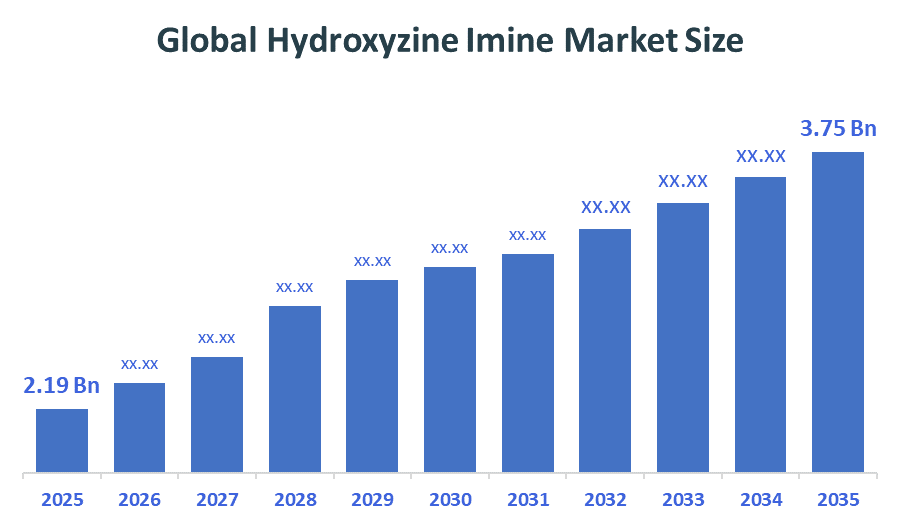
The Global Hydroxyzine Imine Market Size is forecast to grow from USD 2.19 Billion in 2025 to approximately USD 3.75 Billion by 2035. According to Decision Advisors, a detailed research report on the Hydroxyzine imine market indicates that tablets dominate the market, accounting for approximately 58.2% of the total share globally. Pfizer Inc. the market with an estimated 10-12% global market share. The company reported a 2025 revenue of approximately USD 58-60 billion, making it one of the most influential forces shaping industry trends and overall market growth.
Market Snapshot
- Global Hydroxyzine Imine Market Size (2025): USD 2.19 Billion
- Projected Global Hydroxyzine Imine Market Size (2035): USD 3.75 Billion
- Global Hydroxyzine Imine Market Compound Annual Growth Rate (CAGR): 5.53%
- Largest Regional Market: North America
- Fastest Growing Region: Asia-Pacific
- 2nd Largest Region: Europe
- Base Year: 2025
- Historical Period: 2021–2024
- Forecast Period: 2026–2035
Market Overview/ Introduction
The Global hydroxyzine imine market refers to the worldwide industry involved in the production, supply, and commercialization of hydroxyzine imine, a key chemical intermediate used in manufacturing antihistamine and anxiolytic drugs. Hydroxyzine imine is an organic compound utilized in pharmaceutical synthesis, particularly for allergy and anxiety treatments. Market growth is driven by the rising prevalence of allergic conditions, increasing mental health awareness, and expanding pharmaceutical manufacturing in regions such as India and China. Future opportunities lie in advanced drug formulations, growing demand for generic medications, and expanding healthcare infrastructure in emerging economies. Additionally, technological advancements in chemical synthesis and global distribution networks are expected to enhance efficiency, accessibility, and overall market expansion in the coming years.
- The European Medicines Agency implemented strict safety measures for hydroxyzine-containing medicines, including dose limitations and restricted use in high-risk patients to prevent cardiac complications. This initiative ensures safer usage and harmonized regulation across Europe, directly influencing hydroxyzine market standards and prescribing practices.
- The Pharmacovigilance Risk Assessment Committee continuously evaluates hydroxyzine safety through post-market surveillance and periodic risk assessments. This system ensures early identification of adverse effects and mandates updated labeling and usage guidelines, strengthening drug safety frameworks and maintaining market credibility globally.
- The World Health Organization promotes international pharmacovigilance systems to monitor antihistamines like hydroxyzine. Governments adopt WHO guidelines to improve drug safety reporting, adverse event tracking, and rational medicine use, particularly in developing regions, enhancing global market reliability and patient safety standards.
Notable Insights: -
- North America is anticipated to hold the largest share of approximately 35% in the Hydroxyzine imine market over the forecast period.
- Asia Pacific is expected to grow at a rapid CAGR of approximately 6.30% in the Hydroxyzine imine market during the forecast period.
- The anxiety treatment segment dominated the market in 2025, approximately 52%, and is projected to grow at a substantial CAGR during the forecast period.
- The tablet segment dominated the market in 2025, approximately 58%, and is projected to grow at a substantial CAGR during the forecast period.
- The orthodontic clinics segment dominated the market in 2025, approximately 50%, and is projected to grow at a substantial CAGR during the forecast period.
- The compound annual growth rate of the Global Hydroxyzine Imine Market is 5.53%.
- The market is likely to achieve a valuation of USD 3.75 Billion by 2035.
What is role of technology in grooming the market?
Technology plays a significant role in shaping the global hydroxyzine imine market by improving manufacturing efficiency, quality, and scalability. Advanced chemical synthesis techniques and process automation help reduce production costs while ensuring consistent purity standards. Digital monitoring systems and AI-driven quality control enhance compliance with stringent regulatory requirements. In pharmaceutical applications, innovations in drug formulation and delivery systems improve the effectiveness and safety of hydroxyzine-based medications. Additionally, supply chain technologies such as real-time tracking and data analytics optimize inventory management and distribution efficiency. The integration of digital platforms in research and development accelerates product innovation and time-to-market. Furthermore, increased adoption of e-pharmacies and digital healthcare solutions expands market accessibility, allowing manufacturers and distributors to reach a broader patient base globally.
Market Drivers
The global hydroxyzine imine market is driven by the rising prevalence of allergic disorders, anxiety, and dermatological conditions, increasing the demand for antihistamine-based medications. Growing awareness of mental health and improved diagnosis rates are further boosting consumption. Expanding pharmaceutical manufacturing capabilities, particularly in countries like India and China, support cost-effective production and supply. Additionally, the increasing availability of generic drugs, favorable healthcare policies, and advancements in drug formulation technologies enhance accessibility and treatment effectiveness. Rising healthcare expenditure and improving distribution networks globally also contribute to sustained market growth and wider patient reach.
Restrain
The global hydroxyzine imine market faces restraints from strict regulatory requirements and quality compliance standards, increasing production costs and approval timelines. Fluctuating raw material prices and supply chain disruptions further impact profitability. Additionally, availability of alternative antihistamines and potential side effects associated with hydroxyzine-based drugs may limit overall market growth.
Competitive Analysis:
The report offers the appropriate analysis of the key organizations/companies involved within the global hydroxyzine imine market, along with a comparative evaluation primarily based on their product offerings, business overviews, geographic presence, enterprise strategies, segment market share, and SWOT analysis. The report also provides an elaborative analysis focusing on the current news and developments of the companies, which includes product development, innovations, joint ventures, partnerships, mergers & acquisitions, strategic alliances, and others. This allows for the evaluation of the overall competition within the market.
Top Companies in Global Hydroxyzine imine market
- Pfizer Inc.
- GlaxoSmithKline plc
- Teva Pharmaceutical Industries Ltd.
- Novartis AG
- Alliance Pharma PLC
- Piramal Group
- Impax Laboratories Inc.
- Shanghai Ruizheng Chemical Technology Co., Ltd.
- N&R Industries
- UCB S.A.
- Viatris Inc.
- Sun Pharmaceutical Industries Ltd.
Government Initiatives
|
Country |
Key Government Initiatives |
|
US |
The U.S. Food and Drug Administration regulates hydroxyzine-based drugs through strict approval pathways and post-market pharmacovigilance systems. The agency ensures safety, efficacy, and labeling compliance for antihistamines used in anxiety and allergy treatment, supporting continuous monitoring and market authorization processes. |
|
UK |
The Medicines and Healthcare products Regulatory Agency aligns with EU safety frameworks and continues monitoring hydroxyzine use through pharmacovigilance systems. It ensures safe prescribing practices and compliance with updated dosage and risk management guidelines in anxiety and allergy treatments. |
|
Europe |
The European Medicines Agency implemented safety restrictions on hydroxyzine-containing medicines to minimize cardiac risks, including dose limitations and patient-specific usage guidelines. These measures ensure safer use across EU markets while maintaining regulatory harmonization. |
Study on the Supply, Demand, Distribution, and Market Environment of the Hydroxyzine imine market
The global hydroxyzine imine market is shaped by a balanced interplay of supply, demand, distribution, and regulatory environment. Supply is driven by chemical manufacturers and pharmaceutical intermediates producers, with strong production bases in countries like India and China due to cost advantages. Demand is increasing with the rising prevalence of allergies and anxiety disorders, supporting consistent consumption by pharmaceutical companies. Distribution networks are expanding through partnerships with drug manufacturers, wholesalers, and contract manufacturing organizations, ensuring efficient global reach. The market environment is influenced by regulatory frameworks, quality standards, and pricing controls, particularly in developed regions. Additionally, advancements in manufacturing processes and growing generic drug penetration are enhancing competitiveness, while global trade dynamics and supply chain resilience continue to impact overall market stability and growth.
Price Analysis and Consumer Behaviour Analysis
The global hydroxyzine imine market demonstrates notable price sensitivity due to strong competition among generic manufacturers and fluctuating raw material costs. Prices are generally lower in emerging markets, driven by high-volume production and cost-efficient manufacturing, while developed regions maintain stable but competitive pricing structures. Supply chain efficiency and regulatory compliance also influence pricing dynamics. From a consumer behavior perspective, demand is largely driven by the increasing prevalence of allergies and anxiety-related conditions. Patients often prefer affordable and easily accessible medications, leading to higher adoption of generic formulations. Additionally, there is a growing inclination toward self-medication and over-the-counter antihistamines. Digital health awareness and improved access to healthcare information are further shaping purchasing decisions, while preferences for safe, effective, and fast-acting treatments continue to support consistent market demand globally.
Market Segmentation
The hydroxyzine imine market share is classified into application, formulation, and end-user.
- The anxiety treatment segment dominated the market in 2025, approximately 52%, and is projected to grow at a substantial CAGR during the forecast period.
Based on the application, the hydroxyzine imine market is divided into anxiety treatment, allergic reactions, and sedative. Among these, the anxiety treatment segment dominated the market in 2025, approximately 52%, and is projected to grow at a substantial CAGR during the forecast period. The growth of the anxiety treatment segment is driven by the rising prevalence of anxiety disorders worldwide and strong prescription rates. Hydroxyzine is widely preferred as a non-addictive anxiolytic, making it a first-line option in many clinical settings.
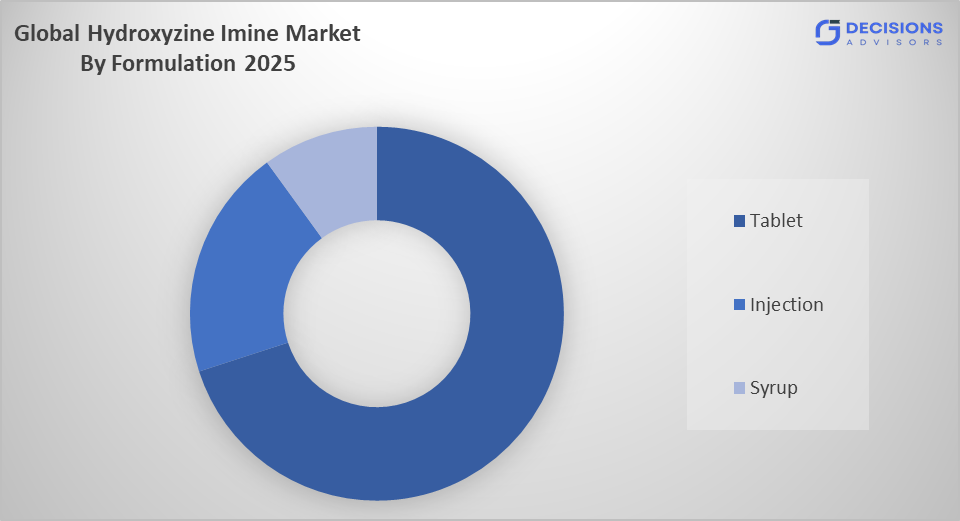
- The tablet segment dominated the market in 2025, approximately 58%, and is projected to grow at a substantial CAGR during the forecast period.
Based on the formulation, the Hydroxyzine imine market is divided into tablet, injection, and syrup. Among these, the tablet segment dominated the market in 2025, approximately 58%, and is projected to grow at a substantial CAGR during the forecast period. The tablet segment dominated due to high patient preference for oral dosage forms, ease of administration, and cost-effectiveness. Tablets offer better stability and longer shelf life compared to liquid formulations, making them widely prescribed across both hospital and outpatient settings.
- The pharmacies segment dominated the market in 2025, approximately 50%, and is projected to grow at a substantial CAGR during the forecast period.
Based on the end-user, the Hydroxyzine imine market is divided into hospitals, pharmacies, and home care. Among these, the pharmacies segment dominated the market in 2025, approximately 50%, and is projected to grow at a substantial CAGR during the forecast period. The growth of the pharmacies segment is due to most hydroxyzine prescriptions are dispensed through retail and outpatient pharmacy channels. Easy accessibility, repeat prescriptions for chronic conditions like allergies and anxiety, and growing OTC availability contribute significantly to this segment’s leadership.
Strategies to Implement for Growth of the Market in Non-Leading Regions
To drive growth in non-leading regions of the global hydroxyzine imine market, companies should focus on expanding distribution networks and strengthening partnerships with local pharmaceutical manufacturers. Enhancing affordability through generic production and cost-efficient supply chains is essential to penetrate price-sensitive markets. Increasing awareness about allergy and anxiety treatments via targeted campaigns can boost demand. Investment in regulatory approvals and compliance will help streamline market entry in emerging economies. Additionally, leveraging manufacturing hubs in countries like India and China can reduce production costs and improve accessibility. Companies should also prioritize research collaborations and technology transfer initiatives to develop region-specific formulations, ensuring better patient outcomes and long-term market expansion.
Regional Segment Analysis of the Hydroxyzine imine market
- North America (U.S., Canada, Mexico)
- Europe (Germany, France, U.K., Italy, Spain, Rest of Europe)
- Asia-Pacific (China, Japan, India, Rest of APAC)
- South America (Brazil and the Rest of South America)
- The Middle East and Africa (UAE, South Africa, Rest of MEA)
North America is anticipated to hold the largest share of approximately 35% the hydroxyzine imine market over the forecast period.
North America is anticipated to hold the largest share of approximately 35% the hydroxyzine imine market over the forecast period. The dominance of this region is driven by advanced healthcare infrastructure, high diagnosis rates, and strong demand for antihistamines and anxiolytics. Favorable reimbursement policies, robust pharmaceutical R&D, and the presence of leading drug manufacturers further support growth. Additionally, increasing awareness of mental health and allergy treatments boosts market consumption across the region.
Asia Pacific is expected to grow at a rapid CAGR of approximately 6.30% in the hydroxyzine imine market during the forecast period.
Asia Pacific is expected to grow at a rapid CAGR of approximately 6.30% in the hydroxyzine imine market during the forecast period. This growth is fueled by expanding healthcare infrastructure, rising population, and increasing prevalence of anxiety and allergic conditions. Growing awareness, improving access to medications, and rising disposable incomes support demand. Additionally, strong generic drug manufacturing in countries like India and China accelerates market expansion across the region.
Europe is the 2nd largest region to grow in the hydroxyzine imine market during the period.
Europe holds the second-largest share due to its well-established healthcare systems, high awareness of mental health and allergy treatments, and strong regulatory support. Increasing demand for antihistamines and sedatives, along with the presence of major pharmaceutical companies and a growing elderly population, continues to drive steady market growth across countries like Germany, France, and the United Kingdom.
Future Market Trends in Global Hydroxyzine Imine Market: -
1. Rising Allergy & Anxiety Cases
Increasing global prevalence of allergic disorders and anxiety conditions is a key trend driving demand for hydroxyzine imine. Growing pollution levels, lifestyle changes, and mental health awareness are expanding patient pools, boosting consumption of antihistamine intermediates used in therapeutic drug production worldwide.
2. Expansion of Generic Drug Production
The market is witnessing strong growth in generic drug manufacturing, as hydroxyzine imine is widely used in cost-effective antihistamine formulations. Intense competition among generic manufacturers and rising demand for affordable medicines are improving accessibility and increasing production volumes, particularly in emerging economies.
3. Advancements in Drug Formulations
Ongoing pharmaceutical R&D is leading to improved formulations, including faster-acting and more patient-friendly dosage forms. Innovations in drug delivery systems enhance efficacy, safety, and compliance, supporting broader clinical use of hydroxyzine-based therapies and strengthening long-term market growth potential.
Recent Development
- In July 2025, major pharmaceutical companies including Pfizer, GlaxoSmithKline, and Teva Pharmaceutical Industries actively expanded their strategic partnerships and acquisitions to strengthen drug development pipelines. These collaborations focused on innovation, licensing, and joint research, reinforcing their competitive position in the global hydroxyzine and broader pharmaceutical market.
- In June 2025, the pharmaceutical industry witnessed a rise in strategic alliances, with many companies expanding partnerships to strengthen innovation pipelines and accelerate drug development. Industry insights indicated that a significant proportion of biotech firms were actively collaborating with larger pharma players to enhance research efficiency and bring new therapies to market faster.
- In December 2022, Brillpharma (Ireland) Limited received marketing authorization from Ireland’s Health Products Regulatory Authority for Hydroxyzine hydrochloride 25 mg film-coated tablets. The drug was approved for anxiety management in adults, supporting growth and regulatory expansion
How is Recent Developments Helping the Market?
Recent developments are strengthening the global hydroxyzine imine market by improving formulation efficiency, accessibility, and therapeutic applications. Pharmaceutical companies such as Pfizer Inc. and Viatris Inc. are expanding generic production, making treatments more affordable and widely available. Advances in tablet and syrup formulations have enhanced patient compliance, especially among pediatric and geriatric populations. Additionally, increased regulatory approvals for anxiety and allergy indications are widening the drug’s clinical usage. Digital healthcare integration and e-pharmacy platforms are further boosting distribution channels globally. Ongoing R&D efforts focused on improved safety profiles and reduced side effects are also driving adoption. Together, these developments are accelerating market growth by increasing accessibility, enhancing treatment outcomes, and supporting consistent demand across both developed and emerging healthcare markets.
Market Segment
This study forecasts revenue at global, regional, and country levels from 2020 to 2035. Decision Advisors has segmented the hydroxyzine imine market based on the below-mentioned segments:
Global Hydroxyzine Imine Market, By Application
- Anxiety Treatment
- Allergic Reactions
- Sedative
Global Hydroxyzine Imine Market, By Formulation
- Tablet
- Injection
- Syrup
Global Hydroxyzine Imine Market, By End-User
- Hospitals
- Pharmacies
- Home Care
Global Hydroxyzine Imine Market, By Regional Analysis
- North America
- US
- Canada
- Mexico
- Europe
- Germany
- UK
- France
- Italy
- Spain
- Russia
- Rest of Europe
- Asia Pacific
- China
- Japan
- India
- South Korea
- Australia
- Rest of Asia Pacific
- South America
- Brazil
- Argentina
- Rest of South America
- Middle East & Africa
- UAE
- Saudi Arabia
- Qatar
- South Africa
- Rest of the Middle East & Africa
Frequently Asked Questions (FAQ)
Q. How is the shift toward adult orthodontics influencing the global market?
A. The increasing number of adults seeking orthodontic treatment is significantly expanding the market. Adults prioritize aesthetics and convenience, driving demand for clear aligners and invisible braces. Higher disposable income and growing awareness about oral health are encouraging late-age treatments, thereby diversifying the patient base and boosting overall market revenue.
Q. What role do dental insurance and reimbursement policies play in market growth?
A. Dental insurance and reimbursement policies strongly impact treatment adoption. In developed regions, partial coverage for orthodontic procedures reduces financial burden, encouraging more patients to opt for advanced treatments. However, limited or absent insurance coverage in developing countries restricts access, making affordability a key factor influencing market penetration and growth.
Q. How are direct-to-consumer (DTC) orthodontic models changing the industry landscape?
A. Direct-to-consumer orthodontic models are transforming accessibility by offering remote consultations and at-home aligner solutions. These models reduce costs and eliminate frequent clinic visits, appealing to tech-savvy consumers. However, concerns regarding clinical supervision and treatment accuracy remain, influencing regulatory scrutiny and shaping the competitive environment.
Q. What impact does the shortage of skilled orthodontists have on the global market?
A. The limited availability of trained orthodontists, especially in emerging regions, restricts access to specialized care. This gap slows market growth despite rising demand. It also increases reliance on general dentists and digital solutions like AI-based planning and teledentistry, which help bridge the expertise gap and expand treatment reach.
Check Licence
Choose the plan that fits you best: Single User, Multi-User, or Enterprise solutions tailored for your needs.
We Have You Covered
- 24/7 Analyst Support
- Clients Across the Globe
- Tailored Insights
- Technology Tracking
- Competitive Intelligence
- Custom Research
- Syndicated Market Studies
- Market Overview
- Market Segmentation
- Growth Drivers
- Market Opportunities
- Regulatory Insights
- Innovation & Sustainability
Report Details
| Scope | Global |
| Pages | 210 |
| Delivery | PDF & Excel via Email |
| Language | English |
| Release | Apr 2026 |
| Access | Download from this page |