
Global Hypertension Management Market
 |
Pages:
245
|
Pages:
245
Global Hypertension Management Market Size, Share, By Treatment Type (Medications, Lifestyle Management, Device-Based Treatment), By Drug Class (ARBs, ACE Inhibitors, Calcium Channel Blockers, Beta-Blockers, Diuretics), By End User (Hospitals, Clinics, Homecare Settings), and By Region, Analysis and Forecast 2025?2035
REPORT COVERAGE
Global
Market Snapshot
- Market Size (2025): USD 7.1 Billion
- Projected Market Size (2035): USD 16.1 Billion
- Compound Annual Growth Rate (CAGR): 8.53%
- Largest Regional Market: North America
- Fastest Growing Region: Asia Pacific
- 3rd Largest Region: Europe
- Base Year: 2025
- Historical Period: 2021–2025
- Forecast Period: 2025–2035
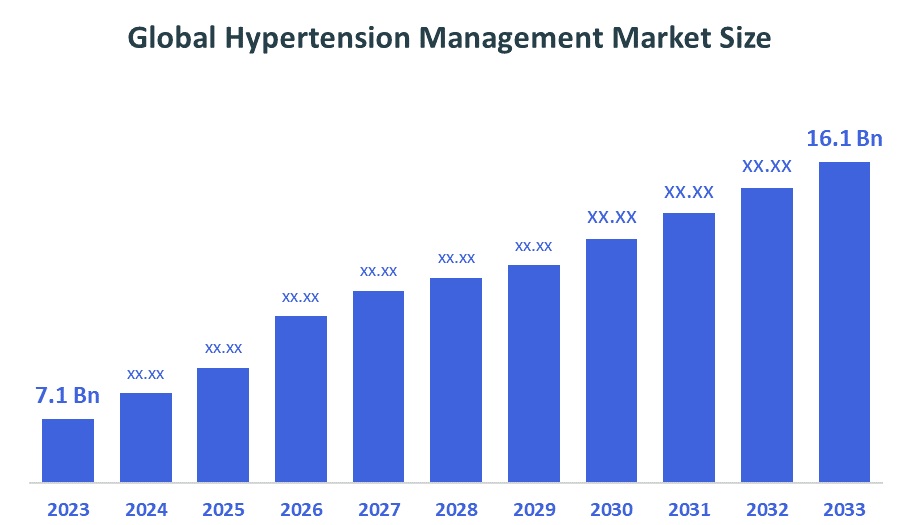
According to Decision Advisors, the global Hypertension management market Size is expected to grow from USD 7.1t billion in 2024 to USD 16.1 billion by 2035, at a CAGR of 8.53% during the forecast period 2025-2035. Growth is driven by the increasing prevalence of hypertension, rising awareness regarding cardiovascular health, and the growing adoption of digital monitoring solutions. The increasing burden of lifestyle-related diseases and the demand for long-term disease management solutions are further accelerating market expansion.
Market Overview/ Introduction
The hypertension management market is essentially the global defence system against the silent killer, encompassing everything from high-tech wearable monitors and telemedicine platforms to life-saving antihypertensive drugs. Defined by the transition from reactive hospital care to proactive, home-based monitoring. This surge is fueled by an ageing global population and lifestyle shifts, but more importantly, by a digital revolution where patients now track their own vitals using smartwatches and apps, creating a massive demand for connected health devices. Governments are the primary engines behind this expansion, shifting their focus toward prevention to save long-term costs. The WHO’s HEARTS technical package is providing the clinical blueprints for mass treatment. These programs are being matched by corporate innovation, where companies like Omron, Apple, and various MedTech startups are moving beyond simple hardware. They are now investing in AI-driven diagnostics that can predict a hypertensive crisis before it happens and tele-coaching services that bridge the gap between doctor visits. Looking ahead, the future of the market lies in making management invisible and hyper-personalised.
- The market is witnessing a strong shift toward fixed-dose combination therapies, which significantly improve patient adherence and treatment outcomes by simplifying complex medication regimens into a single pill.
- Rapid growth in digital health and remote monitoring solutions, including wearable blood pressure devices and telehealth platforms, is transforming hypertension management into a more patient-centric and continuous care model.
- In India, Ayushman Bharat Pradhan Mantri Jan Arogya Yojana supports the adoption of digital healthcare and AI-enabled diagnostic services by providing up to ?5 lakh annual health coverage for secondary and tertiary care at empanelled hospitals
Notable Insights: -
- North America is anticipated to hold the largest share of approximately 37% in the hypertension management market over the predicted timeframe.
- Asia Pacific is expected to grow at a rapid CAGR in the hypertension management market during the forecast period.
- By treatment type, the medications dominated the market in 2025 and are projected to grow at a substantial CAGR during the forecast period.
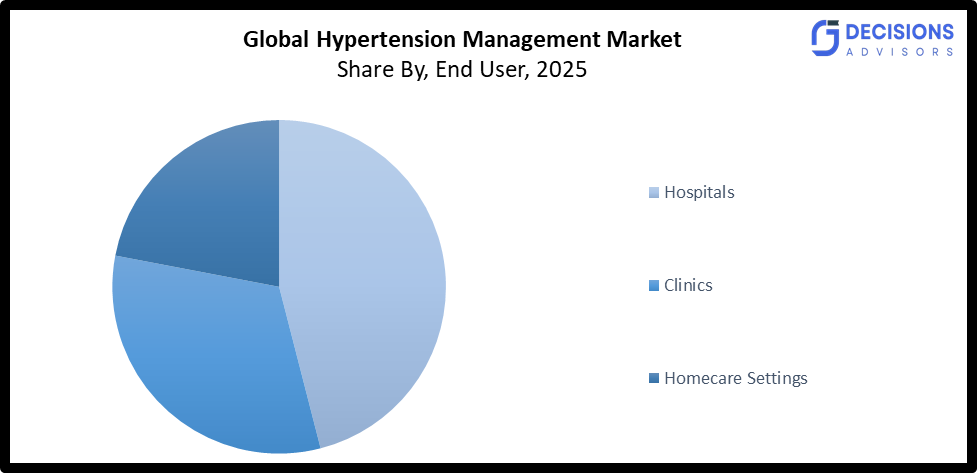
- By end user, the hospitals segment dominated the market with a share 46% in 2025, and is projected to grow at a substantial CAGR during the forecast period.
- The compound annual growth rate of the global spirit market is 8.53%
- The market is likely to achieve a valuation of USD 16.1 billion by 2035.
What is role of technology in grooming the market?
Technology plays a crucial role in advancing hypertension management. Digital health solutions such as wearable blood pressure monitors and mobile health applications enable continuous monitoring and early detection of abnormalities. Telemedicine platforms allow patients to consult healthcare providers remotely, improving accessibility and convenience. Artificial intelligence is increasingly used to analyze patient data, predict hypertension risks, and personalize treatment plans. Additionally, smart devices integrated with cloud-based systems enable real-time data sharing between patients and healthcare providers, enhancing treatment outcomes and reducing hospital visits. These technological advancements are improving disease management efficiency and patient compliance
Market Drivers
The hypertension management market is driven by the rising global prevalence of high blood pressure and increasing incidence of cardiovascular diseases. Sedentary lifestyles, unhealthy dietary habits, and growing obesity rates are contributing significantly to the expanding patient population. The increasing aging population is another major driver, as older individuals are more susceptible to hypertension. Additionally, growing awareness regarding preventive healthcare and early diagnosis is encouraging patients to seek timely treatment. Advancements in pharmaceutical therapies, particularly combination drugs, are improving treatment effectiveness and adherence. The rising adoption of home healthcare devices and remote monitoring solutions is further supporting market growth
Restrain
The hypertension management market is restrained because it faces challenges such as poor patient adherence to long-term medication and lifestyle changes. Side effects associated with antihypertensive drugs can discourage patients from continuing treatment. The availability of low-cost generic drugs reduces revenue potential for branded pharmaceutical companies. Additionally, limited access to healthcare services in low-income regions and a lack of awareness in rural areas can restrict market growth.
Competitive Analysis:
The report offers the appropriate analysis of the key organizations/companies involved within the global hypertension management market, along with a comparative evaluation primarily based on their product of offering, business overviews, geographic presence, enterprise strategies, segment market share, and SWOT analysis. The report also provides an elaborative analysis focusing on the current news and developments of the companies, which includes product development, innovations, joint ventures, partnerships, mergers & acquisitions, strategic alliances, and others. This allows for the evaluation of the overall competition within the market.
Top Companies in the Global Hypertension Management Market
- Novartis AG
- Pfizer Inc.
- Sanofi S.A.
- AstraZeneca plc.
- Merk & Co; Inc.
- Bayer AG
- Boehringer Ingelheim
- Daiichi Sankyo Company
- Takeda Pharmaceutical Company
- Jonson & Johnson
Government Initiatives
|
Country |
Key Government Initiatives |
|
India |
75/25 Initiative & IHCI: A massive scale-up targeting 75 million people with hypertension and diabetes for standardized care by 2025. Supported by the India Hypertension Control Initiative (IHCI), it uses the digital "Simple App" and has already enrolled over 42 million individuals as of early 2025 |
|
US |
Million Hearts 2027: A national initiative co-led by the CDC and CMS to prevent 1 million heart attacks and strokes. It includes the National Hypertension Control Initiative (NHCI), which invested $32 million to deploy self-measured blood pressure (SMBP) tools across 500 community health centres. |
|
China |
Healthy China 2030 & NPPHS: Aims for a 50% hypertension control rate by 2030. Through the National Primary Public Health Services (NPPHS), the government manages over 100 million hypertension patients, focusing on standardized management in rural and urban primary clinics. |
Market Segmentation
The hypertension management market share is classified into treatment type, drug class, and end user
- The medications dominated the market in 2025 and are projected to grow at a substantial CAGR during the forecast period.
Based on the treatment type, the hypertension management market is divided into medications, lifestyle management and device-based treatment. Among these, the medications dominated the market in 2025 and are projected to grow at a substantial CAGR during the forecast period. Due to the widespread use of antihypertensive drugs for long-term disease control. Lifestyle management is gaining traction due to increasing awareness about preventive care. Device-based treatment is expected to grow rapidly with the rising adoption of home monitoring devices.
- The ARBs segment accounted for the largest share in 2025, and is anticipated to grow at a significant CAGR during the forecast period.
Based on the drug class, the hypertension management market is divided into ARBs, ACE inhibitors, calcium channel blockers, beta-blockers, diuretics and others. Among these, the ARBs segment accounted for the largest share in 2025, and is anticipated to grow at a significant CAGR during the forecast period. This is primarily due to the extensive use of AI in analysing CT scans, MRIs, and X-rays for early and accurate disease detection. AI-powered imaging solutions enhance diagnostic precision, reduce interpretation time, and support clinicians in identifying complex conditions such as cancer, neurological disorders, and cardiovascular diseases.
- The hospitals segment dominated the market with a share 46% in 2025, and is projected to grow at a substantial CAGR during the forecast period.
Based on the end user, the hypertension management market is divided into hospitals, clinics and home care. Among these, the hospitals segment dominated the market with a share 46% in 2025, and is projected to grow at a substantial CAGR during the forecast period. They serve as primary centres for diagnosis, treatment, and management of severe hypertension cases. The availability of advanced medical infrastructure, specialised healthcare professionals, and emergency care facilities further supports this dominance.
Strategies to Implement for Growth of the Market in Non-Leading Regions
Market growth in emerging regions can be accelerated by increasing awareness about hypertension and promoting early diagnosis. Governments should invest in healthcare infrastructure and improve access to affordable treatment options. Expanding telehealth services and encouraging partnerships with global healthcare organizations can further enhance market penetration.
Regional Segment Analysis of the Hypertension Management Market
- North America (U.S., Canada, Mexico)
- Europe (Germany, France, U.K., Italy, Spain, Rest of Europe)
- Asia-Pacific (China, Japan, India, Rest of APAC)
- South America (Brazil and the Rest of South America)
- The Middle East and Africa (UAE, South Africa, Rest of MEA)
North America is anticipated to hold the largest share of the hypertension management market over the predicted timeframe.
North America is anticipated to hold the largest share of the hypertension management market over the predicted timeframe. The dominance of this region is primarily driven by the presence of advanced healthcare infrastructure, high awareness regarding cardiovascular diseases, and strong adoption of antihypertensive therapies. The region benefits from the presence of leading pharmaceutical and medical device companies, along with continuous advancements in treatment options and monitoring technologies. Additionally, supportive regulatory frameworks and government initiatives aimed at controlling hypertension are accelerating market growth. The rising prevalence of lifestyle-related disorders, increasing geriatric population, and growing adoption of home blood pressure monitoring devices are further supporting the expansion of the market in this region.
Asia Pacific is expected to grow at a rapid CAGR in the hypertension management market during the forecast period.
Asia Pacific is expected to grow at a rapid CAGR in the hypertension management market during the forecast period. This growth is driven by the large and rapidly increasing patient population, rising healthcare expenditure, and improving healthcare infrastructure in countries such as China, India, and Japan. The increasing prevalence of hypertension due to changing lifestyles, urbanisation, and dietary habits is creating significant demand for effective management solutions. Governments in the region are actively promoting awareness programs and early diagnosis initiatives, which are further boosting market growth. Additionally, the growing adoption of affordable generic drugs and the expansion of digital health and remote monitoring solutions are accelerating market development across the region.
Europe is the 3rd largest region to grow in the Hypertension management market during the period. Europe is the third-largest region in the Hypertension management market, supported by well-established healthcare systems and an increasing focus on chronic disease management. Key countries such as Germany, France, and the United Kingdom play a significant role in driving regional growth. The region is witnessing increasing adoption of advanced antihypertensive therapies and growing use of home healthcare solutions for long-term disease management. Supportive regulatory policies and government initiatives aimed at reducing cardiovascular disease burden are further contributing to market expansion. Additionally, rising awareness about preventive healthcare and increasing adoption of digital health platforms are enhancing hypertension management across Europe.
Future Market Trends in the Global Hypertension Management Market: -
1.Expansion of Digital Health and Remote Monitoring Solutions
One of the most significant opportunities in the hypertension management market is the rapid expansion of digital health technologies, including wearable blood pressure monitors, mobile health applications, and telehealth platforms. These solutions enable continuous monitoring, early detection, and real-time data sharing between patients and healthcare providers. The increasing preference for home-based care and remote patient management is expected to drive strong demand for these technologies, especially in aging populations and urban regions.
2.Growing Demand for Personalized and Precision Medicine
Another key opportunity lies in the development of personalized treatment approaches tailored to individual patient profiles. Advances in data analytics and patient monitoring are enabling healthcare providers to customize treatment plans based on genetic, lifestyle, and clinical factors. This approach improves treatment effectiveness, reduces side effects, and enhances patient adherence. The shift toward precision medicine is expected to create new growth avenues for pharmaceutical companies and healthcare providers.
3.Rising Opportunities in Emerging Markets
Emerging economies such as India, China, and Brazil present significant growth opportunities due to their large patient populations and increasing healthcare investments. Rapid urbanization, changing lifestyles, and rising prevalence of hypertension are driving demand for effective management solutions. Additionally, government initiatives focused on improving healthcare access, along with the growing availability of affordable generic drugs, are expected to accelerate market expansion in these regions.
Recent Development
- In November 2025, clinical trial results from Novo Nordisk highlighted that its experimental drug “CagriSema” demonstrated significant reductions in systolic blood pressure in Phase III trials, indicating strong potential for future hypertension treatment and cardiovascular risk reduction.
- In June 2025, George Medicines received approval from the U.S. Food and Drug Administration for its triple-combination single-pill therapy “WIDAPLIK,” designed for the treatment of hypertension, which demonstrated improved blood pressure control and enhanced patient adherence by combining three antihypertensive agents into a single dose.
- In March 2024, the U.S. Food and Drug Administration approved “Tryvio” (aprocitentan), a novel endothelin receptor antagonist developed for resistant hypertension, which showed significant effectiveness in lowering blood pressure in patients who were not adequately controlled with existing therapies.
How is Recent Developments Helping the Market?
Recent developments are significantly accelerating the growth of the hypertension management market by improving treatment effectiveness, patient adherence, and overall disease management outcomes. The introduction of innovative therapies such as fixed-dose combination drugs is simplifying treatment regimens by reducing the number of pills required, thereby enhancing patient compliance and long-term blood pressure control.
Market Segment
This study forecasts revenue at global, regional, and country levels from 2020 to 2035. Decision Advisors has segmented the hypertension management based on the below-mentioned segments:
Global Hypertension Management Market, By Treatment Type
- Medications
- Lifestyle Management
- Device-Based Treatment
Global Hypertension Management Market, By Drug Class
- ARBs
- ACE Inhibitors
- Calcium Channel Blockers
- Beta-Blockers
- Diuretics
Global Hypertension Management Market, By End User
- Hospitals
- Clinics
- Homecare Settings
Global Hypertension Management Market, By Regional Analysis
- North America
- US
- Canada
- Mexico
- Europe
- Germany
- UK
- France
- Italy
- Spain
- Russia
- Rest of Europe
- Asia Pacific
- China
- Japan
- India
- South Korea
- Australia
- Rest of Asia Pacific
- South America
- Brazil
- Argentina
- Rest of South America
- Middle East & Africa
- UAE
- Saudi Arabia
- Qatar
- South Africa
- Rest of the Middle East & Africa
Frequently Asked Questions (FAQ)
Q. How does hypertension management impact healthcare costs globally?
A. Effective hypertension management helps reduce long-term healthcare costs by preventing expensive complications such as stroke, heart attacks, and kidney failure, thereby lowering hospitalisation and emergency care expenses.
Q. What role do pharmacists play in hypertension management?
A. Pharmacists play a key role by monitoring medication adherence, providing patient counselling, and assisting in optimising drug therapy, especially in outpatient and community healthcare settings.
Q. How is patient adherence measured in hypertension treatment?
A. Patient adherence is typically measured through prescription refill rates, patient self-reports, digital monitoring tools, and clinical outcomes such as consistent blood pressure control.
Q. What are the key factors influencing the choice of antihypertensive therapy?
A. Factors include patient age, comorbid conditions (such as diabetes or kidney disease), severity of hypertension, drug side effects, and physician recommendations.
Q. How are wearable devices influencing long-term hypertension management?
A. Wearable devices enable continuous blood pressure monitoring, early detection of abnormalities, and real-time data sharing, improving patient engagement and supporting proactive disease management.
Check Licence
Choose the plan that fits you best: Single User, Multi-User, or Enterprise solutions tailored for your needs.
We Have You Covered
- 24/7 Analyst Support
- Clients Across the Globe
- Tailored Insights
- Technology Tracking
- Competitive Intelligence
- Custom Research
- Syndicated Market Studies
- Market Overview
- Market Segmentation
- Growth Drivers
- Market Opportunities
- Regulatory Insights
- Innovation & Sustainability
Report Details
| Scope | Global |
| Pages | 245 |
| Delivery | PDF & Excel via Email |
| Language | English |
| Release | Apr 2026 |
| Access | Download from this page |