
Global Hypertriglyceridemia Market
 |
Pages:
240
|
Pages:
240
Global Hypertriglyceridemia Market Size, Share, and COVID-19 Impact Analysis, By Type (Primary Hypertriglyceridemia, Secondary Hypertriglyceridemia, and Others), By Drug Class (Statins, Fibrates, Niacin, Omega-3 fatty acids, HMG-CoA reductase inhibitors) and By Region (North America, Europe, Asia-Pacific, Latin America, Middle East, and Africa), Analysis and Forecast 2025-2035
REPORT COVERAGE
Global
Global Hypertriglyceridemia Market Size Insights Forecasts to 2035
- The Global Hypertriglyceridemia Market Size Was valued at USD 12162.59 Million in 2024
- The Global Hypertriglyceridemia Market Size is Expected to Grow at a CAGR of around 4.68% from 2025 to 2035
- The Worldwide Hypertriglyceridemia Market Size is Expected to Reach USD 20112.10 Million by 2035
- Asia-Pacific is expected to grow the fastest during the forecast period.
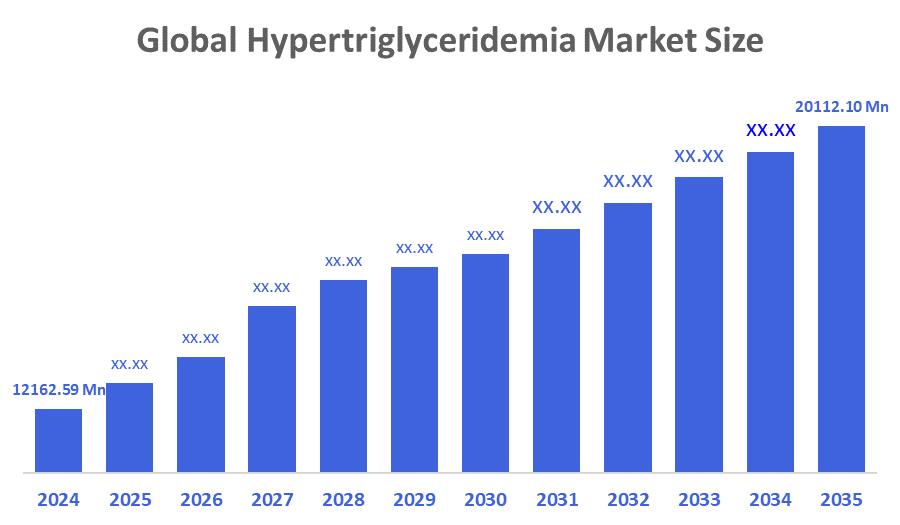
According to a research report published by Decisions Advisors and Consulting, the global hypertriglyceridemia market size was worth around USD 12162.59 Million in 2024 and is predicted to grow to around USD 20112.10 Million by 2035 with a compound annual growth rate (CAGR) of 4.68% from 2025 to 2035. The global hypertriglyceridemia market will develop new business prospects through three main paths which include developing new lipid-lowering treatments and gene-based therapies and combination medications and expanding screening initiatives and increasing cardiovascular health knowledge and increasing health system access in developing countries.
Market Overview
The global hypertriglyceridemia market encompasses all international business operations that deal with diagnosing and treating high blood triglyceride levels through pharmaceutical solutions and lifestyle changes and preventive heart disease treatment methods. Additionally, the Hypertriglyceridemia Market has reached a critical state of transformation because both metabolic disorders and cardiovascular health awareness have started to increase. The demand for effective triglyceride treatment solutions has grown because both healthcare professionals and patients now understand the dangers of high triglyceride levels. The market includes multiple treatment methods which combine lifestyle changes with medical treatments and nutritional supplements. The research and development initiatives in this industry will create new solutions which will improve patient results and better health management practices. The Hypertriglyceridemia Market continues to change because of technological progress and the development of individualized treatment approaches. The combination of digital health solutions with telemedicine will enhance patient capabilities to monitor and manage their triglyceride levels, which will result in improved health outcomes. Pharmaceutical companies and research institutions will work together to develop new treatments that first focus on treating the main factors which cause hypertriglyceridemia. The market expansion requires stakeholders to monitor new trends while developing plans which will help them fulfill the requirements of their different patient groups.
Report Coverage
This research report categorizes the hypertriglyceridemia market based on various segments and regions, forecasts revenue growth, and analyzes trends in each submarket. The report analyses the key growth drivers, opportunities, and challenges influencing the hypertriglyceridemia market. Recent market developments and competitive strategies such as expansion, type launch, development, partnership, merger, and acquisition, have been included to draw the competitive landscape in the market. The report strategically identifies and profiles the key market players and analyses their core competencies in each sub-segment of the hypertriglyceridemia market.
Driving Factors
The Hypertriglyceridemia Market shows increased growth due to rising healthcare costs which serve as a primary market driver. As nations allocate more resources to healthcare, there is a corresponding increase in the availability of advanced diagnostic and therapeutic options for managing hypertriglyceridemia. Several countries have documented healthcare expenditure increases which exceed 5% per year as shown in the financial data from their respective nations. The financial investment permits healthcare organizations to acquire advanced medical equipment and treatment methods, which results in better patient results. As patients become more inclined to obtain medical treatment for hypertriglyceridemia, the market will experience higher demand for specialized healthcare services. The Hypertriglyceridemia Market depends on financial resources because better spending management results in improved access to essential medical treatments.
Restraining Factors
The costs of treatment together with the low public knowledge in developing areas and the side effects of lipid-lowering medications and the low patient compliance with extended treatment and the strict requirements for regulatory approval and the market entry of generic products which decrease profit margins all serve as restraining factors.
Market Segmentation
The hypertriglyceridemia market share is classified into type and drug class.
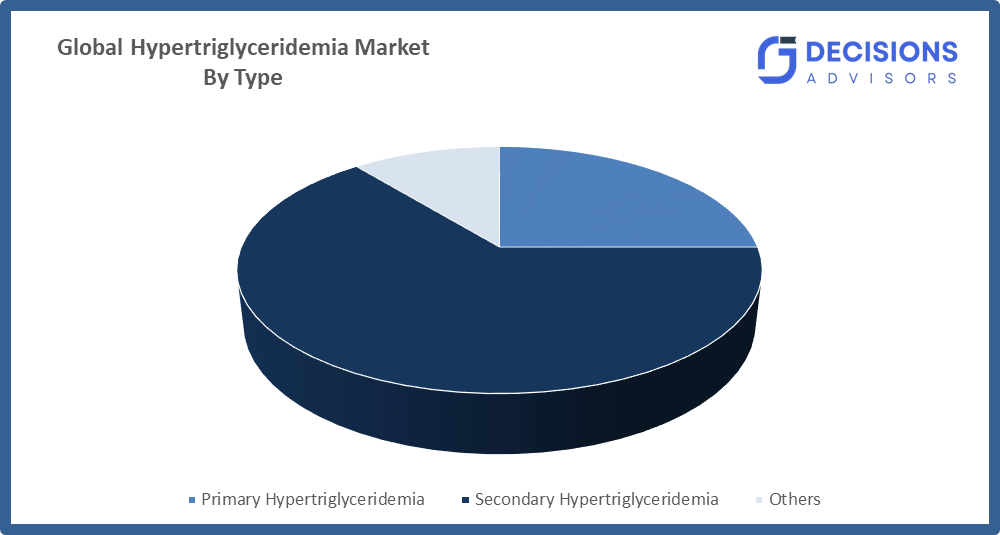
- The secondary hypertriglyceridemia segment dominated the market in 2024, approximately 66% and is projected to grow at a substantial CAGR during the forecast period.
Based on the type, the hypertriglyceridemia market is divided into primary hypertriglyceridemia, secondary hypertriglyceridemia, others. Among these, the secondary hypertriglyceridemia segment dominated the market in 2024, approximately 66% and is projected to grow at a substantial CAGR during the forecast period. The active connection between multiple health conditions leads to common medical conditions which include obesity diabetes and metabolic syndrome and excessive alcohol consumption. The global increase in lifestyle-related disorders leads to higher rates of medical diagnosis. The combination of better screening methods and increased public knowledge about cardiovascular disease risks creates a demand for efficient triglyceride-reduction solutions which helps the market segment to grow continuously.
- The statins segment accounted for the largest share in 2024, approximately 45% and is anticipated to grow at a significant CAGR during the forecast period.
Based on the drug class, the hypertriglyceridemia market is divided into statins, fibrates, niacin, omega-3 fatty acids, HMG-CoA reductase inhibitors. Among these, the electronic segment accounted for the largest share in 2024, approximately 45% and is anticipated to grow at a significant CAGR during the forecast period. Doctors first recommend the medication because research shows it effectively decreases triglyceride levels and protects against heart disease. The medication receives widespread use as the initial treatment choice because clinical research backing the treatment and its reimbursement system and physician preference both support its use. The increasing incidence of cardiovascular diseases creates persistent demand for treatments that use statins.
Regional Segment Analysis of the Hypertriglyceridemia Market
- North America (U.S., Canada, Mexico)
- Europe (Germany, France, U.K., Italy, Spain, Rest of Europe)
- Asia-Pacific (China, Japan, India, Rest of APAC)
- South America (Brazil and the Rest of South America)
- The Middle East and Africa (UAE, South Africa, Rest of MEA)
North America is anticipated to hold the largest share of the hypertriglyceridemia market over the predicted timeframe.
North America is anticipated to hold the largest share of the hypertriglyceridemia market over the predicted timeframe. The region benefits from advanced healthcare infrastructure, high prevalence of metabolic disorders, and increasing awareness about cardiovascular health. The FDA and other regulatory bodies support market expansion through their backing of innovative treatments and customized medical solutions. The United States is the primary contributor, with significant investments from key players such as Amgen, Pfizer, and Eli Lilly. Canada plays a vital role in healthcare development through its increasing focus on preventive healthcare, although its contributions remain smaller than those of other countries. The competitive landscape shows established pharmaceutical giants and new biotech companies competing against each other to capture market share in this profitable industry.
Asia-Pacific is expected to grow at a rapid CAGR in the hypertriglyceridemia market during the forecast period. The area experiences three main changes which include growing rates of lifestyle diseases and rising disposable incomes and better health awareness among people. Regulatory bodies are beginning to implement more supportive frameworks which will create market expansion in upcoming years. Countries such as China and India are leading global health sector development through their substantial investments in healthcare systems and their expanding pharmaceutical markets. The market competition develops new challenges as local companies and international firms like AstraZeneca and Mylan compete for market dominance. The region will continue to expand because people increasingly emphasize preventive healthcare and research new treatment methods.
Competitive Analysis:
The report offers the appropriate analysis of the key organizations/companies involved within the hypertriglyceridemia market, along with a comparative evaluation primarily based on their type of offering, business overviews, geographic presence, enterprise strategies, segment market share, and SWOT analysis. The report also provides an elaborative analysis focusing on the current news and developments of the companies, which includes type development, innovations, joint ventures, partnerships, mergers & acquisitions, strategic alliances, and others. This allows for the evaluation of the overall competition within the market.
List of Key Companies
- Pfizer Inc
- F. Hoffmann-La Roche Ltd
- Mylan N.V. (U.S.)
- Fresenius Kabi AG
- Hikma Pharmaceuticals PLC
- Novartis AG
- Teva Pharmaceutical Industries Ltd.
- Bristol Myers Squibb Company
- GSK Plc.
- Bayer AG
- Others
Key Target Audience
- Market Players
- Investors
- End-users
- Government Authorities
- Consulting and Research Firm
- Venture capitalists
- Value-Added Resellers (VARs)
Recent Development
- In August 2025, researchers reported that hypertriglyceridemia played a key role in the development and rupture of abdominal aortic aneurysms, based on genetic and experimental evidence, highlighting potential targets that improved cardiovascular disease outcomes.
Market Segment
This study forecasts revenue at global, regional, and country levels from 2020 to 2035. Decisions Advisors has segmented the hypertriglyceridemia market based on the below-mentioned segments:
Global Hypertriglyceridemia Market, By Type
- Primary Hypertriglyceridemia
- Secondary Hypertriglyceridemia
- Others
Global Hypertriglyceridemia Market, By Drug Class
- Statins
- Fibrates
- Niacin
- Omega-3 fatty acids
- HMG-CoA reductase inhibitors
Global Hypertriglyceridemia Market, By Regional Analysis
- North America
- US
- Canada
- Mexico
- Europe
- Germany
- UK
- France
- Italy
- Spain
- Russia
- Rest of Europe
- Asia Pacific
- China
- Japan
- India
- South Korea
- Australia
- Rest of Asia Pacific
- South America
- Brazil
- Argentina
- Rest of South America
- Middle East & Africa
- UAE
- Saudi Arabia
- Qatar
- South Africa
- Rest of the Middle East & Africa
Frequently Asked Questions (FAQ)
1. What is the projected market size of the Global Hypertriglyceridemia Market by 2035?
A: The market is projected to grow from USD 12,162.59 million in 2024 to USD 20,112.10 million by 2035, registering a CAGR of 4.68% during the forecast period 2025–2035.
2. Which type segment dominated the market in 2024?
A: Secondary hypertriglyceridemia dominated in 2024 with approximately 66% share, driven by rising obesity, diabetes, metabolic syndrome, alcohol consumption, and increasing awareness of cardiovascular risk factors globally.
3. Which drug class held the largest share in 2024?
A: Statins accounted for the largest share, about 45% in 2024, due to strong clinical evidence, physician preference, proven cardiovascular protection, and widespread use as first-line therapy.
4. Why does North America lead the market?
A: North America leads due to advanced healthcare infrastructure, high metabolic disorder prevalence, strong regulatory support, major pharmaceutical players, and increased cardiovascular health awareness.
5. Why is Asia-Pacific expected to grow rapidly?
A: Asia-Pacific is growing rapidly due to rising lifestyle diseases, expanding healthcare investments, improving regulatory support, increasing disposable income, and strong pharmaceutical market expansion in China and India.
Check Licence
Choose the plan that fits you best: Single User, Multi-User, or Enterprise solutions tailored for your needs.
We Have You Covered
- 24/7 Analyst Support
- Clients Across the Globe
- Tailored Insights
- Technology Tracking
- Competitive Intelligence
- Custom Research
- Syndicated Market Studies
- Market Overview
- Market Segmentation
- Growth Drivers
- Market Opportunities
- Regulatory Insights
- Innovation & Sustainability
Report Details
| Scope | Global |
| Pages | 240 |
| Delivery | PDF & Excel via Email |
| Language | English |
| Release | Feb 2026 |
| Access | Download from this page |