
Global Inhalable Drugs Market
 |
Author:
Disha B
|
Pages:
210
|
Author:
Disha B
|
Pages:
210
Global Inhalable Drugs Market Size, Share By Type (Dry Powder Inhalers, Metered Dose Inhalers, Nebulizers, Soft Mist Inhalers, and Others), By Application (Asthma, Chronic Obstructive Pulmonary Disease, Cystic Fibrosis, Pulmonary Arterial Hypertension, and Others), By Technology (Conventional Inhalation Technology, Smart Inhaler Technology, Particle Engineering, and Nebulization Technology), and By Region (North America, Europe, Asia-Pacific, Latin America, Middle East & Africa), Analysis and Forecast 2026-2035
CAGR
7.6%
REVENUE 2025
USD Billion 42.68
FORECAST 2035
USD Billion 88.78
REPORT COVERAGE
Global
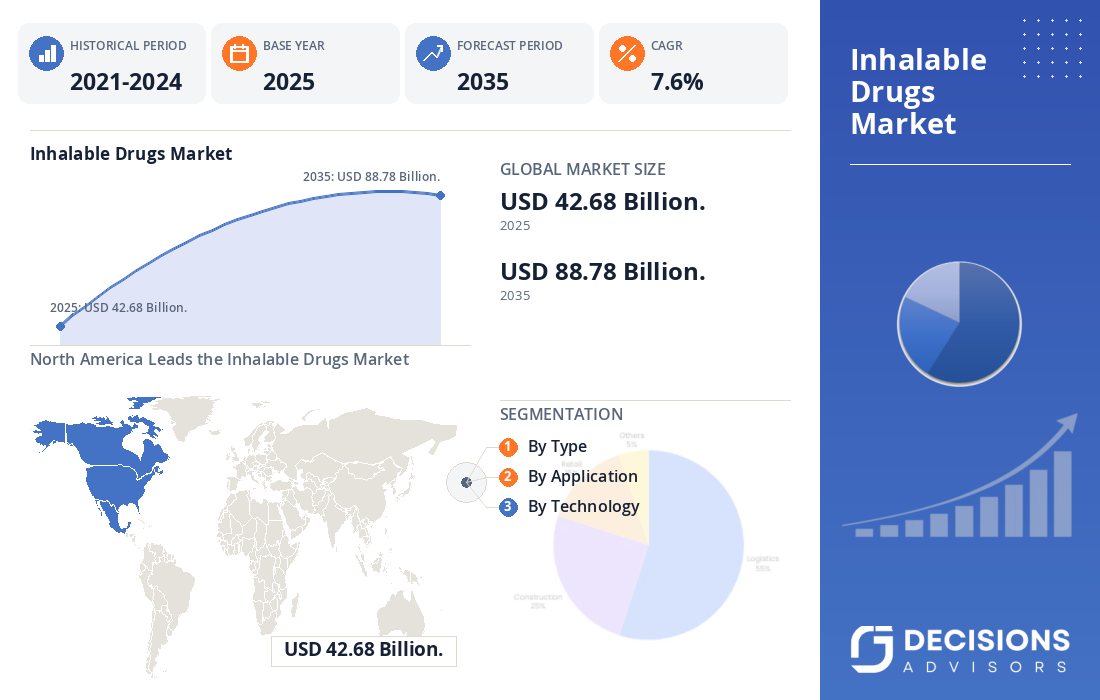
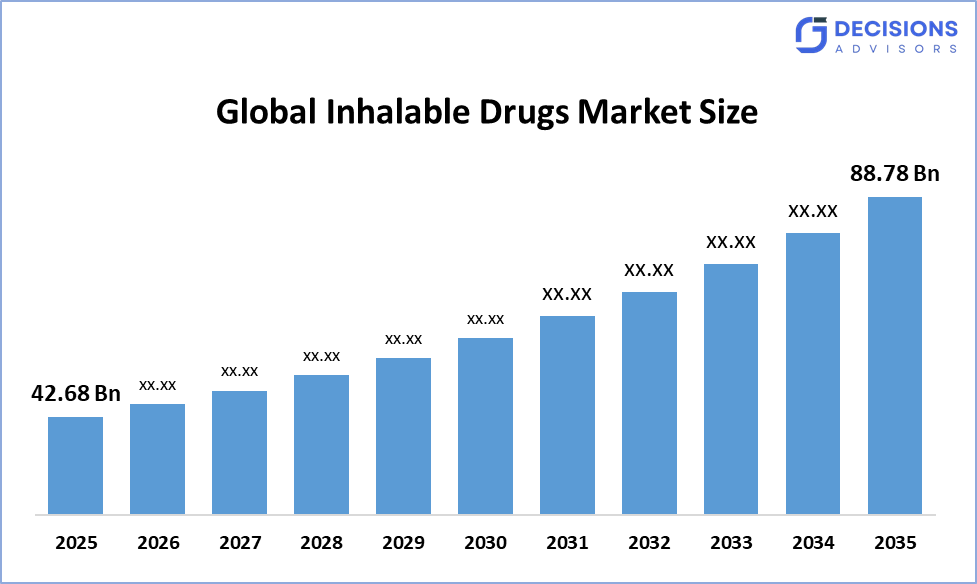
The Global Inhalable Drugs Market Size is predicted to grow from USD 42.68 Billion in 2025 and is likely to reach around USD 88.78 Billion by 2035 with a CAGR of 7.6%. The market is driven by the increasing prevalence of chronic respiratory diseases, expanding adoption of biologics, and continuous advancements in pulmonary drug delivery technologies. Rising demand for patient-friendly, non-invasive drug delivery systems and increasing investments in inhalation therapies continue to strengthen market expansion globally.
Market Snapshot
- Global Inhalable Drugs Market Size (2025): USD 42.68 Billion.
- Projected Global Inhalable Drugs Market Size (2035): USD 88.78 Billion.
- Global Inhalable Drugs Market Compound Annual Growth Rate (CAGR): 7.6%.
- Largest Regional Market: North America
- 2nd Largest Region: Europe
- Fastest Growing Region: Asia-Pacific
- Base Year: 2025
- Historical Period: 2021-2024
- Market Forecast Period: 2026-2035
Market Overview/ Introduction
The Global Inhalable Drugs Market comprises pharmaceutical formulations delivered directly into the lungs through inhalation devices such as dry powder inhalers (DPIs), metered dose inhalers (MDIs), nebulizers, and soft mist inhalers. These therapies are primarily prescribed for chronic respiratory diseases including asthma, chronic obstructive pulmonary disease (COPD), cystic fibrosis, pulmonary hypertension, and various infectious lung disorders. Compared with oral or injectable medications, inhalable drugs provide rapid therapeutic action, targeted drug delivery, reduced systemic side effects, and improved patient compliance, making them a preferred treatment option for both acute and long-term respiratory conditions. The market is experiencing sustained growth owing to the increasing global burden of respiratory diseases, rising air pollution, growing tobacco consumption in developing nations, and expanding elderly populations that are more susceptible to pulmonary disorders.
- Government organizations and healthcare agencies worldwide continue to support respiratory healthcare through funding programs, reimbursement policies, and initiatives aimed at improving early diagnosis and disease management. Regulatory authorities such as the U.S. FDA, European Medicines Agency (EMA), and several national healthcare organizations are encouraging innovation in inhalation drug delivery technologies while promoting quality manufacturing standards.
Notable Insights: -
- North America is expected to account for approximately 38% of the Global Inhalable Drugs Market revenue in 2025 due to advanced healthcare infrastructure, high respiratory disease prevalence, and strong pharmaceutical innovation.
- Europe is projected to hold nearly 29% of the global market, supported by favorable reimbursement policies, growing elderly populations, and increasing adoption of advanced inhalation therapies.
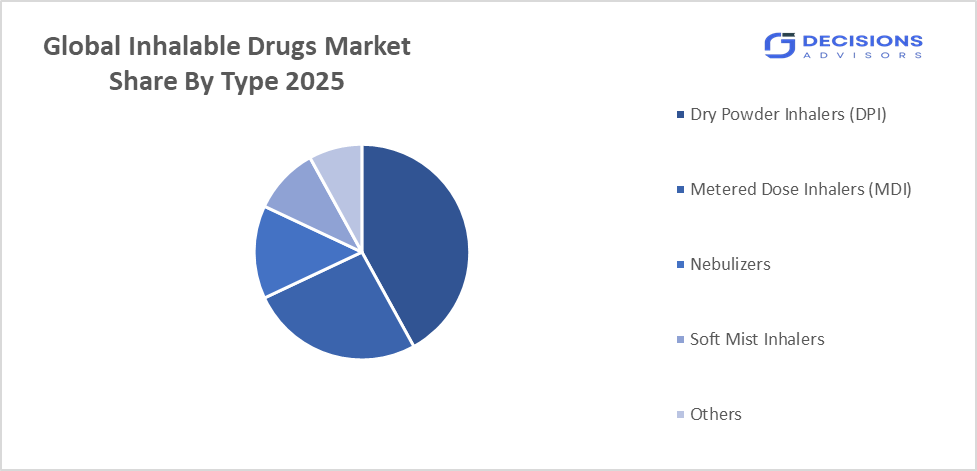
- By Type, the Dry Powder Inhalers (DPI) segment dominated the market, accounting for approximately 42% of revenue in 2025 owing to ease of use, portability, and improved drug stability.
- By Application, the Asthma segment held approximately 46% of the market share in 2025, supported by increasing asthma prevalence, expanding diagnosis rates, and widespread availability of inhalation therapies.
- The Global Inhalable Drugs Market is projected to expand at a CAGR of 7.6% during the forecast period from 2026 to 2035.
- The market is anticipated to reach a valuation of approximately USD 88.78 Billion by 2035.
Market Drivers
The Global Inhalable Drugs Market is primarily driven by the rapidly increasing prevalence of asthma, COPD, cystic fibrosis, and other chronic respiratory diseases across both developed and emerging economies. Rising environmental pollution, occupational exposure to airborne contaminants, smoking-related illnesses, and changing lifestyles continue to increase the global burden of pulmonary disorders. Advances in inhalation technology, including smart inhalers with digital monitoring capabilities, particle engineering, and sustained-release pulmonary formulations, have significantly improved medication adherence and therapeutic outcomes. Pharmaceutical manufacturers are increasingly developing biologic inhalation therapies and combination drug formulations that offer enhanced efficacy with fewer systemic side effects. Expanding healthcare expenditure, favorable reimbursement policies, growing awareness regarding early respiratory disease management, and continuous investments in respiratory drug research further support market growth. Additionally, increasing adoption of home healthcare, telemedicine integration, and connected inhalation devices is creating new opportunities for manufacturers and healthcare providers worldwide.
Restrain
Despite its promising growth outlook, the Global Inhalable Drugs Market faces several challenges. The high development costs associated with advanced inhalation formulations, complex regulatory approval processes, and expensive manufacturing technologies can limit product commercialization. Patient misuse of inhaler devices, inconsistent drug delivery techniques, and limited healthcare access in low-income countries also affect treatment outcomes. Furthermore, the availability of generic alternatives, pricing pressures, and stringent quality requirements for inhalation devices continue to create competitive and operational challenges for pharmaceutical manufacturers.
Competitive Analysis:
The report offers the appropriate analysis of the key organizations/companies involved within the Global Inhalable Drugs Market, along with a comparative evaluation primarily based on their product offerings, business overviews, geographic presence, enterprise strategies, segment market share, and SWOT analysis. The report also provides an elaborative analysis focusing on the current news and developments of the companies, which includes product development, innovations, joint ventures, partnerships, mergers & acquisitions, strategic alliances, and others. This allows for the evaluation of the overall competition within the market.
Top Companies in the Global Inhalable Drugs Market
- AstraZeneca PLC
- GlaxoSmithKline plc (GSK)
- Boehringer Ingelheim International GmbH
- Chiesi Farmaceutici S.p.A.
- Teva Pharmaceutical Industries Ltd.
- Novartis AG
- Cipla Limited
- Viatris Inc.
- PARI GmbH
- 3M Health Care.
Government Initiatives
|
Country |
Key Government Initiatives |
|
United States |
The U.S. FDA continues supporting innovation in inhalation therapies through expedited regulatory pathways, respiratory disease research funding, and programs encouraging the development of advanced pulmonary drug delivery systems. |
|
United Kingdom |
The National Health Service (NHS) promotes environmentally sustainable inhaler use while expanding respiratory disease management programs and encouraging the adoption of low-carbon inhaler technologies. |
|
China |
China's National Health Commission has strengthened respiratory disease prevention programs, expanded healthcare infrastructure, and increased investments in domestic pharmaceutical manufacturing and innovative inhalation therapies. |
Market Segmentation
The Global Inhalable Drugs Market is segmented based on Type, Application, and Technology
- The Dry Powder Inhalers (DPI) segment dominated the Global Inhalable Drugs Market and accounted for approximately 42% of the market share in 2025.
Based on type, the market is segmented into dry powder inhalers (DPI), metered dose inhalers (MDI), nebulizers, soft mist inhalers, and others. DPIs remain the leading segment because they are breath-actuated, portable, require no propellants, and provide greater drug stability than conventional inhalers. Continuous technological improvements in powder formulations and inhaler device design further support segment growth, while smart inhalers integrated with digital monitoring are expected to gain strong momentum during the forecast period.
- The Asthma segment held the largest market share of approximately 46% in 2025 and is expected to maintain its leadership throughout the forecast period.
Based on application, the market is categorized into asthma, chronic obstructive pulmonary disease (COPD), cystic fibrosis, pulmonary arterial hypertension, and others. Asthma continues to dominate due to its high global prevalence, increasing diagnosis rates, and widespread use of maintenance and rescue inhalation therapies. Rising pediatric asthma cases and continuous development of combination inhalers further strengthen demand within this segment.
- The Conventional Inhalation Technology segment accounted for approximately 51% of the market in 2025.
Based on technology, the market is segmented into conventional inhalation technology, smart inhaler technology, particle engineering, and nebulization technology. Conventional inhalation systems remain dominant because of their extensive clinical adoption, affordability, and established manufacturing infrastructure. However, smart inhaler technologies incorporating digital sensors, Bluetooth connectivity, and medication adherence tracking are expected to experience the fastest growth as healthcare systems increasingly embrace digital respiratory care.
Regional Segment Analysis of the Global Inhalable Drugs Market
- North America (U.S., Canada, Mexico)?
- Europe (Germany, U.K., France, Italy, Spain, Netherlands, Rest of Europe).
- Asia-Pacific (China, Japan, India, Australia, South Korea, Rest of Asia-Pacific).
- South America (Brazil, Argentina, Rest of South America).
- Middle East & Africa (UAE, Saudi Arabia, South Africa, Rest of MEA).
North America accounted for approximately 38% of the Global Inhalable Drugs Market in 2025 and continues to dominate the global industry.
The region benefits from advanced healthcare infrastructure, high diagnosis rates of asthma and chronic obstructive pulmonary disease (COPD), and strong reimbursement policies for respiratory therapies. The United States remains the largest contributor due to the presence of leading pharmaceutical manufacturers, continuous research and development investments, and widespread adoption of innovative inhalation devices. Increasing utilization of smart inhalers, biologic therapies, and digital respiratory monitoring solutions continues to strengthen market expansion across hospitals, specialty clinics, and home healthcare settings.
Europe represented approximately 29% of the global market in 2025, making it the second-largest regional market.
Countries including Germany, the United Kingdom, France, Italy, and Spain continue driving regional demand through well-established healthcare systems, increasing elderly populations, and favorable reimbursement frameworks for respiratory medications. The region also benefits from stringent regulatory standards that encourage pharmaceutical innovation while supporting environmentally sustainable inhaler technologies. Continuous investments in respiratory disease research and increasing adoption of combination inhalation therapies further contribute to regional growth.
Asia-Pacific is projected to be the fastest-growing regional market, accounting for nearly 24% of global revenue during the forecast period.
Rapid urbanization, worsening air pollution, increasing smoking prevalence, expanding healthcare infrastructure, and growing awareness regarding respiratory disease management continue to accelerate demand across China, India, Japan, South Korea, and Australia. Rising healthcare expenditure, expanding pharmaceutical manufacturing capabilities, and increasing availability of affordable generic inhalable drugs are creating substantial opportunities for both domestic and multinational pharmaceutical companies.
Future Market Trends in Global Inhalable Drugs Market: -
-
- Integration of Smart Inhalers and Digital Health
The integration of Bluetooth-enabled smart inhalers with mobile healthcare applications is transforming respiratory disease management. These devices improve medication adherence, enable remote patient monitoring, and provide physicians with real-time treatment data, supporting personalized healthcare delivery and reducing hospital admissions.
-
- Expansion of Biologic and Targeted Pulmonary Therapies
Pharmaceutical companies are increasingly developing inhalable biologics and targeted drug delivery systems for severe asthma, COPD, pulmonary fibrosis, and rare respiratory disorders. Advanced particle engineering technologies are improving drug deposition within the lungs while minimizing systemic side effects.
-
- Sustainable and Eco-Friendly Inhaler Technologies
Growing environmental concerns are encouraging manufacturers to replace high-global-warming-potential propellants with environmentally friendly alternatives. The development of recyclable inhaler components, low-carbon propellants, and sustainable packaging solutions is expected to reshape future product development strategies.
-
- Growth of Home-Based Respiratory Care
The increasing adoption of home healthcare services, portable nebulizers, and telemedicine platforms is driving demand for user-friendly inhalation therapies. Aging populations, chronic disease management programs, and remote patient monitoring technologies are expected to accelerate the use of inhalable drugs outside traditional hospital settings.
Recent Development
- In March 2025, AstraZeneca PLC received expanded regulatory approval for its triple-combination inhalation therapy for COPD, strengthening its respiratory disease treatment portfolio across major international markets.
- In October 2024, GlaxoSmithKline plc (GSK) introduced a next-generation smart inhaler platform integrated with digital patient monitoring capabilities to improve medication adherence and respiratory disease management.
- In July 2024, Chiesi Farmaceutici S.p.A. expanded its portfolio of low-carbon inhalers by introducing environmentally sustainable pressurized metered-dose inhalers across selected European markets.
- In February 2024, Teva Pharmaceutical Industries Ltd. launched an advanced generic dry powder inhaler for asthma management, increasing access to cost-effective respiratory therapies in several global markets
Market Segment
This study forecasts revenue at global, regional, and country levels from 2021 to 2035. Decision Advisors has segmented the Global Inhalable Drugs Market based on the below-mentioned segment:
Global Inhalable Drugs Market, By Type
- Dry Powder Inhalers (DPI)
- Metered Dose Inhalers (MDI)
- Nebulizers
- Soft Mist Inhalers
- Others
Global Inhalable Drugs Market, By Application
- Asthma
- Chronic Obstructive Pulmonary Disease (COPD)
- Cystic Fibrosis
- Pulmonary Arterial Hypertension
- Others
Global Inhalable Drugs Market, By Technology
- Conventional Inhalation Technology
- Smart Inhaler Technology
- Particle Engineering Technology
- Nebulization Technology
- Others.
Global Inhalable Drugs Market, By Regional Analysis
- North America
- US
- Canada
- Mexico
- Europe
- Germany
- UK
- France
- Italy
- Spain
- Russia
- Rest of Europe
- Asia Pacific
- China
- Japan
- India
- South Korea
- Australia
- Rest of Asia Pacific
- South America
- Brazil
- Argentina
- Rest of South America
- Middle East & Africa
- UAE
- Saudi Arabia
- Qatar
- South Africa
- Rest of the Middle East & Africa
Frequently Asked Questions (FAQ)
Q. Why are inhalable drugs preferred over oral or injectable medications for respiratory diseases?
A. Inhalable drugs deliver medication directly to the lungs, allowing rapid therapeutic action while reducing systemic side effects. This targeted drug delivery improves treatment effectiveness, requires lower dosages, and enhances patient compliance, particularly for chronic respiratory diseases such as asthma and COPD.
Q. Which inhalation device segment dominates the Global Inhalable Drugs Market?
A. Dry Powder Inhalers (DPIs) currently dominate the market because they are portable, breath-actuated, propellant-free, and provide improved drug stability. Their ease of use, cost-effectiveness, and continuous technological improvements have strengthened their adoption across both developed and emerging healthcare markets.
Q. How are smart inhalers influencing the future of respiratory disease management?
A. Smart inhalers integrate digital sensors, Bluetooth connectivity, and mobile applications to monitor medication adherence, inhalation technique, and treatment outcomes. These technologies enable physicians to remotely monitor patients, improve therapy compliance, and support personalized respiratory care.
Q. What factors are expected to drive the Global Inhalable Drugs Market through 2035?
A. Market growth will be supported by the increasing prevalence of asthma and COPD, rising air pollution, expanding elderly populations, technological advancements in pulmonary drug delivery, growing adoption of biologics and smart inhalers, favorable government healthcare initiatives, and increasing investments in respiratory pharmaceutical research and development.
Check Licence
Choose the plan that fits you best: Single User, Multi-User, or Enterprise solutions tailored for your needs.
We Have You Covered
- 24/7 Analyst Support
- Clients Across the Globe
- Tailored Insights
- Technology Tracking
- Competitive Intelligence
- Custom Research
- Syndicated Market Studies
- Market Overview
- Market Segmentation
- Growth Drivers
- Market Opportunities
- Regulatory Insights
- Innovation & Sustainability
Report Details
| Scope | Global |
| Pages | 210 |
| Delivery | PDF & Excel via Email |
| Language | English |
| Release | Aug 2026 |
| Access | Download from this page |