
Global Inhalation Anesthesia Market
 |
Author:
David J
|
Pages:
240
|
Author:
David J
|
Pages:
240
Global Inhalation Anesthesia Market Size, Share, By Product Type (Nitrous Oxide, Halothane, Isoflurane, Sevoflurane), By Route of Administration (Inhalation, Intravenous), By Application (General Surgery, Dental Surgery, Pediatric Surgery, Obstetric Surgery), By End Use (Hospitals, Outpatient Surgical Centers, Ambulatory Surgical Centers), and By Region (North America, Europe, Asia-Pacific, Latin America, Middle East & Africa), Analysis and Forecast 2026-2035
CAGR
5.98%
REVENUE 2025
USD Billion 2.26
FORECAST 2035
USD Billion 4.04
REPORT COVERAGE
Global
Market Snapshot
- Global Inhalation Anesthesia Market Size (2025): USD 2.26 Billion
- Projected Global Inhalation Anesthesia Market Size (2035): USD 4.04 Billion
- Global Inhalation Anesthesia Market Compound Annual Growth Rate (CAGR): 5.98%
- Largest Regional Market: North America
- Market Fastest Growing Region: Asia-Pacific
- Market 3rd Largest Region: Europe
- Base Year: 2025
- Historical Period: 2021–2024
- Forecast Period: 2026–2035
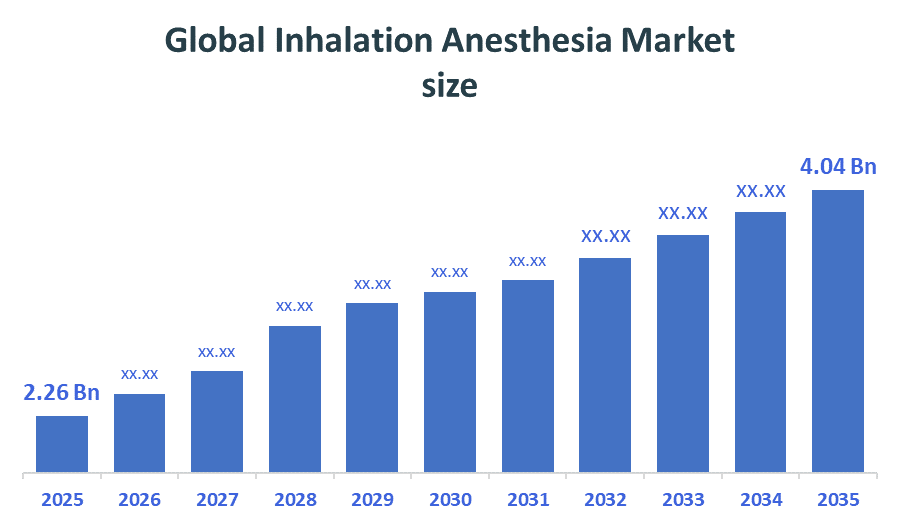
According to Decision Advisors, The Global Inhalation anesthesia market size is expected to grow from USD 2.26billion in 2025 to USD 4.04billion by 2035, at a CAGR of 5.98% during the forecast period 2026-2035. The global Inhalation anaesthesia market is projected to grow significantly over the next decade, driven by a surge in global surgical procedures, an aging population, the rapid adoption of ambulatory surgery centers, the benefits of inhalation agents, and increasing hospital care costs.
Market Overview/ Introduction
The global inhalation anesthesia market refers to the segment of healthcare that develops and employs gaseous anesthetic agents that enable doctors to complete surgeries through patent-induced unconsciousness. The market experiences continual growth because surgical procedures are increasing throughout the world, especially among elderly people and patients who have chronic health issues. Emerging economies present a major opportunity as their healthcare systems develop and their surgical facilities expand, their need for effective anesthesia systems will increase. The market for anesthesia delivery systems and environmentally sustainable products is expanding because of ongoing technological advancements in delivery systems and new environmentally friendly product introductions. The market experiences growth because people prefer procedures that require less invasive techniques and allow them to recover more quickly. The healthcare market keeps growing because medical professionals want to find anesthesia methods that deliver safer and lower cost solutions, together with better patient experience.
- The EU prohibited the routine use of desflurane due to its high global warming potential, exceeding 2,500 times that of CO?. It restricted its use to strict medical necessity, driving a significant shift toward sevoflurane and total intravenous anesthesia alternatives.
- The WHO promoted the inclusion of sevoflurane and isoflurane on national essential medicine lists. This initiative encouraged governments in low-resource settings to shift away from older, more toxic agents like halothane by adopting standardized procurement frameworks and safer anesthesia practices.
Notable Insights: -
- North America is anticipated to hold the largest share of approximately 52.9% in the inhalation anesthesia market over the forecast period.
- Asia Pacific is expected to grow at a rapid CAGR of approximately 8.5% in the inhalation anesthesia market during the forecast period.
- The sevoflurane segment dominated the market in 2025 and is anticipated to grow at a significant CAGR of approximately 7.5% during the forecast period.
- The inhalation segment dominated the market in 2025 and is anticipated to grow at a significant CAGR of approximately 6.9% during the forecast period.
- The general surgery segment dominated the market in 2025 and is anticipated to grow at a significant CAGR of approximately 6.7% during the forecast period.
- The hospitals segment dominated the market in 2025 and is anticipated to grow at a significant CAGR of approximately 7% during the forecast period.
- The compound annual growth rate of the Global Inhalation anesthesia market is 5.98%.
- The market is likely to achieve a valuation of USD 4.04 billion by 2035.
What is role of technology in grooming the market?
Technology plays a crucial role in shaping the global inhalation anesthesia market by enhancing precision, safety, and efficiency in surgical procedures. Advanced anesthesia delivery systems with integrated digital monitoring enable real-time tracking of patient vitals, ensuring accurate dosage and reduced risk of complications. Innovations such as automated control systems, low-flow anesthesia techniques, and improved vaporizers help minimize drug wastage and environmental impact. Additionally, the integration of artificial intelligence and data analytics supports personalized anesthesia management and predictive decision-making. Portable and user-friendly anesthesia workstations further expand access in ambulatory and remote settings. Continuous technological advancements are also driving the development of safer anesthetic agents and improving overall patient outcomes, thereby accelerating market growth.
Market Drivers
The global market for inhalation anesthesia shows its main growth because surgical procedures are increasing across the globe and the elderly population requires effective general anesthesia. Doctors prefer inhalation anesthesia because it enables them to control drug dosages while patients experience a fast recovery from surgery, and the treatment takes effect within a short time period. The current market shows growth because outpatient procedures and minimally invasive surgeries require quick patient discharge after their completion. The current market benefits from ongoing improvements in anesthesia delivery systems and the creation of environmentally safe anesthetic solutions, which boost safety and operational effectiveness. The emerging economies require anesthesia solutions that combine affordable prices with advanced performance capabilities, leading to increased market growth.
Restrain
The global inhalation anesthesia market faces restraints due to the high cost of advanced anesthesia machines and maintenance, limiting adoption in low-resource settings. Environmental concerns over greenhouse gas emissions from anesthetic gases, stringent regulatory requirements, and potential side effects also hinder market growth, along with the increasing preference for alternative anesthesia techniques.
Competitive Analysis:
The report offers the appropriate analysis of the key organizations/companies involved within the global inhalation anesthesia market, along with a comparative evaluation primarily based on their product offerings, business overviews, geographic presence, enterprise strategies, segment market share, and SWOT analysis. The report also provides an elaborative analysis focusing on the current news and developments of the companies, which includes product development, innovations, joint ventures, partnerships, mergers & acquisitions, strategic alliances, and others. This allows for the evaluation of the overall competition within the market.
Top Companies in Global Inhalation Anesthesia Market
- AbbVie Inc.
- Baxter International Inc.
- Fresenius Kabi AG
- Piramal Enterprises Ltd.
- Halocarbon Life Sciences LLC
- Lunan Pharmaceutical Group
- Hikma Pharmaceuticals PLC
- Jiangsu Hengrui Medicine Co. Ltd.
- Sandoz Group AG
- Dechra Pharmaceuticals PLC
- Troikaa Pharmaceuticals Ltd.
- Viatris Inc.
Government Initiatives
|
Country |
Key Government Initiatives |
|
US |
The FDA’s 2026 CBER Guidance Agenda introduced new frameworks for therapeutic products and post-approval safety data. It aimed to enhance real-time monitoring of anesthetic complications and ensured improved safety and regulatory oversight for automated, AI-driven anesthesia delivery systems. |
|
UK |
The Sustainable Anesthesia Project evaluated its 2024 impact by reducing the environmental footprint of anesthetic gases. It eliminated high-emission agents like nitrous oxide and desflurane, replacing them with sustainable alternatives such as sevoflurane and total intravenous anesthesia, promoting eco-friendly clinical practices. |
|
India |
The continued expansion of the world’s largest government-funded healthcare scheme drove the inhalation anesthesia market. The government subsidized modular operating theaters in Tier-2 and Tier-3 cities, promoting the adoption of modern inhalation workstations over older, less precise anesthesia methods. |
Study on the Supply, Demand, Distribution, and Market Environment of Inhalation Anesthesia Market
The Global Inhalation Anesthesia Market is supported by a structured supply chain involving manufacturers of volatile anesthetics such as sevoflurane, isoflurane, and desflurane, alongside specialized equipment providers. Supply depends on high-purity chemical synthesis and strict regulatory compliance. Demand is driven by the rising number of surgeries, increasing chronic diseases, and expanding geriatric population, with hospitals and ambulatory centers as key end users. Distribution occurs through direct hospital procurement, third-party distributors, and government supply systems, especially in emerging markets. The market environment is highly regulated and moderately consolidated, with a growing focus on sustainability and safety standards. Raw materials mainly include halogenated hydrocarbons and fluorinated compounds, requiring advanced processing, consistent quality control, and stable sourcing to ensure uninterrupted production and cost efficiency.
Price Analysis and Consumer Behaviour Analysis
The global inhalation anesthesia market exhibits moderate price variability influenced by raw material costs, regulatory compliance, and technological advancements in delivery systems. Premium-priced agents like sevoflurane and desflurane are favored for their rapid onset and recovery, while cost-sensitive markets prefer isoflurane. Bulk purchasing by hospitals and government tenders helps control pricing. Consumer behaviour is largely driven by healthcare providers, focusing on patient safety, efficacy, and recovery time rather than cost alone. There is an increasing preference for low-flow anesthesia techniques to reduce expenses and environmental impact. Additionally, demand is rising for advanced anesthesia machines with integrated monitoring, reflecting a shift toward value-based care, improved clinical outcomes, and enhanced operational efficiency in healthcare settings.
Market Segmentation
The Inhalation Anesthesia Market share is classified into product type, route of administration, application, and end user
- The sevoflurane segment dominated the market in 2025 and is anticipated to grow at a significant CAGR of approximately 7.5% during the forecast period.
Based on the product type, the inhalation anesthesia market is divided into nitrous oxide, halothane, isoflurane, and sevoflurane. Among these, the sevoflurane segment dominated the market in 2025 and is anticipated to grow at a significant CAGR of approximately 7.5% during the forecast period. The sevoflurane segment dominated due to its rapid induction and recovery, low irritation, and high safety profile. Its suitability for outpatient and pediatric procedures, along with increasing surgical volumes and preference for fast-acting anesthetics, is driving strong demand globally.
- The inhalation segment dominated the market in 2025 and is anticipated to grow at a significant CAGR of approximately 6.9% during the forecast period.
Based on the route of administration, the inhalation anesthesia market is divided into inhalation and intravenous. Among these, the inhalation segment dominated the market in 2025 and is anticipated to grow at a significant CAGR of approximately 6.9% during the forecast period. The growth of the inhalation segment is growing due to its ease of administration, rapid onset, and controlled depth of anesthesia. It is widely preferred in surgical procedures for better patient safety and quick recovery. Increasing surgical volumes and advancements in anesthesia delivery systems further support its strong market growth.
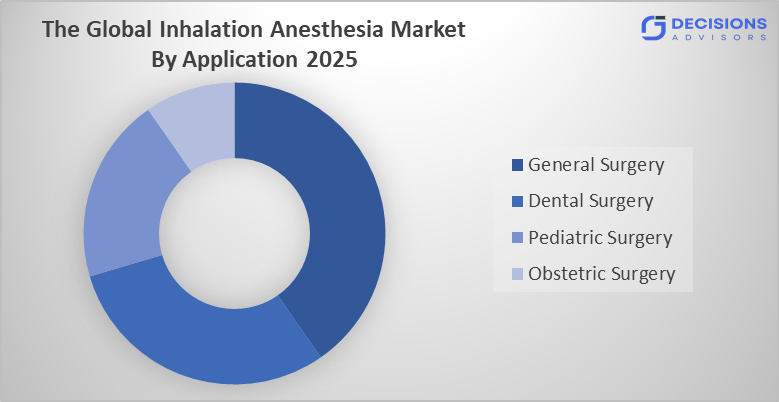
- The general surgery segment dominated the market in 2025 and is anticipated to grow at a significant CAGR of approximately 6.7% during the forecast period.
Based on the application, the inhalation anesthesia market is divided into general surgery, dental surgery, pediatric surgery, and obstetric surgery. Among these, the general surgery segment dominated the market in 2025 and is anticipated to grow at a significant CAGR of approximately 6.7% during the forecast period. The growth of the general surgery segment is growing due to the high volume of surgical procedures worldwide, driven by increasing chronic diseases and trauma cases. Inhalation anesthesia is widely used in general surgeries for its effectiveness, controlled depth, and quick recovery, supporting its strong demand and consistent market growth.
- The hospitals segment dominated the market in 2025 and is anticipated to grow at a significant CAGR of approximately 7% during the forecast period.
Based on the end user, the inhalation anesthesia market is divided into hospitals, outpatient surgical centers, and ambulatory surgical centers. Among these, the hospitals segment dominated the market in 2025 and is anticipated to grow at a significant CAGR of approximately 7% during the forecast period. The growth of the hospitals segment is growing due to the high volume of surgical procedures and the availability of advanced anesthesia equipment and skilled professionals. Hospitals are primary centers for complex and emergency surgeries, driving consistent demand for inhalation anesthesia and supporting strong growth during the forecast period.
Strategies to Implement for Growth of the Market in Non-Leading Regions
Growth in non-leading regions of the global inhalation anesthesia market can be driven through strategic expansion and localized approaches. Companies should focus on cost-effective product offerings, including affordable anesthetic agents and compact anesthesia delivery systems suitable for resource-limited settings. Strengthening distribution networks through partnerships with regional healthcare providers and government agencies is essential to improve accessibility. Investment in training programs for anesthesiologists and healthcare staff can enhance adoption and safe usage. Additionally, leveraging public healthcare initiatives and increasing awareness about surgical care will stimulate demand. Establishing local manufacturing or packaging facilities can reduce costs and regulatory barriers. Emphasizing environmentally sustainable solutions and low-flow anesthesia techniques further supports long-term market growth in emerging and underserved regions.
Regional Segment Analysis of the Inhalation Anesthesia Market
- North America (U.S., Canada, Mexico)
- Europe (Germany, France, U.K., Italy, Spain, Rest of Europe)
- Asia-Pacific (China, Japan, India, Rest of APAC)
- South America (Brazil and the Rest of South America)
- The Middle East and Africa (UAE, South Africa, Rest of MEA)
North America is anticipated to hold the largest share of approximately 52.9% the inhalation anesthesia market over the forecast period.
North America is anticipated to hold the largest share of approximately 52.9% the inhalation anesthesia market over the forecast period. The dominance of this region is primarily driven by its advanced healthcare infrastructure, high surgical volume, and strong presence of leading market players. Additionally, increasing adoption of technologically advanced anesthesia systems, favourable reimbursement policies, and rising prevalence of chronic diseases further drive demand, supporting the region’s significant market share.
Asia Pacific is expected to grow at a rapid CAGR of approximately 8.5% in the inhalation anesthesia market during the forecast period.
Asia Pacific is expected to grow at a rapid CAGR of approximately 8.5% in the inhalation anesthesia market during the forecast period. This growth is driven by the expanding healthcare infrastructure, increasing surgical procedures, and rising healthcare expenditure in countries like India and China. Growing medical tourism, improving access to advanced medical technologies, and a large patient population further drive demand, supporting the region’s strong CAGR during the forecast period.
Europe is the 3rd largest region to grow in the inhalation anesthesia market during the period.
Europe is the third-largest region in the inhalation anesthesia market, driven by well-established healthcare systems, increasing surgical volumes, and a growing aging population. Strong regulatory frameworks, widespread adoption of advanced anesthesia technologies, and the presence of key pharmaceutical companies further support steady market growth across countries like Germany, France, and the United Kingdom.
Future Market Trends in Global Inhalation Anesthesia Market: -
1. Shift toward advanced and automated anesthesia systems
The shift toward advanced and automated anesthesia systems is driven by the need for improved patient safety, precision, and efficiency. These systems enable real-time monitoring and accurate drug delivery, reducing errors. Increasing surgical complexity, demand for faster recovery, and integration with digital technologies further support adoption across modern healthcare settings.
2. Rising preference for low-flow and eco-friendly anesthesia
The rising preference for low-flow and eco-friendly anesthesia is driven by increasing environmental concerns and the need to reduce greenhouse gas emissions from anesthetic gases. Low-flow techniques minimize agent consumption, lower operational costs, and improve efficiency, while supporting sustainable healthcare practices and regulatory compliance across hospitals globally.
3. Increasing demand for fast-acting anesthetic agents
The increasing demand for fast-acting anesthetic agents is driven by the need for quicker induction and rapid patient recovery, especially in outpatient and minimally invasive surgeries. These agents improve workflow efficiency, reduce hospital stays, and enhance patient turnover, while also lowering the risk of complications and improving overall surgical outcomes.
Recent Development
- In April 2026, the institutions such as Mayo Clinic and Boston Children's Hospital demonstrated tailored anesthetic strategies for repeated radiotherapy sessions in a child with autism. Their protocols ensured safety, controlled sedation, and immobilization, highlighting the importance of personalized anesthesia in complex pediatric treatments.
- In December 2025, a recent study supported by Philips Healthcare and GE HealthCare validated a modified oxygen nebulized inhalation method using advanced learning techniques. Their aerosol delivery technologies improved efficiency, precision, and airway anesthesia effectiveness, highlighting the growing role of AI-driven innovations in enhancing inhalation-based anesthesia performance.
- In September 2025, a recent report supported by Dräger and Medtronic highlighted the use of nebulized nitroglycerin with subarachnoid anesthesia for cesarean delivery in pulmonary arterial hypertension patients. Advanced monitoring and delivery systems improved hemodynamic stability and respiratory outcomes, supporting safer management of high-risk obstetric cases.
How is Recent Developments Helping the Market?
Recent developments are significantly supporting the growth of the global inhalation anesthesia market by enhancing efficiency, safety, and accessibility. Innovations in anesthesia delivery systems, including automated workstations and integrated monitoring technologies, enable precise dosing and improved patient outcomes. The development of advanced anesthetic agents with faster onset and reduced side effects is increasing their adoption in outpatient and minimally invasive procedures. Additionally, growing focus on eco-friendly solutions, such as low-flow anesthesia techniques, is addressing environmental concerns and reducing costs. Strategic collaborations, product launches, and regulatory approvals are further strengthening market expansion. Moreover, investments in healthcare infrastructure and digital integration are improving anesthesia management, driving demand and fostering sustained market growth globally.
Market Segment
This study forecasts revenue at global, regional, and country levels from 2020 to 2035. Decision Advisors has segmented the inhalation anesthesia market based on the below-mentioned segments:
Global Inhalation Anesthesia Market, By Product Type
- Nitrous Oxide
- Halothane
- Isoflurane
- Sevoflurane
Global Inhalation Anesthesia Market, By Route of Administration
- Inhalation
- Intravenous
Global Inhalation Anesthesia Market, By Application
- General Surgery
- Dental Surgery
- Pediatric Surgery
- Obstetric Surgery
Global Inhalation Anesthesia Market, By End Use
- Hospitals
- Outpatient Surgical Centers
- Ambulatory Surgical Centers
Global Inhalation Anesthesia Market, By Regional Analysis
- North America
- US
- Canada
- Mexico
- Europe
- Germany
- UK
- France
- Italy
- Spain
- Russia
- Rest of Europe
- Asia Pacific
- China
- Japan
- India
- South Korea
- Australia
- Rest of Asia Pacific
- South America
- Brazil
- Argentina
- Rest of South America
- Middle East & Africa
- UAE
- Saudi Arabia
- Qatar
- South Africa
- Rest of the Middle East & Africa
Frequently Asked Questions (FAQ)
Q How do regulatory policies impact the global inhalation anesthesia market?
A. Regulatory policies play a crucial role by ensuring the safety, efficacy, and quality of anesthetic agents and delivery systems. Strict approval processes and environmental regulations can increase compliance costs but also encourage innovation, particularly in developing safer and eco-friendly anesthetic solutions across global markets.
Q. What role does medical tourism play in the growth of the inhalation anesthesia market?
A. Medical tourism significantly boosts market demand, especially in developing regions. Countries offering cost-effective surgeries attract international patients, increasing the volume of procedures and driving the need for efficient, fast-acting inhalation anesthesia for better patient turnover and recovery.
Q. How does the availability of skilled anesthesiologists affect market growth?
A. The availability of trained anesthesiologists directly influences market expansion. Regions with skilled professionals experience higher adoption of advanced anesthesia technologies, while shortages in developing areas may limit growth and slow the adoption of sophisticated inhalation anesthesia systems.
Q. What challenges do manufacturers face in expanding the inhalation anesthesia market globally?
A. Manufacturers face challenges such as fluctuating raw material costs, stringent regulatory requirements, environmental concerns, and intense market competition. Additionally, limited healthcare infrastructure and affordability issues in emerging markets can hinder widespread adoption of advanced anesthesia products.
Check Licence
Choose the plan that fits you best: Single User, Multi-User, or Enterprise solutions tailored for your needs.
We Have You Covered
- 24/7 Analyst Support
- Clients Across the Globe
- Tailored Insights
- Technology Tracking
- Competitive Intelligence
- Custom Research
- Syndicated Market Studies
- Market Overview
- Market Segmentation
- Growth Drivers
- Market Opportunities
- Regulatory Insights
- Innovation & Sustainability
Report Details
| Scope | Global |
| Pages | 240 |
| Delivery | PDF & Excel via Email |
| Language | English |
| Release | Apr 2026 |
| Access | Download from this page |