
Global Interstitial Cystitis Drugs Market
 |
Author:
David J
|
Pages:
240
|
Author:
David J
|
Pages:
240
Global Interstitial Cystitis Drugs Market Size, Share By Drug Class (Non-steroidal Anti-inflammatory Drugs, Tricyclic Antidepressants), By Type (Non-ulcerative, Ulcerative), By Route of Administration (Oral, Intravesical), and By Region (North America, Europe, Asia-Pacific, Latin America, Middle East & Africa), Analysis and Forecast 2026-2035.
CAGR
4.44%
REVENUE 2025
USD Billion 1.38
FORECAST 2035
USD Billion 2.13
REPORT COVERAGE
Global
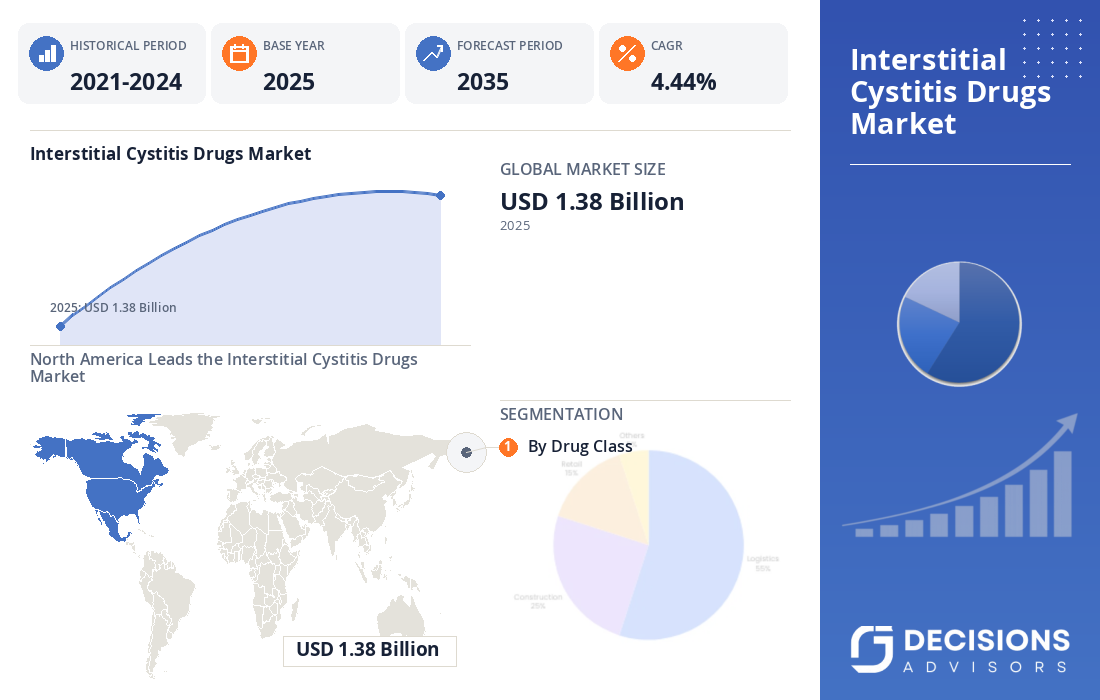
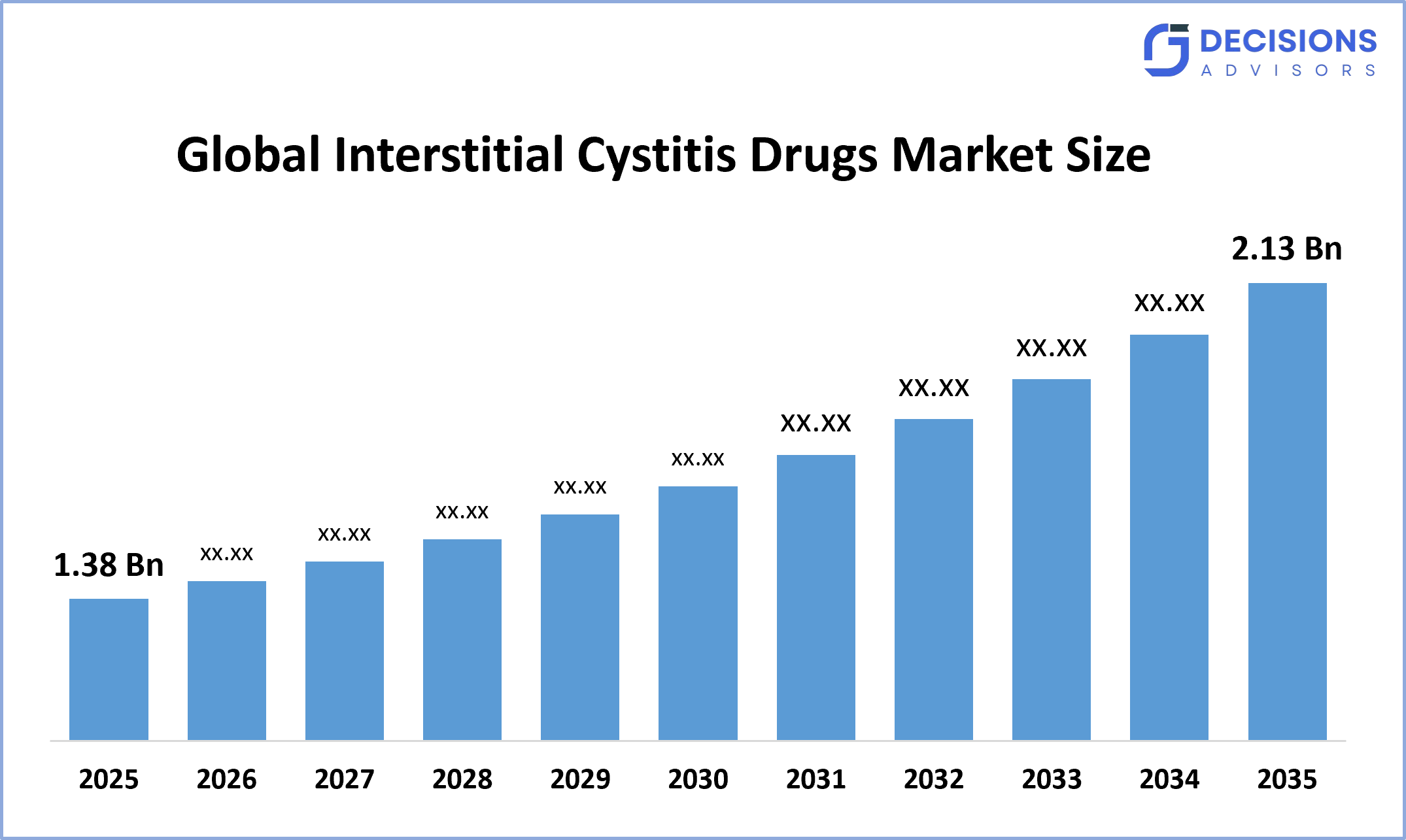
The Global Interstitial Cystitis Drugs Market Size is predicted to grow from USD 1.38 Billion in 2025 and is likely to reach around USD 2.13 Billion by 2035 with a CAGR of 4.44%. According to Decision Advisors, the Pentosan Polysulfate Sodium trend dominates the Global Interstitial Cystitis Drugs Market because of its proven application in oral treatment. One of the major players in the market is Pfizer Inc. due to its wide range of drugs and involvement in interstitial cystitis drugs. Some of the new trends include the use of intravesical drugs, sustained release technology and novel anti-inflammatory and analgesic drugs.
Market Snapshot
- Global Interstitial Cystitis Drugs Market Size (2025): USD 1.38 Billion
- Projected Global Interstitial Cystitis Drugs Market Size (2035): USD 2.13 Billion.
- Global Interstitial Cystitis Drugs Market Compound Annual Growth Rate (CAGR): 4.44%
- Largest Regional Market: North America
- 2nd Largest Region: Europe
- Fastest Growing Region: Asia Pacific
- Base Year: 2025
- Historical Period: 2021-2024
- Market Forecast Period: 2026-2035
Market Overview/ Introduction
The Global Interstitial Cystitis Drugs Market encompasses pharmaceutical drugs used in treating the symptoms of IC/ICBPS such as bladder pain, urgency, frequency, and discomfort. Government Support: Regulatory agencies are enhancing the development and clinical guidance for IC/BPS drugs. U.S. FDA released a draft guidance to aid developers with their treatment strategies, with the healthcare system and urological guidelines assisting in diagnosis and multimodal management of patients. Latest Development: New clinical guidelines for Germany and France stress personalized treatment with pharmacological, intravesical, interventional, and non-pharmacological treatments. Canadian guideline is reconsidering the use of oral pentosan polysulfate due to its poor performance and safety risks. Growth Factors: Growing disease awareness, diagnosis, expanding urology practice, and demand for efficient symptom management are driving this market. Pharmaceutical innovation in drug development, personalized treatments, and better delivery systems is contributing towards innovation and growth of this market across both developed and emerging healthcare markets globally.
- The National Institute of Diabetes and Digestive and Kidney Diseases (NIDDK) continues to award federal grants and small business innovation research funds to map bladder permeability and test novel intravesical drug delivery systems.
- Government health agencies support fast-tracks designation and collaborative clinical studies for innovative intravesical drug delivery systems and non-invasive therapeutic options.
Notable Insights: -
- North America is anticipated to hold approximately 47.61% share of the Global Interstitial Cystitis Drugs Market over the predicted timeframe.
- Asia-Pacific is expected to grow at a rapid CAGR in the Global Interstitial Cystitis Drugs Market by holding approximately 24% of the share during the forecast period.
- By drug class, the Non-steroidal Anti-inflammatory Drugs segment dominated the market and holds approximately 44% share in 2025 and is projected to grow at a substantial CAGR during the forecast period.
- By type, the non-ulcerative segment dominated the market and holds approximately 89.4% share in 2025 and is projected to grow at a substantial CAGR during the forecast period.
- The compound annual growth rate of the Global Interstitial Cystitis Drugs Market is 4.44%.
- The market is likely to achieve a valuation of USD 2.13 Billion by 2035.
Market Drivers
The key factors driving the Global Interstitial Cystitis Drugs Market include the increasing awareness about interstitial cystitis and recognition of symptoms of chronic bladder pain. Increasing number of diagnoses and easy accessibility of urological healthcare facilities are motivating people to get treated. Increased healthcare spending and growth in specialty clinics ensure increased availability of drug treatment options. Increasing demand for effective treatment options is motivating pharmaceutical companies to develop new innovative drugs with better efficacy and safety profile. Diagnostic technology innovations help the medical professionals in identifying the disease and thus motivating them to start treatment at an early stage. The growth in adoption of personalized treatment regimen and combination therapy also contributes to the growth of the market. Moreover, increased research and development initiatives involving new drug development, advanced drug delivery mechanism and targeted therapies help in expanding the market.
Restrain
Wider acceptance is hampered by issues like poor treatment efficacy, adverse drug reactions, expensive treatment costs, and a lack of standardized therapeutic procedures in the global interstitial cystitis drug market. Current treatments frequently only partially alleviate symptoms, making long-term illness management and patient satisfaction difficult.
Competitive Analysis:
The report offers the appropriate analysis of the key organizations/companies involved within the Global Interstitial Cystitis Drugs Market along with a comparative evaluation primarily based on their product offerings, business overviews, geographic presence, enterprise strategies, segment market share, and SWOT analysis. The report also provides an elaborative analysis focusing on the current news and developments of the companies, which includes product development, innovations, joint ventures, partnerships, mergers & acquisitions, strategic alliances, and others. This allows for the evaluation of the overall competition within the market.
Top Companies in the Global Interstitial Cystitis Drugs Market
- Pfizer Inc.
- Johnson & Johnson
- Bayer AG
- Novartis AG
- AbbVie Inc.
- Eli Lilly and Company
- Teva Pharmaceutical Industries Ltd.
- Viatris Inc.
- Astellas Pharma Inc
- Sun Pharmaceutical Industries Ltd
Government Initiatives
|
Country |
Key Government Initiatives |
|
United States |
The National Institutes of Health through the NIDDK funds ongoing clinical trials and epidemiological studies to identify new molecular targets and biomarkers for chronic bladder pain management. |
|
Germany |
The Federal Ministry of Health supports regional clinical research networks and hospital-based studies focusing on novel intravesical drug delivery systems to minimize systemic side effects. |
|
United Kingdom |
The National Health Service promotes evidence-based multi-modal therapy guidelines, encouraging specialized urology care pathways that improve patient access to standard and off-label interstitial cystitis drugs. |
Market Segmentation
The Global Interstitial Cystitis Drugs Market share is classified into Drug Class, Type and Route of Administration
- The Non-steroidal Anti-inflammatory Drugs segment dominated the market and holds approximately 44% share in 2025 and is projected to grow at a substantial CAGR during the forecast period.
Based on the drug class, The Global Interstitial Cystitis Drugs Market is further categorized into Non-steroidal Anti-inflammatory Drugs and Tricyclic Antidepressants. Of the two, the Non-steroidal Anti-inflammatory Drugs category captures the maximum share of the market at around 44%. This is because of their extensive application in dealing with pain, inflammation, and other bladder related problems. The availability and proven effectiveness of such drugs have resulted in sustained demand for them. On the other hand, Tricyclic Antidepressants help in pain and urge control in patients who require different approaches to medication.
- The non-ulcerative segment accounted for the largest share of approximately 89.4% in 2025 and is anticipated to grow at a significant CAGR during the forecast period.
Based on the type, The Global Interstitial Cystitis Drugs Market Segmentation includes Non-ulcerative and Ulcerative segments. Out of these two segments, the non-ulcerative segment holds a dominant position in the global market, accounting for about 89.4% market share. The reason behind the dominance of the segment is due to the high amount of prevalence of non-ulcerative interstitial cystitis cases and high demands for treatments of the symptoms. It is because the non-ulcerative segment consists of a greater number of patient base as compared to ulcerative interstitial cystitis.
- The Hospitals and Retail Pharmacies segment accounted for the largest share of approximately 58% in 2025 and is anticipated to grow at a significant CAGR during the forecast period.
Based on route of administration, the Global Interstitial Cystitis Drugs Market is categorized as Oral and Intravesical. Out of these categories, the Oral segment is leading the market owing to the ease of administration, preference of the patients, and the availability of oral drugs. The oral medications are often prescribed for bladder pain and urgent and frequent urination, which makes them the favored choice. The Intravesical category is also becoming more prominent as the direct delivery of drugs to the bladder provides effective treatment. The growing need for convenient and personalized treatment is likely to drive the market.
Regional Segment Analysis of the Global Interstitial Cystitis Drugs Market
- Asia-Pacific (Japan, China, India, South Korea, and Rest of Asia-Pacific)?
- North America (United States and Canada)
- Europe (Germany, United Kingdom, France, and Rest of Europe)
- Latin America (Brazil, Mexico, Argentina, and Rest of Latin America)?
- The Middle East and Africa (Saudi Arabia, UAE, South Africa, and Rest of MEA)
North America is anticipated to hold approximately 42.3% share of the Global Interstitial Cystitis Drugs Market over the predicted timeframe.
The North America region holds a share of roughly 42.3% in the Global Interstitial Cystitis Drugs Market, fueled by the presence of advanced healthcare infrastructure, rising incidence of interstitial cystitis, and good access to specialized urology care. The region has established pharmaceutical companies, developed healthcare infrastructure, and prescription medication availability. The growth is also due to growing research and development, growing specialty clinics, growing patient awareness, and increasing demand for efficacious drugs. The presence of developed healthcare providers and reimbursement models is another factor that contributes to the accessibility of the treatment. Innovation in drug therapy and symptom management techniques is also boosting the leadership of the region in the global market.
Europe is expected to grow at a rapid CAGR in the Global Interstitial Cystitis Drugs Market, holding approximately 28% of the share during the forecast period
The Europe contributes about 28% to the global Interstitial Cystitis Drugs market on account of the highly developed health care infrastructure, awareness, diagnosis of interstitial cystitis, increased awareness, and availability of specialized urological care. Countries in Europe such as Germany, the UK, France, Italy, and Spain have played an important role in contributing to the regional market demand. Factors like the presence of pharmaceutical companies, healthcare infrastructure, and reimbursement policies make the treatment more accessible. Growth in the market is being driven by factors such as the rise in R&D activities, establishment of specialty clinics, increase in the use of oral and intravesical therapy, and demand for symptom management products.
Asia Pacific is the fastest-growing region in the Global Interstitial Cystitis Drugs Market during the period, holding approximately 15.2% share.
The Asia-Pacific holds a significant share of about 15.2% in the global interstitial cystitis drugs market owing to the increasing awareness of interstitial cystitis, improved health care infrastructure, growing incidence rates, and increased accessibility to urology treatments. This region is witnessing the growth of pharmaceutical investments and healthcare facilities due to their availability in countries such as China, Japan, India, and South Korea. In addition, growing awareness among patients and government initiatives have led to the regional market growth. It is expected to grow at the fastest rate among all regions.
Future Market Trends in Global Interstitial Cystitis Drugs Market: -
-
- Expansion of Novel Drug Therapies
Development of new pharmacological treatments for interstitial cystitis patients is emerging as an important area in the treatment of interstitial cystitis. Pharmaceutical companies have identified the need for drugs that target bladder inflammation, pain, and urinary symptoms. Increased research into new methods, effectiveness, and minimizing side effects will ensure the growth of this market worldwide.
-
- Rising Adoption of Personalized Treatment
Individually tailored treatment strategies are becoming crucial due to the different symptoms that each interstitial cystitis patient suffers from. More consideration is now being made of the severity of the disease, pattern of the symptoms, and individual characteristics of patients when choosing appropriate treatment options. Improvements in diagnosis and research into biomarkers may lead to better clinical outcomes.
-
- Growth in Intravesical Drug Therapies
Intravesical drug delivery is becoming more popular since such drug delivery allows delivering therapeutic compounds right into the bladder, which can increase the efficiency of their local effect. Increased use of bladder instillations for treating various symptoms is pushing pharmaceutical companies towards further research in this area.
-
- Increasing Focus on Combination Therapies
The use of combination therapies appears to be another trend in the treatment of patients who suffer from complicated symptoms of interstitial cystitis, especially those who are not responding to the use of single therapy regimens. More physicians opt to use medications, instillations, and various other therapies to help manage their patients' symptoms.
Recent Development
- In March 2021, Intravesical liposome formulations intended as targeted topical drug carriers to repair damaged urothelial barriers and directly deliver localized anti-inflammatory molecules into bladder tissue became the subject of increased clinical attention.
- In March 2022, AbbVie's Allergan started Phase 2 clinical trials to assess onabotulinumtoxinA (BOTOX) injections as a cutting-edge intradetrusor therapeutic option for treating symptoms of refractory interstitial cystitis.
- In June 2023, New commercial pipeline investments were sparked by the FDA's revised draft guidance, which provided clear guidelines for industry drug research programs aimed at interstitial cystitis.
Market Segment
This study forecasts revenue at global, regional, and country levels from 2020 to 2035. Decision Advisors has segmented the Global Interstitial Cystitis Drugs Market based on the below-mentioned segments:
Global Interstitial Cystitis Drugs Market, By Drug Class
- Non-steroidal Anti-inflammatory Drugs
- Tricyclic Antidepressants
Global Interstitial Cystitis Drugs Market, By Type
- Non-ulcerative
- Ulcerative
Global Interstitial Cystitis Drugs Market, By Route of Administration
- Oral
- Intravesical
Global Interstitial Cystitis Drugs Market, By Regional Analysis
- Asia-Pacific
- Japan
- China
- India
- South Korea
- Rest of Asia-Pacific
- North America
- United States
- Canada
- Europe
- Germany
- United Kingdom
- France
- Rest of Europe
- Latin America
- Brazil
- Mexico
- Argentina
- Rest of Latin America
- Middle East & Africa
- Saudi Arabia
- UAE
- South Africa
- Rest of MEA
Frequently Asked Questions (FAQ)
Q. What is driving the growth of the Global Interstitial Cystitis Drugs Market?
A. Increased awareness of interstitial cystitis, rising diagnostic rates, increased desire for efficient symptom-management treatments, and improvements in pharmaceutical and intravesical therapy options are the main factors driving market expansion.
Q. Which treatment type is widely used for interstitial cystitis?
A. While intravesical treatments are becoming more popular due to their direct delivery of medication into the bladder, oral medications, such as painkillers and other prescription therapy, are still extensively used.
Q. How are pharmaceutical companies improving interstitial cystitis treatments?
A. To increase symptom relief, treatment efficacy, and patient outcomes, pharmaceutical companies are concentrating on new medication formulations, targeted therapies, combination treatments, and enhanced drug-delivery strategies.
Q. What role does increasing disease awareness play in market growth?
A. Increased knowledge among patients and medical professionals promotes early diagnosis, enhances treatment-seeking behavior, and boosts uptake of available therapies, all of which drive the growth of the global market for interstitial cystitis drugs.
Check Licence
Choose the plan that fits you best: Single User, Multi-User, or Enterprise solutions tailored for your needs.
We Have You Covered
- 24/7 Analyst Support
- Clients Across the Globe
- Tailored Insights
- Technology Tracking
- Competitive Intelligence
- Custom Research
- Syndicated Market Studies
- Market Overview
- Market Segmentation
- Growth Drivers
- Market Opportunities
- Regulatory Insights
- Innovation & Sustainability
Report Details
| Scope | Global |
| Pages | 240 |
| Delivery | PDF & Excel via Email |
| Language | English |
| Release | Aug 2026 |
| Access | Download from this page |