
Global Interstitial Cystitis Market
 |
Pages:
230
|
Pages:
230
Global Interstitial Cystitis Market Size, Share, and COVID-19 Impact Analysis, By Severity (Mild To Moderate and Moderate To Severe), By Treatment Type (Medication, Bladder Instillations, Botulinum Toxin A, Nerve Stimulation, and Surgery), By Route of Administration (Oral, Parenteral, Intravesical, Topical, and Others) and By Region (North America, Europe, Asia-Pacific, Latin America, Middle East, and Africa), Analysis and Forecast 2025-2035
REPORT COVERAGE
Global
Global Interstitial Cystitis Market Size Insights Forecasts to 2035
- The Global Interstitial Cystitis Market Size Was valued at USD 2.1 Billion in 2024
- The Global Interstitial Cystitis Market Size is Expected to Grow at a CAGR of around 5.28% from 2025 to 2035
- The Worldwide Interstitial Cystitis Market Size is Expected to Reach USD 3.7 Billion by 2035
- Asia-Pacific is expected to grow the fastest during the forecast period.
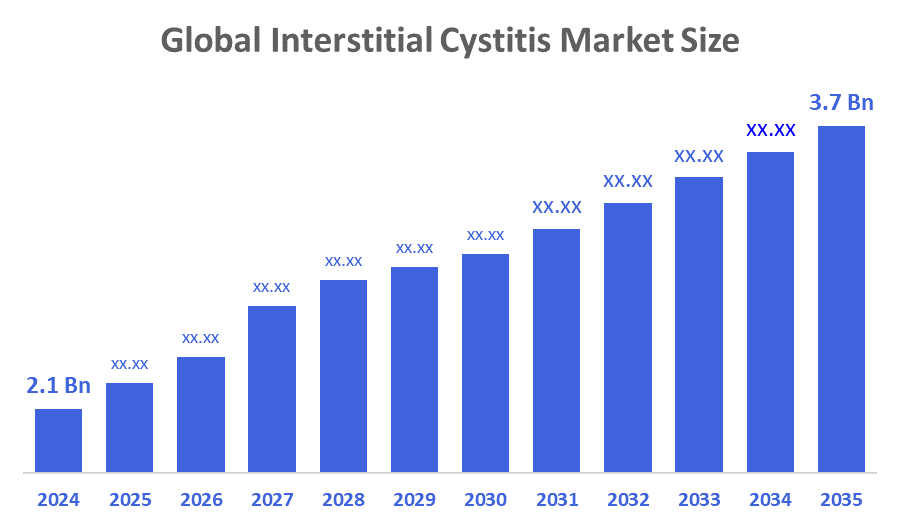
According to a research report published by Decisions Advisors and Consulting, the Global Interstitial Cystitis Market Size was worth around USD 2.4 Billion in 2024 and is predicted to grow to around USD 3.7 Billion by 2035 with a compound annual growth rate (CAGR) of 5.28% from 2025 to 2035. The global interstitial cystitis market provides future growth opportunities through the development of new treatments and through the adoption of less invasive methods and through improved diagnostic capabilities and through the integration of digital health solutions and through increased public understanding of the disease and through market entry into developing areas which are experiencing higher healthcare access and spending patterns.
Market Overview
The condition of interstitial cystitis results in chronic bladder issues which produce pelvic pain along with urgent need to urinate and frequent urination and discomfort without any detectable infection. The global interstitial cystitis market is expanding due to rising prevalence of chronic bladder disorders and increasing public understanding and better diagnostic methods. The increasing research activities about new treatment options which include oral drugs and intravesical therapies and neuromodulation and biologics ) is driving technological progress. The urology-focused portfolios of pharmaceutical companies include the investments from Pfizer Inc and Johnson & Johnson and Sun Pharmaceutical Industries Ltd. North America leads the market because its healthcare system supports medical services while Asia-Pacific will grow rapidly because more people will access specialized medical services and healthcare spending will grow.
Report Coverage
This research report categorizes the interstitial cystitis market based on various segments and regions, forecasts revenue growth, and analyzes trends in each submarket. The report analyses the key growth drivers, opportunities, and challenges influencing the interstitial cystitis market. Recent market developments and competitive strategies such as expansion, type launch, development, partnership, merger, and acquisition, have been included to draw the competitive landscape in the market. The report strategically identifies and profiles the key market players and analyses their core competencies in each sub-segment of the interstitial cystitis market.
Driving Factors
The Global Interstitial Cystitis Market Size continues to grow because of two main factors which drive the market. The first factor arises from the increasing number of people who develop the disease, while the second factor comes from the growing understanding of the condition. The second factor exists because healthcare systems worldwide increase their funding for medical services. The development of personalized medicine and intravesical delivery systems and biologics and digital health tools creates new treatment options. The new treatment options create better patient results because more research funding leads to faster development of innovative therapies which expand the market.
Restraining Factors
The Global Interstitial Cystitis Market Size faces main restrictions because of high treatment and diagnostic costs and the small number of available approved therapies and the diagnostic difficulties which arise from common symptom overlap and the absence of standardized testing methods and the strict regulatory requirements and clinical trial standards which delay new drug development and market entry.
Market Segmentation
The interstitial cystitis market share is classified into severity, treatment type, and route of administration.
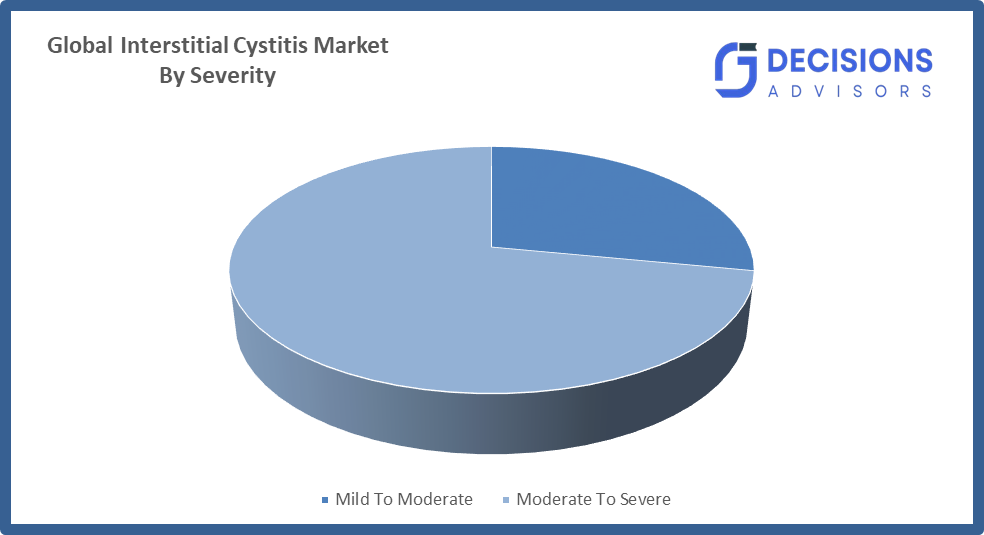
- The moderate to severe segment dominated the market in 2024, approximately 66% and is projected to grow at a substantial CAGR during the forecast period.
Based on the severity, the interstitial cystitis market is divided into mild to moderate and moderate to severe. Among these, the moderate to severe segment dominated the market in 2024, approximately 66% and is projected to grow at a substantial CAGR during the forecast period. The patients in this group show increased symptoms which need advanced medical treatments and ongoing health care. The healthcare system faces higher costs because of increased patient visits and their need for multiple medications and advanced treatment options which include biologics and intravesical therapies and neuromodulation. The rising public knowledge and better diagnostic methods drive increased demand for medical services in this critical patient group.
- The medication segment accounted for the largest share in 2024, approximately 69% and is anticipated to grow at a significant CAGR during the forecast period.
Based on the treatment type, the interstitial cystitis market is divided into medication, bladder instillations, botulinum toxin a, nerve stimulation, and surgery. Among these, the medication segment accounted for the largest share in 2024, approximately 69% and is anticipated to grow at a significant CAGR during the forecast period. The first-line treatment provides most patients with easier access to treatment which they need. Patients select oral medications to treat their symptoms because these treatments are simple to use and cost less and they are readily available. The development of targeted therapies together with innovative combination treatments creates better treatment results which lead to increased product acceptance while maintaining the market share of our segment.
- The oral segment accounted for the highest market revenue in 2024, approximately 72.34% and is anticipated to grow at a significant CAGR during the forecast period.
Based on the route of administration, the interstitial cystitis market is divided into oral, parenteral, intravesical, topical, and others. Among these, the oral segment accounted for the highest market revenue in 2024, approximately 72.34% and is anticipated to grow at a significant CAGR during the forecast period. Patients choose treatment methods which allow them to receive care without needing to undergo invasive procedures. The treatment option receives widespread acceptance because it provides easy access and requires lower costs and serves as the primary therapy for patients. The ongoing development of oral medications brings improvements to both symptom control and treatment effectiveness which results in increased market sales and ongoing business growth throughout the entire forecast period.
Regional Segment Analysis of the Interstitial Cystitis Market
- North America (U.S., Canada, Mexico)
- Europe (Germany, France, U.K., Italy, Spain, Rest of Europe)
- Asia-Pacific (China, Japan, India, Rest of APAC)
- South America (Brazil and the Rest of South America)
- The Middle East and Africa (UAE, South Africa, Rest of MEA)
North America is anticipated to hold the largest share of the interstitial cystitis market over the predicted timeframe.
North America is anticipated to hold the largest share of the interstitial cystitis market over the predicted timeframe. The combination of high disease awareness and strong healthcare infrastructure and advanced diagnostic capabilities and early adoption of innovative therapies creates optimal conditions for the growth of the disease market. The regional market expansion receives additional support from the combination of advantageous reimbursement frameworks and substantial research and development expenditures and the presence of major pharmaceutical enterprises.
Asia-Pacific is expected to grow at a rapid CAGR in the interstitial cystitis market during the forecast period. The market expansion for the region will continue to grow during the upcoming period because of three factors which include rising patient numbers and government support programs and pharmaceutical companies making investments. The market expansion in the region will develop through increasing healthcare costs and rising public knowledge about chronic bladder disorders and better diagnostic methods and greater availability of advanced medical treatments.
Competitive Analysis:
The report offers the appropriate analysis of the key organizations/companies involved within the interstitial cystitis market, along with a comparative evaluation primarily based on their type of offering, business overviews, geographic presence, enterprise strategies, segment market share, and SWOT analysis. The report also provides an elaborative analysis focusing on the current news and developments of the companies, which includes type development, innovations, joint ventures, partnerships, mergers & acquisitions, strategic alliances, and others. This allows for the evaluation of the overall competition within the market.
List of Key Companies
- Alvogen
- Janssen Pharmaceuticals, Inc.
- Sandoz AG
- Sun Pharmaceutical Industries Ltd.
- Accord Healthcare
- Avet Pharmaceuticals Inc.
- Lannett
- Viatris Inc.
- Pfizer, Inc.
- Strides Pharma Science Limited
- Others
Key Target Audience
- Market Players
- Investors
- End-users
- Government Authorities
- Consulting and Research Firm
- Venture capitalists
- Value-Added Resellers (VARs)
Recent Development
- In March 2025, a Phase 1b trial of the investigational oral drug sunobinop (V117957) for interstitial cystitis/bladder pain syndrome (IC/BPS) completed its final patient visit, demonstrated reductions in urinary urgency, frequency, and incontinence versus placebo, and reported no serious adverse events, highlighting its potential as a novel treatment option.
Market Segment
This study forecasts revenue at global, regional, and country levels from 2020 to 2035. Decisions Advisors has segmented the interstitial cystitis market based on the below-mentioned segments:
Global Interstitial Cystitis Market, By Severity
- Mild To Moderate
- Moderate To Severe
Global Interstitial Cystitis Market, By Treatment Type
- Medication
- Bladder Instillations
- Botulinum Toxin A
- Nerve Stimulation
- Surgery
Global Interstitial Cystitis Market, By Route of Administration
- Oral
- Parenteral
- Intravesical
- Topical
- Others
Global Interstitial Cystitis Market, By Regional Analysis
- North America
- US
- Canada
- Mexico
- Europe
- Germany
- UK
- France
- Italy
- Spain
- Russia
- Rest of Europe
- Asia Pacific
- China
- Japan
- India
- South Korea
- Australia
- Rest of Asia Pacific
- South America
- Brazil
- Argentina
- Rest of South America
- Middle East & Africa
- UAE
- Saudi Arabia
- Qatar
- South Africa
- Rest of the Middle East & Africa
Frequently Asked Questions (FAQ)
1. What is driving the growth of the Global Interstitial Cystitis Market?
A: The market is driven by increasing disease prevalence, improved diagnostic capabilities, rising awareness, healthcare investments, and advancements in oral drugs, intravesical therapies, biologics, and digital health technologies.
2. Which severity segment dominates the interstitial cystitis market?
A: The moderate to severe segment dominates with around 66% share in 2024, due to higher symptom burden, increased healthcare visits, need for advanced therapies, and continuous long-term disease management.
3. Why does the medication segment hold the largest market share?
A: Medication accounts for nearly 69% share because oral drugs are first-line treatments, widely available, cost-effective, easy to administer, and supported by continuous development of targeted and combination therapies.
4. Which region leads the global interstitial cystitis market and why?
A: North America leads due to strong healthcare infrastructure, high disease awareness, advanced diagnostics, favorable reimbursement systems, early adoption of innovative treatments, and presence of companies like Pfizer Inc.
5. Why is Asia-Pacific expected to grow the fastest?
A: Asia-Pacific is projected to grow rapidly due to rising patient population, government healthcare initiatives, increasing healthcare expenditure, improving diagnostic access, and expanding pharmaceutical investments in countries like India and China.
Check Licence
Choose the plan that fits you best: Single User, Multi-User, or Enterprise solutions tailored for your needs.
We Have You Covered
- 24/7 Analyst Support
- Clients Across the Globe
- Tailored Insights
- Technology Tracking
- Competitive Intelligence
- Custom Research
- Syndicated Market Studies
- Market Overview
- Market Segmentation
- Growth Drivers
- Market Opportunities
- Regulatory Insights
- Innovation & Sustainability
Report Details
| Scope | Global |
| Pages | 230 |
| Delivery | PDF & Excel via Email |
| Language | English |
| Release | Mar 2026 |
| Access | Download from this page |