
Global Interstitial Lung Disease Market
 |
Pages:
240
|
Pages:
240
Global Interstitial Lung Disease Market Size, Share, By Disease Type (Idiopathic Pulmonary Fibrosis, Interstitial Pneumonia, Nonspecific Interstitial Pneumonitis, Hypersensitivity Pneumonitis, Occupational ILDs, Sarcoidosis-Associated ILDs and Other), By Drug Type (Antifibrotic Agents, Corticosteroids, Biologics & Targeted Therapies, Immunosuppressants), By Distribution Channel (Hospital Pharmacies, Retail Pharmacies, Specialty Pharmacies, Online Pharmacies), and By Region (North America, Europe, Asia-Pacific, Latin America, Middle East, and Africa), Analysis and Forecast 2025 ? 2035.
REPORT COVERAGE
Global
Market Snapshot
- Market Size (2025): USD 1.46Billion
- Projected Market Size (2035): USD 2.61 Billion
- Compound Annual Growth Rate (CAGR): 5.98%
- Largest Regional Market: North America
- Fastest Growing Region: Asia Pacific
- Base Year: 2025
- Historical Period: 2021–2024
- Forecast Period: 2025–2035
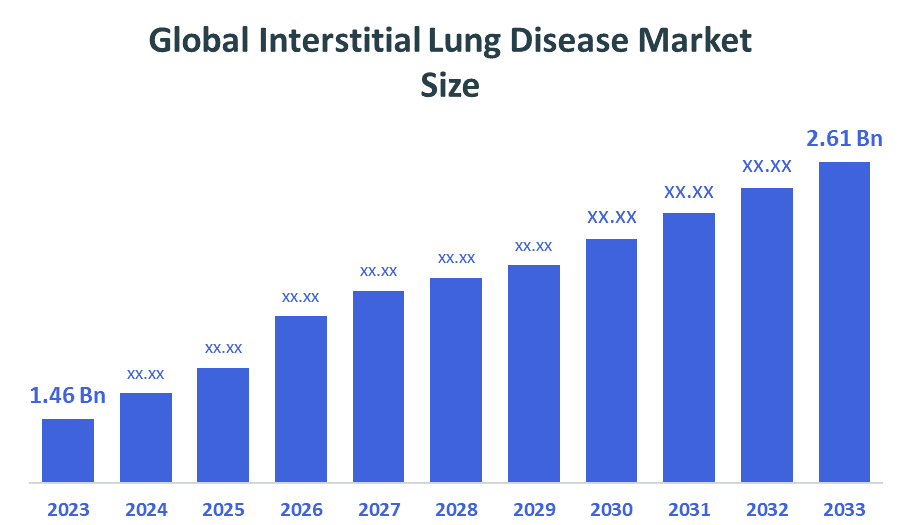
According to Decision Advisors, the Global Interstitial Lung Disease Market Size Is Expected To Grow From USD 1.46Billion in 2025 to USD 2.61 Billion by 2035, at a CAGR of 5.98% During The Forecast Period 2025-2035. The global interstitial lung disease market is driven by the rising disease occurrence together with new treatment solutions receiving regulatory approval and the development of advanced diagnostic systems and the growth of medical facilities and environmental pollution.
Market Overview/ Introduction
The interstitial lung disease market includes commercial activities that support the creation, production, and distribution of treatments and diagnostic tests and medical services that help treat interstitial lung disease. Interstitial Lung Disease (ILD) consists of more than 200 distinct lung disorders that primarily affect the interstitial space which exists between the alveoli (air sacs) of the lungs. The diseases cause lung inflammation together with fibrotic scarring which results in progressive breathing difficulties and diminished oxygen transfer capacity. The increasing use of antifibrotic treatments with the growing availability of biologic drugs will increase revenue streams for the market. The development of AI-based imaging technologies has led to better diagnostic methods that now enable healthcare professionals to identify diseases at earlier stages. The Asia-Pacific region will drive substantial market growth through its expanding investments in healthcare facilities.
The main growth opportunities will arise from three areas which include developing antifibrotic treatments for all interstitial lung disease indications and increasing use of biological drugs and implementing AI diagnostic systems to enhance early detection by 20 to 30%. The Asia-Pacific and Latin America markets provide significant potential for expansion because their healthcare systems continue to develop. Pharmaceutical and healthcare businesses can find major development prospects in precision medicine and biomarker research and home healthcare solution investments.
- The U.S. Food and Drug Administration (FDA) approved Jascayd (nerandomilast) tablets as a treatment option for adults suffering from progressive pulmonary fibrosis (PPF) condition. Jascayd received its first approval to treat adults with idiopathic pulmonary fibrosis (IPF) in a previous decision.
- In 2023 GSK plc announced that the US Food and Drug Administration (FDA) had given Orphan Drug Designation (ODD) to Benlysta (belimumab) which is a B-cell inhibiting monoclonal antibody for treating systemic sclerosis. GSK will start a phase II/III study of belimumab for treating systemic sclerosis-related interstitial lung disease (SSc-ILD) during the first half of 2023.
Notable Insights: -
- North America holds the largest regional market share, approximately 39.6% in the global Interstitial Lung Disease market.
- Asia Pacific is the fastest-growing region in the global interstitial lung disease market.
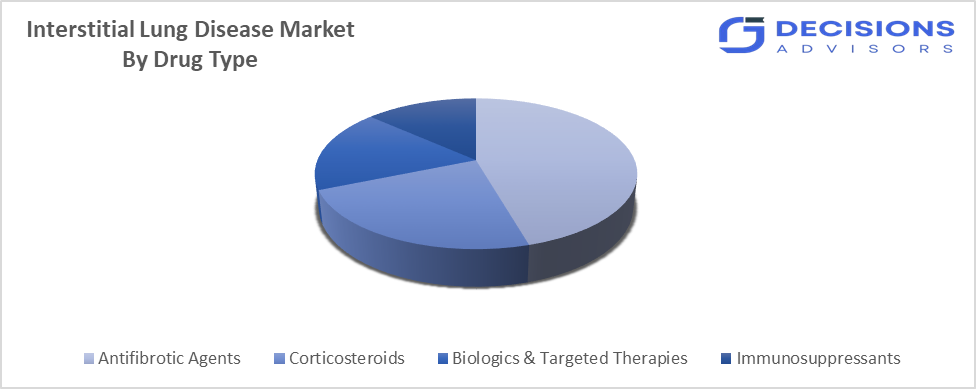
- By drug type, the antifibrotic agents segment held a dominant position of over 51% in terms of market share in 2025.
- By distribution channel, the retail pharmacies segment is the dominating one, accounting for over 48% of the global market share in 2025.
- The compound annual growth rate of the global interstitial lung disease market is 5.98%.
- The market is likely to achieve a valuation of USD 2.61 billion by 2035.
What is role of technology in grooming the market?
Technology plays a critical role in shaping the interstitial lung disease market, significantly improving diagnosis, treatment, and patient outcomes. The advanced imaging technology of high-resolution CT (HRCT) scans has enabled doctors to detect medical conditions 25% to 30% earlier than before. The combination of artificial intelligence (AI) and machine learning tools improves diagnostic accuracy for intricate ILD cases, which results in a 20% reduction of incorrect diagnoses. The field of therapeutics has achieved faster antifibrotic drug approvals through technology-based drug development methods, which created a 6% to 8% annual market expansion rate. Digital health solutions, which combine remote monitoring with wearable devices. Telemedicine has increased patient access to healthcare services, which particularly benefits people who live in areas with limited medical facilities. The combination of biomarker research with precision medicine methods makes it possible to create targeted therapies, which result in better treatment results. Technology advancements are reshaping ILD treatment through improved operational performance and better patient access plus better healthcare results, which simultaneously boost market development.
Market Drivers
The global interstitial lung disease market is propelled by the rising prevalence of ILDs globally, increasing awareness and early diagnosis, and a growing geriatric population susceptible to chronic respiratory diseases. Additionally, advancements in antifibrotic and biologic therapies are improving outcomes and expanding treatment adoption. The global disease burden is also increasing significantly, with incidence, deaths, and disability-adjusted life years rising by over 100% since 1990, highlighting strong demand for treatment solutions. Overall, increasing healthcare investment, innovation in targeted therapies, and unmet clinical needs are sustaining long-term market growth.
Restrain
The main restraints on the global interstitial lung disease market include the patients cannot afford treatment, and their access to treatment becomes restricted. The lack of public knowledge, with the slow process of diagnosing diseases creates obstacles that prevent people from receiving early treatment in developing areas. The introduction of new treatments faces delays because the regulatory approval system requires strict compliance with its established processes. Long-term use of medications leads to serious side effects, which decrease patient compliance with their treatment plans. The special characteristics of ILD subtypes make it difficult to conduct extensive clinical research studies.
Competitive Analysis:
The report offers the appropriate analysis of the key organizations/companies involved within the interstitial lung disease market, along with a comparative evaluation primarily based on their product of offering, business overviews, geographic presence, enterprise strategies, segment market share, and SWOT analysis. The report also provides an elaborative analysis focusing on the current news and developments of the companies, which includes product development, innovations, joint ventures, partnerships, mergers & acquisitions, strategic alliances, and others. This allows for the evaluation of the overall competition within the market.
Top Companies in Global Interstitial Lung Disease Market
- Boehringer Ingelheim
- F. Hoffmann?La Roche Ltd
- Siemens Healthineers
- Koninklijke Philips N.V.
- United Therapeutics
- Bristol?Myers Squibb Company
- Novartis AG
- GSK plc (GlaxoSmithKline)
- Sanofi S.A.
- Gilead Sciences, Inc.
- Merck & Co., Inc
Government Initiatives
|
Country |
Key Government Initiatives |
|
US |
The FDA's regulatory support in the United States has advanced technological progress which included the 2025 approval of new ILD treatments with nerandomilast because it expanded treatment options for patients and increased research funding. |
|
China |
In China, the growing disease burden has created a greater need for public health programs and early disease detection and treatment facilities. This need arises because of the country's large patient base and their exposure to environmental hazards. |
Market Segmentation
The interstitial lung disease market share is classified into disease type, drug type, and distribution channel.
- The idiopathic pulmonary fibrosis segment dominated the market in 2025 and is projected to grow at a substantial CAGR during the forecast period.
Based on the type, the interstitial lung disease market is divided into idiopathic pulmonary fibrosis, interstitial pneumonia, nonspecific interstitial pneumonitis, hypersensitivity pneumonitis, occupational ILDs, sarcoidosis-associated ILDs and other. Among these, the idiopathic pulmonary fibrosis segment dominated the market in 2025 and is projected to grow at a substantial CAGR during the forecast period. The growth of the segment is driven by the occurrence of IPF reaches its highest levels among individuals aged 50 to 60 years and above in developed areas. The disease leads to continuous fibrosis progression, which forces patients to need ongoing treatment that creates increased demand for medical products. IPF has approved antifibrotic medications which the FDA and EMA recognize as effective treatments (Pirfenidone Nintedanib). Other ILDs like NSIP or hypersensitivity pneumonitis often rely on off-label corticosteroids or immunosuppressants, which generate lower pharmaceutical revenue.
- The antifibrotic agents segment accounted for the largest share in 2025, and is anticipated to grow at a significant CAGR of approximately 51% during the forecast period.
Based on the diagnosis, the interstitial lung disease market is divided into antifibrotic agents, corticosteroids, biologics & targeted therapies, immunosuppressants. Among these, the antifibrotic agents segment accounted for the largest share in 2025 and is anticipated to grow at a significant CAGR of approximately 51% during the forecast period. The segmental growth is driven by the standard treatment for patients with progressive fibrosing ILDs includes antifibrotic drugs, which include pirfenidone and nintedanib, as the preferred medication. The drugs he mentioned function as disease progression inhibitors, which receive endorsement from clinical guidelines and achieve regulatory permission and insurance coverage throughout primary markets in the United States and Europe. The medication produces continuous financial earnings that persist throughout its extended usage.
- The retail pharmacies segment dominated the market in 2025, and is projected to grow at a substantial CAGR of approximately 48% during the forecast period.
Based on the route of administration, the interstitial lung disease market is divided into hospital pharmacies, retail pharmacies, specialty pharmacies, online pharmacies. Among these, the retail pharmacies segment dominated the market in 2025 and is projected to grow at a substantial CAGR of approximately 48% during the forecast period. Retail pharmacies have the broadest reach of all channels. They provide both prescription (Rx) and over-the-counter (OTC) medicines to all general consumers. The retail chain includes both chain stores and independent stores which operate in city centers and communities to provide customers with easy access and extended services. The business generates high sales volume because it serves a wide range of customers.
Regional Segment Analysis of the Interstitial Lung Disease Market
- North America (U.S., Canada, Mexico)
- Europe (Germany, France, U.K., Italy, Spain, Rest of Europe)
- Asia-Pacific (China, Japan, India, Rest of APAC)
- South America (Brazil and the Rest of South America)
- The Middle East and Africa (UAE, South Africa, Rest of MEA)
North America is anticipated to hold the largest share of the Interstitial Lung Disease market over the predicted timeframe.
North America is anticipated to hold the largest share of the Interstitial Lung Disease market over the predicted timeframe. North America held a 39.6% revenue share in 2025, with the U.S. alone accounting for 82% of that regional market. North America dominates the market due to advanced healthcare infrastructure. The region, especially the United States, achieves better treatment results because of the substantial funding dedicated to research and early diagnostic methods. Major pharmaceutical companies and the fast approval process for antifibrotic and biologic drugs create better market conditions. Government support also plays a key role. The U.S. FDA and other regulatory bodies assess and approve ILD treatments which benefits patients who need these therapies. Ongoing regulatory processes continue to develop through recent actions which include postponed yet active approval paths for ILD-related inhaled drugs that demonstrate strict yet beneficial regulatory control.
Asia Pacific is expected to grow at a rapid CAGR in the Interstitial Lung Disease market during the forecast period. The Asia Pacific region is expected to exhibit the fastest growth in the global Interstitial Lung Disease market, with 35.2% in 2025. The region is fastest due to the increased healthcare spending and higher rates of respiratory diseases, and better diagnostic systems in China, India and Japan have led to this trend. The regional governments demonstrate their dedication to respiratory healthcare through multiple programs, which include extended insurance benefits and financial support for chronic illness treatment and initiatives that foster early disease detection and testing. Multiple governments in the Asia-Pacific region are funding digital health and telemedicine and pulmonary medical facilities to enhance access for patients with interstitial lung disease. The population growth of elderly citizens and the increasing medical costs are driving higher demand in the market. The Asia-Pacific region experiences its most rapid market growth because of strong government backing, which occurs alongside increased disease rates.
Europe is the 2nd largest region to grow in the Immune Thrombocytopenic Purpura market during the period. The growth of the European ILD market is driven by the existing healthcare systems and their established reimbursement systems together with the growing knowledge about uncommon lung diseases. Germany, the UK and France are making substantial financial commitments to conduct research and develop cutting-edge treatments which include antifibrotic drugs. The combination of an aging population and a rise in respiratory diseases results in greater requirements for ILD testing and medical care.
Strategies to Implement for Growth of the Market in Non-Leading Regions
The interstitial lung disease market in non-leading regions requires operational improvements to three key areas, which include better diagnosis methods, increased access and reduced treatment costs. Expanding awareness programs can reduce underdiagnosis, which currently affects over 40% of ILD cases in low-resource settings. The government and private sector should develop affordable diagnostic solutions that include HRCT technology to enable early detection improvements of 20 to 30%. Pharmaceutical companies can implement tiered pricing models while establishing partnerships with local manufacturers to reduce drug expenses between 15 and 25%, which will make antifibrotic treatments more accessible. The healthcare system needs better resources, which require more pulmonologist training, because existing specialist shortages restrict treatment services. Telemedicine and digital health platforms have the potential to increase patient access in remote regions by 25%. The combination of better reimbursement systems and enhanced public-private partnerships will create the conditions needed for businesses to achieve sustainable market growth which lasts over time.
Future Market Trends in Global Interstitial Lung Disease Market: -
1. Growth in Advanced & Targeted Therapies
Growth in advanced and targeted therapies is a key driver in the interstitial lung disease market. Antifibrotic drugs alone are projected to grow at 9.3% CAGR, increasing from USD 3.5 billion in 2025 to USD 7.2 billion by 2032. Additionally, targeted therapies account for nearly 46% of ongoing treatment strategies, highlighting strong pipeline expansion. These innovations improve treatment efficacy and are accelerating overall market growth.
2. Integration of AI & Digital Diagnostics
Integration of AI and digital diagnostics is transforming the Interstitial Lung Disease market, improving early and accurate detection. AI-based imaging tools enhance diagnostic accuracy by 20% and reduce evaluation time by 30–40%. Digital diagnostics and imaging solutions already contribute 335-40% of diagnostic market value, supporting faster clinical decisions and better patient outcomes.
3. Rise of Home-Based Care & Remote Monitoring
The rise of home-based care in the Interstitial Lung Disease market is accelerating, with this segment projected to grow at a 10-11% CAGR. Remote monitoring and oxygen therapy solutions can reduce hospitalizations by 15-20%, while home-care services are expected to exceed USD 500–700 million globally by 2030, improving long-term disease management.
Recent Development
In June 2025, Insilico announced a Nature Medicine publication of phase IIa results of Rentosertib, the Novel TNIK inhibitor for idiopathic pulmonary fibrosis discovered and designed with a pioneering AI approach.
How is Recent Developments Helping the Market?
Recent developments are significantly accelerating growth in the Interstitial Lung Disease market, particularly through new drug approvals and clinical advancements. In 2025, the FDA approved nerandomilast (JASCAYD)—the first new therapy for idiopathic pulmonary fibrosis in over a decade, marking a breakthrough in treatment innovation. The clinical trials show rapid growth because the studies demonstrate that new therapies are able to reduce lung function decline in patients who have progressive interstitial lung diseases. The orphan drug designation for investigational drugs such as taladegib shows that there is increasing interest in developing treatments for uncommon lung diseases. The updated 2025–2026 clinical guidelines and classification systems enable better disease identification and management solutions for healthcare professionals. The new developments create better treatment choices while they speed up research and development processes which lead to better results for patients as these factors together create market growth which draws more funding from pharmaceutical and healthcare sectors worldwide.
Market Segment
This study forecasts revenue at global, regional, and country levels from 2020 to 2035. Decision Advisors has segmented the interstitial lung disease market based on the below-mentioned segments:
Global Interstitial Lung Disease Market, By Disease Type
- Idiopathic Pulmonary Fibrosis
- Interstitial Pneumonia
- Nonspecific Interstitial Pneumonitis
- Hypersensitivity Pneumonitis
- Occupational ILDs
- Sarcoidosis-Associated ILDs
- Other
Global Interstitial Lung Disease Market, By Drug Type
- Antifibrotic Agents
- Corticosteroids
- Biologics & Targeted Therapies
- Immunosuppressants
Global Interstitial Lung Disease Market, By Distribution Channel
- Hospital Pharmacies
- Retail Pharmacies
- Specialty Pharmacies
- Online Pharmacies
Global Interstitial Lung Disease Market, By Regional Analysis
- North America
- US
- Canada
- Mexico
- Europe
- Germany
- UK
- France
- Italy
- Spain
- Russia
- Rest of Europe
- Asia Pacific
- China
- Japan
- India
- South Korea
- Australia
- Rest of Asia Pacific
- South America
- Brazil
- Argentina
- Rest of South America
- Middle East & Africa
- UAE
- Saudi Arabia
- Qatar
- South Africa
- Rest of the Middle East & Africa
Frequently Asked Questions (FAQ)
Q: What are the key market trends?
A: The ILD market is witnessing trends such as increasing adoption of biologics and targeted therapies, expansion of antifibrotic drugs beyond IPF, and integration of AI in diagnostics. There is also a growing shift toward home-based care and remote monitoring. Additionally, precision medicine and biomarker-based treatments are gaining traction, improving patient outcomes and driving innovation.
Q: What role does technology play in the market?
A: Technology plays a vital role by improving early diagnosis and treatment efficiency. High-resolution imaging, AI-based diagnostic tools, and digital health platforms enable accurate disease detection and monitoring. Wearable devices and telemedicine solutions also help manage patients remotely, reducing hospital visits and enhancing long-term care.
Q: What are the major treatment options available?
A: Treatment options for ILD include antifibrotic drugs, corticosteroids, immunosuppressants, and biologics. Supportive therapies such as oxygen therapy and pulmonary rehabilitation are also widely used. The choice of treatment depends on the specific ILD subtype and severity of the disease.
Q: Why is early diagnosis important in ILD?
A: Early diagnosis is critical because ILDs often progress irreversibly, leading to lung fibrosis. Detecting the disease at an early stage allows timely intervention, slows disease progression, and improves survival rates. Advanced diagnostic tools are helping reduce delays in diagnosis.
Q: How does aging population impact the market?
A: The aging population significantly impacts the ILD market, as older individuals are more susceptible to lung fibrosis and chronic respiratory conditions. As global life expectancy increases, the number of ILD patients is expected to rise, driving demand for diagnosis and treatment
Q: What is the future outlook of the market?
The future outlook of the ILD market is positive, with steady growth expected due to innovation in drug development, improved diagnostics, and expanding healthcare access. Increasing investments in research and the emergence of personalized medicine will further enhance treatment effectiveness and market expansion.
Check Licence
Choose the plan that fits you best: Single User, Multi-User, or Enterprise solutions tailored for your needs.
We Have You Covered
- 24/7 Analyst Support
- Clients Across the Globe
- Tailored Insights
- Technology Tracking
- Competitive Intelligence
- Custom Research
- Syndicated Market Studies
- Market Overview
- Market Segmentation
- Growth Drivers
- Market Opportunities
- Regulatory Insights
- Innovation & Sustainability
Report Details
| Scope | Global |
| Pages | 240 |
| Delivery | PDF & Excel via Email |
| Language | English |
| Release | Mar 2026 |
| Access | Download from this page |