
Global Ischemia Reperfusion Injury Therapeutics Market
 |
Author:
Disha B
|
Pages:
240
|
Author:
Disha B
|
Pages:
240
Global Ischemia Reperfusion Injury Therapeutics Market Size, Share, By Drug Class (Small Molecule Drugs, Biologics, Gene Therapy, Cell & Tissue-based Therapies), By Route of Administration (Intravenous, Oral, Intramuscular, Subcutaneous), By End User (Hospitals, Specialty Clinics, Ambulatory Surgical Centers, Research & Academic Institutes), and By Region (North America, Europe, Asia-Pacific, Latin America, Middle East & Africa), Analysis and Forecast 2026-2035
CAGR
6.13%
REVENUE 2025
USD Billion 2.41
FORECAST 2035
USD Billion 4.37
REPORT COVERAGE
Global
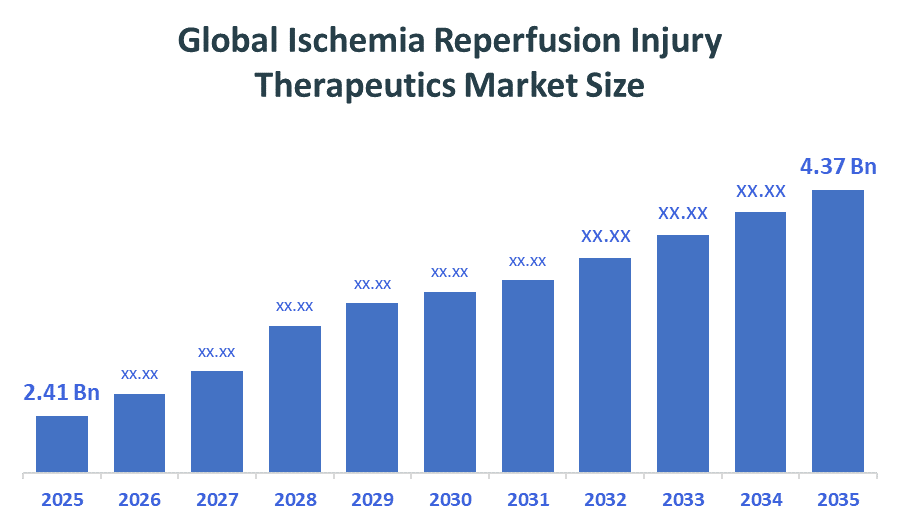
The Global Ischemia Reperfusion Injury Therapeutics Market Size is forecast to grow from USD 2.41 Billion in 2025 to approximately USD 4.37 Billion by 2035. According to Decision Advisors, a detailed research report on the Ischemia reperfusion injury therapeutics market indicates that biologics expansion dominates the market, accounting for approximately 14% of the total share globally. Pfizer Inc. the market with an estimated 18% global market share. The company reported a 2025 revenue of approximately USD 62-64 billion, making it one of the most influential forces shaping industry trends and overall market growth.
Market Snapshot
- Global Ischemia Reperfusion Injury Therapeutics Market Size (2025): USD 2.41 Billion
- Projected Global Ischemia Reperfusion Injury Therapeutics Market Size (2035): USD 4.37 Billion
- Global Ischemia Reperfusion Injury Therapeutics Market Compound Annual Growth Rate (CAGR): 6.13%
- Largest Regional Market: North America
- Fastest Growing Region: Asia-Pacific
- 2nd Largest Region: Europe
- Base Year: 2025
- Historical Period: 2021–2024
- Forecast Period: 2026–2035
Market Overview/ Introduction
The Global Ischemia Reperfusion Injury Therapeutics Market refers to the worldwide industry focused on the development, production, and commercialization of drugs, biologics, and advanced therapies aimed at preventing or reducing tissue damage caused when blood supply returns after a period of ischemia. Ischemia Reperfusion Injury Therapeutics are medical interventions designed to mitigate oxidative stress, inflammation, and cellular damage that occur during reperfusion after ischemic events such as stroke, myocardial infarction, or organ transplantation. Market growth is driven by rising cardiovascular diseases, increasing transplant procedures, and advancements in biotechnology and regenerative medicine. Future opportunities include novel drug discovery, stem cell therapy, and targeted biologics, supported by growing clinical trials and healthcare investments worldwide driving significant global market expansion and adoption trends worldwide.
- The NIH Common Fund supports cross-cutting biomedical research, including cardiovascular diseases and ischemia-reperfusion injury mechanisms. It funds regenerative medicine, drug discovery, and translational therapies aimed at reducing tissue damage during reperfusion events. This scheme accelerates the development of innovative therapeutics and bridges basic science with clinical applications in global healthcare.
- The National Heart, Lung, and Blood Institute (NHLBI) funds research on myocardial ischemia, vascular injury, and reperfusion damage. It supports cell therapy, regenerative medicine, and pharmacological interventions targeting ischemia-reperfusion injury. These initiatives enhance therapeutic innovation and improve survival outcomes in cardiovascular and organ transplant patients.
Notable Insights: -
- North America is anticipated to hold the largest share of approximately 47% in the Ischemia reperfusion injury therapeutics market over the forecast period.
- Asia Pacific is expected to grow at a rapid CAGR of approximately 8% in the Ischemia reperfusion injury therapeutics market during the forecast period.
- The biologics treatment segment dominated the market in 2025, approximately 42%, and is projected to grow at a substantial CAGR during the forecast period.
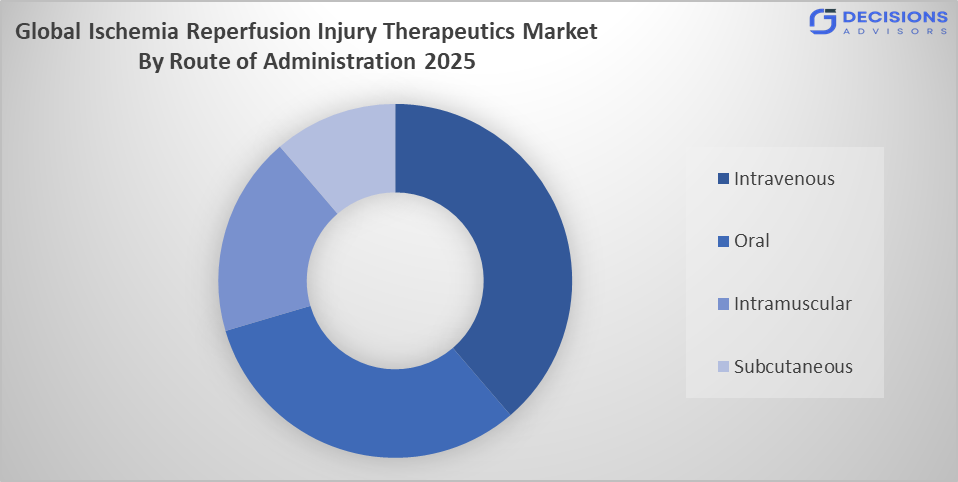
- The intravenous segment dominated the market in 2025, approximately 60%, and is projected to grow at a substantial CAGR during the forecast period.
- The hospitals segment dominated the market in 2025, approximately 68%, and is projected to grow at a substantial CAGR during the forecast period.
- The compound annual growth rate of the Global Ischemia Reperfusion Injury Therapeutics Market is 6.13%.
- The market is likely to achieve a valuation of USD 4.37 Billion by 2035.
What is role of technology in grooming the market?
Technology plays a crucial role in advancing the global ischemia reperfusion injury therapeutics market by improving drug discovery, treatment precision, and clinical outcomes. Artificial intelligence and machine learning accelerate the identification of therapeutic targets, reducing R&D time and enhancing the success rates of new drug candidates. Advanced biotechnology enables the development of biologics, gene therapies, and stem-cell–based treatments that directly address cellular damage caused by ischemia and reperfusion. Nanotechnology-based drug delivery systems improve targeted action, ensuring higher drug concentration at affected tissues with fewer side effects. Additionally, digital health tools and predictive analytics support early diagnosis and patient-specific treatment planning in emergency care settings. Integration of precision medicine allows tailored therapies based on genetic and clinical profiles. Overall, technological innovation is enhancing the efficiency, safety, and effectiveness of therapies, thereby significantly driving market growth globally.
Market Drivers
The global ischemia reperfusion injury therapeutics market is driven by the rising prevalence of cardiovascular diseases, stroke, and organ transplantation procedures worldwide. The increasing aging population and growing incidence of chronic conditions such as diabetes and hypertension further elevate the risk of ischemic events. Advancements in biologics, gene therapies, and regenerative medicine are improving treatment outcomes, boosting demand for innovative therapies. Rising clinical research activities and strong investment by pharmaceutical companies are accelerating drug development. Additionally, improved healthcare infrastructure, faster diagnosis, and increasing awareness among healthcare providers are supporting early intervention, thereby significantly driving market growth globally.
Restrain
The Global Ischemia Reperfusion Injury Therapeutics market faces restraints such as high treatment costs of advanced biologics and gene therapies, which restrain the global ischemia reperfusion injury therapeutics market. Limited availability of specialized infrastructure in developing regions and complex regulatory approval processes further delay drug commercialization. Additionally, a lack of standardized treatment protocols and high R&D failure rates hinder overall market expansion globally.
Competitive Analysis:
The report offers the appropriate analysis of the key organizations/companies involved within the global ischemia reperfusion injury therapeutics market, along with a comparative evaluation primarily based on their product offerings, business overviews, geographic presence, enterprise strategies, segment market share, and SWOT analysis. The report also provides an elaborative analysis focusing on the current news and developments of the companies, which includes product development, innovations, joint ventures, partnerships, mergers & acquisitions, strategic alliances, and others. This allows for the evaluation of the overall competition within the market.
Top Companies in Global Ischemia Reperfusion Injury Therapeutics Market
- Pfizer Inc.
- Novartis AG
- AstraZeneca plc
- Merck & Co., Inc.
- Bristol Myers Squibb
- Sanofi S.A.
- Johnson & Johnson
- Bayer AG
- AbbVie Inc.
- Gilead Sciences, Inc.
- Stealth BioTherapeutics Inc.
- Prolong Pharmaceuticals LLC
Government Initiatives
|
Country |
Key Government Initiatives |
|
US |
The U.S. government supports ischemia reperfusion injury therapeutics through NIH initiatives such as the Regenerative Medicine Innovation Project (RMIP) and NHLBI cardiovascular programs. These schemes fund stem cell therapy, cardioprotection research, and drug development for ischemic injury. |
|
UK |
The UK government promotes advanced biomedicine and cardiovascular innovation by funding genomic research and translational medicine. UKRI and NIHR support ischemia-reperfusion studies focusing on heart attack, stroke, and organ transplantation recovery, improving clinical trial speed and fostering collaboration between academia and biopharma companies for regenerative and cardioprotective therapeutics development. |
|
Europe |
The European Union supports the market through Horizon Europe and European Medicines Agency (EMA) frameworks, funding cardiovascular and ischemia-related research. These initiatives promote biomaterial-based therapies, gene therapy, and regenerative medicine to reduce reperfusion injury damage. EU strategies improve cross-border collaboration, clinical translation, and innovation in biologics and targeted drug delivery systems for ischemic disease treatment. |
Study on the Supply, Demand, Distribution, and Market Environment of the Ischemia Reperfusion Injury Therapeutics Market
The global ischemia reperfusion injury therapeutics market shows a moderately concentrated supply structure, dominated by major pharmaceutical companies focusing on biologics, antioxidants, and regenerative therapies. Supply is driven by continuous R&D investments and expanding clinical pipelines for cardiovascular and transplant-related treatments. Demand is rising due to increasing cases of myocardial infarction, stroke, and organ transplantation, creating strong need for rapid and effective therapeutic interventions. Distribution is primarily hospital-based, with drugs delivered through specialty pharmacies and institutional healthcare networks due to the emergency nature of treatment. The market environment is highly research-driven, supported by clinical trials, regulatory approvals, and strategic collaborations between biotech firms and research institutes. However, high treatment costs and complex approval pathways influence accessibility, while technological advancements and precision medicine are reshaping future supply-demand dynamics globally.
Price Analysis and Consumer Behaviour Analysis
The pricing structure in the global ischemia reperfusion injury therapeutics market is relatively high due to the dominance of biologics, gene therapies, and advanced hospital-based emergency treatments. Drug development costs, complex clinical trials, and strict regulatory approvals significantly increase final therapy prices, making treatments more premium and hospital-dependent. Pricing varies by therapy type, with innovative biologics costing substantially more than conventional drug therapies. Consumer behaviour is largely driven by hospitals, physicians, and healthcare institutions rather than individual patients, as treatments are administered in acute emergency settings such as cardiac surgery and organ transplantation. Demand is highly inelastic because these therapies are life-saving and time-critical. Healthcare providers prioritize efficacy, rapid action, and safety over cost. Increasing awareness of ischemia-related complications and rising adoption of precision medicine are further influencing purchasing decisions toward advanced, targeted therapeutic solutions globally.
Market Segmentation
The Ischemia Reperfusion Injury Therapeutics Market share is classified into drug class, route of administration, and end user.
- The biologics segment dominated the market in 2025, approximately 42%, and is projected to grow at a substantial CAGR during the forecast period.
Based on the drug class, the ischemia reperfusion injury therapeutics market is divided into small molecule drugs, biologics, gene therapy, and cell & tissue-based therapies. Among these, the biologics segment dominated the market in 2025, with approximately 42%, and is projected to grow at a substantial CAGR during the forecast period. The growth of the biologics segment is driven by their high specificity, targeted mechanisms, and strong efficacy in reducing oxidative stress and inflammation in ischemia reperfusion injury. Increasing adoption of monoclonal antibodies, protein therapies, and stem cell-based treatments is driving growth. Rising clinical trials further strengthen biologics’ leadership position in the market.
- The intravenous segment dominated the market in 2025, approximately 60%, and is projected to grow at a substantial CAGR during the forecast period.
Based on the route of administration, the ischemia reperfusion injury therapeutics market is divided into intravenous, oral, intramuscular, and subcutaneous. Among these,the intravenous segment dominated the market in 2025, approximately 60%, and is projected to grow at a substantial CAGR during the forecast period. The intravenous segment dominated due to ischemia reperfusion injury is an acute, emergency condition requiring rapid therapeutic action. IV drugs ensure immediate bioavailability and faster systemic response, especially in cardiac surgery, organ transplantation, and stroke care. Hospitals prefer IV delivery due to its effectiveness in critical care settings.
- The hospitals segment dominated the market in 2025, approximately 68%, and is projected to grow at a substantial CAGR during the forecast period.
Based on the end user, the ischemia reperfusion injury therapeutics market is divided into hospitals, specialty clinics, ambulatory surgical centers, and research & academic institutes. Among these, the hospitals segment dominated the market in 2025, approximately 68%, and is projected to grow at a substantial CAGR during the forecast period. The growth of the hospitals segment is due to high patient inflow for emergency conditions like myocardial infarction, stroke, and organ transplantation. Most ischemia reperfusion injury cases require intensive monitoring, surgical intervention, and immediate drug administration, making hospitals the primary treatment center. Advanced infrastructure further supports their leading market share.
Strategies to Implement for Growth of the Market in Non-Leading Regions
To expand the global ischemia reperfusion injury therapeutics market in non-leading regions such as Latin America, the Middle East, and parts of Asia-Pacific, companies should focus on improving healthcare accessibility and affordability of advanced therapies. Establishing local manufacturing and distribution networks can reduce treatment costs and strengthen supply chains. Strategic collaborations with regional hospitals, research institutes, and governments can support clinical trials and faster regulatory approvals. Increasing physician awareness through training programs and medical education is also crucial for early diagnosis and adoption of novel biologics and regenerative therapies. Investment in healthcare infrastructure, especially in cardiac and transplant centers, will further support demand growth. Additionally, adopting tiered pricing models and patient assistance programs can improve affordability. Together, these strategies can significantly enhance market penetration and accelerate therapeutic adoption in emerging and underserved regions.
Regional Segment Analysis of the Ischemia Reperfusion Injury Therapeutics Market
- North America (U.S., Canada, Mexico)
- Europe (Germany, France, U.K., Italy, Spain, Rest of Europe)
- Asia-Pacific (China, Japan, India, Rest of APAC)
- South America (Brazil and the Rest of South America)
- The Middle East and Africa (UAE, South Africa, Rest of MEA)
North America is anticipated to hold the largest share of approximately 47% the ischemia reperfusion injury therapeutics market over the forecast period.
North America is anticipated to hold the largest share of approximately 47% the ischemia reperfusion injury therapeutics market over the forecast period. The dominance of this region is driven by high prevalence of cardiovascular diseases, advanced healthcare infrastructure, and strong R&D investment. Presence of major biopharmaceutical companies and rapid adoption of novel biologics and gene therapies further strengthens its leadership position globally.
Asia Pacific is expected to grow at a rapid CAGR of approximately 8% in the ischemia reperfusion injury therapeutics market during the forecast period.
Asia Pacific is expected to grow at a rapid CAGR of approximately 8% in the ischemia reperfusion injury therapeutics market during the forecast period. This growth is fueled by rising cardiovascular disease burden, expanding healthcare infrastructure, and increasing clinical research activity. Growing medical investments in China, India, and Japan, along with improving access to advanced therapeutics, are accelerating regional market expansion significantly.
Europe is the 2nd largest region to grow in the ischemia reperfusion injury therapeutics market during the period.
Europe is the second-largest region in the ischemia reperfusion injury therapeutics market due to its strong healthcare infrastructure, high prevalence of cardiovascular and organ failure cases, and robust clinical research environment. Supportive government healthcare policies, increasing adoption of advanced biologics, and rising transplant procedures further drive consistent market growth across the region.
Future Market Trends in Global Ischemia Reperfusion Injury Therapeutics Market: -
1. Rise of Biologics & Targeted Therapies
Biologics and targeted therapies are becoming a key trend due to their ability to precisely block inflammatory and oxidative pathways involved in ischemia-reperfusion injury. Monoclonal antibodies and protein-based drugs improve treatment outcomes, reduce tissue damage, and offer higher specificity compared to conventional drugs, driving strong clinical adoption globally.
2. Growth of Regenerative & Gene Therapy Approaches
Regenerative medicine and gene therapies are emerging rapidly as they focus on repairing damaged tissues at the cellular level. Stem cell-based treatments and gene modulation techniques help restore organ function after ischemic events. Increasing clinical trials and promising early results are accelerating adoption in cardiovascular and transplant-related applications.
3. Expansion of AI-Driven Drug Discovery & Precision Medicine
AI and precision medicine are transforming drug development by enabling faster identification of therapeutic targets for ischemia-reperfusion injury. Machine learning models analyze patient-specific data to optimize treatment strategies. This reduces R&D time, improves success rates, and supports personalized therapies, making treatment more efficient and outcome-focused globally.
Recent Development
- In March 2026, SBI Pharmaceuticals in collaboration with University of Oxford initiated a Phase II clinical trial evaluating a cardioprotective therapy combining 5-ALA hydrochloride and sodium ferrous citrate to mitigate ischemia-reperfusion injury during cardiac bypass surgery, advancing innovations in the global ischemia reperfusion injury therapeutics market.
- In October 2024, ASN Kidney Week 2024, iCoat Medical presented Phase I/IIa ATMIRe trial data showing that iCM012 protected endothelial cells and reduced ischemia-reperfusion injury in preserved kidneys, while demonstrating favorable safety and graft outcomes, supporting further clinical development.
- In June 2024, Faraday Pharmaceuticals completed patient enrollment in the pivotal Phase III IOCYTE AMI-3 trial evaluating FDY-5301 for ischemia-reperfusion injury following STEMI heart attacks. The sodium iodide-based therapy aimed to reduce myocardial damage and heart failure risk after reperfusion. The trial supported global cardiovascular therapeutic innovation.
How is Recent Developments Helping the Market?
Recent developments are significantly boosting the global ischemia reperfusion injury therapeutics market by enhancing treatment precision and accelerating drug innovation. Advances in biologics, gene therapies, and stem-cell–based approaches are improving the ability to target oxidative stress and inflammation, which are key drivers of tissue damage during reperfusion. Increasing clinical trial activity is leading to faster validation of novel drug candidates, especially monoclonal antibodies and regenerative therapies, improving patient recovery outcomes in cardiac, renal, and neurological conditions. Additionally, partnerships between pharmaceutical companies and research institutes are fostering innovation in nanoparticle-based and targeted drug delivery systems, ensuring better drug localization and reduced side effects. Regulatory support for orphan and critical care therapies is further speeding approvals. Overall, these advancements are expanding treatment options, improving survival rates, and strengthening market growth across major healthcare regions globally.
Market Segment
This study forecasts revenue at global, regional, and country levels from 2020 to 2035. Decision Advisors has segmented the ischemia reperfusion injury therapeutics market based on the below-mentioned segments
Global Ischemia Reperfusion Injury Therapeutics Market, By Drug Class
- Small Molecule Drugs
- Biologics
- Gene Therapy
- Cell & Tissue-based Therapies
Global Ischemia Reperfusion Injury Therapeutics Market, By Route of Administration
- Intravenous
- Oral
- Intramuscular
- Subcutaneous
Global Ischemia Reperfusion Injury Therapeutics Market, By End User
- Hospitals
- Specialty Clinics
- Ambulatory Surgical Centers
- Research & Academic Institutes
Global Ischemia Reperfusion Injury Therapeutics Market, By Regional Analysis
- North America
- US
- Canada
- Mexico
- Europe
- Germany
- UK
- France
- Italy
- Spain
- Russia
- Rest of Europe
- Asia Pacific
- China
- Japan
- India
- South Korea
- Australia
- Rest of Asia Pacific
- South America
- Brazil
- Argentina
- Rest of South America
- Middle East & Africa
- UAE
- Saudi Arabia
- Qatar
- South Africa
- Rest of the Middle East & Africa
Frequently Asked Questions (FAQ)
Q. Which therapeutic approach is expected to gain the most clinical attention in the coming years?
A. Gene therapy and regenerative medicine are expected to gain strong clinical attention due to their ability to repair damaged tissues at the cellular level. These approaches aim for long-term recovery rather than short-term symptom control, making them highly promising in advanced ischemic injury treatment.
Q. How do emergency care requirements influence market dynamics?
A. The need for immediate intervention in conditions like heart attacks and organ transplants drives demand for fast-acting therapies. This increases reliance on hospital-based treatments and injectable drugs, shaping product development toward rapid-response formulations and improving overall market demand.
Q. What role do partnerships play in market expansion?
A. Collaborations between pharmaceutical companies, biotech firms, and academic institutions accelerate innovation and clinical trials. These partnerships help share expertise, reduce development costs, and speed up regulatory approvals, thereby strengthening product pipelines and expanding global market presence.
Q. Why is patient outcome improvement a key focus area for companies?
A. Improving survival rates and reducing long-term complications is critical in ischemia reperfusion injury cases. Companies focus on therapies that minimize tissue damage and enhance recovery, as better clinical outcomes increase adoption by healthcare providers and support long-term market growth.
Check Licence
Choose the plan that fits you best: Single User, Multi-User, or Enterprise solutions tailored for your needs.
We Have You Covered
- 24/7 Analyst Support
- Clients Across the Globe
- Tailored Insights
- Technology Tracking
- Competitive Intelligence
- Custom Research
- Syndicated Market Studies
- Market Overview
- Market Segmentation
- Growth Drivers
- Market Opportunities
- Regulatory Insights
- Innovation & Sustainability
Report Details
| Scope | Global |
| Pages | 240 |
| Delivery | PDF & Excel via Email |
| Language | English |
| Release | Apr 2026 |
| Access | Download from this page |