
Global Ischemic Stroke Market
 |
Pages:
250
|
Pages:
250
Global Ischemic Stroke Market Size, Share, and COVID-19 Impact Analysis, By Type (Thrombotic Stroke, Embolic Stroke, Lacunar Stroke, and Others), By Drug Class (Tissue Plasminogen Activator, Anticoagulant, Antiplatelet, and Antihypertensive), By Diagnosis (CT, MRI, Carotid Ultrasound, and Cerebral Angiography), and By Region (North America, Europe, Asia-Pacific, Latin America, Middle East, and Africa), Analysis and Forecast 2025-2035
REPORT COVERAGE
Global
Global Ischemic Stroke Market Size Insights Forecasts to 2035
- The Global Ischemic Stroke Market Size Was Estimated at USD 3.25 Billion in 2024
- The Market Size is Expected to Grow at a CAGR of around 5.44 % from 2025 to 2035
- The Worldwide Ischemic Stroke Market Size is Expected to Reach USD 5.82 Billion by 2035
- North America is expected to grow the fastest during the forecast period.
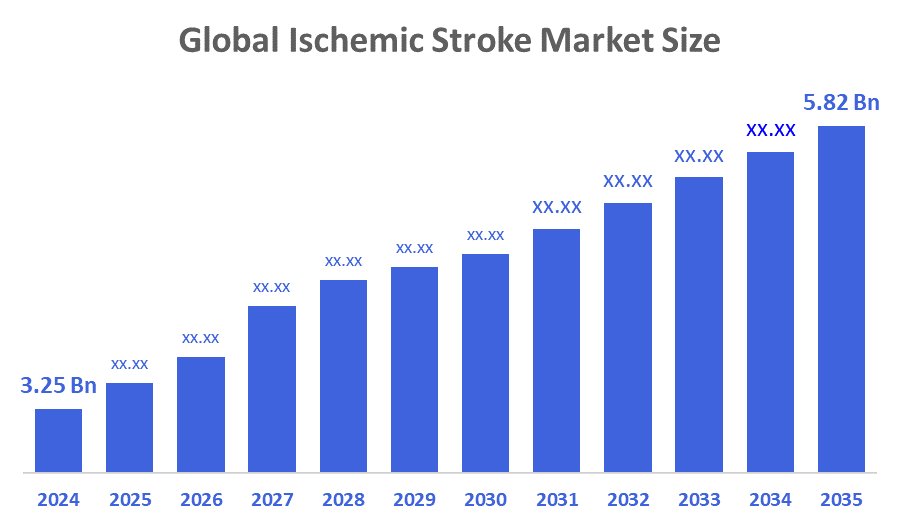
According to a research report published by Decisions Advisors and Consulting, The Global Ischemic Stroke Market Size Was Worth Around USD 3.25 Billion In 2024 And Is Predicted To Grow To Around USD 5.82 Billion By 2035 With A Compound Annual Growth Rate (CAGR) Of 5.44 % From 2025 To 2035. The market for ischemic strokes is seeing an increase in the focus on preventive measures as healthcare systems realise how critical it is to treat risk factors at an early stage. There are more and more programs designed to teach patients about risk management techniques and lifestyle modifications.
Market Overview
An ischemic stroke happens when an arterial blockage or blood clot obstructs blood flow to a particular brain region. Brain cells experience damage and permanent disability because the body lacks an essential blood supply, which delivers necessary oxygen and nutrients. Ischemic strokes are divided into two categories, which include thrombotic strokes that happen when blood clots form inside brain arteries and embolic strokes, which happen when blood clots travel from other body parts to the brain. The common symptoms associated with the ailment include trouble speaking and understanding speech, paralysis or numbness of the arm, face or leg, blurred or blackened vision, dizziness, severe headaches, altered consciousness, difficulty walking and other symptoms. The disease causes people to develop neck stiffness, emotional instability, personality changes, and confusion, which includes agitation and nausea followed by vomiting and memory loss. Physicians establish ischemic stroke diagnosis by using three assessment methods, which include neurological assessment, medical imaging and laboratory procedures. The healthcare provider uses various diagnostic methods, which include computerised tomography (CT) scan, electrocardiogram (ECG), magnetic resonance imaging (MRI) and electroencephalogram (EEG) to establish a diagnosis.
FreeOx Biotech launched a €2.5 million funding round to advance its ischemic stroke therapy, Ox-01. The spin-off from Hospital Clínic de Barcelona aims to support upcoming Phase IIb/III trials in the U.S., with NIH/NINDS backing, targeting the unmet need for effective cerebroprotective treatment.
Imperative Care announced the closing of an $85 million Series C financing round to accelerate the development and commercialisation of its innovative stroke treatment portfolio. This financing positions Imperative Care to scale its stroke technologies globally, aiming to improve patient outcomes and broaden access to advanced interventions.
Report Coverage
This research report categorizes the ischemic stroke market based on various segments and regions, forecasts revenue growth, and analyzes trends in each submarket. The report analyses the key growth drivers, opportunities, and challenges influencing the ischemic stroke market. Recent market developments and competitive strategies, such as expansion, product launch, development, partnership, merger, and acquisition, have been included to draw the competitive landscape in the market. The report strategically identifies and profiles the key market players and analyzes their core competencies in each sub-segment of the ischemic stroke market.
Driving Factors
The ischemic stroke market is experiencing growth because of increasing high cholesterol cases, which result in arterial fatty deposits that heighten blood clotting risks. The market expansion receives additional support from rising occurrences of risk factors, which include obesity, smoking, excessive alcohol consumption, high blood pressure and other medical conditions. The market achieves positive growth because tissue plasminogen activator has become a popular treatment method, which breaks up blood clots while restoring brain blood circulation. The market growth receives additional support from cerebral angiography expansion because it uses contrast dye to create X-ray images that show blockages and abnormalities in the brain's blood vessels needed for medical diagnosis. Key industry companies are dedicating substantial resources to research and development efforts that aim to enhance disease understanding while creating sophisticated disease detection and diagnosis methods that deliver faster and more precise results. This factor functions as a vital component that drives market expansion.
RapidPulse raised additional funding to advance its ischemic stroke therapies, building momentum for its RapidPulse Cyclic Aspiration System. Across clinical studies, the device achieved first-pass full reperfusion rates of 60–69%, a substantial improvement over current-generation devices, which typically achieve 40–42%. The company plans to use the financing to expand clinical evaluation and move toward FDA approval.
Restraining Factors
The market for ischemic stroke is hampered by high treatment costs, a lack of strict regulations, and limited access to modern medicines in developing nations. Furthermore, post-treatment problems and an absence of rehabilitation infrastructure hinder market expansion and prevent widespread adoption.
Market Segmentation
The Ischemic Stroke market share is classified into drug class and diagnosis.
- The thrombotic stroke segment accounted for the largest share in 2024 and is anticipated to grow at a significant CAGR during the forecast period.
Based on the type, the ischemic stroke market is segmented into thrombotic stroke, embolic stroke, lacunar stroke, and others. Among these, the thrombotic stroke segment accounted for the largest share in 2024 and is anticipated to grow at a significant CAGR during the forecast period. The formation of a blood clot within a blood vessel of the brain is often associated with atherosclerotic disease. This segment dominates the ischemic stroke market due to its higher incidence rates, driven by lifestyle factors and comorbidities like hypertension and diabetes.
Infusing clot-buster medication after clot removal may enhance stroke recovery, offering improved outcomes by combining mechanical thrombectomy with pharmacological reperfusion in the critical post-procedure window.
- The antiplatelet segment accounted for the largest share in 2024 and is anticipated to grow at a significant CAGR during the forecast period.
Based on the drug class, the ischemic stroke market is segmented into tissue plasminogen activator, anticoagulant, antiplatelet, and antihypertensive. Among these, the antiplatelet segment accounted for the largest share in 2024 and is anticipated to grow at a significant CAGR during the forecast period. Their standard for managing ischemic stroke and secondary prevention is antiplatelet agents like clopidogrel and aspirin. Most patients can use them; they're generally available, affordable, and often suggested by worldwide recommendations, which guarantees widespread adoption in both established and developing healthcare systems.
Bayer’s asundexian, an oral Factor XIa inhibitor, has shown a breakthrough in secondary stroke prevention. In the Phase III OCEANIC?STROKE trial, patients who had experienced a non-cardioembolic ischemic stroke or high-risk transient ischemic attack (TIA) and received asundexian (50 mg once daily on top of antiplatelet therapy) had a 26% relative risk reduction in recurrent ischemic stroke compared with placebo.
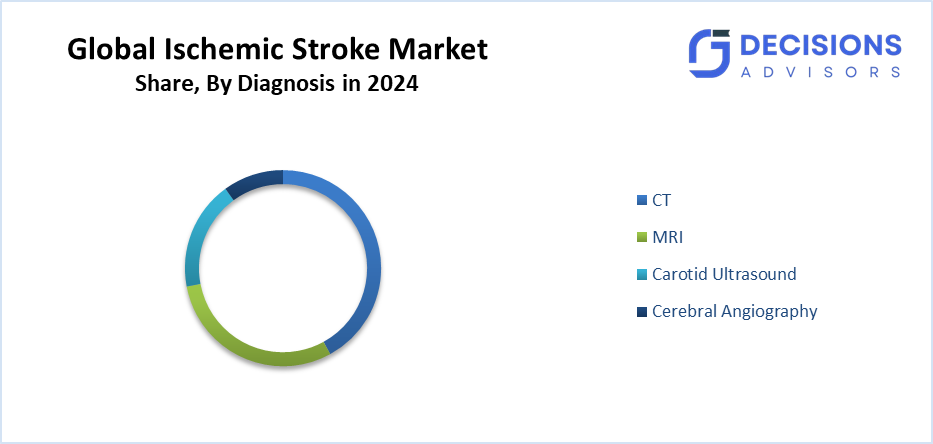
- The CT segment accounted for the highest market share in 2024 and is anticipated to grow at a notable CAGR over the forecast period.
Based on the diagnosis, the ischemic stroke market is differentiated into CT, MRI, carotid ultrasound, and cerebral angiography. Among these, the CT segment accounted for the highest market share in 2024 and is anticipated to grow at a notable CAGR over the forecast period. The quickest and most easily available emergency imaging method for stroke is CT, which is essential for differentiating between ischemic and hemorrhagic patients. It is essential for prompt therapies like thrombolysis or thrombectomy in situations with limited resources since it is affordable, widely accessible, and produces quick results.
Regional Segment Analysis of the Ischemic Stroke Market
- North America (U.S., Canada, Mexico)
- Europe (Germany, France, U.K., Italy, Spain, Rest of Europe)
- Asia-Pacific (China, Japan, India, Rest of APAC)
- South America (Brazil and the Rest of South America)
- The Middle East and Africa (UAE, South Africa, Rest of MEA)
Asia Pacific is anticipated to hold the largest share of the ischemic stroke market over the predicted timeframe.
Asia Pacific is anticipated to hold the largest share of the ischemic stroke market over the predicted timeframe. The expansion of this sector occurs because of three factors, which include higher healthcare spending, greater public knowledge about stroke prevention and better healthcare facilities. The high population numbers of China and India, who suffer from rising lifestyle-related health conditions, are driving these countries to seek better methods of stroke treatment. China leads the regional market through its major funding of both healthcare technology and pharmaceutical research activities. The different healthcare requirements of the region create possibilities for developing new treatment methods that will improve patient outcomes and healthcare access for locals.
The Indian Council of Medical Research (ICMR) handed over Mobile Stroke Units to the Government of Assam, bringing life-saving stroke care closer to homes in rural, remote, and difficult terrain. The initiative cuts treatment time dramatically, enabling rapid diagnosis and intervention within the critical golden hour.
Sixteen Indian hospitals, led by AIIMS Delhi, have united to launch the GRASSROOT trial (Gravity Stent-Retriever System for Reperfusion of Large Vessel Occlusion Stroke) — the country’s first multicenter device trial for acute ischemic stroke treatment. The device, developed by Gravity Medical Technology (U.S.), is specifically designed to address clot characteristics common in Indian patients.
North America is expected to grow at a rapid CAGR in the Ischemic Stroke market during the forecast period. The region experiences growth because of its advanced healthcare system, increased stroke symptom awareness and expanding population of elderly residents. The demand for stroke research and development facilities in this area increases because regulatory authorities support companies developing new treatments and medical devices. The United States leads the market because it has strong healthcare regulations and provides financial support for stroke research activities. The presence of major pharmaceutical companies in the area boosts both technology development and patient access to cutting-edge medical treatments.
The American Heart Association (AHA), with support from the Leona M. and Harry B. Helmsley Charitable Trust, has committed nearly $10 million to expand and enhance stroke care in Minnesota and South Dakota.
The 2026 Guideline for the Early Management of Patients With Acute Ischemic Stroke, a comprehensive update to the 2018 edition and its 2019 update, was published by the American Heart Association and the American Stroke Association. In a single document, the guideline offers clinicians treating patients with acute arterial ischemic stroke the most recent advice.
Competitive Analysis:
The report offers the appropriate analysis of the key organizations/companies involved within the Ischemic Stroke market, along with a comparative evaluation primarily based on their product offering, business overviews, geographic presence, enterprise strategies, segment market share, and SWOT analysis. The report also provides an elaborative analysis focusing on the current news and developments of the companies, which includes product development, innovations, joint ventures, partnerships, mergers & acquisitions, strategic alliances, and others. This allows for the evaluation of the overall competition within the market.
List of Key Companies
- AbbVie
- AstraZeneca
- Bayer AG
- Boehringer Ingelheim
- Imperative Care
- Johnson & Johnson (Janssen)
- Medtronic
- Merck & Co.
- Novartis AG
- Penumbra Inc.
- Pfizer Inc.
- Philips Healthcare
- Roche/Genentech
- Stryker Neurovascular
- Others
Key Target Audience
- Market Players
- Investors
- End-users
- Government Authorities
- Consulting and Research Firm
- Venture capitalists
- Value-Added Resellers (VARs)
Recent Development
- In March 2025, the FDA approved Genentech’s TNKase (tenecteplase) for the treatment of acute ischemic stroke in adults, marking the first new stroke medicine approved in nearly 30 years. TNKase is administered as a single five-second intravenous bolus, offering faster and simpler delivery compared to the standard alteplase infusion. Genentech now has the only two FDA-approved thrombolytics for stroke: TNKase and Activase (alteplase).
- In February 2025, Johnson & Johnson MedTech launched the CEREGLIDE 92 Catheter System for treating acute ischemic stroke. The next-generation 0.092-inch catheter, featuring the InnerGlide 9 delivery aid and TruCourse technology, is designed to optimise distal access to the M1 segment, improve trackability, and support multiple neurovascular tools. The system aims to enhance revascularisation outcomes while reducing procedural challenges, and is now commercially available in the U.S.
Market Segment
This study forecasts revenue at global, regional, and country levels from 2020 to 2035. Decisions Advisors has segmented the ischemic stroke market based on the below-mentioned segments:
Global Ischemic Stroke Market, By Type
- Thrombotic Stroke
- Embolic Stroke
- Lacunar Stroke
- Others
Global Ischemic Stroke Market, By Drug Class
- Tissue Plasminogen Activator
- Anticoagulant
- Antiplatelet
- Antihypertensive
Global Ischemic Stroke Market, By Diagnosis
- CT
- MRI
- Carotid Ultrasound
- Cerebral Angiography
Global Ischemic Stroke Market, By Regional Analysis
- North America
- US
- Canada
- Mexico
- Europe
- Germany
- UK
- France
- Italy
- Spain
- Russia
- Rest of Europe
- Asia Pacific
- China
- Japan
- India
- South Korea
- Australia
- Rest of Asia Pacific
- South America
- Brazil
- Argentina
- Rest of South America
- Middle East & Africa
- UAE
- Saudi Arabia
- Qatar
- South Africa
- Rest of the Middle East & Africa
Frequently Asked Questions (FAQ)
1. How is artificial intelligence (AI) influencing the ischemic stroke market?
Artificial intelligence is increasingly being integrated into stroke diagnosis and treatment planning. AI-powered imaging tools help detect large vessel occlusions, interpret CT/MRI scans faster, and support decision-making in emergency settings. This reduces time-to-treatment and improves patient outcomes, thereby accelerating the adoption of advanced diagnostic technologies in the ischemic stroke market.
2. What role do telemedicine and mobile stroke units play in market expansion?
Telemedicine and mobile stroke units (MSUs) are transforming acute stroke care delivery, especially in rural and underserved areas. These technologies enable faster diagnosis and early thrombolytic administration within the “golden hour,” increasing demand for portable imaging systems, clot-dissolving drugs, and interventional devices.
3. How does the growing geriatric population impact the ischemic stroke market?
The rising global elderly population significantly increases the prevalence of stroke risk factors such as atrial fibrillation, hypertension, and atherosclerosis. As individuals aged 65 and above are more vulnerable to ischemic stroke, expanding ageing demographics directly contribute to long-term market growth.
4. What is the impact of personalised medicine on ischemic stroke treatment?
Personalised medicine is gaining traction through genetic profiling and biomarker-based treatment selection. Tailoring antiplatelet or anticoagulant therapy based on patient-specific risk profiles improves efficacy and safety, encouraging pharmaceutical innovation and precision-based therapeutic development.
5. How are reimbursement policies affecting the ischemic stroke market?
Favourable reimbursement frameworks in developed countries are promoting the adoption of advanced thrombectomy devices, imaging systems, and novel drug therapies. However, inconsistent reimbursement structures in emerging markets can limit access to innovative stroke treatments, influencing regional growth variations.
6. What technological advancements are expected to shape the future competitive landscape?
Next-generation neurovascular devices, improved clot retrieval systems, minimally invasive catheters, and combination pharmacological-mechanical therapies are expected to redefine treatment standards. Additionally, digital health integration and remote patient monitoring may enhance post-stroke rehabilitation management, creating new revenue streams in the market.
Check Licence
Choose the plan that fits you best: Single User, Multi-User, or Enterprise solutions tailored for your needs.
We Have You Covered
- 24/7 Analyst Support
- Clients Across the Globe
- Tailored Insights
- Technology Tracking
- Competitive Intelligence
- Custom Research
- Syndicated Market Studies
- Market Overview
- Market Segmentation
- Growth Drivers
- Market Opportunities
- Regulatory Insights
- Innovation & Sustainability
Report Details
| Scope | Global |
| Pages | 250 |
| Delivery | PDF & Excel via Email |
| Language | English |
| Release | Feb 2026 |
| Access | Download from this page |