
Japan Aerospace Foam Market
 |
Author:
Atul K
|
Pages:
180
|
Author:
Atul K
|
Pages:
180
Japan Aerospace Foam Market Size, Share, and COVID-19 Impact Analysis, By Foam Type (Polyurethane Foam, Polyethylene Foam, Melamine Foam, Metal Foam, Polyimide Foam, and Others), By End-Use (General Aviation, Commercial Aviation, Military Aircraft, and Rotary Aircraft), and Japan Aerospace Foam Market Insights, Industry Trend, Forecasts to 2035
CAGR
7.01%
REVENUE 2025
Million 304.7
FORECAST 2035
Million 641.8
REPORT COVERAGE
Country
Japan Aerospace Foam Market Insights Forecasts to 2035
- The Japan Aerospace Foam Market Size Was Estimated at USD 304.7 Million in 2024
- The Market Size is Expected to Grow at a CAGR of around 7.01% from 2025 to 2035
- The Japan Aerospace Foam Market Size is Expected to Reach USD 641.8 Million by 2035
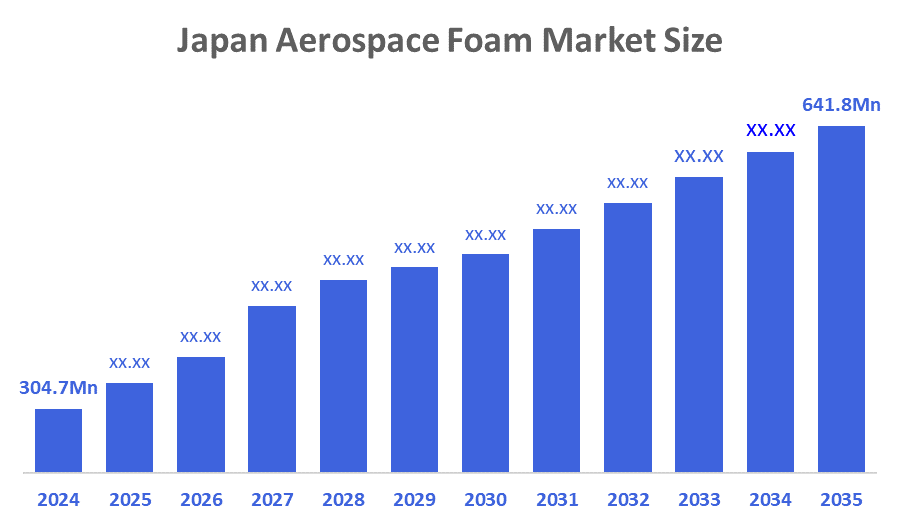
According To a Research Report Published By Decisions Advisors & Consulting, The Japan Aerospace Foam Market Size?Is Anticipated To Reach USD 641.8 Million By 2035, Growing At a CAGR of 7.01% From 2025 to 2035. The Japanese Aerospace Foam market is driven by the increasing commotion in air travel in recent years, which has propelled demand for aircraft across all end uses, including general aviation, commercial aviation, military aircraft, and rotary aircraft.
Market Overview
The Japan Aerospace Foam Market utilizes advanced materials science to develop and manufacture specialty foams, including metal and polyethylene foams. These materials are used to improve the aircraft's performance, reduce weight, and increase their durability. The demand for lighter and more durable foams is driving increased demand for products that provide both energy efficiency and superior noise reduction benefits for the commercial aerospace industry. Japan's aerospace foam market provides opportunities for commercial and defense growth by supporting new designs that meet customers' needs for higher performance, increased strength-to-weight ratios, improved fuel efficiency, and reduced noise, with applications including interiors (cabin, seating), structural components, and insulation using sustainable solutions, fire-retardant foams, and energy efficient materials such as Polyimide (PMI) and Polyurethane (PU). The government's support of this market has been made possible through investments in research and development, digital transformation, and sustainability, which are enabling the development of new lightweight materials for aircraft and the growth of the aerospace industry as it seeks to compete globally in safety and efficiency through the application of new technologies. The production of lightweight materials has benefited from Japan's strong manufacturing base and the synergy among the academic and industrial sectors through partnerships such as that established with the Japan Aerospace Exploration Agency (JAXA) for advanced space technology development.
Report Coverage
This research report categorizes the Japan aerospace foam market based on various segments and regions, and forecasts revenue growth and analyzes trends in each submarket. The report analyses the key growth drivers, opportunities, and challenges influencing the Japan aerospace foam market. Recent market developments and competitive strategies, such as expansion, Protein launch, development, partnership, merger, and acquisition, have been included to draw the competitive landscape in the market. The report strategically identifies and profiles the key market players and analyses their core competencies in each sub-segment of the Japan aerospace foam market.
Driving Factor
The Japanese aerospace foam market is driven by increased aircraft manufacturing, adoption of lightweight materials, and the growing demand for fuel-efficient aircraft. The rise in MRO activities, the growth of domestic and international air travel, and the demand for improved cabin comfort and safety are driving an increase in foam usage. The market for structural and interior applications is further bolstered by technological progress in polyurethane, polyethylene, and specialty foams.
Restraining Factor
The Japanese aerospace foam market is restrained by higher costs for materials and production, stringent regulatory requirements, and scarce resources for high-tech foam. The slow growth of regional carriers' fleets and the fluctuation of petrochemical prices also impede adoption, rendering alternatives that are competitive in terms of cost more appealing for certain aerospace applications.
Market Segmentation
The Japan aerospace foam market share is classified into foam type and end-use.
- The polyurethane (PU) dominated the market in 2024 and is expected to grow at a remarkable CAGR during the forecast period.
The Japanese aerospace foam market is segmented by foam type into polyurethane foam, polyethylene foam, melamine foam, metal foam, polyimide foam, and others. Among these, the polyurethane (PU) dominated the market in 2024 and is expected to grow at a remarkable CAGR during the forecast period. This is due to the versatile properties like durability, lightweight, and excellent thermal insulation. This material is widely used in aircraft interiors, offering significant weight savings, which is crucial for fuel efficiency.
- The commercial aviation segment dominated the market in 2024 and is expected to grow at a substantial CAGR during the predicted period.
The Japanese aerospace foam market is segmented by end-use into general aviation, commercial aviation, military aircraft, and rotary aircraft. Among these, the commercial aviation segment dominated the market in 2024 and is expected to grow at a substantial CAGR during the predicted period. This is due the impetus for modernizing fleets and enhancing fuel efficiency has heightened the application of lightweight, high-performance foams to decrease total aircraft weight. The market in this segment continues to be driven by the increase in passenger traffic and the growing demand for aircraft retrofitting and cabin upgrades.
Competitive Analysis:
The report offers the appropriate analysis of the key organizations/companies involved within the Japan Aerospace Foam market, along with a comparative evaluation primarily based on their Protein offering, business overviews, geographic presence, enterprise strategies, segment market share, and SWOT analysis. The report also provides an elaborate analysis focusing on the current news and developments of the companies, which includes Protein development, innovations, joint ventures, partnerships, mergers & acquisitions, strategic alliances, and others. This allows for the evaluation of the overall competition within the market.
List of Key Companies
- Mitsubishi Chemical Group
- Toray
- Teijin
- Asahi Kasei
- Kaneka
- Showa Aircraft Industry
- Others
Key Target Audience
- Market Players
- Investors
- End-users
- Government Authorities?
- Consulting and Research Firm
- Venture capitalists
- Value-Added Resellers (VARs)
Market Segment
This study forecasts revenue at the Japan, regional, and country levels from 2020 to 2035. Decisions Advisors has segmented the Japan Aerospace Foam market based on the below-mentioned segments:
Japan Aerospace Foam Market, By Foam Type
- Polyurethane Foam
- Polyethylene Foam
- Melamine Foam
- Metal Foam
- Polyimide Foam
- Others
Japan Aerospace Foam Market, By End-Use
- General Aviation
- Commercial Aviation
- Military Aircraft
- Rotary Aircraft
FAQ’s
Q: What is the Japan Aerospace Foam Market?
A: The Japan aerospace foam market refers to the production and utilization of lightweight, high-performance foams, such as polyurethane, polyethylene, melamine, metal, and polyimide foams, used in aircraft interiors, structural components, insulation, seating, and safety systems.
Q: What factors are driving the growth of the Japan Aerospace Foam Market?
A: Key drivers include rising aircraft manufacturing, increased passenger traffic, fleet modernization, growing demand for fuel-efficient aircraft, and advancements in lightweight foam materials that improve durability, insulation, and cabin comfort.
Q: Which foam type dominates the Japan aerospace foam market?
A: Polyurethane (PU) foam dominates the market due to its durability, lightweight nature, fire-retardant properties, and superior thermal insulation, making it widely used in cabin interiors and other structural applications.
Q: What is the expected market size of Japan’s aerospace foam industry by 2035?
A: The market is projected to reach USD 641.8 million by 2035, growing at a CAGR of 7.01% from 2025 to 2035.
Q: Who are the major players in the Japan Aerospace Foam Market?
A: Key companies include Mitsubishi Chemical Group, Toray, Teijin, Asahi Kasei, Kaneka, Showa Aircraft Industry, and several other specialized material manufacturers involved in the production of aerospace-grade foam.
Check Licence
Choose the plan that fits you best: Single User, Multi-User, or Enterprise solutions tailored for your needs.
We Have You Covered
- 24/7 Analyst Support
- Clients Across the Globe
- Tailored Insights
- Technology Tracking
- Competitive Intelligence
- Custom Research
- Syndicated Market Studies
- Market Overview
- Market Segmentation
- Growth Drivers
- Market Opportunities
- Regulatory Insights
- Innovation & Sustainability
Report Details
| Scope | Country |
| Pages | 180 |
| Delivery | PDF & Excel via Email |
| Language | English |
| Release | Dec 2025 |
| Access | Download from this page |