
Japan Aircraft Navigation System Market
 |
Pages:
180
|
Pages:
180
Japan Aircraft Navigation System Market Size, Share, And COVID-19 Impact Analysis, By Technology (Automatic Dependant Surveillance-Broadcast and Ground-based Navigation Systems), By Aircraft Type (Fixed-wing Aircraft and Rotary-wing Aircraft), By End Users (Commercial Aviation and Military Aviation), By Application (Flight Management Systems And Aircraft Positioning Systems), and Japan Aircraft Navigation System Market Insights, Industry Trend, Forecast To 2035
REPORT COVERAGE
Country
Japan Aircraft Navigation System Market Size Insights Forecasts to 2035
- The Japan Aircraft Navigation System Market Size is expected to grow at a CAGR of around 5.8% from 2025 to 2035
- The Japan Aircraft Navigation System Market Size is expected to hold a significant share by 2035
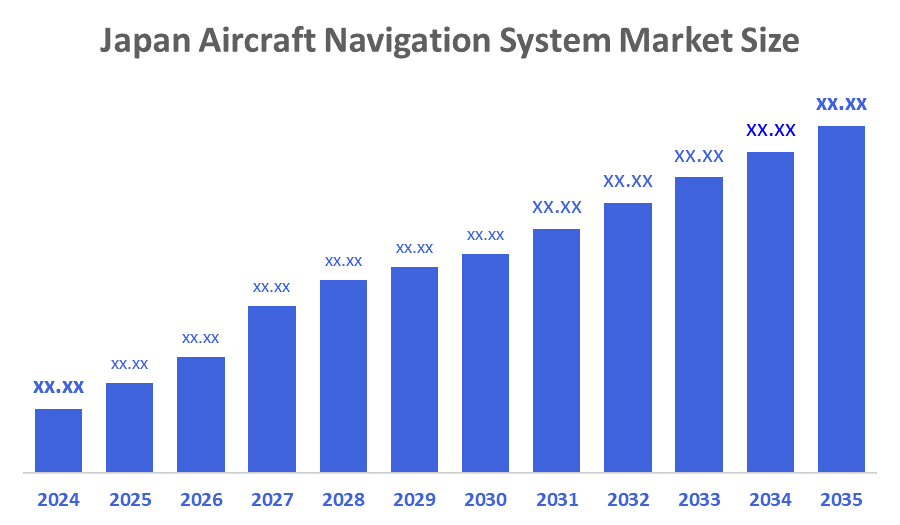
According to a Research Report Published by Decisions Advisors & Consulting, The Japan Aircraft Navigation System Market Size is expected to Grow at a CAGR of 5.8% during the forecast period 2025-2035. The Japan Aircraft Navigation System market is driven by a strong focus on aviation safety, rapid advances in software and sensor technologies, and growing pressure to improve fuel efficiency.
Market Overview
An aircraft navigation system refers to a suite of instruments and methods used in an airplane to establish its position and the path it shall follow towards a destination in relative safety. Since an airplane is not able to just stop in mid-air to establish its position, all these systems employ various technologies, including GPS from satellites and radio signals from the ground stations, among others such as VOR and ILS, and inertial navigation systems monitoring movements from an established initial position, to estimate position, speed, and direction of the aircraft. These technologies combine to guide the pilot through the planned route, considering aspects such as weather, airspace regulations, and fuel requirements. The primary objective is to ensure the safety, efficiency, and accuracy of the flight all the way to the destination.
The Japan navigation system market is one where designing, producing, and deploying technologies and services deliver precise positioning, navigation, and timing capabilities throughout Japan and the greater Asia–Oceania region. Japan has its own regional navigation infrastructure at the core of this industry: the Quasi-Zenith Satellite System, or Michibiki, which serves both as a RNSS and SBAS to help increase accuracy and reliability of positioning, navigation, and timing. The Japan aircraft navigation system market is growing rapidly, driven by new technology, upgrade cycles of aircraft fleets, and government initiatives to enhance flight safety and efficiency. Growth is underpinned by expanding commercial and defense aviation industries, coupled with demands for accurate and reliable navigation apparatus using modern technologies like AI, 5G, and satellite systems. Working in coordination with the U.S. GPS, it provides very accurate positioning across East Asia and Oceania. This indigenous satellite system further strengthens Japan's independence in navigation technology and supports advanced local developments such as NEC's GBAS, which assists in improving landing accuracy at airports such as Tokyo International Airport. Overall, the market is moving toward performance-based navigation and ensuring different navigation systems can work smoothly together to handle future air traffic needs in Japan.
Report Coverage
This research report categorizes the market for the Japan aircraft navigation system market based on various segments and regions, and forecasts revenue growth and analyses trends in each submarket. The report analyses the key growth drivers, opportunities, and challenges influencing the Japan aircraft navigation system market. Recent market developments and competitive strategies, such as expansion, product launch, development, partnership, merger, and acquisition, have been included to draw the competitive landscape in the market. The report strategically identifies and profiles the key market players and analyses their core competencies in each sub-segment of the Japan aircraft navigation system market.
Driving Factors
The Japan aircraft navigation system markets in Japan are driven by a strong focus on aviation safety, rapid advances in software and sensor technologies, and growing pressure to improve fuel efficiency. Modernization efforts such as the shift to performance-based navigation (PBN) and the expansion of the Quasi-Zenith Satellite System (QZSS) are further boosting demand for upgraded systems. Airlines are also seeking greater fleet commonality to simplify training and enhance operational reliability, supporting continued market growth. Also Passengers increasingly expect smoother, more reliable, and more punctual flights, which push airlines to adopt advanced navigation systems that reduce delays, optimize routes, and improve overall travel experience. Growing expectations for safety, comfort, and on-time performance make passenger satisfaction is an important driver of navigation system upgrades in Japan aircraft navigation system market
Restraining Factors
Japan aircraft navigation system market faces high upgrade and maintenance costs, complex system integration, and inconsistent data standards across countries. Cyber threats like jamming and spoofing, potential 5G interference, and component shortages add further technical challenges. Also strict regulations, export controls, and limited budgets make it difficult for companies to enter the market and invest in new developments.
Market Segmentation
The Japan aircraft navigation system market share is classified into technology, aircraft type, end- user[AB1] , and application.
- The ground-based navigation systems segment accounted for the largest revenue market share in 2024 and is expected to grow at a significant CAGR during the forecast period.
The Japan aircraft navigation system market is segmented by technology into automatic dependant surveillance-broadcast and ground-based navigation systems. Among these, the ground-based navigation systems segment accounted for the largest revenue market share in 2024 and is expected to grow at a significant CAGR during the forecast period. The segmental growth is driven by the need for enhanced accuracy and reliability in aircraft navigation and increased safety as well as precision and compatible with Japan’s QZSS satellite constellation. Also integration with emerging technologies such as Artificial Intelligence (AI), the internet of things (IoT) and 5G networks.
- The fixed-wing aircraft segment dominated the market in 2024 and is projected to grow at a substantial CAGR during the forecast period.
The Japan aircraft navigation system market is segmented by aircraft type into rotary-wing aircraft and fixed wing aircraft. Among these, fixed-wing aircraft segment dominated the market in 2024 and is projected to grow at a substantial CAGR during the forecast period. The growth of the segment is due to increased passenger and cargo carrying capacity and increased operational expenses as they have superior efficiency for long distances which are essential for both domestic and international commercial aviation and key military operations.
- The commercial aviation segment accounted for the largest revenue market share in 2024 and is expected to grow at a significant CAGR during the forecast period.
The Japan aircraft navigation system market is segmented by end users into commercial aviation and military aviation. Among these, the commercial aviation segment accounted for the largest revenue market share in 2024 and is expected to grow at a significant CAGR during the forecast period. The segmental growth is driven by a large existing fleet and continuous modernization efforts which includes performance-based navigation (PBN) and NextGen/SESAR integration. Also due to high air passenger traffic (both domestic and international), a strong tourism industry, a robust economy and substantial government investment in infrastructure.
- The flight management systems segment dominated the market in 2024 and is projected to grow at a substantial CAGR during the forecast period.
The Japan aircraft navigation system market is segmented by application into flight management systems and aircraft positioning systems. Among these, the flight management systems segment dominated the market in 2024 and is projected to grow at a substantial CAGR during the forecast period. The growth of the segment is due to growing demand for systems that manage air route traffic and ensure operational harmony between all flight elements. Japan has strong emphasis on operational safety and efficiency, government-led technological modernization, and a high volume of air traffic.
Competitive Analysis:
The report offers the appropriate analysis of the key organizations/companies involved within The Japan aircraft navigation systems market, along with a comparative evaluation primarily based on their product offering, business overviews, geographic presence, enterprise strategies, segment market share, and SWOT analysis. The report also provides an elaborate analysis focusing on the current news and developments of the companies, which includes product development, innovations, joint ventures, partnerships, mergers & acquisitions, strategic alliances, and others. This allows for the evaluation of the overall competition within the market.
List of Key Companies
- Airbus Japan K.K.
- Kawasaki Heavy Industries, Ltd.
- Mitsubishi Heavy Industries, Ltd.
- Raytheon
- Thales
- Saab
- Telephonics
- L3Harris Technologies
- JRC Manufactures Limited
- Others
Key Target Audience
- Market Players
- Investors
- End-users
- Government Authorities
- Consulting and Research Firm
- Venture capitalists
- Value-Added Resellers (VARs)
Recent Developments
- In April 2025, The ISO officially released the International standard for uncrewed aircraft detection and avoidance systems as “ISO15964 detection and avoidance systems for uncrewed aircraft systems.” This standard specifies the requirements for sensors and other components used in detection and avoidance systems that implement “ISO21384-3 Unmanned aircraft systems-Part 3: Operational procedures.” Japan contributed use cases for detection and avoidance with manned helicopters, which were based on the technical report “ISO/TR 23267: Experiment results on test methods for detection and avoidance systems for unmanned aircraft systems.” This report compiled various demonstration experiment results from the NEDO DRESS Project.
- In February 2025, Mitsubishi Heavy Industries, Ltd., the fifth satellite in the Japan’s QZSS network has successfully launched a navigation satellite on its flagship H3 rocket as the country seeks to have a precise positioning system of its own. Japan plans to have a seven satellite system by March 2026 for highly precise global positioning capabilities.
Market Segment
This study forecasts revenue at the Japan, regional, and country levels from 2024 to 2035. Decisions Advisors has segmented the Japan Aircraft Navigation System Market based on the below-mentioned segments:
Japan Aircraft Navigation System Market, By Technology
- Automatic Dependant Surveillance-Broadcast
- Ground-based Navigation Systems
Japan Aircraft Navigation System Market, By Aircraft Type
- Rotary-wing Aircraft
- Fixed-wing Aircraft
Japan Aircraft Navigation System Market, By End Users
- Commercial Aviation
- Military Aviation
Japan Aircraft Navigation System Market, By Application
- Flight Management Systems
- Aircraft Positioning Systems
FAQ’s
Q. What are the key driving factors for the growth of the Japan aircraft navigation system market?
A. The Japan aircraft navigation system markets in Japan are driven by a The Japan aircraft navigation system markets in Japan are driven by a strong focus on aviation safety, rapid advances in software and sensor technologies, and growing pressure to improve fuel efficiency. Modernization efforts such as the shift to performance-based navigation (PBN) and the expansion of the Quasi-Zenith Satellite System (QZSS) are further boosting demand for upgraded systems. Growing expectations for safety, comfort, and on-time performance make passenger satisfaction is an important driver of navigation system upgrades in Japan aircraft navigation system market.
Q. What are the top players operating in the Japan aircraft navigation system market?
A. Airbus Japan K.K., Kawasaki Heavy Industries, Ltd. , Mitsubishi Heavy Industries, Ltd., Raytheon, Thales, Saab, Telephonics, L3Harris Technologies, JRC Manufactures Limited and Others
Q. What segments are covered in the Japan aircraft navigation system report?
A. Japan aircraft navigation system market is segmented based on End Users, Aircraft Type, Technology and Application.
Q. Who are the key target audience in the Japan aircraft navigation system market?
A. Market Players, Investors, End-users, Government Authorities , Consulting and Research Firm, Venture capitalists and Value-Added Resellers (VARs).
Check Licence
Choose the plan that fits you best: Single User, Multi-User, or Enterprise solutions tailored for your needs.
We Have You Covered
- 24/7 Analyst Support
- Clients Across the Globe
- Tailored Insights
- Technology Tracking
- Competitive Intelligence
- Custom Research
- Syndicated Market Studies
- Market Overview
- Market Segmentation
- Growth Drivers
- Market Opportunities
- Regulatory Insights
- Innovation & Sustainability
Report Details
| Scope | Country |
| Pages | 180 |
| Delivery | PDF & Excel via Email |
| Language | English |
| Release | Dec 2025 |
| Access | Download from this page |