
Japan Baby Care Products Market
 |
Author:
Rahul B
|
Pages:
167
|
Author:
Rahul B
|
Pages:
167
Japan Baby Care Products Market Size, Share, and COVID-19 Impact Analysis, By Product Type (Baby Skin Care, Baby Hair Care, Baby Toiletries, and Baby Food and Beverages), By Distribution channel (Supermarkets and Hypermarkets, Convenience Stores, Pharmacies/Drug Stores, Online Stores, and Others), and Japan Baby Care Products Market Insights, Industry Trend, Forecasts to 2035
CAGR
5.75%
REVENUE 2025
Billion 10.02
FORECAST 2035
Billion 18.54
REPORT COVERAGE
country
Japan Baby Care Products Market Insights Forecasts to 2035
- The Japan Baby Care Products Market Size Was Estimated at USD 10.02 Billion in 2024
- The Market Size is Expected to Grow at a CAGR of Around 5.75% from 2025 to 2035
- The Japan Baby Care Products Market Size is Expected to Reach USD 18.54 Billion by 2035
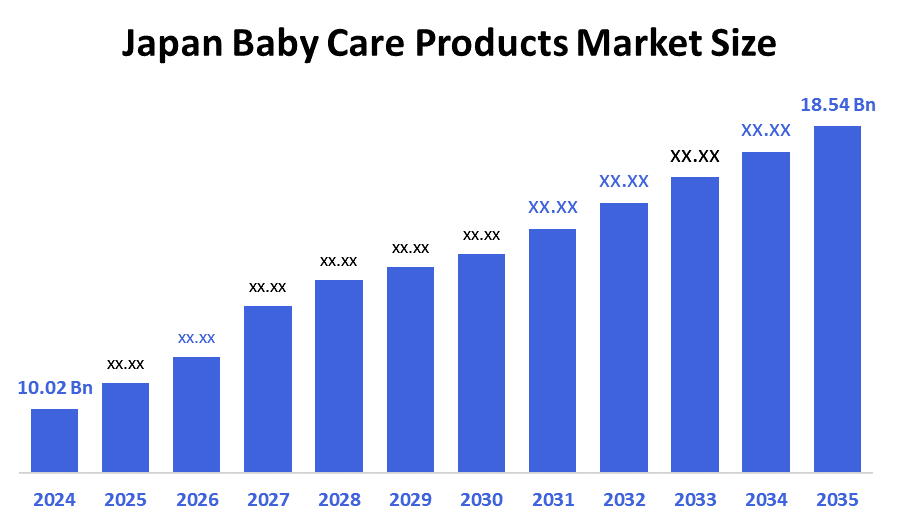
According to a research report published by Decision Advisior & Consulting, the Japan baby care products market size is anticipated to reach USD 18.54 billion by 2035, growing at a CAGR of 5.75% from 2025 to 2035. The baby care products market in Japan is driven by growing demand for luxury and organic baby products, growing digital retail channels, and increasing per-child spending despite falling birth rates.
Market Overview
The baby care product marketplace consists of many different varieties of baby care product lines that address the needs of newborns/toddlers for health, hygiene, safety, nutrition, and comfort. These lines can include baby skin care products, hair care products, diapers, feeding products, bath products, baby foods, safety accessories, etc. The market for baby care items in Japan is maintaining its trend of consistent growth, supported by higher expenditure per child, growing interest in premium and organic options, and the expansion of online sales channels for baby care products. In 2024, there were 678661 births in Japan for the first time, indicating a decline below the 700000 births/barrier on an annual basis. The latest total fertility rate is 1/20 children for every woman in 2023. This decrease in the number of children also means parents are going to spend more money on each individual child to provide higher-quality baby care products than ever before.
The premium segment continues to grow dramatically, even though there has been a decrease in overall consumer numbers. Therefore, the combination of urbanization and an increasing number of dual-income households drives the demand for baby care products that provide convenience. Recent patterns of increasing e-commerce utilization and the availability of natural, chemical-free, and biodegradable baby products will allow baby care brands to reach a larger consumer base throughout the country of Japan.
Report Coverage
This research report categorizes the market for the Japan baby care products market based on various segments and regions, and forecasts revenue growth and analyses trends in each submarket. The report analyses the key growth drivers, opportunities, and challenges influencing the Japan baby care products market. Recent market developments and competitive strategies, such as expansion, product launch, development, partnership, merger, and acquisition, have been included to draw the competitive landscape in the market. The report strategically identifies and profiles the key market players and analyses their core competencies in each sub-segment of the Japan baby care products market.
Driving Factors
The baby care products market in Japan is driven by an increase in the amount of money parents spend on their children and the increasing interest among parents to use quality, natural, and non-toxic baby care products. The ongoing growth of electronic commerce will continue to increase availability. The growing number of families in urban areas and the number of working mothers in dual-income families are further driving demand for convenient and multifunctional baby care products. The support of governmental initiatives and programs for the health and well-being of mothers and children indirectly contributes to the growth of the Japanese market for baby care products. Finally, numerous developments of hypoallergenic, chemical-free, and environmentally friendly baby care products have created additional opportunities for the growth of products such as skin care items, diapers, feeding items, and hygienic products.
Restraining Factors
The baby care products market in Japan is mostly constrained by a declining birth rate, limited population growth, and the high cost of premium and/or organic baby care products. Restraints include intense competition among baby care product manufacturers and a preference by many consumers for well-established brands, which can limit the success of new and/or niche manufacturers.
Market Segmentation
The Japan baby care products market share is classified into product type and distribution channel.
- The baby skin care segment accounted for the largest revenue market share in 2024 and is expected to grow at a significant CAGR during the forecast period.
The Japan baby care products market is segmented by product type into baby skin care, baby hair care, baby toiletries, and baby food and beverages. Among these, the baby skin care segment accounted for the largest revenue market share in 2024 and is expected to grow at a significant CAGR during the forecast period. Due to parents' preference for organic, hypoallergenic, and mild products for their infants' delicate skin, baby skin care products dominate the Japanese market. Lotions, cleansers, and bath products are the top and fastest-growing category due to rising safety consciousness and consumer willingness to pay more per child.
- The online stores segment accounted for the largest revenue share in 2024 and is expected to grow at a significant CAGR during the forecast period.
The Japan baby care products market is segmented by distribution channel into supermarkets and hypermarkets, convenience stores, pharmacies/drug stores, online stores, and others. Among these, the online stores segment accounted for the largest revenue share in 2024 and is expected to grow at a significant CAGR during the forecast period. This is due to the fact that e-commerce's convenience, more availability, and home delivery appeal to parents who are becoming busier and tech-savvy. Additionally, premium, organic, or specialty baby care goods that are sometimes inaccessible in physical stores are easily accessible through online purchasing, increasing both sales share and growth momentum.
Competitive Analysis:
The report offers the appropriate analysis of the key organizations/companies involved within the Japan baby care products market, along with a comparative evaluation primarily based on their product offering, business overviews, geographic presence, enterprise strategies, segment market share, and SWOT analysis. The report also provides an elaborate analysis focusing on the current news and developments of the companies, which includes product development, innovations, joint ventures, partnerships, mergers & acquisitions, strategic alliances, and others. This allows for the evaluation of the overall competition within the market.
List of Key Companies
- Pigeon Corporation
- Unicharm Corporation
- Kao Corporation
- Lion Corporation
- Akachan Honpo Co., Ltd.
- Aeon Retail Co., Ltd.
- Merries
- Moony
- Goo.n
- Combi Corporation
- Others
Key Target Audience
- Market Players
- Investors
- End-users
- Government Authorities
- Consulting and Research Firm
- Venture capitalists
- Value-Added Resellers (VARs)
Recent Developments:
- In June 2024, Jichi Medical Saitama Medical Center and Japan Medical Company Inc. partnered to conduct joint research on a baby head shape assessment app that is being used by patients who are receiving helmet therapy.
- In April 2024, Unicharm of Japan rolled out the first horizontally recycled nappy on the market, with South Japan the starting point for their launch. These eco-friendly nappies provide a solution to resource waste by utilizing waste materials (i.e., used nappies) as input for new products. The decontamination and sterilization of these materials occur during the manufacturing process and result in greater sustainability in nappy production.
Market Segment
This study forecasts revenue at the Japan, regional, and country levels from 2020 to 2035. Decision Advisior has segmented the Japan baby care products market based on the below-mentioned segments:
Japan Baby Care Products Market, By Product Type
- Baby Skin Care
- Baby Hair Care
- Baby Toiletries
- Baby Food and Beverages
Japan Baby Care Products Market, By Distribution Channel
- Supermarkets and Hypermarkets
- Convenience Stores
- Pharmacies/Drug Stores
- Online Stores
- Others
FAQ’s
Q: What is the Japan baby care products market size?
A: Japan baby care products market size is expected to grow from USD 10.02 billion in 2024 to USD 18.54 billion by 2035, growing at a CAGR of 5.75% during the forecast period 2025-2035.
Q: What are the key growth drivers of the market?
A: Market growth is driven by an increase in the amount of money parents spend on their children and the increasing interest among parents to use quality, natural, and non-toxic baby care products. The ongoing growth of electronic commerce will continue to increase availability. The growing number of families in urban areas and the number of working mothers in dual-income families are further driving demand for convenient and multifunctional baby care products. The support of governmental initiatives and programs for the health and well-being of mothers and children indirectly contributes to the growth of the Japanese market for baby care products.
Q: What factors restrain the Japan baby care products market?
A: Constraints include a declining birth rate, limited population growth, and the high cost of premium and/or organic baby care products.
Q: How is the market segmented by product type?
A: The market is segmented into baby skin care, baby hair care, baby toiletries, and baby food and beverages.
Q: Who are the key players in the Japan baby care products market?
A: Key companies include Pigeon Corporation, Unicharm Corporation, Kao Corporation, Lion Corporation, Akachan Honpo Co., Ltd., Aeon Retail Co., Ltd., Merries, Moony, Goo.n, Combi Corporation, and Others.
Q: Who are the target audiences for this market report?
A: The report targets market players, investors, end-users, government authorities, consulting and research firms, venture capitalists, and value-added resellers (VARs).
Check Licence
Choose the plan that fits you best: Single User, Multi-User, or Enterprise solutions tailored for your needs.
We Have You Covered
- 24/7 Analyst Support
- Clients Across the Globe
- Tailored Insights
- Technology Tracking
- Competitive Intelligence
- Custom Research
- Syndicated Market Studies
- Market Overview
- Market Segmentation
- Growth Drivers
- Market Opportunities
- Regulatory Insights
- Innovation & Sustainability
Report Details
| Scope | country |
| Pages | 167 |
| Delivery | PDF & Excel via Email |
| Language | English |
| Release | Dec 2025 |
| Access | Download from this page |