
Japan Biopharmaceutical Market
 |
Author:
Disha B
|
Pages:
188
|
Author:
Disha B
|
Pages:
188
Japan Biopharmaceutical Market Size, Share, and COVID-19 Impact Analysis, By Indication (Autoimmune Diseases, Oncology, Metabolic Disorders, and Others), By Class (Recombinant Proteins, Monoclonal Antibodies, Purified Proteins), and Japan Biopharmaceutical Market Insights, Industry Trend, Forecasts to 2035
CAGR
9.18%
REVENUE 2024
USD Million 13267.6
FORECAST 2035
USD Million 34857.7
REPORT COVERAGE
country
Japan Biopharmaceutical Market Insights Forecasts to 2035
- The Japan Biopharmaceutical Market Size Was Estimated at USD 13267.6 Million in 2024
- The Market Size is Expected to Grow at a CAGR of Around 9.18% from 2025 to 2035
- The Japan Biopharmaceutical Market Size is Expected to Reach USD 34857.7 Million by 2035
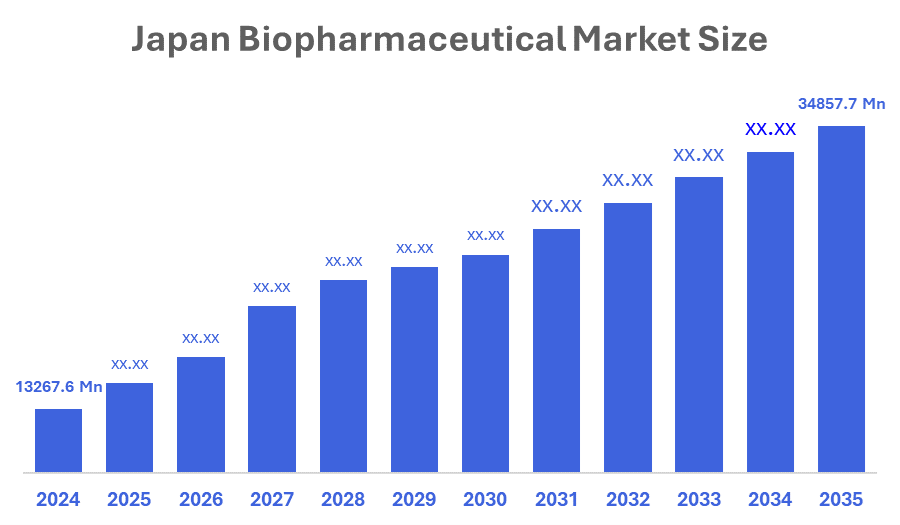
According to a research report published by Decision Advisors & Consulting, the Japan Biopharmaceutical Market size is anticipated to reach USD 34857.7 Million by 2035, growing at a CAGR of 9.18% from 2025 to 2035. The Japanese biopharmaceutical market is driven by increasing prevalence of chronic and rare diseases, an increase in the number and level of funding provided to develop advanced therapies such as monoclonal antibodies and cell & gene therapy, an increase in collaborations between domestic and global pharmaceutical companies, an increase in the use of personalized medicine, and lastly, government support for biotechnology innovation.
Market Overview
The Japan biopharmaceutical market refers to the biopharmaceutical manufacturing, such as monoclonal antibodies and recombinant proteins, which involves researching, developing, producing, and marketing therapeutic drugs made from living organisms or using their processes. Biopharmaceuticals are specialized treatments developed from a variety of biological materials to treat severe and chronic illnesses such as cancer, autoimmune diseases, and uncommon ailments. Trends within the industry are as increased use of targeted therapies, rapid growth within the area of regenerative medicine, and growing use of digital and artificial intelligence (AI) technologies for drug development. Characteristics of the industry include a significant amount spent on research and development (R&D), increased regulatory oversight, and an emphasis on precision medicine. The drivers leading to these trends include an increase in the prevalence of disease, improvements in technology, and a significant increase in partnerships between domestic and international participants in the industry.
Japanese government initiatives, such as support through the Pharmaceuticals and Medical Devices Agency (PMDA) and funding for regenerative medicine and gene therapy programs, have accelerated market growth.
Report Coverage
This research report categorizes the market for the Japan biopharmaceutical market based on various segments and regions, and forecasts revenue growth and analyses trends in each submarket. The report analyses the key growth drivers, opportunities, and challenges influencing the Japan biopharmaceutical market. Recent market developments and competitive strategies, such as expansion, product launch, development, partnership, merger, and acquisition have been included to draw the competitive landscape in the market. The report strategically identifies and profiles the key market players and analyses their core competencies in each sub-segment of the Japan biopharmaceutical market.
Driving Factors
The Japanese biopharmaceutical market is driven by the increased incidence of chronic and uncommon diseases, the heightened interest in monoclonal antibodies and other targeted biologics, and the expanding interest in both cell therapy and gene therapy. The growing number of partnerships between pharmaceutical companies from the United States and around the world, increased government funding for biotech research and development, and the transition toward personalized medicine also aid in the market's growth.
Restraining Factors
The Japanese biopharmaceutical market is restrained by the high development and manufacturing costs of biopharmaceuticals are expensive, heavily regulated, and have a complicated manufacturing process. Other factors that deter use are price sensitivity as well as reimbursement issues. The potential revenue of a biopharmaceutical may also be inhibited by competition from both generics and biosimilars.
Market Segmentation
The Japan biopharmaceutical market share is categorized by indication and class.
- The oncology indication segment accounted for the largest revenue market share in 2024 and is expected to grow at a significant CAGR during the forecast period.
The Japanese biopharmaceutical market is segmented by indication into autoimmune diseases, oncology, metabolic disorders, and others. Among these, the oncology segment accounted for the largest revenue market share in 2024 and is expected to grow at a significant CAGR during the forecast period. The segment is driven by the rising prevalence of cancer, increasing adoption of targeted therapies and immunotherapies, and strong investment in oncology research and development across Japan. Continuous innovation in biologic drugs and favorable regulatory support further contribute to the dominance of this segment.
- The monoclonal antibodies class segment accounted for the largest revenue market share in 2024 and is expected to grow at a significant CAGR during the forecast period.
The Japanese biopharmaceutical market is segmented by class into recombinant proteins, monoclonal antibodies, and purified proteins. Among these, the monoclonal antibodies segment held the largest market share in 2024 and is expected to grow at a significant CAGR during the forecast period. The segmental growth is driven by their high specificity, effectiveness in treating complex diseases such as cancer and autoimmune disorders, and expanding clinical applications. Increasing approvals of monoclonal antibody therapies and growing demand for personalized medicine continue to support segment growth in Japan.
Competitive Analysis
The report offers the appropriate analysis of the key organizations/companies involved within the Japan biopharmaceutical market, along with a comparative evaluation primarily based on their product offering, business overviews, geographic presence, enterprise strategies, segment market share, and SWOT analysis. The report also provides an elaborate analysis focusing on the current news and developments of the companies, which includes product development, innovations, joint ventures, partnerships, mergers & acquisitions, strategic alliances, and others. This allows for the evaluation of the overall competition within the market.
List of Key Companies
- Takeda Pharmaceutical Company Limited
- Astellas Pharma Inc.
- Chugai Pharmaceutical Co., Ltd.
- Mitsubishi Tanabe Pharma Corporation
- Eisai Co., Ltd.
- Daiichi Sankyo Company, Limited
- Kyowa Kirin Co., Ltd.
- Ono Pharmaceutical Co., Ltd.
- Nippon Shinyaku Co., Ltd.
- Others
Key Target Audience
- Market Players
- Investors
- End-users
- Government Authorities
- Consulting and Research Firm
- Venture capitalists
- Value-Added Resellers (VARs)
Recent Developments
- In April 2025, Kyowa Kirin completed construction of a new biologics manufacturing site in Takasaki, Japan, focused on antibody technology and protein engineering, boosting domestic biopharma production capacity and early-stage development readiness.
Market Segment Forecast
This study forecasts revenue at the Japan, regional, and country levels from 2020 to 2035. Decision Advisors has segmented the Japan Biopharmaceutical Market based on the below-mentioned segments:
Japan Biopharmaceutical Market, By Indication
- Autoimmune Diseases
- Oncology
- Metabolic Disorders
- Others
Japan Biopharmaceutical Market, By Class
- Recombinant Proteins
- Monoclonal Antibodies
- Purified Proteins
Frequently Asked Questions (FAQ’s)
Q: What is the Japan Biopharmaceutical Market size?
A: Japan Biopharmaceutical Market size is expected to grow from USD 13267.6 million in 2024 to USD 34857.7 million by 2035, growing at a CAGR of 9.18% during the forecast period 2025 to 2035.
Q: What are the key growth drivers of the market?
A: Market growth is driven by the rising prevalence of chronic and rare diseases, increasing demand for targeted biologics, and government support for biotechnology innovation.
Q: What factors restrain the Japan Biopharmaceutical Market?
A: High development and manufacturing costs, complex production processes, and reimbursement challenges.
Q: Who are the key players in the Japan Biopharmaceutical Market?
A: Key companies include Takeda, Astellas Pharma, Chugai Pharmaceutical, Mitsubishi Tanabe Pharma, Eisai, Daiichi Sankyo, Kyowa Kirin, Ono Pharmaceutical, and others
Check Licence
Choose the plan that fits you best: Single User, Multi-User, or Enterprise solutions tailored for your needs.
We Have You Covered
- 24/7 Analyst Support
- Clients Across the Globe
- Tailored Insights
- Technology Tracking
- Competitive Intelligence
- Custom Research
- Syndicated Market Studies
- Market Overview
- Market Segmentation
- Growth Drivers
- Market Opportunities
- Regulatory Insights
- Innovation & Sustainability
Report Details
| Scope | country |
| Pages | 188 |
| Delivery | PDF & Excel via Email |
| Language | English |
| Release | Dec 2025 |
| Access | Download from this page |