
Japan Cell Culture Market
 |
Author:
David J
|
Pages:
184
|
Author:
David J
|
Pages:
184
Japan Cell Culture Market Size, Share, and COVID-19 Impact Analysis, By Product (Consumables and Instruments), By Application (Biopharmaceutical Production, Drug Development, Tissue Culture & Engineering, Cell & Gene Therapy, Toxicity Testing, and Others), and Japan Cell Culture Market Insights, Industry Trend, Forecasts to 2035
CAGR
13.43%
REVENUE 2024
USD Million 1035.7
FORECAST 2035
USD Million 4141.6
REPORT COVERAGE
country
Japan Cell Culture Market Insights Forecasts to 2035
- The Japan Cell Culture Market Size Was Estimated at USD 1035.7 Million in 2024
- The Market Size is Expected to Grow at a CAGR of Around 13.43% from 2025 to 2035
- The Japan Cell Culture Market Size is Expected to Reach USD 4141.6 Million by 2035
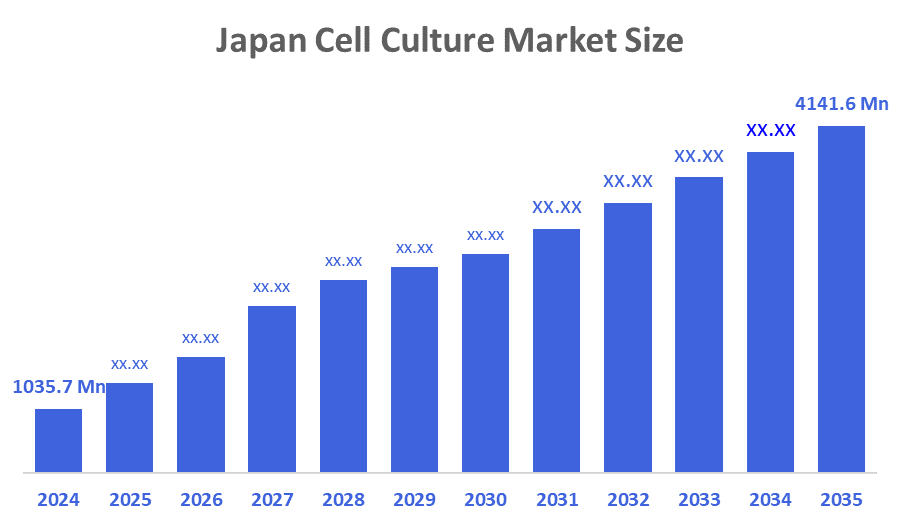
According to a research report published by Decision Advisors & Consulting, the Japan Cell Culture Market size is anticipated to reach USD 4141.6 million by 2035, growing at a CAGR of 13.43% from 2025 to 2035. The cell culture market in Japan is driven by the increase in demand for biopharmaceuticals, including gene therapies, recombinant proteins, and monoclonal antibodies. Moreover, the rapid adoption of scientific technologies and emerging therapeutics, such as regenerative medicines and cancer immunotherapies, is likely to strengthen the region’s growth over the forecast period.
Market Overview
The Japan cell culture market is exhibiting significant growth due to a more biopharma industry, a highly developed biotechnology ecosystem, focusing on regenerative medicine and the production of biologics. Cellular culture is defined as isolating, cultivating and maintaining cells in a controlled laboratory environment, allowing researchers to study cell behaviour, screen and develop drugs, and generate cell-based therapies. Cellular culture is one of the most fundamental components upon which modern biomedical research, Precision Medicine initiatives, and regenerative medicine applications have been established. The expansion of iPSC-based research and development and commercialisation will result in a greater need for scalable 3D culture platforms, good manufacturing practice grade consumables, and automated systems for bioprocessing. Increased investment in regenerative medicine for diseases such as ophthalmology, neurology and cardiac repair is driving the increased adoption of advanced culture platforms. In addition, the Japanese government supports the growth of the cell culture ecosystem by providing funding for large-scale projects in the areas of cell therapy, induced pluripotent stem cells through the Japan Agency for Medical Research and Development (AMED). The Regenerative Medicine Act and the Pharmaceuticals and Medical Devices Act (PMDA) provide accelerated approval pathways for cell-based products.
Report Coverage
This research report categorizes the market for the Japan cell culture market based on various segments and regions, and forecasts revenue growth and analyses trends in each submarket. The report analyses the key growth drivers, opportunities, and challenges influencing the Japan cell culture market. Recent market developments and competitive strategies, such as expansion, product launch, development, partnership, merger, and acquisition, have been included to draw the competitive landscape in the market. The report strategically identifies and profiles the key market players and analyses their core competencies in each sub-segment of the Japan cell culture market.
Driving Factors
The cell culture markets in Japan are driven by strong developments in regenerative medicine, growing iPSC research, and substantial biotechnology financing from AMED/MEXT. Adoption of sophisticated culture methods is boosted by the rising demand for biologics, vaccines, and customised treatments. High-quality cell culture equipment and technologies are being adopted more quickly thanks to government-backed clinical translation programs, automation in bioprocessing, and increased pharmaceutical R&D.
Restraining Factors
The cell culture market in Japan is mostly restrained by high cost of premium culture systems, and reliance on imported single-use components. Adoption is further hampered by limited local manufacturing capacity, supply-chain volatility, and the requirement for specialized infrastructure and skilled labour, especially among small research institutes and up-and-coming biotech companies.
Market Segmentation
The Japan cell culture market share is classified into product and application.
- The consumables segment accounted for the largest market share in 2024 and is expected to grow at a significant CAGR during the forecast period.
The Japanese cell culture market is segmented by product into consumables and instruments. among these, the consumables segment accounted for the largest market share in 2024 and is expected to grow at a significant CAGR during the forecast period. This dominance is due to the regular need for and acquisition of consumables. Also, increased R&D spending by biotechnology and biopharmaceutical companies to create advanced biologics, like monoclonal antibodies and vaccines, is another driver driving the segment's expansion.
- The biopharmaceutical production segment dominated the market in 2024 and is expected to grow at a significant CAGR during the forecast period.
The Japan cell culture market is segmented by application into biopharmaceutical production, drug development, tissue culture & engineering, cell & gene therapy, toxicity testing, and others. Among these, the biopharmaceutical production segment dominated the market in 2024 and is expected to grow at a significant CAGR during the forecast period. This is due to the usage of mammalian cell lines in the manufacturing of biopharmaceuticals and the growing need for alternative therapies are expected to lead to an increase in the biopharmaceutical applications of cell culture techniques.
Competitive Analysis:
The report offers the appropriate analysis of the key organizations/companies involved within the Japan Cell Culture market, along with a comparative evaluation primarily based on their product offering, business overviews, geographic presence, enterprise strategies, segment market share, and SWOT analysis. The report also provides an elaborate analysis focusing on the current news and developments of the companies, which includes product development, innovations, joint ventures, partnerships, mergers & acquisitions, strategic alliances, and others. This allows for the evaluation of the overall competition within the market.
List of Key Companies
- Takara Bio
- REPROCELL Inc.
- FUJIFILM Holdings
- Evident Corp.
- Nikon Cell Innovation
- Cyfuse Biomedical K.K.
- JMC Corporation
- Nippon Shokubai
- Others
Key Target Audience
- Market Players
- Investors
- End-users
- Government Authorities
- Consulting and Research Firm
- Venture capitalists
- Value-Added Resellers (VARs)
Market Segment
This study forecasts revenue at the Japan, regional, and country levels from 2020 to 2035. Decision Advisors has segmented the Japan Cell Culture Market based on the below-mentioned segments:
Japan Cell Culture Market, By Product
- Consumables
- Instruments
Japan Cell Culture Market, By Application
- Biopharmaceutical Production
- Drug Development
- Tissue Culture & Engineering
- Cell & Gene Therapy
- Toxicity Testing
- Others
FAQ’s
Q: What is the Japan Cell Culture Market and what does it include?
A: The Japan Cell Culture Market involves technologies, instruments, and consumables used to grow and maintain cells under controlled laboratory conditions. It includes culture media, reagents, bioreactors, consumables, and advanced systems used in drug development, biopharmaceutical production, regenerative medicine, and toxicity testing.
Q: Which segment held the largest market share in 2024?
A: The consumables segment accounted for the largest market share in 2024, supported by continuous demand for culture media, reagents, sera, and disposables used daily in biopharmaceutical R&D, manufacturing, and cell therapy workflows.
Q: Which application segment dominated the Japan Cell Culture Market in 2024?
A: The biopharmaceutical production segment dominated the market due to the increasing use of mammalian cell lines in producing monoclonal antibodies, recombinant proteins, and gene therapies.
Q: Who are the major players operating in the Japan Cell Culture Market?
A: Key companies include Takara Bio, REPROCELL Inc., Fujifilm Holdings, Evident Corporation, Nikon Cell Innovation, Cyfuse Biomedical K.K., JMC Corporation, and Nippon Shokubai, along with other regional and global biotechnology suppliers.
Q: How is the Japanese government supporting the cell culture industry?
A: The government supports growth through AMED funding, MEXT academic research programs, the Regenerative Medicine Act, and PMDA’s accelerated approval pathways, which promote innovation, clinical translation, and commercialization of cell-based products
Check Licence
Choose the plan that fits you best: Single User, Multi-User, or Enterprise solutions tailored for your needs.
We Have You Covered
- 24/7 Analyst Support
- Clients Across the Globe
- Tailored Insights
- Technology Tracking
- Competitive Intelligence
- Custom Research
- Syndicated Market Studies
- Market Overview
- Market Segmentation
- Growth Drivers
- Market Opportunities
- Regulatory Insights
- Innovation & Sustainability
Report Details
| Scope | country |
| Pages | 184 |
| Delivery | PDF & Excel via Email |
| Language | English |
| Release | Dec 2025 |
| Access | Download from this page |