
Japan Football Market
 |
Pages:
153
|
Pages:
153
Japan Football Market Size, Share, and COVID-19 Impact Analysis, By Type (Training Football, Match Football, and Others), By Size (Size 1, Size 2, Size 3, Size 4, and Size 5), By Distribution Channel (Online and Offline), and Japan Football Market Insights, Industry Trend, Forecasts to 2035
REPORT COVERAGE
Country
Japan Football Market Size Insights Forecasts to 2035
- The Japan Football Market Size Was Estimated at USD 195.6 Million in 2024
- The Market Size is Expected to Grow at a CAGR of Around 4.06% from 2025 to 2035
- The Japan Football Market Size is Expected to Reach USD 302.9 Million by 2035
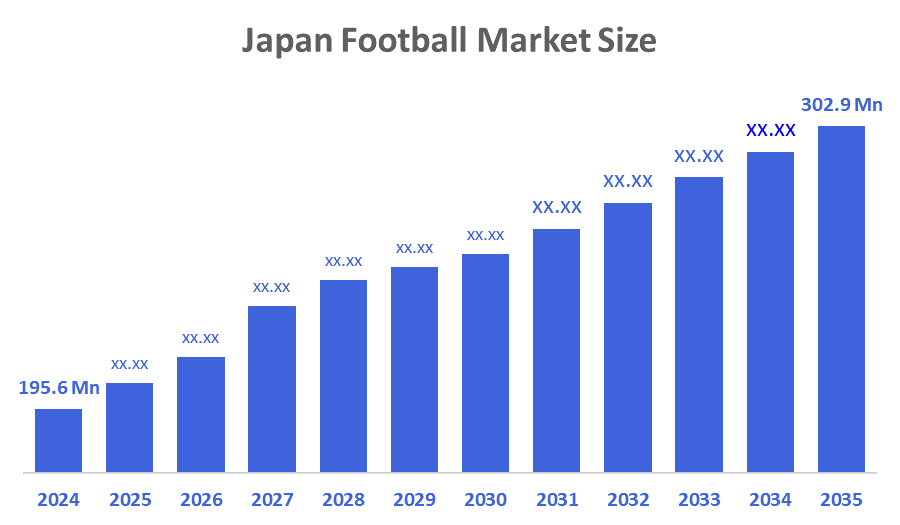
According to a Research Report Published by Decisions Advisors & Consulting, The Japan Football Market Size is anticipated to Reach USD 302.9 Million by 2035, Growing at a CAGR of 4.06% from 2025 to 2035. The football market in Japan is driven by expanding grassroots programs, advanced training technologies, rising global success of Japanese players, modern stadium upgrades, and strong community engagement that boosts participation, performance, fan loyalty, and long-term investment.
Market Overview
The football market encompasses all the various products, services, and activities related to the sport. The football market consists of all professional leagues and clubs, professional player development, broadcasting rights, sponsorships, merchandise sales, equipment sales, sports technology, stadium operations, and fan engagement, as well as grassroots programs. The football market includes both the business of football as well as the participation aspect of the sport. Growing grassroots initiatives, excellent young academies, and the increasing success of Japanese players abroad are all contributing factors to the robust expansion of the Japanese football market. The Japan Football Association (JFA), supported by FIFA Forward, receives significant funding to boost football development. For instance, FIFA Forward allocated nearly USD?3?million for youth leagues and national team programs, with up to USD?8?million available over 2023–2026. These funds support training facilities, scholarships, and grassroots initiatives, enhancing participation and nurturing football talent nationwide. The football market creates economic value from events, media, and commercial partnerships, training and educational infrastructure, and all other related football services. Recent examples include the J. League breaking the record for attendance on a single day (12.5 million in 2024), major partnerships with international clubs, and the continued promotion of youth programs, creating the foundation for the continual growth and professionalization of the market.
Report Coverage
This research report categorizes the market for the Japan football market based on various segments and regions, and forecasts revenue growth and analyses trends in each submarket. The report analyses the key growth drivers, opportunities, and challenges influencing the Japan football market. Recent market developments and competitive strategies, such as expansion, product launch, development, partnership, merger, and acquisition, have been included to draw the competitive landscape in the market. The report strategically identifies and profiles the key market players and analyses their core competencies in each sub-segment of the Japan football market.
Driving Factors
The football market in Japan is driven by a combination of strong government and JFA support, along with continual investment into grassroots and elite training programs. The professional league has continued to expand, including an emphasis on commercializing the league and improving the engagement of the fan base. Partnerships with global organizations, improvements to infrastructure, and funding through FIFA Forward have enhanced the ability of the clubs to continue developing new talent. Additionally, increased interest in viewing international tournaments and improved media exposure help to drive higher viewership, increased sponsorship opportunities, and added growth of the football market overall.
Restraining Factors
The football market in Japan is mostly constrained by the cost of infrastructure and training facilities, limited commercial revenue for smaller clubs, and competition from baseball and up-and-coming sports. The migration of talent overseas adds to the hurdle of creating a balanced domestic market, and uneven participation at the regional level inhibits balanced growth in the market.
Market Segmentation
The Japan football market share is classified into type, size, and distribution channel.
- The training football segment accounted for the largest revenue market share in 2024 and is expected to grow at a significant CAGR during the forecast period.
The Japan football market is segmented by type into training football, match football, and others. Among these, the training football segment accounted for the largest revenue market share in 2024 and is expected to grow at a significant CAGR during the forecast period. The increased volume demand across schools, academies, clubs, and grassroots programs, bolstered by the nationwide youth development initiatives of the Japan football association, is the driving force behind this leadership. The market share and long-term growth prospects of this segment are further strengthened by their cheaper cost, bulk procurement, and extensive use in community and educational activities.
- The size 5 segment accounted for the largest revenue share in 2024 and is expected to grow at a significant CAGR during the forecast period.
The Japan football market is segmented by size into size 1, size 2, size 3, size 4, and size 5. Among these, the size 5 segment accounted for the largest revenue share in 2024 and is expected to grow at a significant CAGR during the forecast period. This is due to the fact that, according to JFA and FIFA standards, size 5 is the official standard ball size used in professional leagues, tournaments, and adult contests. Size 5 footballs are the top revenue-generating segment due to strong and consistent purchasing, which is further supported by expanding youth-to-pro paths, increased competitive football participation, and ongoing training requirements.
- The offline segment accounted for the largest revenue share in 2024 and is expected to grow at a significant CAGR during the forecast period.
The Japan football market is segmented by distribution channel into online and offline. Among these, the offline segment accounted for the largest revenue share in 2024 and is expected to grow at a significant CAGR during the forecast period. This is due to the fact that consumers who wish to check product quality, test durability, and get professional advice before buying footballs continue to favor sporting goods stores, specialty sports retailers, and physical outlets. Additionally, schools, clubs, and training academies buy in bulk from reputable offline vendors.
Competitive Analysis:
The report offers the appropriate analysis of the key organizations/companies involved within the Japan football market, along with a comparative evaluation primarily based on their product offering, business overviews, geographic presence, enterprise strategies, segment market share, and SWOT analysis. The report also provides an elaborate analysis focusing on the current news and developments of the companies, which includes product development, innovations, joint ventures, partnerships, mergers & acquisitions, strategic alliances, and others. This allows for the evaluation of the overall competition within the market.
List of Key Companies
- Mizuno
- Molten
- Asics
- Jogarbola
- Mitsubishi Yowa
- KAMO
- Supersports Xebio
- Smaller / Niche Japanese Sports-Goods Makers
- Others
Key Target Audience
- Market Players
- Investors
- End-users
- Government Authorities
- Consulting and Research Firm
- Venture capitalists
- Value-Added Resellers (VARs)
Recent Developments:
- In August 2025, the brand value of Japanese professional soccer clubs participating in the J-League was ranked by an international report, and it was revealed that there has been an increase in the connection between fans with these clubs, which contributes to their increasing brand power in the marketplace.
- In June 2025, as part of its Climate Action Plan, the J-League (soccer league) entered into a partnership with a clean energy provider to create a sustainable source of electricity for its stadiums and to provide environmental education resources for local communities.
- In May 2025, one day of match attendance in the J-League shattered previous records by reaching nearly approx. 420,000 fans in a single day, indicating increased interest from fans in attending J-League matches.
Market Segment
This study forecasts revenue at the Japan, regional, and country levels from 2020 to 2035. Decisions Advisors has segmented the Japan football market based on the below-mentioned segments:
Japan Football Market, By type
- Training Football
- Match Football
- Others
Japan Football Market, By Size
- Size 1
- Size 2
- Size 3
- Size 4
- Size 5
Japan Football Market, By Distribution Channel
- Online
- Offline
FAQ’s
Q: What is the Japan football market size?
A: Japan Football market size is expected to grow from USD 195.6 million in 2024 to USD 302.9 million by 2035, growing at a CAGR of 4.06% during the forecast period 2025-2035.
Q: What are the key growth drivers of the market?
A: Market growth is driven by a combination of strong government and JFA support, along with continual investment into grassroots and elite training programs. The professional league has continued to expand, including an emphasis on commercializing the league and improving the engagement of the fan base. Partnerships with global organizations, improvements to infrastructure, and funding through FIFA Forward have enhanced the ability of the clubs to continue developing new talent.
Q: What factors restrain the Japan football market?
A: Constraints include the cost of infrastructure and training facilities, limited commercial revenue for smaller clubs, and competition from baseball and up-and-coming sports.
Q: How is the market segmented by distribution channel?
A: The market is segmented into online and offline.
Q: Who are the key players in the Japan football market?
A: Key companies include Mizuno, Molten, Asics, Jogarbola, Mitsubishi Yowa, KAMO, Supersports Xebio, Smaller / Niche Japanese Sports-Goods Makers, and Others.
Q: Who are the target audiences for this market report?
A: The report targets market players, investors, end-users, government authorities, consulting and research firms, venture capitalists, and value-added resellers (VARs).
Check Licence
Choose the plan that fits you best: Single User, Multi-User, or Enterprise solutions tailored for your needs.
We Have You Covered
- 24/7 Analyst Support
- Clients Across the Globe
- Tailored Insights
- Technology Tracking
- Competitive Intelligence
- Custom Research
- Syndicated Market Studies
- Market Overview
- Market Segmentation
- Growth Drivers
- Market Opportunities
- Regulatory Insights
- Innovation & Sustainability
Report Details
| Scope | Country |
| Pages | 153 |
| Delivery | PDF & Excel via Email |
| Language | English |
| Release | Dec 2025 |
| Access | Download from this page |