
Japan Healthcare-IT Market
 |
Author:
David J
|
Pages:
157
|
Author:
David J
|
Pages:
157
Japan Healthcare-IT Market Size, Share, and COVID-19 Impact Analysis, By Product (Healthcare Software Solutions, Healthcare IT Services, Digital Health Platforms, and Others), By Delivery Mode (On-Premise, Cloud-Based), By End User (Healthcare Providers, Healthcare Payers, and Others), and Japan Healthcare-IT Market Insights, Industry Trend, Forecasts to 2035
CAGR
7.51%
REVENUE 2025
Million 196.7
FORECAST 2035
Million 436.1
REPORT COVERAGE
Country
Japan Healthcare-IT Market Insights Forecasts to 2035
- The Japan Healthcare-IT Market Size Was Estimated at USD 196.7 Million in 2024
- The Market Size is Expected to Grow at a CAGR of Around 7.51% from 2025 to 2035
- The Japan Healthcare-IT Market Size is Expected to Reach USD 436.1 Million by 2035
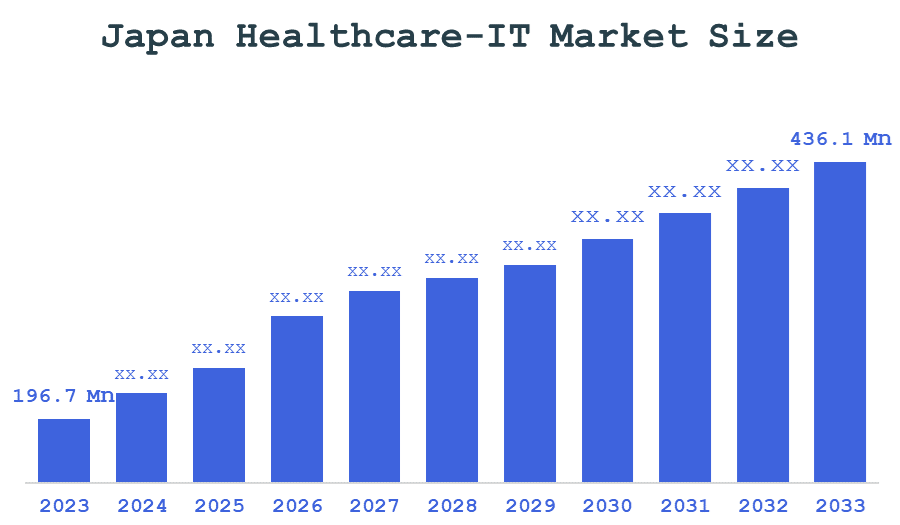
According to a Research Report Published by Decision Advisior & Consulting, the Japan Healthcare-IT Market size is anticipated to reach USD 436.1 Million by 2035, growing at a CAGR of 7.51% from 2025 to 2035. The Japan healthcare-IT market is driven by the rapid digitalization of healthcare services, rising adoption of electronic health records, and increasing demand for integrated healthcare information systems. Growth is also supported by expanding telehealth usage, investments in digital hospital infrastructure, and rising emphasis on efficient data management and improved clinical workflows across healthcare facilities.
Market Overview
The Japanese healthcare-IT market refers to digital technologies, software platforms, and IT services designed to enhance clinical operations, patient data management, telehealth delivery, and healthcare administration. These solutions include electronic health record systems, hospital information systems, telemedicine platforms, healthcare analytics tools, and digital workflow applications. The market is characterized by increasing adoption of cloud-based solutions, rising demand for digital transformation in hospitals, and growing integration of data analytics into clinical decision-making. Key drivers include the need for efficient healthcare data management, increasing demand for digital patient engagement, and the widespread shift toward connected care environments. Trends such as telehealth expansion, AI-based diagnostics, improved interoperability, and real-time data monitoring continue to shape market growth. The Japanese government supports the healthcare-IT sector through initiatives promoting digital health adoption, modernization of hospital IT infrastructure, funding for healthcare data platforms, and policies encouraging electronic medical record standardization and interoperability across healthcare facilities.
The Ministry of Health, Labour and Welfare (MHLW), together with other agencies, has revised policies and guidelines to facilitate wider adoption of telemedicine and online medical treatments. In June 2023, the “Basic Policy for Promoting Online Medical Treatments and Other Forms of Telemedicine” was published, laying the foundation for expanded remote care and digital health services. As part of healthcare?IT adoption, this policy supports the deployment of telehealth platforms, remote monitoring systems, and cloud?based patient?care tools.
Report Coverage
This research report categorizes the market for the Japan healthcare-IT market based on various segments and regions, and forecasts revenue growth and analyses trends in each submarket. The report analyses the key growth drivers, opportunities, and challenges influencing the Japan healthcare-IT market. Recent market developments and competitive strategies, such as expansion, product launch, development, partnership, merger, and acquisition, have been included to draw the competitive landscape in the market. The report strategically identifies and profiles the key market players and analyses their core competencies in each sub-segment of the Japan healthcare-IT market.
Driving Factors
The Japanese healthcare-IT market is driven by rising adoption of electronic health records, increasing demand for digital hospital infrastructure, and growing need for efficient patient data management systems. Expanding telehealth services, rapid progress in digital healthcare platforms, and rising adoption of cloud-based and AI-enabled technologies further fuel market growth. Additionally, government initiatives supporting digital health transformation and increasing healthcare facilities' investment in advanced information systems significantly drive the adoption of healthcare-IT solutions across Japan.
Restraining Factors
The Japanese healthcare-IT market faces restraints such as high implementation costs, data security concerns, and limited interoperability between legacy hospital systems. Shortages of IT-skilled healthcare professionals and complex integration processes also hinder faster market expansion.
Market Segmentation
The Japan Healthcare-IT Market share is categorized by product type and application.
- The Healthcare Software Solutions segment accounted for the largest revenue market share in 2024 and is expected to grow at a significant CAGR during the forecast period.
The Japanese healthcare-IT market is segmented by product type into healthcare software solutions, healthcare IT services, digital health platforms, and others. Among these, the healthcare software solutions segment accounted for the largest revenue market share in 2024 and is expected to grow at a significant CAGR during the forecast period. Growth is driven by increasing adoption of electronic health records, rising demand for hospital information systems, and expanding usage of clinical workflow management tools. Healthcare IT services and digital health platforms are also witnessing strong growth due to increasing digital transformation initiatives, cloud-based service adoption, and the rising need for scalable IT support solutions across healthcare systems.
- The Cloud-Based segment accounted for the largest revenue market share in 2024 and is expected to grow at a significant CAGR during the forecast period.
The Japanese healthcare-IT market is segmented by delivery mode into on-premise and cloud-based solutions. Among these, the cloud-based segment accounted for the largest revenue share in 2024 and is expected to grow at a significant CAGR during the forecast period. Growth is primarily driven by increasing adoption of remote data access, cost-efficient IT infrastructure, and the rise of telehealth platforms. Cloud-based healthcare IT solutions are preferred due to scalability, ease of integration, and reduced maintenance costs. The on-premise segment continues to serve organizations with strict data-control requirements, particularly large hospitals and institutions with legacy systems.
- The Healthcare Providers segment accounted for the largest revenue share in 2024 and is projected to grow significantly during the forecast period.
The Japanese healthcare-IT market is segmented by end user into healthcare providers, healthcare payers, and others. Among these, the healthcare providers segment accounted for the largest revenue share in 2024 and is projected to grow significantly during the forecast period. Growth is fueled by rising digital transformation across hospitals, increasing usage of electronic health records (EHRs), and strong demand for telemedicine and clinical analytics platforms. The healthcare payers segment is also expanding due to increasing adoption of claims management solutions, automated billing systems, and fraud detection technologies.
Competitive Analysis
The report offers the appropriate analysis of the key organizations/companies involved within the Japan healthcare-IT market, along with a comparative evaluation primarily based on their product offerings, business overviews, geographic presence, enterprise strategies, segment market share, and SWOT analysis. The report also provides an elaborate analysis focusing on the current news and developments of the companies, which includes product development, innovations, joint ventures, partnerships, mergers & acquisitions, strategic alliances, and others. This allows for the evaluation of the overall competition within the market.
List of Key Companies
- NEC Corporation
- Fujitsu Limited
- NTT Data Corporation
- Olympus Corporation
- Terumo Corporation
- SoftBank Corp.
- Hitachi Ltd.
- Cerner Japan
- Philips Healthcare
- IBM Japan
- Others
Key Target Audience
- Market Players
- Investors
- End-users
- Government Authorities
- Consulting and Research Firms
- Venture Capitalists
- Value-Added Resellers (VARs)
Recent Developments
• In January 2024, a leading healthcare-IT provider expanded its digital health platform offerings in Japan, strengthening its position in hospital information systems and remote patient monitoring technologies.
Market Segment
This study forecasts revenue at the Japan, regional, and country levels from 2020 to 2035. Decision Advisior has segmented the Japan Healthcare-IT Market based on the below-mentioned segments:
Japan Healthcare-IT Market, By Product Type
- Healthcare Software Solutions
- Healthcare IT Services
- Digital Health Platforms
- Others
Japan Healthcare-IT Market, By Delivery Mode
- On-Premise
- Cloud-Based
Japan Healthcare-IT Market, By End User
- Healthcare Providers
- Healthcare Payers
- Others
FAQs
Q. What are the key drivers of the Japan Healthcare-IT Market?
A: Key drivers include rising digital transformation in hospitals, increasing adoption of telehealth and remote monitoring solutions, the aging population, and government support for healthcare IT modernization.
Q. What are the major restraining factors for the Japan Healthcare-IT Market?
A: Restraints include high implementation costs, integration challenges with legacy systems, limited IT expertise in some healthcare facilities, and data security concerns.
Q. What trends are shaping the Japan Healthcare-IT Market?
A: Trends include the shift toward cloud-based solutions, expansion of telemedicine services, adoption of AI and analytics in patient care, and increased interoperability between healthcare systems.
Q. How is telemedicine influencing the Japan Healthcare-IT Market?
A: Telemedicine drives demand for cloud-based platforms, remote monitoring systems, and digital health tools, enabling hospitals and clinics to provide remote consultations and continuous patient care.
Q. How are government policies impacting healthcare IT adoption in Japan?
A: Government initiatives like EHR standardization, the Public Medical Hub, telemedicine promotion, and funding for digital health startups are accelerating adoption of healthcare IT solutions across hospitals, clinics, and other care facilities.
Check Licence
Choose the plan that fits you best: Single User, Multi-User, or Enterprise solutions tailored for your needs.
We Have You Covered
- 24/7 Analyst Support
- Clients Across the Globe
- Tailored Insights
- Technology Tracking
- Competitive Intelligence
- Custom Research
- Syndicated Market Studies
- Market Overview
- Market Segmentation
- Growth Drivers
- Market Opportunities
- Regulatory Insights
- Innovation & Sustainability
Report Details
| Scope | Country |
| Pages | 157 |
| Delivery | PDF & Excel via Email |
| Language | English |
| Release | Dec 2025 |
| Access | Download from this page |