
Japan Microgrid Market
 |
Author:
Somesh R
|
Pages:
210
|
Author:
Somesh R
|
Pages:
210
Japan Microgrid Market Size, Share, By Power Source (Natural Gas, Combined Heat & Power, Fuel Cell, Diesel, and Others), By Grid Type (On-grid, Off-grid, and Hybrid), By Application (Education, Government, Commercial, Utility, Defense, and Others), Japan Microgrid Market Insights, Industry Trend, Forecasts to 2035
CAGR
20.23%
REVENUE 2025
USD Billion 1.95
FORECAST 2035
USD Billion 14.8
REPORT COVERAGE
Country
Japan Microgrid Market Insights Forecasts to 2035
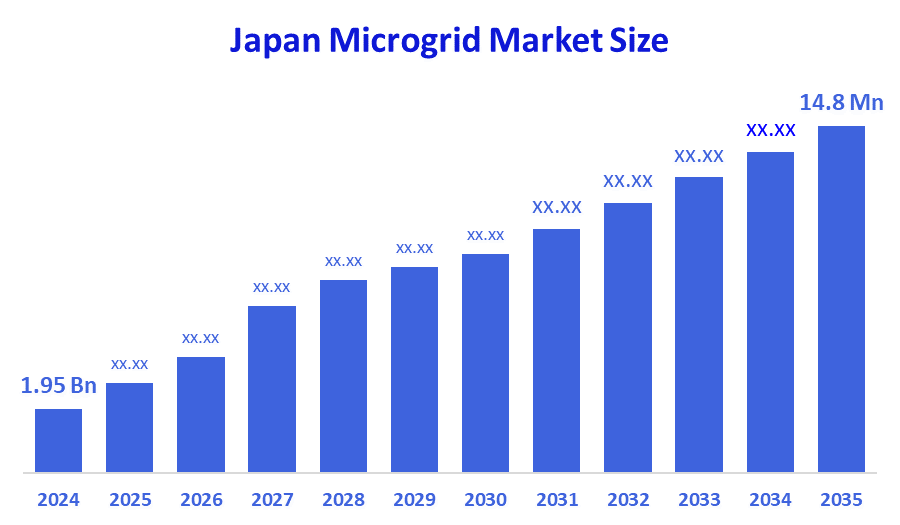
- Japan Microgrid Market Size 2024: USD 1.95 Bn
- Japan Microgrid Market Size 2035: USD 14.8 Bn
- Japan Microgrid Market CAGR 2024: 20.23%
- Japan Microgrid Market Segments: Power Source, Grid Type, and Application.
A microgrid is a localised energy system that can generate, distribute, and manage electricity either while connected to the main grid or in independent mode during outages or emergencies. It typically integrates renewable sources, energy storage, and advanced controls to provide reliable and resilient power tailored to local needs. Microgrids are typically built using a combination of renewable generation technologies, energy storage systems (ESS), and advanced control systems to supply a consistent, resilient, and durable local electricity source, as well as providing power that is tailored for the local community. The microgrid market in Japan is currently experiencing significant growth because of increasing demand for energy security, disaster preparedness, and sustainable energy alternatives.
Japanese government initiatives for microgrids through smart city projects and renewable energy programs support microgrid deployment as part of the long-term decarbonization strategy for Japan. The majority of microgrid deployment projects in Japan were designed, such as Fujisawa Sustainable Smart Town and Yokohama Smart City project, to increase efficiency and harness the sun's energy. The solar energy was then stored and gradually removed from the grid, thus reducing carbon emissions from the electric grid.
The development of technology, including energy storage systems (ESS), smart energy management systems (SEMS), and Internet of Things (IoT) controls, will continue to allow microgrids to expand their capabilities. The newest energy storage systems enable the balancing of intermittent fluctuating renewable energy generation while enhancing reliability during peak demand and when the electric grid is disrupted. The latest development of Artificial Intelligence-powered energy management systems will provide a real-time balance between energy supply and demand, as well as help reduce operating costs.
Market Dynamics of the Japan Microgrid Market:
The Japan microgrid market is driven by an increasing energy security need and reliable electricity supply in areas affected by disasters, as well as by the trend towards clean energy systems and environmental preservation using renewable energy resources, such as solar, as part of microgrids. As a result, government assistance, through smart cities, has also encouraged the development of microgrids through renewable energy and energy efficiency incentive programs.
The Japanese microgrid market is restrained by high upfront costs of initial capital investments, and financial barriers are among the most significant impediments to the successful implementation of microgrids. The process of securing regulatory approvals can be complex and extended, and technical interoperability issues have also been reported with respect to connecting multiple microgrids and to integrating with large-scale renewable projects. These issues will likely hamper the rollout of this technology in some sectors.
There will be strong growth opportunities within the remote and rural electrification marketplace, industrial and campus microgrids, and disaster-resilient power systems, specifically in developing countries and locations where electricity is currently not available. Furthermore, developments in energy storage technologies, smart control systems, and the Internet of Things are creating new commercial opportunities for efficient and innovative microgrid solutions throughout the entire energy sector, as well as residential and commercial customers.
Market Segmentation
The Japan Microgrid Market share is classified into power source, grid type, and application.
By Power Source:
The Japan microgrid market is divided by power source into natural gas, combined heat & power, fuel cell, diesel, and others. Among these, the combined heat & power segment dominated the market in 2024 and is anticipated to grow at a significant CAGR during the forecast period. This is due to a change in preference from traditional Separate Heat & Power (SHP) systems to energy generation from a single fuel, which is projected to have a significant impact on the category growth.
By Grid Type:
The Japan microgrid market is divided by grid type into on-grid, off-grid, and hybrid. among these, the education segment dominated the market in 2024 and is anticipated to grow at a significant CAGR during the forecast period. This is due to rising government investment in education infrastructure improvements to provide school education in rural areas of developing countries, such as China and India, which is projected to have a favourable impact.
By Application:
The Japan microgrid market is divided by application into education, government, commercial, utility, defense, and others. Among these, the on-grid segment held the largest market share in 2024 and is anticipated to grow at a significant CAGR during the forecast period. The on-grid segment delivers increased renewable resource integration, low operational costs, and energy reliability while working in parallel with the primary grid. Also, its efficient energy systems, particularly as a renewable energy source, make it more accessible to the natural ecology.
Competitive Analysis:
The report offers the appropriate analysis of the key organisations/companies involved within the Japan Microgrid market, along with a comparative evaluation primarily based on their product offering, business overviews, geographic presence, enterprise strategies, segment market share, and SWOT analysis. The report also provides an elaborative analysis focusing on the current news and developments of the companies, which includes product development, innovations, joint ventures, partnerships, mergers & acquisitions, strategic alliances, and others. This allows for the evaluation of the overall competition within the market.
Top Key Companies in Japan Microgrid Market:
- Hitachi Energy
- Mitsubishi Electric
- Kaneka & Itochu
- Eco Marine Power
- Sumitomo Electric
- Others
Recent Developments in Japan Microgrid Market:
In December 2025, Mitsubishi Electric launched a Microgrid-as-a-Service (MaaS) solution for municipal evacuation centres, integrating solar and battery systems that can run independently during blackouts to boost community resilience.
Key Target Audience
- Market Players
- Investors
- End-users
- Government Authorities
- Consulting and Research Firm
- Venture capitalists
- Value-Added Resellers (VARs)
Market Segment
This study forecasts revenue at the Japan, regional, and country levels from 2020 to 2035. Decisions Advisors has segmented the Japan Microgrid market based on the below-mentioned segments:
Japan Microgrid Market, By Power Source
- Natural Gas
- Combined Heat & Power
- Fuel Cell
- Diesel
- Others
Japan Microgrid Market, Grid Type
- On-grid
- Off grid
- Hybrid
Japan Microgrid Market, Application
- Education
- Government
- Commercial
- Utility
- Defense
- Others
FAQ
Q: What is the current size and future outlook of the Japan microgrid market?
A: The Japan microgrid market was valued at USD 1.95 billion in 2024 and is projected to reach USD 14.8 billion by 2035, growing at a strong CAGR of 20.23% during the forecast period 2025–2035.
Q: What are the key factors driving growth in the Japan microgrid market?
A: Major drivers include increasing demand for energy security, frequent natural disasters, growing adoption of renewable energy, and strong government support through smart city and decarbonization initiatives.
Q: Which grid type holds the largest market share in Japan?
A: On-grid microgrids held the largest market share in 2024 due to their ability to integrate renewable energy efficiently while maintaining grid reliability and lower operational costs.
Q: Which power source segment dominates the Japan microgrid market?
A: The combined heat & power (CHP) segment dominated the market in 2024, driven by its high efficiency and ability to generate electricity and thermal energy from a single fuel source.
Q: Who are the major companies operating in the Japan microgrid market?
A: Key players include Hitachi Energy, Mitsubishi Electric, Kaneka & Itochu, Sumitomo Electric, Eco Marine Power, and other regional and global energy solution providers.
Q: Who are the target audiences for this market report?
A: The report targets market players, investors, end-users, government authorities, consulting and research firms, venture capitalists, and value-added resellers (VARs)
Check Licence
Choose the plan that fits you best: Single User, Multi-User, or Enterprise solutions tailored for your needs.
We Have You Covered
- 24/7 Analyst Support
- Clients Across the Globe
- Tailored Insights
- Technology Tracking
- Competitive Intelligence
- Custom Research
- Syndicated Market Studies
- Market Overview
- Market Segmentation
- Growth Drivers
- Market Opportunities
- Regulatory Insights
- Innovation & Sustainability
Report Details
| Scope | Country |
| Pages | 210 |
| Delivery | PDF & Excel via Email |
| Language | English |
| Release | Dec 2025 |
| Access | Download from this page |