
Japan Microneedle Drug Delivery Market
 |
Author:
David J
|
Pages:
158
|
Author:
David J
|
Pages:
158
Japan Microneedle Drug Delivery Market Size, Share, and COVID-19 Impact Analysis, By Product Type (Hollow, Coated, Solid, and Others), By Application (Drug Delivery, Vaccine Delivery, Pain Management, Dermatology, Cancer Therapy, and Others), By Material (Metal, Polymer, Silicon, and Others), and Japan Microneedle Drug Delivery Market Insights, Industry Trend, Forecasts to 2035
CAGR
8.08%
REVENUE 2025
Million 212.5
FORECAST 2035
Million 499.6
REPORT COVERAGE
Country
Japan Microneedle Drug Delivery Market Insights Forecasts to 2035
- The Japan Microneedle Drug Delivery Market Size Was Estimated at USD 212.5 Million in 2024
- The Market Size is Expected to Grow at a CAGR of Around 8.08% from 2025 to 2035
- The Japan Microneedle Drug Delivery Market Size is Expected to Reach USD 499.6Million by 2035
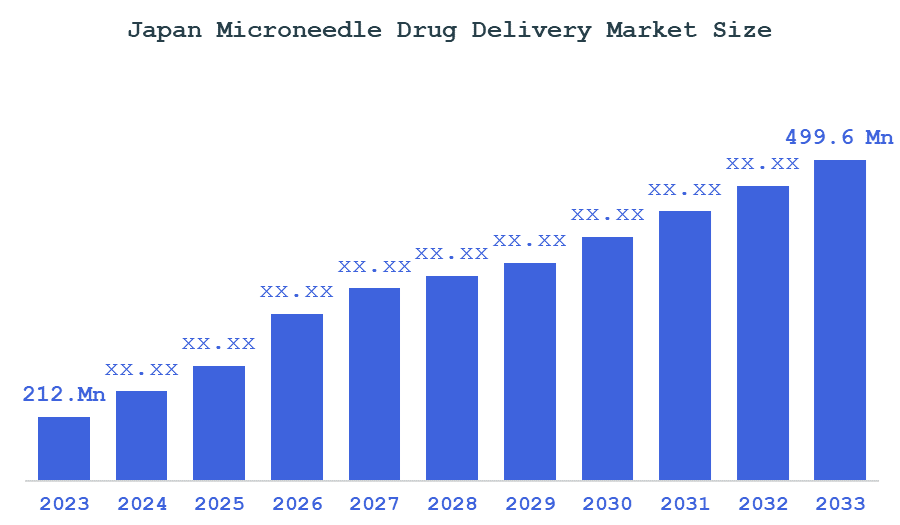
According to a Research Report Published by Decision Advisior & Consulting, the Japan Microneedle Drug Delivery Market size is anticipated to reach USD 499.6Million by 2035, growing at a CAGR of 8.08% during the forecast period. The Japan microneedle drug delivery market is driven by rising demand for painless drug administration, rapid advancement in wearable medical technologies, and increasing use of microneedle patches in vaccination programs. Growth is also supported by rising chronic disease prevalence, demand for self-administered therapies, and expanding research investments in minimally invasive drug delivery technologies.
Market Overview
The Japan microneedle drug delivery market refers to minimally invasive drug delivery systems that use micro-sized needles to deliver drugs, vaccines, and therapeutic agents through the skin. These include hollow microneedles, coated microneedles, solid microneedles, and dissolving microneedles. The market is characterized by increasing preference for painless medication delivery, growing adoption of transdermal patches, and rising integration of microneedle platforms in dermatology and chronic disease management. Key trends include the use of microneedles in vaccine delivery, expanding development of polymer-based microneedles, rising use of dissolvable microneedles for cosmetic applications, and increased R&D partnerships between pharmaceutical and medical device companies. Major drivers include rising patient preference for pain-free dosing, improved bioavailability through transdermal absorption, and increasing demand for self-administration among aging populations.
The Japanese government supports the microneedle drug delivery sector through initiatives promoting advanced drug delivery systems, funding for minimally invasive medical technologies, and programs encouraging innovation in vaccine delivery and chronic disease management. Supportive policies for digital health integration, remote treatment tools, and pharmaceutical R&D acceleration further strengthen market growth.
Report Coverage
This research report categorizes the market for the Japan microneedle drug delivery market based on various segments and regions, and forecasts revenue growth while analyzing trends in each submarket. The report examines the key growth drivers, opportunities, and challenges influencing the Japan microneedle drug delivery market. Recent market developments and competitive strategies, such as product launches, expansions, partnerships, mergers, and acquisitions, have been included to analyze the competitive landscape. The report strategically identifies and profiles the key market players and evaluates their core competencies in each sub-segment of the Japan microneedle drug delivery market.
Driving Factors
The Japan microneedle drug delivery market is driven by increasing demand for minimally invasive and pain-free drug administration systems, rising adoption of microneedle patches in vaccination programs, and growing usage in dermatology, diabetes care, and chronic disease therapies. Advancements in microneedle materials, enhanced drug absorption efficiency, and improvements in manufacturing technologies further accelerate market growth. In addition, patient preference for self-administered treatments, increasing pharmaceutical investments in transdermal delivery innovations, and government support for novel drug delivery technologies significantly contribute to market expansion across Japan.
Restraining Factors
The Japanese microneedle drug delivery market faces restraints such as high production costs, limited drug loading capacity, and regulatory challenges associated with microneedle-based combination products. Concerns regarding skin irritation, durability of microneedle materials, and slow adoption in traditional clinical settings also restrict faster market penetration.
Market Segmentation
The Japan Microneedle Drug Delivery Market share is categorized by product type, application, and material.
• The Hollow Microneedles segment accounted for the largest revenue market share in 2024 and is expected to grow at a significant CAGR during the forecast period.
The Japanese microneedle drug delivery market is segmented by product type into hollow, coated, solid, and others. Among these, the hollow microneedles segment accounted for the largest revenue share in 2024 and is expected to grow significantly during the forecast period. Growth is driven by their high precision in delivering liquid formulations, increased use in vaccine administration, and expanding applications in chronic disease therapeutics. Coated and solid microneedles are also witnessing rapid adoption for sustained drug release and dermatology-based treatments.
• The Drug Delivery segment accounted for the largest revenue share in 2024 and is projected to grow significantly during the forecast period.
The Japanese microneedle drug delivery market is segmented by application into drug delivery, vaccine delivery, pain management, dermatology, cancer therapy, and others. Among these, the drug delivery segment accounted for the largest revenue share in 2024 and is expected to grow significantly during the forecast period. Growth is driven by to rising adoption of microneedle patches for chronic disease management, improved patient compliance, and increased preference for home-based treatment. The vaccine delivery segment is expanding strongly owing to high government interest in minimally invasive vaccination platforms and improved dose accuracy.
• The Polymer Material segment accounted for the largest revenue market share in 2024 and is expected to grow significantly during the forecast period.
The Japanese microneedle drug delivery market is segmented by material into metal, polymer, silicon, and others. Among these, the polymer segment accounted for the largest revenue share in 2024 and is expected to grow significantly during the forecast period. Growth is driven by high biocompatibility, low manufacturing cost, and expanding use of dissolvable microneedles. Metal and silicon microneedles continue to grow due to their structural strength and use in precision-based therapeutic applications.
Competitive Analysis
The report offers the appropriate analysis of the key organizations/companies involved within the Japan microneedle drug delivery market, along with a comparative evaluation primarily based on their product offering, business overviews, geographic presence, enterprise strategies, segment market share, and SWOT analysis. The report also provides an elaborate analysis focusing on the current news and developments of the companies, which includes product development, innovations, joint ventures, partnerships, mergers & acquisitions, strategic alliances, and others. This allows for the evaluation of the overall competition within the market.
List of Key Companies
- Terumo Corporation
- Fujifilm Holdings
- Olympus Corporation
- Nitto Denko Corporation
- Micron Biomedical
- Nanobiosciences
- LTS Lohmann Therapie-Systeme
- Hisamitsu Pharmaceutical
- Others
Key Target Audience
- Market Players
- Investors
- End-users
- Government Authorities
- Consulting and Research Firms
- Venture Capitalists
- Value-Added Resellers (VARs)
Recent Developments
- In January 2024, a leading microneedle technology developer introduced a next-generation dissolvable microneedle patch in Japan designed for high-precision drug and vaccine delivery, enhancing patient comfort and supporting broader adoption of minimally invasive therapeutic platforms.
Market Segment
This study forecasts revenue at the Japan, regional, and country levels from 2020 to 2035. Decision Advisior has segmented the Japan Microneedle Drug Delivery Market based on the below-mentioned segments:
Japan Microneedle Drug Delivery Market, By Product Type
- Hollow
- Coated
- Solid
- Others
Japan Microneedle Drug Delivery Market, By Application
- Drug Delivery
- Vaccine Delivery
- Pain Management
- Dermatology
- Cancer Therapy
- Others
Japan Microneedle Drug Delivery Market, By Material
- Metal
- Polymer
- Silicon
- Others
FAQs
Q. What are the key drivers of the Japan Microneedle Drug Delivery Market?
A: Key drivers include rising demand for minimally invasive drug administration, increasing use of microneedle patches in chronic disease management, advancements in microneedle materials, and growing adoption of microneedle-based vaccine delivery supported by government healthcare initiatives.
Q. What are the major restraining factors for the Japan Microneedle Drug Delivery Market?
A: Major restraints include high manufacturing costs, limited drug loading capacity, regulatory challenges associated with new delivery methods, and slow adoption in traditional clinical settings.
Q. Which product type is expected to dominate the Japan Microneedle Drug Delivery Market?
A: Hollow microneedles are expected to dominate due to their precision in delivering liquid formulations, higher efficiency in transdermal absorption, and expanding applications in therapeutic and vaccination programs.
Q. How is government policy supporting the adoption of microneedle drug delivery in Japan?
A: Government support includes funding for minimally invasive drug delivery technologies, initiatives to modernize vaccination platforms, and encouragement of innovation in pharmaceutical delivery systems to improve patient outcomes.
Q. Which application segment holds the largest market share in the Japan Microneedle Drug Delivery Market?
A: Drug delivery holds the largest share due to high demand for self-administered therapies, increasing prevalence of chronic diseases, and rapid adoption of microneedle patches in home-based treatment.
Check Licence
Choose the plan that fits you best: Single User, Multi-User, or Enterprise solutions tailored for your needs.
We Have You Covered
- 24/7 Analyst Support
- Clients Across the Globe
- Tailored Insights
- Technology Tracking
- Competitive Intelligence
- Custom Research
- Syndicated Market Studies
- Market Overview
- Market Segmentation
- Growth Drivers
- Market Opportunities
- Regulatory Insights
- Innovation & Sustainability
Report Details
| Scope | Country |
| Pages | 158 |
| Delivery | PDF & Excel via Email |
| Language | English |
| Release | Dec 2025 |
| Access | Download from this page |