
Japan Neonatal and Prenatal Devices Market
 |
Author:
David J
|
Pages:
225
|
Author:
David J
|
Pages:
225
Japan Neonatal and Prenatal Devices Market Size, Share, and COVID-19 Impact Analysis, By Product Type (Prenatal and Fetal Equipment, Neonatal Equipment), By End User (Hospitals & Clinics, Homecare Settings, and Others), and Japan Neonatal and Prenatal Devices Market Insights, Industry Trend, Forecasts to 2035
CAGR
7.02%
REVENUE 2024
USD Million 411.0
FORECAST 2035
USD Million 867.0
REPORT COVERAGE
Country
Japan Neonatal and Prenatal Devices Market Insights Forecasts to 2035
- The Japan Neonatal and Prenatal Devices Market Size Was Estimated at USD 411 Million in 2024
- The Market Size is Expected to Grow at a CAGR of Around 7.02% from 2025 to 2035
- The Japan Neonatal and Prenatal Devices Market Size is Expected to Reach USD 867 Million by 2035
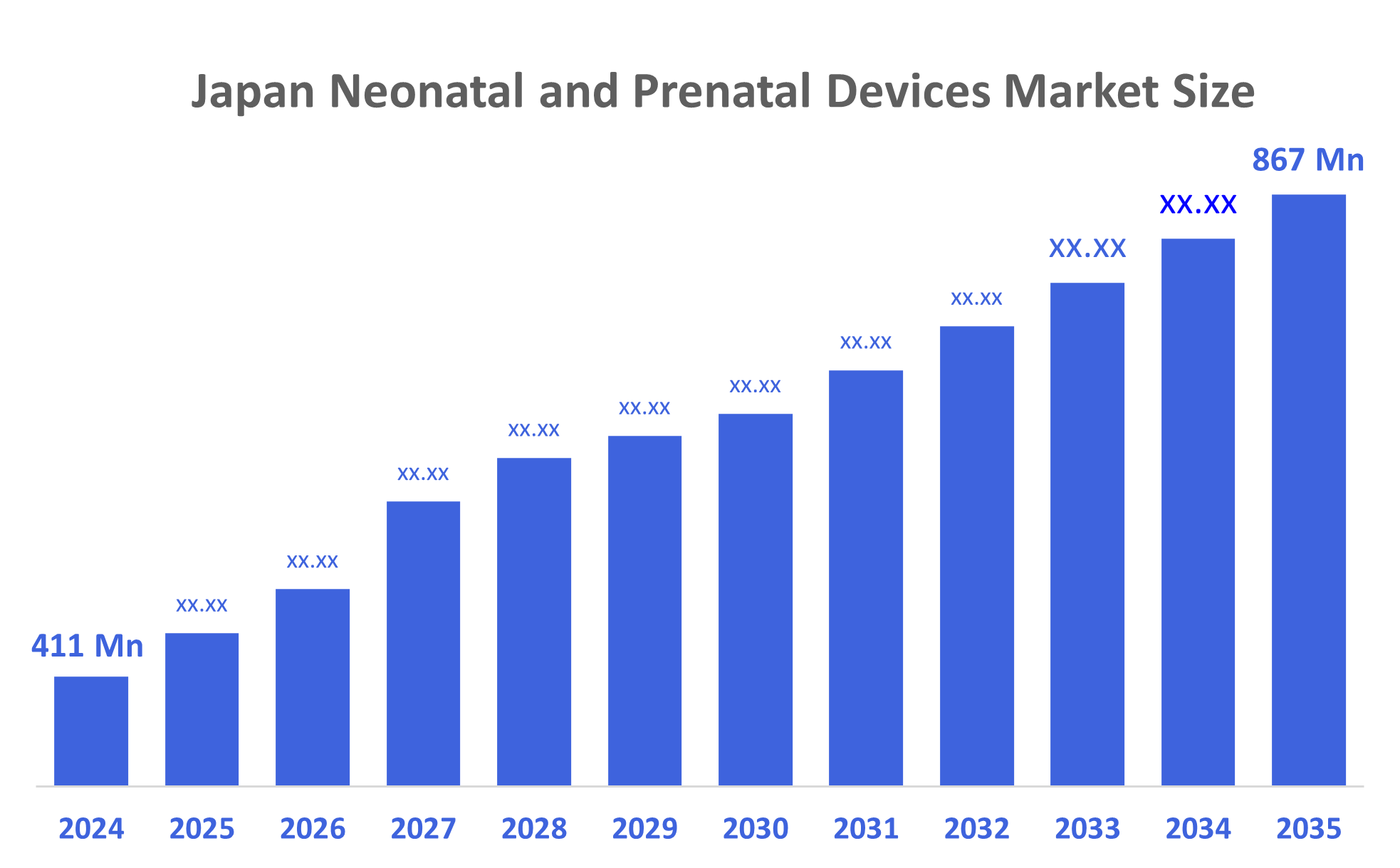
According to a research report published by Decisions Advisors, The Japan Neonatal and Prenatal Devices Market Size is Anticipated to Reach USD 867 Million by 2035, growing at a CAGR of 7.02% from 2025 to 2035. The Japan neonatal and prenatal devices market is driven by rising birth complications and technological advancements, that also and increased health care investment, increased NICU capacity, and increasing demand for early diagnostics and maternal fetal monitoring.
Market Overview
Medical devices that are neonatal & prenatal provide hospitals, clinics, and homes with advanced ways to provide care for infants and unborn children. Devices like incubators, phototherapy devices, fetal monitors, ultrasound devices and ventilators allow for monitoring of growth of fetus during pregnancy, as well as caring for preterm infants or those with severe illness. Further, as the future continues to be bright for neonatal & prenatal medical devices; the introduction of mobile monitoring, Artificial intelligence powered diagnostic devices, and portable medical devices will lead to the continued improvement in the quality and accessibility of care provided.
Furthermore, the advancement of telemedicine, remote monitoring of infants and mothers, and data analytics will also enhance the way caregivers deliver quality care, particularly in rural and underserved communities. The increasing number of preterm births in Japan remains an area of focus on neonatal & prenatal medical devices and their related supports, designed to enhance both the survival rate and long-term developmental outcome of preterm infants. The establishment of specialised neonatal intensive care units (NICU's) equipped with new technologies and innovations will be significant contributors to growing the market in the future. Customized plans for treatment and diagnostics for this population are also increasing the scope of the market.
Report Coverage
This research report categorizes the market for the Japan neonatal and prenatal devices market based on various segments and regions, and forecasts revenue growth and analyses trends in each submarket. The report analyses the key growth drivers, opportunities, and challenges influencing the Japan neonatal and prenatal devices market. Recent market developments and competitive strategies, such as expansion, product launch, development, partnership, merger, and acquisition, have been included to draw the competitive landscape in the market. The report strategically identifies and profiles the key market players and analyses their core competencies in each sub-segment of the Japan neonatal and prenatal devices market.
Driving Factors
The neonatal and prenatal devices in Japan are driven by according to statistics released by the ministry of health, labour, and welfare for neonatal care technology that measures the amount of new neonatal care technology that will be adopted over the next few years, every new neonatal care device developed will be adopted every six months (as compared to the original devices that were developed over the prior 20-year period), yielding an average annual growth of 6.3% for this segment of the neonatal care industry. The national institute of population and social security research emphasized the importance of these technological advancements in light of Japan's distinct demographic challenges of an increasing elderly population and a decreasing birth-rate.
Recent research conducted by the Japan society for pediatric neonatology highlights the importance to the Japan government of making the improvement of the neonatal healthcare infrastructure a priority; the Japan government allocates approximately 4.2% of its healthcare budget to pediatric and neonatal medical technology, which indicates that there is a considerable amount of public and private investment into the growth of this area of medicine (research and development). This comprehensive plan combines not only cutting-edge medical devices but also Integrated Care Solutions that focus on obtaining accurate diagnoses, identifying health issues early on, and developing personalised treatment plans based upon the patient's individual needs.
Restraining Factors
The neonatal and prenatal devices market in Japan is restrained by increasing demand for advanced neonatal and prenatal technologies are being slowed by high equipment costs, stringent regulatory approval processes, limited availability of specialists, declining birth rates and budget constraints on smaller health care organizations
Market Segmentation
The Japan neonatal and prenatal devices market share is categorized by product type and end user.
- The neonatal equipment segment accounted for the largest revenue market share in 2024 and is expected to grow at a significant CAGR during the forecast period.
The Japan neonatal and prenatal devices market is segmented by product type into prenatal and fetal equipment, neonatal equipment. Among these, the neonatal equipment segment accounted for the largest revenue market share in 2024 and is expected to grow at a significant CAGR during the forecast period. The segmental growth is driven by increasing rates of early preterm birth, and ongoing technological improvements in technology, therefore, more hospital investment in advanced prenatal monitoring and respiratory support technology has caused an increase in hospital focus on the continued survival of infants and improving the quality of care provided to critically ill new-borns.
- The hospitals & clinics segment dominated the market in 2024 and is projected to grow at a substantial CAGR during the forecast period.
The Japan neonatal and prenatal devices market is segmented by end user into hospitals & clinics, homecare settings, and others. Among these, the hospitals & clinics segment accounted for the largest revenue share in 2024 and is expected to grow at a significant CAGR during the forecast period. The growth of the segment is due to utilization of advanced neonatal technology and increased financial support from healthcare agencies along with skilled healthcare professionals, which will ultimately rely heavily on continued development and utilization of the most advanced technologies and the demand for holistic prenatal and neonatal care.
Competitive Analysis:
The report offers the appropriate analysis of the key organizations/companies involved within the Japan neonatal and prenatal devices market, along with a comparative evaluation primarily based on their product offering, business overviews, geographic presence, enterprise strategies, segment market share, and SWOT analysis. The report also provides an elaborate analysis focusing on the current news and developments of the companies, which includes product development, innovations, joint ventures, partnerships, mergers & acquisitions, strategic alliances, and others. This allows for the evaluation of the overall competition within the market.
List of Key Companies
- Atom Medical
- Apel Co. Ltd
- GE Healthcare
- Masimo
- Natus Medical Incorporated
- Koninklijke Philips NV
- Vyaire Medical
- Medtronic Plc
- Others
Key Target Audience
- Market Players
- Investors
- End-users
- Government Authorities
- Consulting and Research Firm
- Venture capitalists
- Value-Added Resellers (VARs)
Recent Developments
- In March 2025, GE HealthCare and NVIDIA announced a collaboration to develop autonomous X-ray and ultrasound technologies, leveraging AI-enabled software to address healthcare staff shortages and automate repetitive imaging tasks in high-volume settings.
Market Segment
This study forecasts revenue at the Japan, regional, and country levels from 2020 to 2035. Decisions Advisors has segmented the Japan Neonatal and Prenatal Devices Market based on the below-mentioned segments:
Japan Neonatal and Prenatal Devices Market, By Product Type
- Prenatal and Fetal Equipment
- Neonatal Equipment
- Others
Japan Neonatal and Prenatal Devices Market, By End User
- Hospitals & Clinics
- Homecare Settings
- Others
Check Licence
Choose the plan that fits you best: Single User, Multi-User, or Enterprise solutions tailored for your needs.
We Have You Covered
- 24/7 Analyst Support
- Clients Across the Globe
- Tailored Insights
- Technology Tracking
- Competitive Intelligence
- Custom Research
- Syndicated Market Studies
- Market Overview
- Market Segmentation
- Growth Drivers
- Market Opportunities
- Regulatory Insights
- Innovation & Sustainability
Report Details
| Scope | Country |
| Pages | 225 |
| Delivery | PDF & Excel via Email |
| Language | English |
| Release | Nov 2025 |
| Access | Download from this page |