
Japan Plant-Based Egg Replacers Market
 |
Author:
Sayali T
|
Pages:
206
|
Author:
Sayali T
|
Pages:
206
Japan Plant-Based Egg Replacers Market Size, Share, and COVID-19 Impact Analysis, By Source (Soy, Pea, Chickpea, Potato, Algal, and Others), By Application (Bakery & Confectionery, Processed Food, Ready Meals, Snacks & Desserts, and Nutritional Products), and Japan Plant-Based Egg Replacers Market Insights, Industry Trend, Forecasts to 2035
CAGR
9.72%
REVENUE 2025
Million 23.4
FORECAST 2035
Million 64.9
REPORT COVERAGE
Country
Japan Plant-Based Egg Replacers Market Size Insights Forecasts to 2035
- The Japan Plant-Based Egg Replacers Market Size Was Estimated at USD 23.4 Million in 2024
- The Market Size is Expected to Grow at a CAGR of Around 9.72% from 2025 to 2035
- The Japan Plant-Based Egg Replacers Market Size is Expected to Reach USD 64.9 Million by 2035
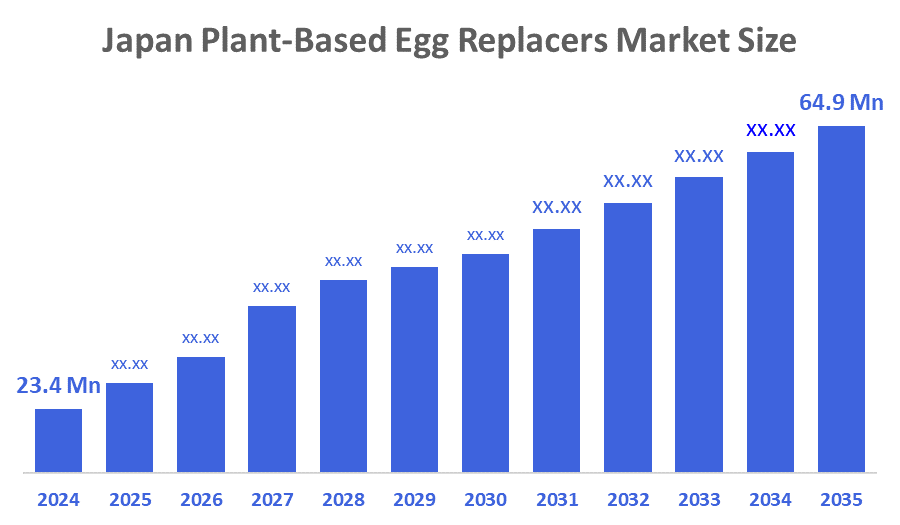
According to a Research Report Published by Decisions Advisors & Consulting, The Japan Plant-Based Egg Replacers Market Size is anticipated to Reach USD 64.9 Million by 2035, Growing at a CAGR of 9.72% from 2025 to 2035. The plant-based egg replacers market in Japan is driven by the increasing demand for adaptable egg substitutes in baking, cooking, and processed meals is rising due to the rise in vegan and flexitarian diets. Additionally, the products that closely resemble the flavor, texture, and usefulness of actual eggs are made possible by developments in food technology.
Market Overview
Japan's plant-based egg substitute industry creates innovative alternatives to regular eggs using plant-based ingredients in baked goods, prepared meals, and food service applications. The plant-based egg substitute industry is experiencing rapid growth in Japan due to increasing consumer interest in health, sustainability, and veganism, and the increasing availability of products that provide similar functionality to traditional eggs in a variety of ways. A large portion of this growth is being driven by the strong adoption of plant-based egg substitutes by the bakery, candy manufacturing, food service, and packaged food industries. Plant-based egg alternatives are also constantly being developed using innovative formulations that optimize the functional and textural attributes of plant-based egg substitutes for similarity to traditional eggs. Key growth areas for plant-based egg substitutes in Japan include baked goods, confectionery, and snack foods. These products leverage the innovative use of various plant-based ingredient sources, such as algal flour, soy, and other yeast extract products, to create egg alternatives that can offer comparable taste, texture, and functionality to traditional egg products. Repeatedly, the Japanese government has provided funding to assist in advancing innovations within the plant-based egg substitute industry. For example, in 2024, the Japanese government's Ministry of Agriculture, Forestry and Fisheries (MAFF) approved a 2.8 billion grant to assist Umami United in its pursuit of continued innovation in the development of plant-based egg technology through the SME innovation promotion fund.
Report Coverage
This research report categorizes the market for the Japan plant-based egg replacers Market based on various segments and regions, and forecasts revenue growth and analyses trends in each submarket. The report analyses the key growth drivers, opportunities, and challenges influencing the Japan plant-based egg replacers Market. Recent market developments and competitive strategies, such as expansion, product launch, development, partnership, merger, and acquisition have been included to draw the competitive landscape in the market. The report strategically identifies and profiles the key market players and analyses their core competencies in each sub-segment of the Japan plant-based egg replacers market.
Driving Factors
The plant-based egg replacers markets in Japan are driven by due to rising health consciousness, increasing vegan and flexitarian populations, and growing concerns over cholesterol, food allergies, and animal welfare. In addition, strong demand from the bakery, confectionery, and processed food industries, along with innovation in clean-label, protein-rich formulations and expanding retail availability, further accelerates market adoption across the country.
Restraining Factors
The plant-based egg replacers market in Japan is mostly restrained by higher product costs, limited consumer awareness outside major cities, and taste or texture differences compared to conventional eggs. Dependence on imported raw materials and limited large-scale local production also hinder affordability, consistency, and wider acceptance.
Market Segmentation
The Japan plant-based egg replacers market share is classified into source and application.
- The soy segment accounted for the largest share in 2024 and is expected to grow at a significant CAGR during the forecast period.
The Japan plant-based egg replacers market is segmented by source into soy, pea, chickpea, potato, algal, and others. Among these, the soy segment accounted for the largest share in 2024 and is expected to grow at a significant CAGR during the forecast period. As consumers move toward more ethical and sustainable eating practices, the increased demand for plant-based and vegan cuisine is a key factor driving the market for soy-based egg substitutes. Flexitarian diets, veganism, and increased awareness of animal welfare have prompted people and food producers to look for practical non-animal substitutes.
- The bakery and confectionery segment accounted for the largest revenue market share in 2024 and is expected to grow at a significant CAGR during the forecast period.
The Japan Plant-Based Egg Replacers market is segmented by application into bakery & confectionery, processed food, ready meals, snacks & desserts, and nutritional products. Among these, the bakery and confectionery segment accounted for the largest revenue market share in 2024 and is expected to grow at a significant CAGR during the forecast period. By improving functionality and nutritional content, plant-based egg substitutes revolutionize product creation in the bread and confectionery industry. In order to give baked item, the necessary texture and binding qualities without using conventional eggs, ingredients like pea and soy proteins are being used more and more.
Competitive Analysis:
The report offers the appropriate analysis of the key organizations/companies involved within the Japan plant-based egg replacers market, along with a comparative evaluation primarily based on their product offering, business overviews, geographic presence, enterprise strategies, segment market share, and SWOT analysis. The report also provides an elaborate analysis focusing on the current news and developments of the companies, which includes product development, innovations, joint ventures, partnerships, mergers & acquisitions, strategic alliances, and others. This allows for the evaluation of the overall competition within the market.
List of Key Companies
- Kewpie
- Umami United
- Next Meats
- DAIZ
- Kerry Group
- Others
Key Target Audience
- Market Players
- Investors
- End-users
- Government Authorities
- Consulting and Research Firm
- Venture capitalists
- Value-Added Resellers (VARs)
Market Segment
This study forecasts revenue at the Japan, regional, and country levels from 2020 to 2035. Decisions Advisors has segmented the Japan plant-based egg replacers market based on the below-mentioned segments:
Japan Plant-Based Egg Replacers Market, By Source
- Soy
- Pea
- Chickpea
- Potato
- Algal
- Others
Japan Plant-Based Egg Replacers Market, By Application
- Bakery & Confectionery
- Processed Food
- Ready Meals
- Snacks & Desserts
- Nutritional Products
FAQ’s
Q: What was the market size of the Japan Plant-Based Egg Replacers Market in 2024?
A: The market size was valued at USD 23.4 million in 2024, driven by rising demand for vegan and allergen-free alternatives.
Q: What is the projected market size by 2035?
A: The market is expected to reach USD 64.9 million by 2035, expanding at a CAGR of 9.72% during 2025–2035.
Q: What factors are driving market growth in Japan?
A: Key drivers include rising health consciousness, growing vegan and flexitarian populations, innovation in clean-label formulations, food allergy concerns, and increasing adoption by bakery, confectionery, and processed-food manufacturers.
Q: Which source segment holds the largest market share?
A: The soy-based egg replacers segment held the largest share in 2024 due to high consumer familiarity, functionality in food processing, and strong presence in plant-based formulations.
Q: Which application segment dominates the market?
A: Bakery & confectionery accounted for the largest revenue share in 2024, as plant-based egg replacers provide essential binding, texture, and moisture retention required in baked products.
Q: Which companies are prominent in the Japan plant-based egg replacers market?
A: Key players include Kewpie, Umami United, Next Meats, DAIZ, Kerry Group, and other ingredient suppliers operating in plant-protein technologies.
Check Licence
Choose the plan that fits you best: Single User, Multi-User, or Enterprise solutions tailored for your needs.
We Have You Covered
- 24/7 Analyst Support
- Clients Across the Globe
- Tailored Insights
- Technology Tracking
- Competitive Intelligence
- Custom Research
- Syndicated Market Studies
- Market Overview
- Market Segmentation
- Growth Drivers
- Market Opportunities
- Regulatory Insights
- Innovation & Sustainability
Report Details
| Scope | Country |
| Pages | 206 |
| Delivery | PDF & Excel via Email |
| Language | English |
| Release | Dec 2025 |
| Access | Download from this page |