
Japan Sesame Market
 |
Author:
Anurag B
|
Pages:
210
|
Author:
Anurag B
|
Pages:
210
Japan Sesame Market Size, Share, By Product Type (White Sesame Seeds, Black Sesame Seeds, Brown Sesame Seeds, Hulled Sesame Seeds, Natural Sesame Seeds, and Organic Sesame Seeds), By Application (Food Processing, Edible Oil Production, Bakery & Confectionery, Traditional Japanese Cuisine, and Cosmetics & Personal Care), By Distribution Channel (Supermarkets & Hypermarkets, Convenience Stores, Specialty Stores, Online Retail, and Foodservice & Industrial Supply), Analysis and Forecast 2026 ? 2035
CAGR
6.79%
REVENUE 2025
USD Billion 4.89
FORECAST 2035
USD Billion 9.43
REPORT COVERAGE
Country
Market Snapshot
- Japan Sesame Market Size (2025): USD 4.89 Billion
- Japan Sesame Projected Market Size (2035): USD 9.43 Billion
- Japan Sesame Compound Annual Growth Rate (CAGR): 6.79%
- Base Year: 2025
- Historical Period: 2021–2024
- Forecast Period: 2026–2035
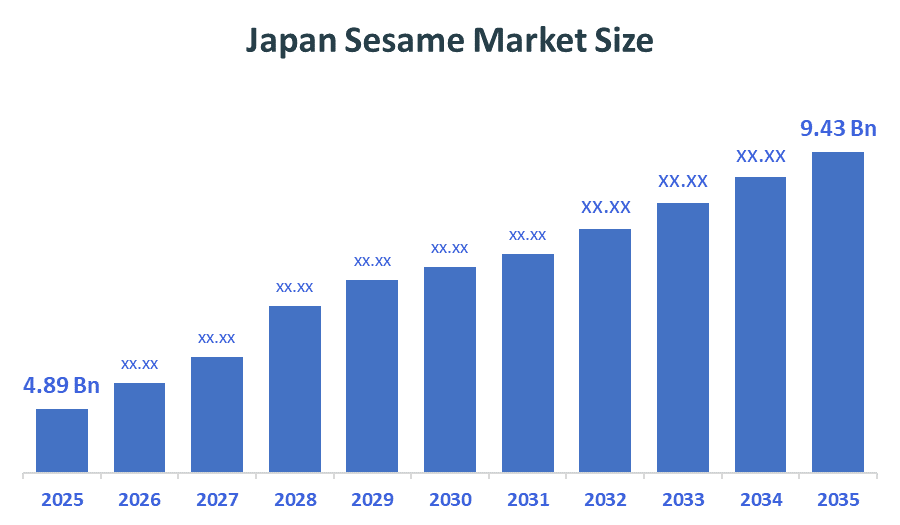
According to Decision Advisors, the Japan sesame market was projected to grow from USD 4.89 billion in 2025 to USD 9.43 billion by 2035, achieving a CAGR of 6.79% during the forecast period of 2026–2035. Japan's sesame market is set to experience growth year after year throughout the next decade, as there is an increased trend towards the consumption of functional ingredients along with the usage of sesame within both traditional dishes and health care products. Although Japan is one of the world's largest importers, a significant emphasis is placed upon obtaining the highest quality product in terms of non-pesticide treated seeds and creation of added-value products such as health supplement products and sesame oil. This trend also includes the incorporation of sesame seeds within the pharmaceutical and cosmetic sectors.
Market Overview/Introduction
The market for sesame in Japan has a high degree of success the advanced network of premium seeds supplied to the population, which cares about its nutritional intake. Among the cutting-edge technologies used in the processing of oilseeds by the industry, there can be mentioned mechanical dehulling with high precision and steamed roasting, which makes sure that the resulting product complies with the standards of purity defined by the Ministry of Health, Labour, and Welfare. Growing consumer demand can be associated with the health benefits provided by sesame in terms of the antioxidants and lignans needed by the wellness industry. These include the supply of premium types of white, black, and even golden sesame seeds, as well as other products such as sesame paste and toasted oil. One of the latest trends in the field has been the use of AI systems to sort colour and ensure quality as demanded by retail chains under the zero-tolerance policy. In addition to use in the food industry, there are plans to apply sesame lignans in pharmaceuticals and anti-ageing cosmetics.
- Since Japan has an ageing population, it is quite significant to have such an industry because many consumers nowadays are looking for food products that are FOSHU (Food for Specified Health Uses) and FFC (Foods with Function Claims).
- About 95% of sesame seeds used in Japan are imported from Africa and Southeast Asia. However, the value addition through technological refinement is high in Japan, where branded oils and condiments are produced for export to various parts of the world.
Notable Insights: -
- By product type, the white sesame seeds segment holds a dominant position with an estimated share of over 40% in 2025, driven by its extensive use in food processing, bakery products, and traditional Japanese cuisine.
- The forecasted CAGR for the Japan sesame market is expected to be about 6.8% for the period between 2026 and 2035, driven by increasing demand for plant-based products and quality oils.
- The market is expected to reach a valuation of approximately USD 8.23 billion by 2035
What is the Role of Technology in Grooming the Market?
One of the leading factors responsible for the rise in the complexity of the Japanese sesame market can be seen in the combination of advanced precision farming processes and AI-enabled optical sorting systems. The current technological trend shaping the market is characterised by a smart cleaning ecosystem with high safety due to highly accurate mechanical separation techniques for guaranteeing high-level purity according to the regulations in Japan. High-tech techniques such as the utilisation of 3D digital colour sorters and ultrasonic hulling have been established as standards for reaching extremely high levels of purity and size uniformity within international logistics systems. The quality of the imported product is usually ensured by sterilisation with advanced steam treatment technology as well as moisture monitoring.
Market Drivers
What drives the industry of sesame in Japan is traditional cuisine and modernization with an inclination towards functional wellness. One important driver that maintains equilibrium in the market is increasing consumer preferences towards ingredients rich in plant proteins amid the rapidly growing market share of veganism and "Tokuro" (healthy foods). Special needs of the nutraceuticals segment, which includes antioxidants in sesame such as sesamin to improve heart and liver supplement health, guarantees a steady flow of demand in value-added products. Moreover, Japan enjoys an advantage of sophisticated refining abilities, which enables local processors to convert imported seeds into premium-quality toasted oil and paste.
Restraints
Even with its high-value status, there are some challenges that may arise from the competition from other functional oils that have been developed, such as perilla oil and flaxseed oil, which are becoming more popular in the health supplements industry. Another possible challenge may be the rising difficulty and costs associated with attaining the zero-pesticide residue certification.
Study on the Supply, Demand, Distribution, and Market Environment
In the case of Sesame in Japan, the product is considered to be a mature product which is dependent on imports and serves as a high technology processing centre for East Asia. In terms of sources, the product comes mainly from the trading partners of Japan in other continents such as Africa and Southeast Asia, with the product reaching the industrial centres of Japan such as Mie and Kagawa where the specific processing plants for hulling and oil extraction can be found. As for demand, it remains stable as it stems from the basic needs of the Washoku diet and for industrial use in the confectionery and pharmaceutical industries.
Price Analysis and Consumer Behaviour Analysis
Through price analysis, the study shows that there exists a market hierarchy, whereby normal natural seeds have constant prices; on the other hand, organic seeds, seeds without pesticides, and golden seeds have prices which are relatively higher owing to their elaborate processing procedures. While the prices of these seeds are relatively high as compared to ordinary cooking oils in stores, the buyers consider these seeds as health assets for themselves, rather than just goods for consumption. In Japan, buying behavior shows that consumers are very concerned about origin, purity, and nutrition content of the seed. Consumers prefer foods labeled Foods with Function Claims (FFC). There also exists a category of consumers who are interested in aroma of sesame prepared through traditional Japanese roasting techniques.
Market Segmentation
The Japan Sesame Market is categorised by product type, application, and distribution channel.
The hulled sesame seeds segment dominated the market in 2025 and is projected to grow at a steady CAGR of approximately 6.5% during the forecast period.
Based on the product type, the sesame market is divided into white sesame seeds, black sesame seeds, brown sesame seeds, hulled sesame seeds, natural sesame seeds, and organic sesame seeds. Among these, the hulled sesame seeds segment dominated the market in 2025 and is projected to grow at a steady CAGR of approximately 6.5% during the forecast period. Such dominance stems from the demand for deshelled seeds that produce a finer texture and better look. There is an enormous demand for such products in Japan's high-end cooking industry since such products can easily satisfy the demands of food producers that produce top-tier products. There has been a quick incorporation of modern deshelling and steam processing technologies in Japan's refining centers to ensure adherence to the required quality standards.
The traditional Japanese cuisine and food processing application segment accounted for the largest share in 2025 and is anticipated to grow at a significant CAGR of approximately 6.2% during the forecast period.
Based on the application, the sesame market is divided into food processing, edible oil production, bakery & confectionery, traditional japanese cuisine, and cosmetics & personal care. Among these, the traditional Japanese cuisine and food processing application segment accounted for the largest share in 2025 and is anticipated to grow at a significant CAGR of approximately 6.2% during the forecast period. The incorporation of sesame into staple foods consumed in everyday life becomes necessary owing to the high amount of lignans and minerals contained in the ingredient; in line with the health food approach of the nation towards Tokuro, together with the growing interest in natural anti-aging components. One of the reasons behind the growth in potential is the development of the wellness industry in Japan and introduction of nutrient rich seeds to various consumer products.
The foodservice and industrial supply distribution segment dominated the market in 2025 and is projected to grow at a substantial CAGR of approximately 6.9% during the forecast period.
Based on the distribution channel, the sesame market is divided into supermarkets & hypermarkets, convenience stores, specialty stores, online retail, and foodservice & industrial supply. Among these, the foodservice and industrial supply distribution segment dominated the market in 2025 and is projected to grow at a substantial CAGR of approximately 6.9% during the forecast period In fact, the operational efficiency of these industrial processors, combined with the strict adherence to the Food Sanitation Act, makes the industrial distribution channel the most effective channel to accommodate the immense number of imported sesame seeds. Although specialty shops and e-commerce sites are becoming more popular because of the high-end golden sesame market, the size of the orders from the local food production industry, which is the largest consumer, means that the industrial channels remain the behemoths of the market structure.
Recent Developments
- In February 2025, in Japan, the imports of sesame accounted for around 186.49 thousand metric tons with a monetary value of approximately $302.74 million, showing a reduction in terms of value by 17.89% and quantity by 2.82% compared to 2024.
- In December 2024, the value of Japan sesame imports amounted to approximately USD 368.69 million, increasing by about 14.66% from USD 321.56 million in 2023, driven by robust consumption in food processing and oil sectors.
- In November 2024, the cost of sesame seeds imported into Japan was reported to have climbed to an estimated value of USD 1,920 per ton from USD 1,830 per ton in 2023, reflecting a growth of 4.75% due to high demand for quality seeds
Competitive Analysis
The report offers the appropriate analysis of the key organisations/companies involved within the Japan sesame market, along with a comparative evaluation primarily based on their product offering, business overviews, geographic presence, enterprise strategies, segment market share, and SWOT analysis. The report also provides an elaborate analysis focusing on the current news and developments of the companies, which includes product development, innovations, joint ventures, partnerships, mergers & acquisitions, strategic alliances, and others. This allows for the evaluation of the overall competition within the market.
Top Key Companies in the Japan Sesame Market
- Kadoya Sesame Mills Inc.
- Kuki Sangyo Co., Ltd.
- Takemoto Oil & Fat Co., Ltd.
- Mitsui & Co., Ltd.
- Maruhon Sesame Oil
- Wadaman Co., Ltd.
- Iwai’s Sesame Oil Co., Ltd.
- Katagi Kushigoma Co., Ltd.
- Yamada Sesame Oil Manufacturing
- Others
Key Target Audience
- Market Players
- Investors
- End-users
- Government Authorities
- Consulting and Research Firm
- Venture capitalists
- Value-Added Resellers (VARs)
Market Segmentation
This study forecasts revenue at the national and regional levels from 2021 to 2035. Decision Advisor has segmented the the Japan Sesame Market based on the following segments:
Japan Sesame Market, By Product Type
- White Sesame Seeds
- Black Sesame Seeds
- Brown Sesame Seeds
- Hulled Sesame Seeds
- Natural Sesame Seeds
- Organic Sesame Seeds
Japan Sesame Market, By Application
- Food Processing
- Edible Oil Production
- Bakery & Confectionery
- Traditional Japanese Cuisine
- Cosmetics & Personal Care
Japan Sesame Market, By Distribution Channel
- Supermarkets & Hypermarkets
- Convenience Stores
- Specialty Stores
- Online Retail
- Foodservice & Industrial Supply
Frequently Asked Questions (FAQ)
How is the demand for premium healthy ingredients driving the Japan sesame market?
The focus on functional nutrition and an aging population provides the necessary motivation for market growth. The demand for sesame seeds, particularly due to their high sesamin and antioxidant content among health-conscious Japanese consumers, is instrumental in increasing the value of the product as a vital superfood for cardiovascular and liver health.
Why is Japan a leading market for sesame processing and consumption?
Japan’s dominance lies in its excellence in the advanced refining and processing of sesame seeds, supported by world-class facilities in regions like Mie and Kagawa. While the country relies on imports for raw materials, its focus on producing high-purity toasted oils and medicinal-grade extracts makes it a global benchmark for sesame quality and innovation.
What is the role of digital colour sorting technology, and how does it help growth?
AI-driven digital colour sorting allows Japanese processing units to accurately detect and eliminate any discolored seeds or foreign impurities with extreme precision. It assists in increasing the purity level of sesame batches to ensure they comply with the stringent Food Sanitation Act requirements while maintaining the high aesthetic standards expected by premium retail brands.
What is the role of hulled sesame technology in the market?
There has been a trend towards mechanized and steam hulling machines, which give seed that lacks the outer coat and is much favored in the Japanese culinary and baking industry. This is because such seeds not only look and taste better but can also be used to make the paste of nerigoma.
How do food safety regulations impact the 2035 forecast?
Industrial policy in Japan is geared towards ensuring the complete transformation towards pure sesame oil devoid of pesticide residue, following the Positive List System. The integration of government intervention in facilitating traceability and transparency within the sourcing countries' supply chains guarantees the full transformation towards certified oilseeds by 2035. Expansion will be sustained by adopting new digital standards within the value chain.
Check Licence
Choose the plan that fits you best: Single User, Multi-User, or Enterprise solutions tailored for your needs.
We Have You Covered
- 24/7 Analyst Support
- Clients Across the Globe
- Tailored Insights
- Technology Tracking
- Competitive Intelligence
- Custom Research
- Syndicated Market Studies
- Market Overview
- Market Segmentation
- Growth Drivers
- Market Opportunities
- Regulatory Insights
- Innovation & Sustainability
Report Details
| Scope | Country |
| Pages | 210 |
| Delivery | PDF & Excel via Email |
| Language | English |
| Release | Apr 2026 |
| Access | Download from this page |