
Japan Shrimp Market
 |
Author:
Sayali T
|
Pages:
149
|
Author:
Sayali T
|
Pages:
149
Japan Shrimp Market Size, Share, and COVID-19 Impact Analysis, By Species (L. vannamei, Pleoticus muelleri, P. monodon, Acetes japonicus, Pandalus borealis, P. chinensis, and Others), By Distribution Channel (B2B and B2C), and Japan Shrimp Market Insights, Industry Trend, Forecasts to 2035
CAGR
3.01%
REVENUE 2025
Billion 5.73
FORECAST 2035
Billion 7.94
REPORT COVERAGE
Country
Japan Shrimp Market Size Insights Forecasts to 2035
- The Japan Shrimp Market Size Was Estimated at USD 5.73 Billion in 2024.
- The Market Size is expected to Grow at a CAGR of around 3.01% from 2025 to 2035.
- The Japan Shrimp Market Size is expected to Reach USD 7.94 Billion by 2035.
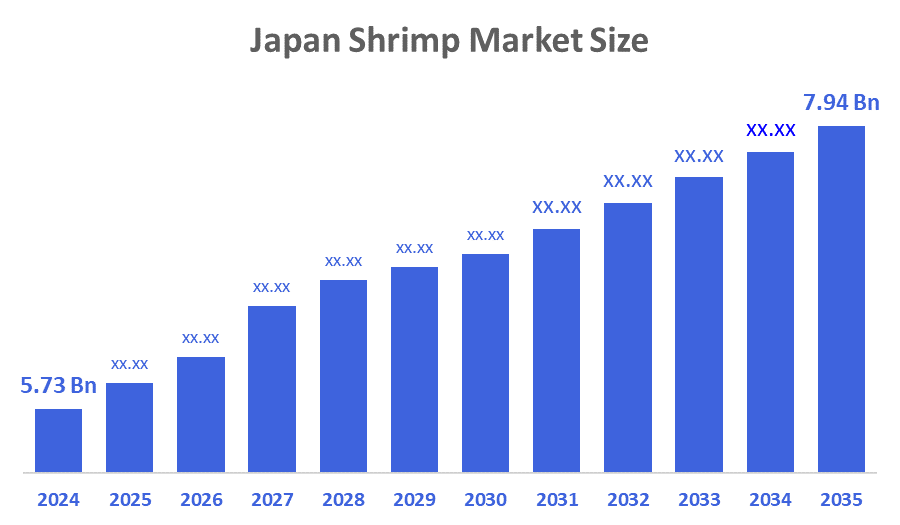
According to a Research Report Published by Decisions Advisors & Consulting, The Japan Shrimp Market Size is anticipated to Reach USD 7.94 Billion by 2035, Growing at a CAGR of 3.01% from 2025 to 2035. The market is driven due to rising demand as a result of customers, changing eating habits, and increased health consciousness. The shrimp industry is also expanding due to increased knowledge of the nutritional advantages of seafood, especially shrimp, which is seen to be a healthier protein source and high in vital nutrients like omega-3 fatty acids.
Market Overview
The Japanese shrimp market encompasses the fabrication, importation, processing, sale, and use of shrimp throughout Japan’s borders. The shrimp market is the business of producing, processing, distributing, and selling shrimp products, encompassing both farmed and wild-caught shrimp. Shrimp is one of the primary fish consumed in Japan at home and in restaurants or bars, where they are also used to create popular dishes, including sushi, tempura, ramen, and bentos. Japanese people eat many different types of shrimp, the most popular are the whiteleg, or sometimes called Chinese, black tiger, northern prawn, and local wild-caught shrimp. Japan’s shrimp market provides strong market growth due to rising demand for high-quality processed and cooked shrimp products. The older segment of Japan's population is growing and therefore creating a demand for high-quality protein seafoods, which shrimp provides. As a consumption market develops through an expansion of restaurants, convenience stores, and internet grocery stores, it will create opportunities for further expansion of product offerings related to shelled, deveined, marinated, frozen, and cooked shrimp. The Japanese government supports the shrimp/shrimp industry through ongoing initiatives to promote sustainable food safety and supply chain modernization programs. The Regulations That govern this industry are very strict related to hygiene, certification for import quality, and traceability under the Food Sanitation Act.
Report Coverage
This research report categorizes the market for the Japan Shrimp market based on various segments and regions and forecasts revenue growth and analyzes trends in each submarket. The report analyses the key growth drivers, opportunities, and challenges influencing the Japan Shrimp market. Recent market developments and competitive strategies such as expansion, product launch, and development, partnership, merger, and acquisition have been included to draw the competitive landscape in the market. The report strategically identifies and profiles the key market players and analyses their core competencies in each sub-segment of the Japan Shrimp market.
Driving Factors
The Japanese shrimp market is mainly driven by increased demand from eateries and convenience stores, expanding seafood consumption, and growing inclination toward premium, high-protein foods. The market is further supported by the rise in ready-to-cook and value-added shrimp products, the growth of internet retail, and consistent imports from significant Asian suppliers. Additionally, demand for premium shrimp types is increased by customer interest in safe, traceable, and sustainable seafood.
Restraining Factors
The Japanese shrimp market is restrained by significant reliance on imports, erratic shrimp prices, and stringent food safety laws. Consistent supply and market expansion are further hampered by disease outbreaks in supplier nations, low domestic aquaculture output, and growing transportation and cold-chain maintenance costs.
Market Segmentation
The Japan Shrimp market share is classified into species and distribution channel.
- The L. vannamei market segment accounted for the largest revenue share in 2024 and is expected to grow at a significant CAGR during the forecast period.
The Japan Shrimp market is segmented by species into L. vannamei, Pleoticus muelleri, P. monodon, Acetes japonicus, Pandalus borealis, p. chinensis, and others. Among these, the L. vannamei market segment accounted for the largest revenue share in 2024 and is expected to grow at a significant CAGR during the forecast period. This is due to the rapid advancement rate, good survival rates, and flexibility in a variety of farming environments. It is very appealing for commercial aquaculture since its production costs are lower than those of other species.
- The B2B segment accounted for the largest market revenue share in 2024 and is expected to grow at a significant CAGR during the forecast period.
The Japanese shrimp market is segmented by distribution channel into B2B and B2C. Among these, the B2B segment accounted for the largest market revenue share in 2024 and is expected to grow at a significant CAGR during the forecast period. Strong demand from foodservice providers, such as eateries, lodging facilities, and catering businesses, drives shrimp sales through B2B distribution channels. Also, consistent product availability and cost savings are provided by bulk purchasing and efficient supply chains.
Competitive Analysis:
The report offers the appropriate analysis of the key organizations/companies involved within the Japan Shrimp market along with a comparative evaluation primarily based on their product offering, business overviews, geographic presence, enterprise strategies, segment market share, and SWOT analysis. The report also provides an elaborative analysis focusing on the current news and developments of the companies, which includes product development, innovations, joint ventures, partnerships, mergers & acquisitions, strategic alliances, and others. This allows for the evaluation of the overall competition within the market.
List of Key Companies
- Maruha Nichiro Corporation
- Nippon Suisan Kaisha
- Kyokuyo Co., Ltd
- Mitsubishi & Marubeni
- Jintatsu Foodstuff Co., Ltd
- TOYO REIZO Co., Ltd
- Others
Key Target Audience
- Market Players
- Investors
- End-users
- Government Authorities
- Consulting and Research Firm
- Venture capitalists
- Value-Added Resellers (VARs)
Market Segment
This study forecasts revenue at Japan, regional, and country levels from 2020 to 2035. Decisions Advisors has segmented the Japan Shrimp market based on the below-mentioned segments:
Japan Shrimp Market, By Species
- L. vannamei
- Pleoticus muelleri
- P. monodon
- Acetes japonicus
- Pandalus borealis
- P. chinensis
- Others
Japan Shrimp Market, By Distribution Channel
- B2B
- B2C
FAQ’s
Q: What is the expected growth rate of the Japanese Shrimp Market?
A: The Japan Shrimp Market is projected to grow at a CAGR of 3.01% from 2025 to 2035.
Q: What is driving the growth of the shrimp market in Japan?
A: Growth is fueled by rising seafood consumption, increased demand from restaurants and convenience stores, and the growing preference for premium, high-protein foods.
Q: Which shrimp species dominates the Japanese market?
A: L. Vannamei holds the largest revenue share due to its fast growth, high survival rate, and cost-effective farming advantages.
Q: Why is consumer demand for shrimp increasing in Japan?
A: Consumers increasingly prefer shrimp for its high protein, low fat, and rich omega-3 content, aligning with Japan’s health-conscious dietary trends.
Q: Which sectors create the highest demand for shrimp in Japan?
A: The foodservice sector, including sushi bars, restaurants, hotels, and convenience stores generates the highest demand.
Q: Who are the major players in the Japanese shrimp market?
A: Key companies include Maruha Nichiro, Nippon Suisan Kaisha, Kyokuyo Co., Mitsubishi & Marubeni, Jintatsu Foodstuff, and TOYO REIZO.
Check Licence
Choose the plan that fits you best: Single User, Multi-User, or Enterprise solutions tailored for your needs.
We Have You Covered
- 24/7 Analyst Support
- Clients Across the Globe
- Tailored Insights
- Technology Tracking
- Competitive Intelligence
- Custom Research
- Syndicated Market Studies
- Market Overview
- Market Segmentation
- Growth Drivers
- Market Opportunities
- Regulatory Insights
- Innovation & Sustainability
Report Details
| Scope | Country |
| Pages | 149 |
| Delivery | PDF & Excel via Email |
| Language | English |
| Release | Dec 2025 |
| Access | Download from this page |