
Global Kidney Transplant Rejection Market
 |
Pages:
240
|
Pages:
240
Global Kidney Transplant Rejection Market Size, Share, By Treatment (Immunosuppressive Drugs, Biologic Therapies), By Diagnostic Method (Tissue Biopsy, Blood Based Biomarkers, Molecular Diagnostics), By End User (Transplant Centers, Hospitals, Diagnostic Laboratories), and By Region (North America, Europe, Asia Pacific, Latin America, Middle East and Africa), Analysis and Forecast 2025 ? 2035
REPORT COVERAGE
Global
Market Snapshot
- Market Size (2025): USD 3.03 Billion
- Projected Market Size (2035): USD 7.14 Billion
- Compound Annual Growth Rate (CAGR): 8.95%
- Largest Regional Market: North America
- Fastest Growing Region: Asia Pacific
- 3rd Largest Region: Europe
- Base Year: 2025
- Historical Period: 2021–2024
- Forecast Period: 2025–2035
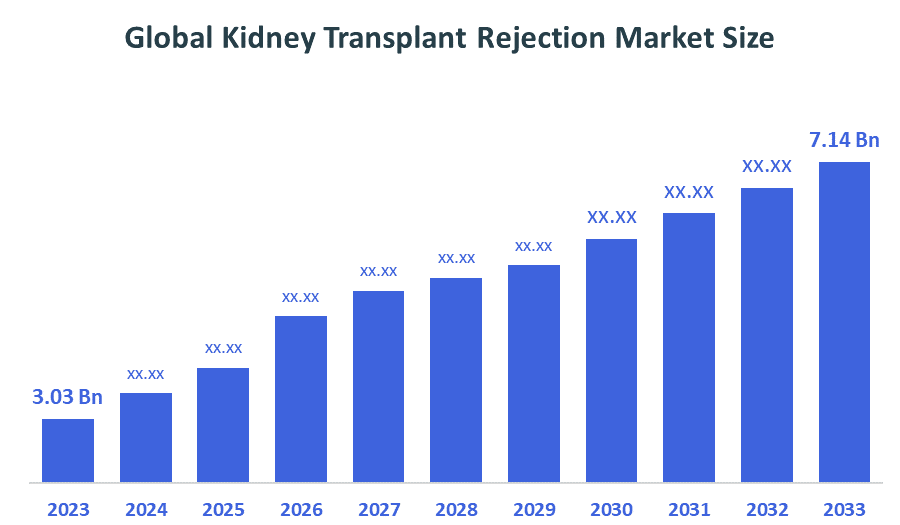
According to Decision Advisors, the Global Kidney Transplant Rejection Market Size is expected to grow from USD 3.03 billion in 2025 to USD 7.14 billion by 2035, at a CAGR of 8.95% during the forecast period 2025-2035. Global kidney transplant rejection market is projected to grow significantly over the next decade due rising chronic kidney disease prevalence, increasing transplant procedures, and a growing need for long-term immunosuppressive therapy. Advancements in non-invasive diagnostics and AI-based monitoring are further enhancing early detection and improving graft survival outcomes globally.
Market Overview/ Introduction
The global kidney transplant rejection market refers to the therapies, diagnostics, and monitoring solutions designed to prevent, detect, and manage immune-mediated rejection of transplanted kidneys, ensuring long-term graft survival and improved patient outcomes. Kidney transplant rejection occurs when the recipient’s immune system recognizes the donor kidney as foreign and attacks it, potentially causing inflammation, tissue damage, and graft failure if not effectively controlled. This market includes immunosuppressive drugs such as calcineurin inhibitors, corticosteroids, and biologics targeting antibody-mediated rejection, alongside advanced diagnostics like donor-derived cell-free DNA, gene expression profiling, and molecular assays that enable early, non-invasive detection of subclinical rejection. The market also spans pre-transplant compatibility testing, post-transplant monitoring, and long-term maintenance therapy, reflecting the entire transplant lifecycle. Growth is driven by rising chronic kidney disease prevalence, increasing transplant procedures, and expanding living donor programs, while technological innovations in AI-based predictive analytics and precision immunology are enhancing personalized treatment and graft survival. Future opportunities lie in tolerance-inducing therapies that could reduce lifelong immunosuppression, xenotransplantation, and the broader adoption of decentralized molecular diagnostics, collectively improving patient outcomes and expanding the global market potential.
- The HOLD Act in the USA, 2026, reimburses living kidney donors regardless of recipient income. This reduces financial barriers, increases donor participation, and indirectly supports higher transplant volumes, driving demand for kidney transplant rejection therapies and post-transplant monitoring solutions.
- Rashtriya Arogya Nidhi in India provides financial grants for kidney transplants and post-transplant care to low-income patients. This improves access to treatment, increases transplant rates, and boosts demand for immunosuppressive therapies and kidney transplant rejection management solutions.
- Ayushman Bharat PMJAY in India covers kidney transplant procedures for eligible families. This facilitates access to surgery and post-transplant care, increases transplant volumes, and supports adoption of cost-effective rejection detection and monitoring therapies across the country.
Notable Insights: -
1.North America holds the largest regional market share approximately 39.8% in the global kidney transplant rejection market.
2.Asia-Pacific is the fastest growing region in the global kidney transplant rejection market, accounting for approximately 20.97% of the total market share.
3.Europe is the third largest region in the global kidney transplant rejection market, accounting for approximately 30.62% of the total market share.
4.By treatment, the immunosuppressive drugs segment held a dominant position with 61.7% in terms of market share in 2025.
5.By rejection type, the chronic rejection segment held a dominant position with 52.4% in terms of market share in 2025.
6.By diagnostic method, the biomarker-based diagnostics segment held a dominant position with the highest share of the market in 2025 and is projected to grow at a CAGR of 8.5% during the forecast period.
7.The compound annual growth rate of the global kidney transplant rejection market is 8.95%.
8.The market is likely to achieve a valuation of USD 7.14 billion by 2035.
What is role of technology in grooming the market?
Technology is playing a critical role in the growth of the global kidney transplant rejection market by enabling early, accurate, and non-invasive detection of rejection. Advanced biomarker-based diagnostics such as donor-derived cell-free DNA testing allow real-time monitoring, reducing dependence on invasive biopsies. Molecular diagnostics and gene expression profiling improve detection of subclinical rejection and support timely intervention. Additionally, artificial intelligence is enhancing prediction of rejection risk through patient-specific data analysis, enabling personalized immunosuppressive therapy. Innovations in cell-based therapies and precision immunology are further improving graft survival and treatment outcomes, thereby driving demand for advanced solutions in the market.
How is Recent Developments Helping the Market?
Recent developments such as advancements in targeted biologics, expansion of cell-based therapies, and increasing adoption of biomarker-based diagnostics are supporting the growth of the global Kidney Transplant Rejection market. The market is witnessing strong innovation in precision immunology and non-invasive monitoring technologies, improving early detection and clinical decision-making. Demand for advanced rejection management solutions is rising, driven by the growing use of molecular diagnostics and personalized immunosuppressive approaches. Additionally, the adoption of desensitization therapies is increasing transplant eligibility among highly sensitized patients. Continuous improvements in post-transplant monitoring and treatment strategies are enhancing graft survival rates and strengthening long-term patient management, thereby accelerating overall market expansion.
Market Drivers
The global kidney transplant rejection market is propelled by the rising burden of chronic kidney disease and the increasing number of transplant procedures worldwide, creating a large and lifelong patient pool requiring continuous immunosuppressive therapy. The shift toward living donor transplants, accounting for nearly half of procedures, is further accelerating demand for advanced induction and maintenance treatments. Additionally, the growing adoption of non-invasive molecular diagnostics such as donor-derived cell-free DNA is transforming early detection and monitoring of rejection. Integration of artificial intelligence in transplant care is also enabling predictive risk assessment and personalized immunosuppression, significantly improving graft survival outcomes and driving overall market growth.
Restrain
The global kidney transplant rejection market is restrained by high costs of immunosuppressive therapies and advanced diagnostics, limiting accessibility in low- and middle-income regions. Long-term side effects of immunosuppressants, including infection risks and toxicity, reduce patient adherence. Additionally, donor organ shortages and complex regulatory approvals further hinder overall market growth.
Competitive Analysis:
The report offers the appropriate analysis of the key organizations/companies involved within the global kidney transplant rejection market, along with a comparative evaluation primarily based on their product of offering, business overviews, geographic presence, enterprise strategies, segment market share, and SWOT analysis. The report also provides an elaborative analysis focusing on the current news and developments of the companies, which includes product development, innovations, joint ventures, partnerships, mergers & acquisitions, strategic alliances, and others. This allows for the evaluation of the overall competition within the market.
Top Companies in Global Kidney Transplant Rejection Market
- Novartis AG
- Sanofi
- Astellas Pharma Inc.
- Bristol Myers Squibb
- Hansa Biopharma AB
- Thermo Fisher Scientific Inc.
- CareDx, Inc.
- Natera, Inc.
Government Initiatives
|
Country |
Key Government Initiatives |
|
US |
The U.S. government has implemented the Increasing Organ Transplant Access (IOTA) Model, incentivizing hospitals to improve transplant volumes and graft survival rates through performance-based payments, thereby increasing demand for kidney transplant rejection therapies and post-transplant monitoring solutions. |
|
India |
The Indian government is strengthening transplant infrastructure through national registries, standardized brainstem death certification, and promotion of domestic diagnostic development. In addition, the Karnataka state government is expanding transplant access through a 1000-bed multi-specialty hospital, providing free organ transplants for eligible patients, increasing transplant volumes, and driving demand for kidney transplant rejection therapies and post-transplant care solutions. |
|
China |
China has implemented stricter organ donation regulations prohibiting commercialization and promoting ethical, voluntary donation systems, improving public trust and increasing donor participation, which supports higher transplant volumes and long-term demand for rejection prevention and treatment solutions. |
|
EU |
The EU launched CARMEN2026, a research initiative funding precision medicine and AI tools for early rejection detection, improving clinical outcomes and adoption of advanced diagnostics and personalized kidney transplant rejection therapies. The EU’s Second Action Plan aims to harmonize transplant registries across member states, reducing regional disparities, improving donor tracking, and supporting higher adoption of immunosuppressive therapies and rejection monitoring programs. |
Market Segmentation
The global kidney transplant rejection market share is classified into treatment, rejection type, and diagnostic method
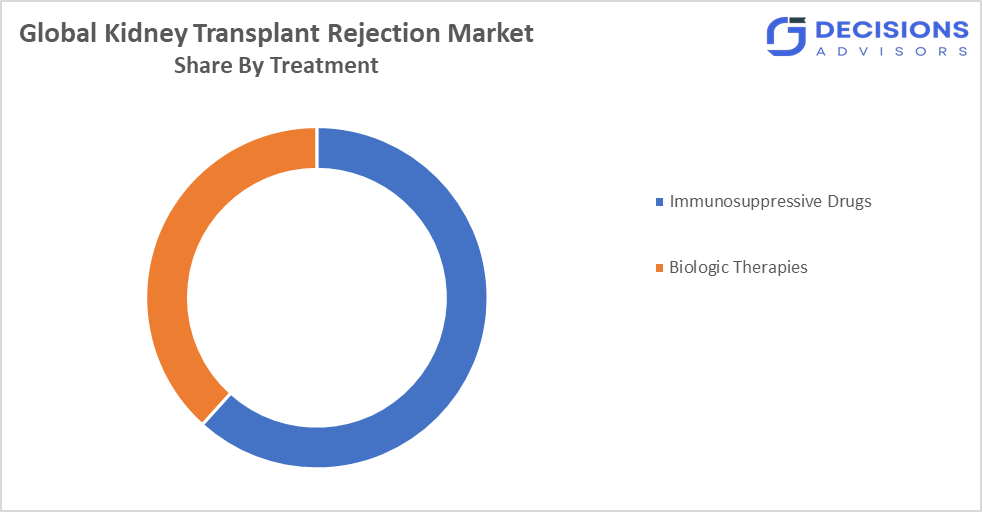
- The immunosuppressive drugs segment dominated the market in 2025, accounting for approximately 61.7% of the total market share, and is projected to grow at a substantial CAGR during the forecast period.
Based on the treatment, the global kidney transplant rejection market is divided into immunosuppressive drugs and biologic therapies. Among these, the immunosuppressive drugs segment dominated the market in 2025, accounting for approximately 61.7% of the total market share, and is projected to grow at a substantial CAGR during the forecast period. It is because these drugs are essential for lifelong transplant survival, widely adopted across all patients, supported by increasing transplant procedures and continuous demand for effective rejection prevention therapies globally.
- The chronic rejection segment dominated the market in 2025, accounting for approximately 52.4% of the total market share, and is projected to grow at a substantial CAGR during the forecast period.
Based on the rejection type, the global kidney transplant rejection market is divided into chronic rejection and acute rejection. Among these, the chronic rejection segment dominated the market in 2025, accounting for approximately 52.4% of the total market share, and is projected to grow at a substantial CAGR during the forecast period. It is because delayed detection, gradual progression, limited early diagnostic tools, and long-term graft damage increase treatment demand and prevalence across transplant patients globally.
- The biomarker-based diagnostics segment dominated the market in 2025, accounting for the highest share of the market, and is projected to grow at a CAGR of approximately 8.5% during the forecast period.
Based on the diagnostic method, the global kidney transplant rejection market is divided into biomarker-based diagnostics and genomics-based diagnostics. Among these, the biomarker-based diagnostics segment dominated the market in 2025, accounting for the highest share of the market, and is projected to grow at a CAGR of approximately 8.5% during the forecast period. It is because noninvasive testing, rapid results, cost effectiveness, early detection capability, and growing clinical adoption are driving demand for biomarker based diagnostic solutions globally.
What is the Reason of the Region Dominance?
The dominance of certain regions in the global kidney transplant rejection market is primarily driven by high kidney transplant volumes, increasing prevalence of chronic kidney disease and end stage renal disease, strong adoption of lifelong immunosuppressive therapies, and availability of advanced diagnostic technologies. Regions such as North America lead the market due to well established transplant infrastructure, high utilization of calcineurin inhibitors and corticosteroids, and widespread use of donor specific antibody monitoring and biopsy-based diagnostics. Additionally, the presence of leading pharmaceutical companies, robust post-transplant patient management systems, and continuous monitoring protocols further contribute to regional dominance.
Strategies to Implement for Growth of the Market in Non-Leading Regions
Growth in non-leading regions can be supported through strategic investments, expansion of transplant infrastructure, and improved access to treatment and diagnostics. Companies and healthcare systems can increase market penetration by ensuring availability of affordable immunosuppressive therapies and adopting cost-effective biomarker-based rejection monitoring solutions. Strengthening hospital networks, increasing the number of transplant centers, and enhancing specialist training can improve patient management. Additionally, partnerships with local healthcare providers and governments can support awareness programs for organ donation and post-transplant care. Investment in diagnostic technologies and integration of standardized monitoring protocols can further improve early detection and long-term graft survival, driving market growth.
Regional Segment Analysis of the Kidney Transplant Rejection Market
- North America (U.S., Canada, Mexico)
- Europe (Germany, France, U.K., Italy, Spain, Rest of Europe)
- Asia-Pacific (China, Japan, India, Rest of APAC)
- South America (Brazil and the Rest of South America)
- The Middle East and Africa (UAE, South Africa, Rest of MEA)
North America is anticipated to hold the largest share of the global kidney transplant rejection market over the predicted timeframe.
North America is anticipated to hold the largest share of the kidney transplant rejection market over the predicted timeframe. This market is accounting about approximately 39.8% of the total market share, the dominance of this market is driven by high kidney transplant volumes, strong utilization of maintenance immunosuppressive regimens such as calcineurin inhibitors and corticosteroids, widespread adoption of donor specific antibody monitoring, and availability of advanced biopsy and biomarker-based rejection diagnostics. Countries such as the United States lead due to high incidence of end stage renal disease, established transplant registries, and continuous post-transplant monitoring protocols that increase treatment demand.
Asia Pacific is expected to grow at a rapid CAGR in the global kidney transplant rejection market during the forecast period. Asia Pacific is expected to grow at a rapid CAGR in the kidney transplant rejection market during the forecast period. This market is accounting about approximately 20.97% of the total market share, it is the fastest growing region due to increasing living donor kidney transplants, rising incidence of chronic kidney disease, improving access to immunosuppressive therapies, and gradual adoption of noninvasive biomarker based rejection monitoring. Countries such as China and India are expanding transplant infrastructure and post-transplant care capabilities, which is directly increasing demand for rejection prevention and treatment solutions across the region.
Europe is the 3rd largest region in the global kidney transplant rejection market. This market is accounting about approximately 30.62% of the total market share, the growth of this region is driven by high prevalence of chronic rejection cases, standardized immunosuppression protocols, strong uptake of therapeutic drug monitoring, and integration of molecular diagnostics for early rejection detection. Countries such as Germany, France, and the United Kingdom contribute significantly due to well established transplant networks and long-term graft survival management practices, increasing sustained demand for rejection related therapies.
Future Market Trends in Global Kidney Transplant Rejection Market: -
1.Advancements in Targeted and Biologic Therapies
The market is increasingly shifting toward biologics and targeted immunosuppressive therapies that offer improved graft survival with reduced side effects. These advanced therapies are gaining traction due to their ability to precisely control immune response and reduce chronic rejection risks.
2.Rising Adoption of Non-Invasive Biomarker Based Diagnostics
Non-invasive biomarker-based diagnostics are witnessing strong adoption as they enable early detection of rejection without the need for invasive biopsies. These technologies improve real time monitoring, support timely clinical decisions, and enhance long term transplant outcomes.
3.Growth in Personalized and Precision Medicine Approaches
Personalized medicine is emerging as a key trend, where treatment is tailored based on patient specific immune profiles and genetic markers. This approach helps optimize immunosuppressive drug dosing, minimize adverse effects, and improve long term graft survival rates.
Recent Development
- In November 2025, CareDx announced the launch of HistoMap Kidney, a molecular diagnostic test that enhances biopsy interpretation through gene expression profiling, strengthening precision diagnostics in the global Kidney Transplant Rejection market.
- In July 2025, clinical studies further validated donor-derived cell-free DNA testing such as AlloSure for accurate detection of kidney transplant rejection, accelerating global adoption of biomarker-based diagnostics.
- In February 2025, CareDx reported clinical study results demonstrating that its AlloSeq cfDNA test showed high accuracy in detecting kidney transplant rejection, supporting increased adoption of biomarker-based diagnostics globally.
Market Segment
This study forecasts revenue at global, regional, and country levels from 2020 to 2035. Decision Advisor has segmented the global kidney transplant rejection market based on the below-mentioned segments:
Global Kidney Transplant Rejection Market, By Treatment
- Immunosuppressive Drugs
- Biologic Therapies
Global Kidney Transplant Rejection Market, By Diagnostic Method
- Tissue Biopsy
- Blood Based Biomarkers
- Molecular Diagnostics
Global Kidney Transplant Rejection Market, By End User
- Transplant Centers
- Hospitals
- Diagnostic Laboratories
Global Kidney Transplant Rejection Market, By Regional Analysis
- North America
- US
- Canada
- Mexico
- Europe
- Germany
- UK
- France
- Italy
- Spain
- Russia
- Rest of Europe
- Asia Pacific
- China
- Japan
- India
- South Korea
- Australia
- Rest of Asia Pacific
- South America
- Brazil
- Argentina
- Rest of South America
- Middle East & Africa
- UAE
- Saudi Arabia
- Qatar
- South Africa
- Rest of the Middle East & Africa
Frequently Asked Questions (FAQ)
Q: What are the emerging biomarkers under research for earlier detection of kidney transplant rejection beyond dd-cfDNA?
A: Researchers are investigating novel proteomic and metabolomic biomarkers, microRNA signatures, and immune cell phenotyping panels that could further enhance early, non-invasive detection and risk stratification of transplant rejection.
Q: How is telemedicine being integrated into post-transplant monitoring for kidney transplant patients?
A: Telemedicine platforms are being piloted to allow remote graft function monitoring, virtual consultations, and real-time medication adherence tracking, improving follow-up compliance and early intervention without requiring frequent hospital visits.
Q: Are there any global collaborative registries for sharing post-transplant rejection data?
A: Initiatives are emerging to create multinational transplant registries that pool anonymized patient data to improve outcome prediction models, track graft survival trends, and accelerate adoption of standardized rejection management protocols.
Q: How is AI being used to predict rejection beyond immunosuppressive dosing?
A: AI algorithms are now being developed to integrate longitudinal lab results, histopathology images, and genetic profiles to forecast early immune response patter
Check Licence
Choose the plan that fits you best: Single User, Multi-User, or Enterprise solutions tailored for your needs.
We Have You Covered
- 24/7 Analyst Support
- Clients Across the Globe
- Tailored Insights
- Technology Tracking
- Competitive Intelligence
- Custom Research
- Syndicated Market Studies
- Market Overview
- Market Segmentation
- Growth Drivers
- Market Opportunities
- Regulatory Insights
- Innovation & Sustainability
Report Details
| Scope | Global |
| Pages | 240 |
| Delivery | PDF & Excel via Email |
| Language | English |
| Release | Mar 2026 |
| Access | Download from this page |