
Global Klebsiella Pneumoniae Infections Market
 |
Pages:
240
|
Pages:
240
Global Klebsiella Pneumoniae Infections Market Size, Share, and COVID-19 Impact Analysis, By Infection Type (Pneumonia, Bloodstream Infections (Septicemia), Urinary Tract Infections (UTIs), Liver Abscess, Wound & Surgical Site Infections, Meningitis, and Others), By Drug Class (Cephalosporins, Carbapenems, Aminoglycosides, Fluoroquinolones, ?-lactam/?-lactamase Inhibitor Combinations, Polymyxins, Tetracyclines, and Combination Therapy) and By Region (North America, Europe, Asia-Pacific, Latin America, Middle East, and Africa), Analysis and Forecast 2025-2035
REPORT COVERAGE
Global
Global Klebsiella Pneumoniae Infections Market Size Insights Forecasts to 2035
- Global Klebsiella Pneumoniae Infections Market Size Is Expected to Grow at a CAGR of Around 4.70% from 2025 to 2035.
- Global Klebsiella Pneumoniae Infections Market Size Is Expected to Reach a Significant Share by 2035
- Asia-Pacific is expected to grow the fastest during the forecast period.
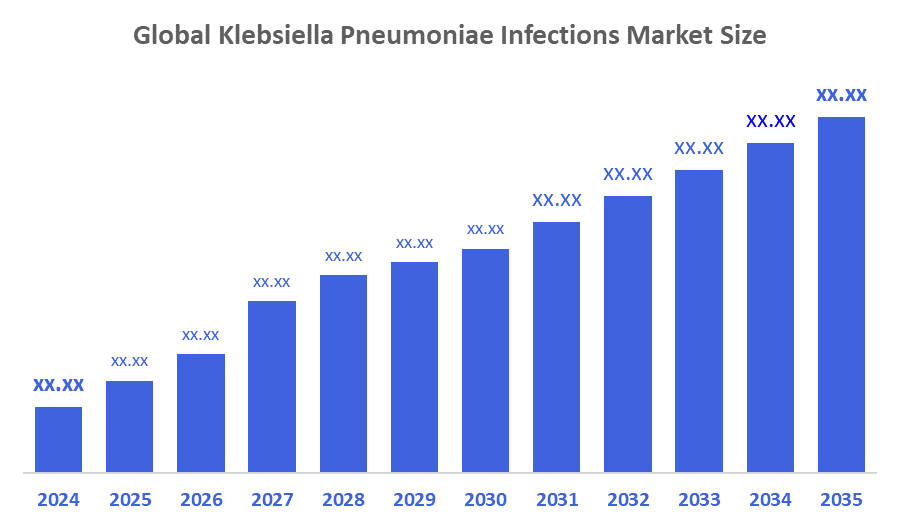
According to a research report published by Decisions Advisors and Consulting, The Global Klebsiella Pneumoniae Infections Market Size Is Expected To Hold A Significant Share By 2035, At A CAGR Of 4.70% During The Forecast Period 2025-2035. Future opportunities in the Global Klebsiella Pneumoniae Infections Market include development of novel antibiotics and combination therapies and rapid diagnostic technologies and antimicrobial stewardship programs and vaccine research and expansion in emerging markets and increased investment in combating antimicrobial resistance.
Market Overview
Klebsiella pneumoniae infections occur when the bacterium klebsiella pneumoniae infects humans. The global klebsiella pneumoniae infections market shows increased growth because of three factors which include rising antimicrobial resistance and growing hospital admissions and the higher occurrence of healthcare-associated infections which exist throughout the world. Government bodies such as the World Health Organization have classified carbapenem-resistant Klebsiella pneumoniae as a critical priority pathogen, encouraging antibiotic research and surveillance programs. The Centers for Disease Control and Prevention in the United States monitors resistant strains while it supports programs for better use of antimicrobial products. The market expansion throughout the world receives support from three factors which include enhanced funding for infection control programs and better diagnostic technologies and the creation of new antibiotics.
Report Coverage
This research report categorizes the klebsiella pneumoniae infections market based on various segments and regions, forecasts revenue growth, and analyzes trends in each submarket. The report analyses the key growth drivers, opportunities, and challenges influencing the klebsiella pneumoniae infections market. Recent market developments and competitive strategies such as expansion, type launch, development, partnership, merger, and acquisition, have been included to draw the competitive landscape in the market. The report strategically identifies and profiles the key market players and analyses their core competencies in each sub-segment of the klebsiella pneumoniae infections market.
Driving Factors
The global klebsiella pneumoniae infections market is driven by rising antimicrobial resistance together with increasing hospital-acquired infections and growing ICU admissions. The development of rapid molecular diagnostics through innovative approaches together with AI-based pathogen detection systems and new β-lactam/β-lactamase inhibitor solutions and bacteriophage therapy research and next-generation antibiotic development for carbapenem-resistant strains drives both treatment progress and market expansion throughout the world.
Restraining Factors
The global klebsiella pneumoniae infections market encounters obstacles which stem from three main factors that include high costs of antibiotic development, strict requirements for regulatory approval, and the current lack of effective treatments for resistant bacterial strains, as well as diagnostic delays and increasing limitations on antibiotic usage through antimicrobial stewardship programs.
Market Segmentation
The klebsiella pneumoniae infections market share is classified into infection type and drug class.
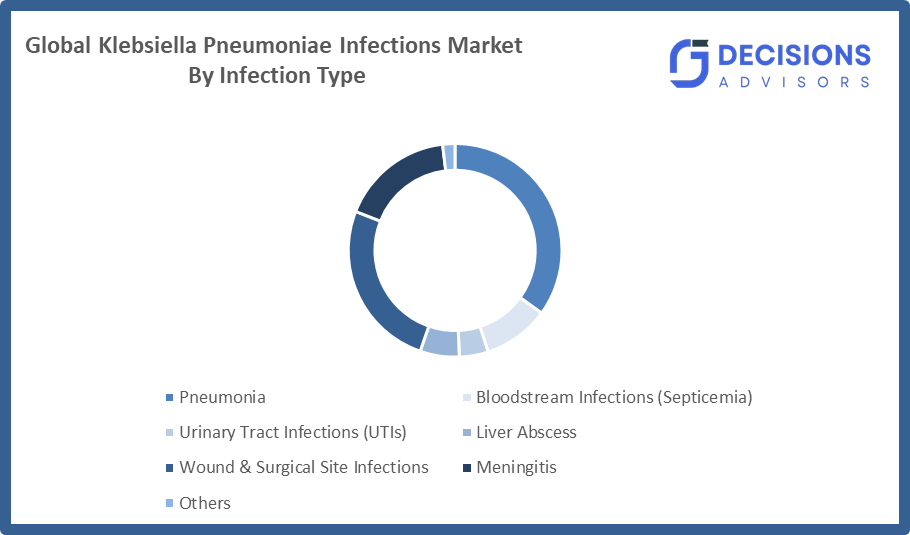
- The pneumonia segment dominated the market in 2024, approximately 38% and is projected to grow at a substantial CAGR during the forecast period.
Based on the infection type, the Klebsiella Pneumoniae Infections market is divided into pneumonia, bloodstream infections (septicemia), urinary tract infections (UTIs), liver abscess, wound & surgical site infections, meningitis, and others. Among these, the pneumonia segment dominated the market in 2024, approximately 38% and is projected to grow at a substantial CAGR during the forecast period. The high rates of hospital-acquired and ventilator-associated pneumonia spread through ICU units and between immunocompromised patients. The growing need for advanced antibiotics and combination treatments results from increasing antimicrobial resistance and extended hospital stays and the rising number of elderly patients. This demand drives both revenue growth and continuous market expansion throughout the projected period.
- The carbapenems segment accounted for the largest share in 2024, approximately 34% and is anticipated to grow at a significant CAGR during the forecast period.
Based on the drug class, the phosphine gas market is divided into cephalosporins, carbapenems, aminoglycosides, fluoroquinolones, β-lactam/β-lactamase inhibitor combinations, polymyxins, tetracyclines, and combination therapy. Among these, the carbapenems segment accounted for the largest share in 2024, approximately 34% and is anticipated to grow at a significant CAGR during the forecast period. The antibiotics provide effective treatment for all types of infections because they successfully combat severe hospital-acquired infections and multidrug-resistant Klebsiella pneumoniae cases. The medical field uses these antibiotics as final treatment options in critical care units to treat bloodstream infections and ventilator-associated infections. The increasing number of resistant bacterial strains together with the growing demand for intensive care unit services will drive continuous market expansion.
Regional Segment Analysis of the Klebsiella Pneumoniae Infections Market
- North America (U.S., Canada, Mexico)
- Europe (Germany, France, U.K., Italy, Spain, Rest of Europe)
- Asia-Pacific (China, Japan, India, Rest of APAC)
- South America (Brazil and the Rest of South America)
- The Middle East and Africa (UAE, South Africa, Rest of MEA)
North America is anticipated to hold the largest share of the klebsiella pneumoniae infections market over the predicted timeframe.
North America is anticipated to hold the largest share of the klebsiella pneumoniae infections market over the predicted timeframe. The region accounted for approximately 41% market share in 2024 because hospital-acquired infections increased and hospitals used antibiotics extensively while insurance companies provided coverage for new anti-infective treatments and research funding continued to support development of new treatments.
Asia-Pacific is expected to grow at a rapid CAGR in the klebsiella pneumoniae infections market during the forecast period. The region held approximately 27% of the market in 2024 because of increasing ICU admissions, better diagnostic abilities, governmental infection-control programs, and rising healthcare spending in developing nations.
Competitive Analysis:
The report offers the appropriate analysis of the key organizations/companies involved within the klebsiella pneumoniae infections market, along with a comparative evaluation primarily based on their type of offering, business overviews, geographic presence, enterprise strategies, segment market share, and SWOT analysis. The report also provides an elaborative analysis focusing on the current news and developments of the companies, which includes type development, innovations, joint ventures, partnerships, mergers & acquisitions, strategic alliances, and others. This allows for the evaluation of the overall competition within the market.
List of Key Companies
- Pfizer Inc.
- Merck & Co., Inc. (MSD)
- Johnson & Johnson (Janssen Pharmaceuticals)
- GlaxoSmithKline plc (GSK)
- Novartis AG
- Roche Holding AG
- AstraZeneca plc
- Sanofi S.A.
- AbbVie Inc.
- Others
Key Target Audience
- Market Players
- Investors
- End-users
- Government Authorities
- Consulting and Research Firm
- Venture capitalists
- Value-Added Resellers (VARs)
Recent Development
- In November 2025, a review in Frontiers in Cellular and Infection Microbiology highlighted the rising threat of multidrug-resistant Klebsiella pneumoniae and explored antimicrobial resistance mechanisms. It emphasized phage-based combination therapies as promising alternatives to traditional antibiotics in the post-antibiotic era.
Market Segment
This study forecasts revenue at global, regional, and country levels from 2020 to 2035. Decisions Advisors has segmented the klebsiella pneumoniae infections market based on the below-mentioned segments:
Global Klebsiella Pneumoniae Infections Market, By Infection Type
- Pneumonia
- Bloodstream Infections (Septicemia)
- Urinary Tract Infections (UTIs)
- Liver Abscess
- Wound & Surgical Site Infections
- Meningitis
- Others
Global Klebsiella Pneumoniae Infections Market, By Drug Class
- Cephalosporins
- Carbapenems
- Aminoglycosides
- Fluoroquinolones
- β-lactam/β-lactamase Inhibitor Combinations
- Polymyxins
- Tetracyclines
- Combination Therapy
Global Klebsiella Pneumoniae Infections Market, By Regional Analysis
- North America
- US
- Canada
- Mexico
- Europe
- Germany
- UK
- France
- Italy
- Spain
- Russia
- Rest of Europe
- Asia Pacific
- China
- Japan
- India
- South Korea
- Australia
- Rest of Asia Pacific
- South America
- Brazil
- Argentina
- Rest of South America
- Middle East & Africa
- UAE
- Saudi Arabia
- Qatar
- South Africa
- Rest of the Middle East & Africa
Frequently Asked Questions (FAQ)
1. What is the projected growth rate of the global klebsiella pneumoniae infections market?
A: The market is expected to grow at a CAGR of 4.70% from 2025 to 2035, driven by rising antimicrobial resistance, increasing hospital-acquired infections, and growing demand for advanced antibiotic therapies.
2. Which infection type segment leads the market?
A: The pneumonia segment dominates with approximately 38% share in 2024 due to high incidence of ventilator-associated pneumonia, ICU admissions, antimicrobial resistance, and increasing elderly patient population globally.
3. Why do carbapenems hold the largest drug class share?
A: Carbapenems accounted for around 34% share in 2024 because they are widely used as last-line treatments for severe, multidrug-resistant infections, especially in critical care and bloodstream infection cases.
4. Which region holds the largest market share?
A: North America leads the market with approximately 41% share in 2024, supported by advanced healthcare infrastructure, high antibiotic usage, strong reimbursement systems, and ongoing research funding.
5. Why is Asia-Pacific the fastest-growing region?
A: Asia-Pacific, holding about 27% share in 2024, is growing rapidly due to rising ICU admissions, increasing antimicrobial resistance, government infection-control initiatives, and expanding healthcare expenditure in emerging economies.
Check Licence
Choose the plan that fits you best: Single User, Multi-User, or Enterprise solutions tailored for your needs.
We Have You Covered
- 24/7 Analyst Support
- Clients Across the Globe
- Tailored Insights
- Technology Tracking
- Competitive Intelligence
- Custom Research
- Syndicated Market Studies
- Market Overview
- Market Segmentation
- Growth Drivers
- Market Opportunities
- Regulatory Insights
- Innovation & Sustainability
Report Details
| Scope | Global |
| Pages | 240 |
| Delivery | PDF & Excel via Email |
| Language | English |
| Release | Mar 2026 |
| Access | Download from this page |