
Global Lactose Intolerance Market
 |
Author:
David J
|
Pages:
250
|
Author:
David J
|
Pages:
250
Global Lactose Intolerance Market Size, Share, and COVID-19 Impact Analysis, By Type (Primary Lactose Intolerance, Secondary Lactose Intolerance, and Congenital Lactose Intolerance), By Treatment (Food Supplements, Enzyme Lactase Supplements, and Probiotics), By Form (Powder, Liquid and Tablets), and By Region (North America, Europe, Asia-Pacific, Latin America, Middle East, and Africa), Analysis and Forecast 2025-2035
CAGR
6.25%
REVENUE 2024
USD Billion 11.46
FORECAST 2035
USD Billion 22.32
REPORT COVERAGE
Global
Global Lactose Intolerance Market Size Insights Forecasts to 2035
- The Global Lactose Intolerance Market Size Was Estimated at USD 11.46 Billion in 2024
- The Market Size is Expected to Grow at a CAGR of around 6.25 % from 2025 to 2035
- The Worldwide Lactose Intolerance Market Size is Expected to Reach USD 22.32 Billion by 2035
- North America is expected to grow the fastest during the forecast period.
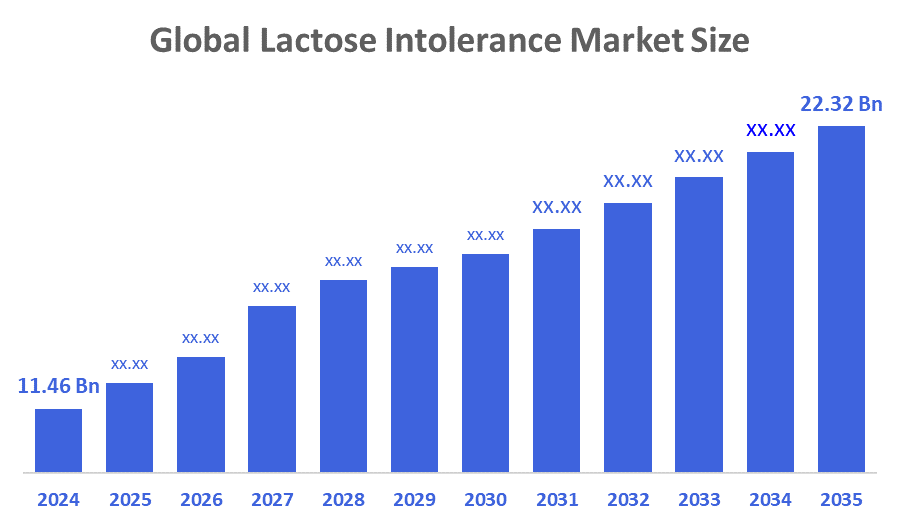
According to a research report published by Decisions Advisors and Consulting, The Global Lactose Intolerance Market Size Was Worth Around USD 11.46 Billion In 2024 And Is Predicted To Grow To Around USD 22.32 Billion By 2035 With A Compound Annual Growth Rate (CAGR) Of 6.25 % From 2025 To 2035. The market for lactose intolerance treatments is being greatly impacted by customers' increased interest in dairy substitutes. The demand for dairy alternatives is growing as more people choose plant-based diets or look for lactose-free solutions. This trend suggests a change in consumer behaviour as individuals give sustainability and health more weight when making food decisions.
Market Overview
The lactose intolerance market includes the global ecosystem of products, diagnostics, and therapies addressing the dietary and clinical management of lactose intolerance, a digestive condition caused by insufficient lactase enzyme activity. Low levels of the lactase enzyme within the small intestine prevent the body from properly breaking down lactose, the type of sugar found in dairy products, resulting in the prevalent disorder known as lactose intolerance. Although lactose consumption continues, this deficit usually gets worse with age. Lactose intolerance can be classified as primary, secondary, congenital, or developmental, depending on the underlying cause. Bloating, gas, diarrhoea, cramping in the abdomen, nausea, and other symptoms are the most prevalent signs of the condition. Constipation, lower abdominal pain, vomiting, and an overwhelming urge to use the restroom are among the symptoms that people with this illness may encounter. A review of the patient's symptoms, medical history, and physical examination is necessary for the diagnosis of this disorder. A hydrogen breath test and a stool acidity test are the additional supporting tests used to confirm a diagnosis. Additionally, by testing blood glucose levels, the healthcare professional may conduct a lactose tolerance test to determine how well lactose is absorbed in the digestive tract.
Freshways, one of the UK’s largest independent dairy suppliers, announced a £25 million investment in a new state-of-the-art dairy processing hub in West Bromwich.
Vegan Cowboys, the Dutch?Belgian precision fermentation startup, raised €6.25 million ($7.3M) to scale up production of its cow-free dairy proteins.
Report Coverage
This research report categorizes the lactose intolerance market based on various segments and regions, forecasts revenue growth, and analyzes trends in each submarket. The report analyses the key growth drivers, opportunities, and challenges influencing the lactose intolerance market. Recent market developments and competitive strategies, such as expansion, product launch, development, partnership, merger, and acquisition, have been included to draw the competitive landscape in the market. The report strategically identifies and profiles the key market players and analyzes their core competencies in each sub-segment of the lactose intolerance market.
Driving Factors
The lactose intolerance market is currently undergoing significant changes due to the influence of consumer preferences and advancements in medical research. With the rising awareness of lactose intolerance, people are actively looking for ways to effectively treat the condition. This has led to the development of innovative treatment methods, such as enzyme supplements and lactose-free products. Moreover, the market is undergoing a transition towards natural and organic alternatives, as consumers are becoming more health-conscious and preferring products with fewer artificial ingredients. This indicates a possible expansion in the market as manufacturers respond to these changing consumer demands. Additionally, the lactose intolerance market is affected by the increasing incidence of lactose intolerance among different groups.
Allergen Alert, a French firm, demonstrated a portable "small lab" at CES 2026 that can accurately test food for dairy and gluten allergies. Despite its entry into the consumer health technology market, this gadget responds to the expanding need for allergy safety equipment worldwide. It is a formidable rival in the nascent allergen detection business due to its portability and FDA approval.
Restraining Factors
One of the biggest challenges that the global lactose intolerance market faces is the high cost that is associated with the treatment and diagnosis process. The diagnosis of lactose intolerance needs tests such as the hydrogen breath test or genetic analysis, which are quite costly. In addition, treatment methods such as enzyme replacement therapy involve taking medicines for the rest of one's life, which increases the cost of treatment. In addition, improper diagnosis means that patients do not adhere to the right diet modification or medication on time.
Market Segmentation
The lactose intolerance market share is classified into type, treatment, and form.
- The primary lactose intolerance segment accounted for the largest market share in 2024 and is anticipated to grow at a significant CAGR during the forecast period.
Based on the type, the lactose intolerance market is segmented into primary lactose intolerance, secondary lactose intolerance, and congenital lactose intolerance. Among these, the primary lactose intolerance segment accounted for the largest market share in 2024 and is anticipated to grow at a significant CAGR during the forecast period. The most common cause of lactose intolerance around the globe is hereditary lactase deficiency after childhood. It is uncommon for hereditary lactose intolerance to occur; secondary lactose intolerance is caused by gut trauma or disease.
- The lactase supplements segment accounted for the highest market revenue in 2024 and is anticipated to grow at a significant CAGR during the forecast period.
Based on the treatment, the lactose intolerance market is divided into food supplements, enzymes, lactase supplements, and probiotics. Among these, the lactase supplements segment accounted for the highest market revenue in 2024 and is anticipated to grow at a significant CAGR during the forecast period. This is reducing symptoms straightforwardly and efficiently. Considering a strong supply chain and distribution network that improves accessibility, the market appeals to customers looking for immediate fixes for stomach issues.
Research into lactase treatment for feeding intolerance in preterm infants is an emerging area in neonatal care, given that premature babies often have underdeveloped digestive systems and reduced lactase activity.
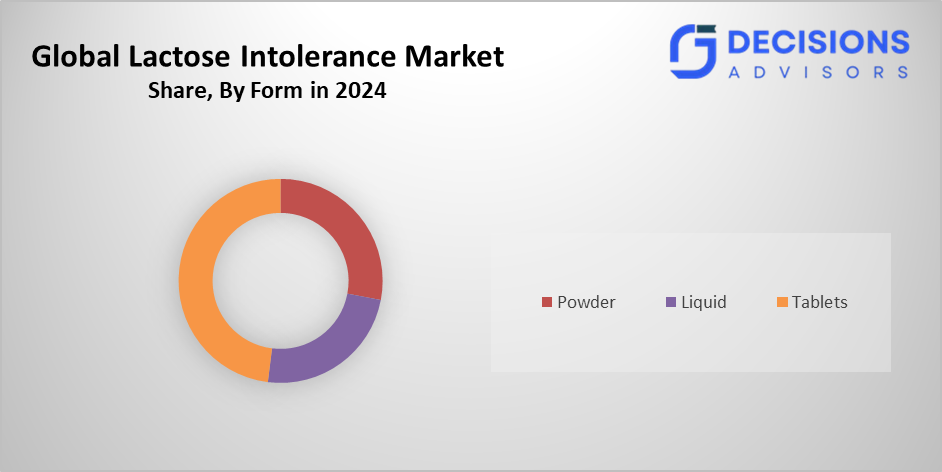
- The tablets segment accounted for the largest share in 2024 and is anticipated to grow at a significant CAGR during the forecast period.
Based on the form, the lactose intolerance market is differentiated into powder, liquid and tablets. Among these, the tablets segment accounted for the largest share in 2024 and is anticipated to grow at a significant CAGR during the forecast period. This is because of their easy use and familiarity with consumers. Their effectiveness and ease have earned them widespread trust, enabling accurate dosing to accommodate different degrees of lactose sensitivity.
Milktab introduced a breakthrough lactase pill designed specifically for consumers with lactose intolerance who still want to enjoy dairy products.
Regional Segment Analysis of the Lactose Intolerance Market
- North America (U.S., Canada, Mexico)
- Europe (Germany, France, U.K., Italy, Spain, Rest of Europe)
- Asia-Pacific (China, Japan, India, Rest of APAC)
- South America (Brazil and the Rest of South America)
- The Middle East and Africa (UAE, South Africa, Rest of MEA)
Asia Pacific is anticipated to hold the largest share of the lactose intolerance market over the predicted timeframe.
Asia Pacific is anticipated to hold the largest share of the lactose intolerance market over the predicted timeframe. The Asia-Pacific lactose intolerance market, currently at 5.0, is growing rapidly due to an increase in the awareness of lactose intolerance and changes in dietary patterns. Countries such as China and India are experiencing an increase in the consumption of lactose-free products due to lifestyle and dietary pattern changes. The Asia-Pacific region is also experiencing the effects of government regulations regarding food safety and labelling, which is fueling the growth of the market as consumers become more health-conscious. The Asia-Pacific region is also experiencing the effects of an increase in the middle class and urbanisation, which is fueling the growth of the lactose intolerance market.
ZUMI Foods, a Hyderabad-based startup, has launched India’s first lactose-free, no-refined-sugar milkshakes under the brand name ZUMI.
North America is expected to grow at a rapid CAGR in the lactose intolerance market during the forecast period. The market in North America is fueled by the growing awareness of lactose intolerance and the subsequent surge in the demand for lactose-free products. The support of the regulatory framework for food labelling and health claims also accelerates the growth of the market. The incidence of lactose intolerance among different populations drives the demand for new and innovative treatment solutions, such as dietary supplements and lactose-free dairy products. The competitive market in North America is intense, with prominent players such as Lactaid, Abbott Laboratories, and Pinnacle Foods. The U.S. is the leading market, with Canada and Mexico also contributing to the growth of the market. The market in North America is characterised by the presence of strong brands and an established distribution network, making lactose intolerance treatment products easily available to consumers.
Competitive Analysis:
The report offers the appropriate analysis of the key organizations/companies involved within the Lactose Intolerance market, along with a comparative evaluation primarily based on their product offering, business overviews, geographic presence, enterprise strategies, segment market share, and SWOT analysis. The report also provides an elaborative analysis focusing on the current news and developments of the companies, which includes product development, innovations, joint ventures, partnerships, mergers & acquisitions, strategic alliances, and others. This allows for the evaluation of the overall competition within the market.
List of Key Companies
- Abbott Laboratories
- Arla Foods
- Chr. Hansen Holding A/S
- Danone
- Dean Foods (Lactaid brand)
- DSM Nutritional Products
- Green Valley Creamery
- Johnson & Johnson (McNeil Nutritionals)
- Nestlé Health Science
- Novozymes
- Sanofi
- Saputo Inc.
- Valio Ltd.
- Yili Group
- Others
Key Target Audience
- Market Players
- Investors
- End-users
- Government Authorities
- Consulting and Research Firm
- Venture capitalists
- Value-Added Resellers (VARs)
Recent Development
- In November 2023, Nestlé declared today that it has created N3 milk. It is made from cow's milk and has all of the vital nutrients, proteins, vitamins, and minerals that are present in milk. It is also low in lactose, has prebiotic fibres, and is more than 15% lower in calories.
Market Segment
This study forecasts revenue at global, regional, and country levels from 2020 to 2035. Decisions Advisors has segmented the Lactose Intolerance market based on the below-mentioned segments:
Global Lactose Intolerance Market, By Type
- Primary Lactose Intolerance
- Secondary Lactose Intolerance
- Congenital Lactose Intolerance
Global Lactose Intolerance Market, By Treatment
- Food Supplements
- Enzyme Lactase Supplements
- Probiotics
Global Lactose Intolerance Market, By Form
- Powder
- Liquid
- Tablets
Global Lactose Intolerance Market, By Regional Analysis
- North America
- US
- Canada
- Mexico
- Europe
- Germany
- UK
- France
- Italy
- Spain
- Russia
- Rest of Europe
- Asia Pacific
- China
- Japan
- India
- South Korea
- Australia
- Rest of Asia Pacific
- South America
- Brazil
- Argentina
- Rest of South America
- Middle East & Africa
- UAE
- Saudi Arabia
- Qatar
- South Africa
- Rest of the Middle East & Africa
Frequently Asked Questions (FAQ)
1. How is e-commerce influencing the lactose intolerance market?
Online retail platforms are significantly expanding access to lactose intolerance products, especially in emerging economies. Direct-to-consumer (DTC) models allow supplement brands to offer subscription-based lactase tablets and probiotics, improving repeat sales and customer retention. Digital pharmacies and health marketplaces are also accelerating product penetration in tier-2 and tier-3 cities.
2. What role does personalised nutrition play in the lactose intolerance market?
Personalised nutrition trends are encouraging the development of customised digestive health solutions. Companies are exploring microbiome testing kits that recommend specific probiotics or enzyme blends tailored to individual lactose tolerance levels, supporting precision health strategies.
3. How are regulatory differences impacting global expansion?
Regulatory frameworks for dietary supplements vary significantly across regions. For example, North America classifies many lactase products as dietary supplements, while some European markets impose stricter health-claim approvals. These variations affect labelling, marketing strategies, and time-to-market for new products.
4. Are plant-based dairy alternatives direct competitors or complementary products?
Plant-based dairy alternatives both compete with and complement lactose intolerance treatments. While almond, soy, oat, and coconut-based products reduce reliance on lactase supplements, many consumers still prefer enzyme tablets to continue consuming traditional dairy, keeping both markets interconnected.
5. What technological innovations are emerging in lactose digestion support?
Innovations include microencapsulation technology to protect lactase enzymes from stomach acid, improving efficacy. Extended-release enzyme tablets and combination digestive enzyme formulas (lactase + protease + lipase) are also entering the market to enhance digestion performance.
6. How does pediatric lactose intolerance affect market dynamics?
Although congenital lactose intolerance is rare, pediatric cases influence demand for specialised infant formulas and pediatric enzyme drops. Parental awareness campaigns and pediatric dietary guidance contribute to niche but steady demand growth in this segment.
7. What is the impact of rising gut health awareness?
The broader digestive health and gut microbiome movement is positively impacting the lactose intolerance market. Consumers increasingly associate gut comfort with overall wellness, leading to higher adoption of probiotics and enzyme-based supplements even among individuals with mild symptoms.
8. How are mergers and acquisitions shaping competition?
Large food and pharmaceutical companies are acquiring niche digestive health brands to diversify their portfolios. Strategic acquisitions allow multinational firms to strengthen distribution networks, enhance R&D capabilities, and expand into lactose-free functional food categories.
Check Licence
Choose the plan that fits you best: Single User, Multi-User, or Enterprise solutions tailored for your needs.
We Have You Covered
- 24/7 Analyst Support
- Clients Across the Globe
- Tailored Insights
- Technology Tracking
- Competitive Intelligence
- Custom Research
- Syndicated Market Studies
- Market Overview
- Market Segmentation
- Growth Drivers
- Market Opportunities
- Regulatory Insights
- Innovation & Sustainability
Report Details
| Scope | Global |
| Pages | 250 |
| Delivery | PDF & Excel via Email |
| Language | English |
| Release | Feb 2026 |
| Access | Download from this page |