
Global Laser Probe Market
 |
Pages:
190
|
Pages:
190
Global Laser Probe Market Size, Share, By Probe Type (Single Probe, Cluster Probe), By Wavelength (UV, Visible Light, IR), By Application (Ophthalmology, Dermatology, Rheumatology, Orthopedics, Dentistry, Oncology), By End User (Hospitals, Ambulatory Surgical Centers, Specialty Clinics & Dental Centers, Research Institutes, Industrial), and By Region (North America, Europe, Asia-Pacific, Latin America, Middle East & Africa), Analysis and Forecast 2026?2035
REPORT COVERAGE
Global
Market Snapshot
- Market Size (2025): USD 1.45 Billion
- Projected Market Size (2035): USD 2.32 Billion
- Compound Annual Growth Rate (CAGR): 4.81%
- Largest Regional Market: North America
- Fastest Growing Region: Europe
- 3rd Largest Region: Asia-Pacific
- Base Year: 2025
- Historical Period: 2021–2024
- Forecast Period: 2026–2035
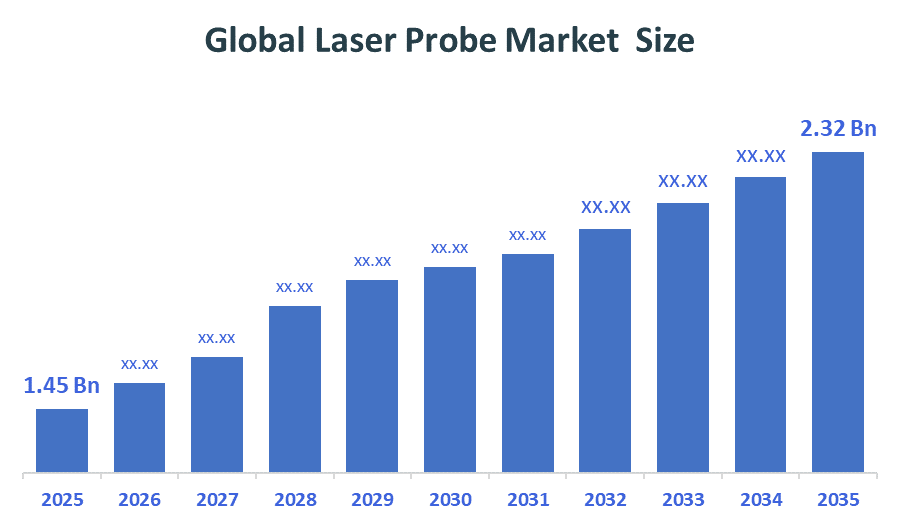
According to Decision Advisors, the global laser probe market Size is expected to grow from USD 1.45 Billion in 2025 to USD 2.32 Billion by 2035, at a CAGR of 4.81% during the forecast period 2026-2035. The global laser probe market is projected to grow significantly over the next decade. The market growth is driven by increasing demand for personalized medicine, expansion of biobanks, advancements in genomics and proteomics, rising R&D investments, and growing prevalence of chronic diseases such as cancer and genetic disorders.
Market Overview/ Introduction
The laser probe market is essentially the high-tech scalpel industry of the modern world, defined by the development of sophisticated optical tools that deliver precise beams of light for everything from delicate eye surgeries to intricate microchip manufacturing. This growth is being driven by a global shift toward minimally invasive medical procedures, where patients and doctors are trading traditional surgery for the pinpoint accuracy and faster recovery times that laser probes provide. Think of this growth as a team effort between big-picture government support and clever engineering. This, along with PLI schemes, is essentially giving local companies the green light to dream bigger and produce more. On the ground, industry leaders like Lumenis and IRIDEX are making life easier for surgeons by rolling out Swiss Army knife probes. By packing both a bright light and a precise laser into one tiny tool, they’re helping doctors see better and work faster, which ultimately means safer surgeries and quicker recovery for the rest of us Looking toward the future, the opportunities for this technology are expanding far beyond the operating room. We are moving toward a world of smart probes powered by Artificial Intelligence, which can give surgeons real-time feedback or even adjust laser intensity automatically to protect healthy tissue. Beyond healthcare, there is a massive opening in the semiconductor industry, where these probes are becoming essential for building the next generation of microchips. As the technology becomes more portable and affordable, we can expect these precision tools to move out of high-end city hospitals and into smaller, local clinics, making advanced treatment accessible to millions more consumers. Governments, especially in countries like India and China, are launching initiatives like the Production Linked Incentive (PLI) Scheme to make these high-tech medical devices more affordable and locally available.
- The Indian government has stepped in with a 500 crore boost specifically to help manufacturers tackle the expensive hurdles of clinical trials and high-tech factory setups.
- Belkin Laser Ltd. raised $12.2 million in Series B funding led by Santen Ventures to advance automated laser treatments for glaucoma
Notable Insights: -
- North America is anticipated to hold approximately 39% share of the global laser probe market over the predicted timeframe.
- Europe is expected to hold the second-largest share of approximately 27% and is projected to grow at a steady CAGR during the forecast period.
- By probe type, the single probe segment dominated the market in 2025 and is projected to grow at a substantial CAGR of approximately 8.7% during the forecast period.
- By end user, the hospitals segment dominated the market with a share of approximately 64% in 2025 and is projected to grow at a substantial CAGR during the forecast period.
- The compound annual growth rate of the global laser probe market is 4.81%.
6. The market is likely to achieve a valuation of USD 2.32 Billion by 2035.
What is role of technology in grooming the market?
Technology is transforming the laser probe market by enhancing precision, safety, and treatment outcomes. Advanced fiber-optic laser probes allow targeted energy delivery with minimal thermal damage to surrounding tissues. Integration with imaging technologies such as MRI and ultrasound enables real-time guidance during procedures. Robotic-assisted laser systems are further improving accuracy and reducing human error. Additionally, innovations such as wavelength customization, smart sensors, and AI-driven feedback systems are enabling personalized treatments, making laser probes more efficient and reliable in complex surgical applications.
Market Drivers
The laser probe market is primarily driven by the rapid increase in minimally invasive surgical procedures and the rising global disease burden. Globally, more than 310 million major surgeries are performed annually, with a growing share shifting toward minimally invasive techniques due to benefits such as reduced recovery time, lower infection risk, and improved clinical outcomes. Laser probes play a critical role in these procedures by enabling precise tissue targeting and controlled energy delivery. Additionally, the rising prevalence of chronic diseases particularly cancer, which accounts for over 19 million new cases per year globally is significantly boosting demand for laser-based treatments such as tumor ablation and photocoagulation. Technological advancements further strengthen market growth, as innovations in fiber-optic probes, diode lasers, and AI-integrated systems improve accuracy and efficiency. Moreover, increasing healthcare expenditure, which surpassed USD 9 trillion globally, is supporting the adoption of advanced medical devices across hospitals and specialty clinics
Restrain
The market faces challenges such as high costs of advanced laser systems and probes, which limit adoption in price-sensitive regions. Strict regulatory requirements and approval processes can delay product launches. Additionally, the need for skilled professionals to operate laser-based equipment and concerns related to accidental tissue damage or thermal injury may hinder market growth.
Competitive Analysis:
The report offers the appropriate analysis of the key organizations/companies involved within the laser probe market, along with a comparative evaluation primarily based on their product of offering, business overviews, geographic presence, enterprise strategies, segment market share, and SWOT analysis. The report also provides an elaborative analysis focusing on the current news and developments of the companies, which includes product development, innovations, joint ventures, partnerships, mergers & acquisitions, strategic alliances, and others. This allows for the evaluation of the overall competition within the market.
Top Companies in the Global Laser Probe Market
- Iridex Corporation
- Lumenis Ltd.
- Bausch & Lomb Incorporated
- FCI
- Reimers & Janssen GmbH
- Transonic Systems Inc
- OphthalMed LLC
- Quantel Medica
- Omega Laser Systems Limited
- Vitreq B.V.
Government Initiatives
|
Country |
Key Government Initiatives |
|
Japan |
Government support through universal healthcare coverage and investment in advanced medical technologies encourages adoption of minimally invasive procedures, including laser-based treatments. Regulatory bodies ensure high standards for medical device approval. |
|
US |
The Food and Drug Administration (FDA) regulates medical laser devices, including laser probes, under strict safety and performance standards (21 CFR regulations). These guidelines ensure product safety, quality, and clinical effectiveness, accelerating adoption of advanced laser technologies in surgical and diagnostic applications. |
|
China |
The Healthy China 2030 initiative and government investments in medical technology innovation are driving adoption of advanced surgical devices, including laser probes. Policies supporting domestic manufacturing and hospital modernization are key growth drivers. |
Study on the Supply, Demand, Distribution, and Market Environment of the Laser Probe Market
The laser probe market is influenced by increasing demand for precision surgical tools across hospitals and specialty clinics. Supply is driven by technological advancements and continuous innovation by medical device manufacturers. Distribution channels include direct sales to hospitals, partnerships with distributors, and integration with surgical system providers. Market environment factors such as rising chronic disease burden, increasing preference for minimally invasive procedures, and favourable reimbursement policies are contributing to sustained demand growth.
Price Analysis and Consumer Behaviour Analysis
Laser probes are high-value medical devices with pricing influenced by technology type, wavelength capabilities, and integration features. Advanced probes used in oncology and cardiovascular procedures command premium pricing. Hospitals and specialty clinics prioritize quality, precision, and durability over cost. Purchasing decisions are increasingly driven by clinical outcomes, efficiency, and compatibility with existing systems. Buyers also consider after-sales service, training, and brand reputation, making total cost of ownership a key factor.
Market Segmentation
The Laser Probe Market share is classified into probe type, wavelength, application, and end user
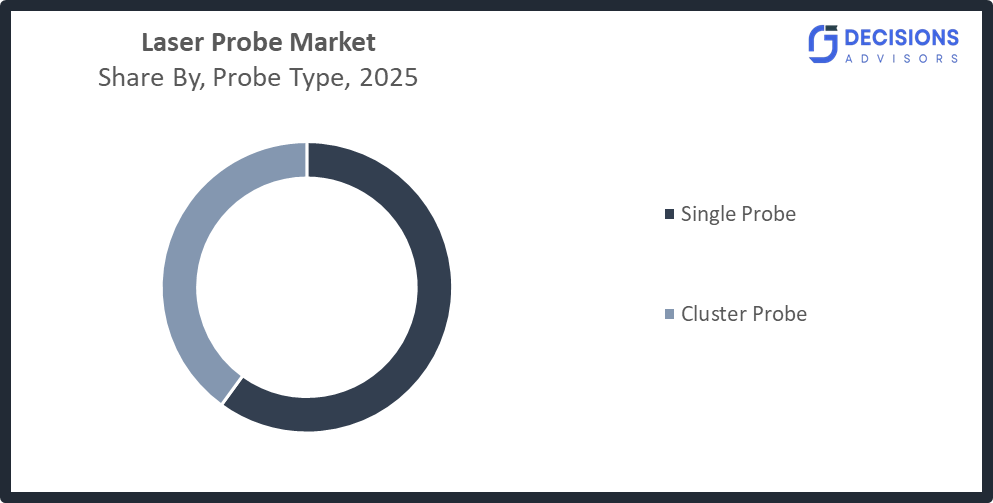
- The single probe segment dominated the market in 2025 and is projected to grow at a substantial CAGR of approximately 8.7% during the forecast period.
Based on the probe type, the laser probe market is divided into single probe and cluster probes. Among these, the single probe segment dominated the market in 2025 and is projected to grow at a substantial CAGR of approximately 8.7% during the forecast period. This dominance is attributed to its high precision, flexibility, and widespread use in minimally invasive procedures. Single probes enable accurate energy delivery to targeted tissues, reducing collateral damage and improving patient outcomes. Additionally, increasing adoption of image-guided and robotic-assisted procedures is further driving demand for advanced single-use and fiber-based laser probes.
- The infrared (IR) wavelength segment accounted for the largest share of approximately 47% in 2025 and is anticipated to grow at a significant CAGR during the forecast period.
Based on the wavelength, the laser probe market is divided into ultraviolet (UV), visible light, and infrared (IR). Among these, the infrared (IR) wavelength segment accounted for the largest share of approximately 47% in 2025 and is anticipated to grow at a significant CAGR during the forecast period. This is due to its deep tissue penetration capability and wide applicability in surgical and therapeutic procedures. IR laser probes are extensively used in oncology, urology, and orthopedics for precise tissue ablation and coagulation. The growing preference for non-invasive and targeted therapies is further boosting demand. Meanwhile, UV and visible light segments are also witnessing steady growth due to increasing applications in dermatology and ophthalmology.
- The oncology segment accounted for the largest share of approximately 38% in 2025 and is anticipated to grow at a significant CAGR of over 9.2% during the forecast period.
Based on the application, the laser probe market is divided into ophthalmology, dermatology, rheumatology, orthopedics, dentistry and oncology. Among these, the oncology segment accounted for the largest share of approximately 38% in 2025 and is anticipated to grow at a significant CAGR of over 9.2% during the forecast period. This dominance is due to the increasing use of laser ablation therapies in tumor treatment. Rising global cancer prevalence, which exceeded 19 million new cases annually, is significantly driving demand for precise and minimally invasive treatment options. Additionally, growing adoption of laser-based therapies in dermatology and ophthalmology is supporting overall market expansion. Orthopedics and dentistry segments are also experiencing steady growth due to increasing procedural volumes and technological advancements.
- The hospitals segment dominated the market with a share of approximately 64% in 2025 and is projected to grow at a substantial CAGR during the forecast period.
Based on the end user, the laser probe market is divided into hospitals, ambulatory surgical centers, specialty clinics & dental centers, research institutes, and industrial users. Among these, the hospitals segment dominated the market with a share of approximately 64% in 2025 and is projected to grow at a substantial CAGR during the forecast period. This is driven by the availability of advanced surgical infrastructure and skilled healthcare professionals. Hospitals perform a high volume of complex procedures, including oncology and cardiovascular surgeries, where laser probes are widely used. Additionally, hospitals are early adopters of advanced technologies such as robotic-assisted systems and AI-integrated surgical platforms. Strong financial capabilities and better post-operative care facilities further strengthen their leading position. Ambulatory surgical centers are expected to witness the fastest growth due to increasing preference for outpatient procedures and cost-effective treatment options.
Strategies to Implement for Growth of the Market in Non-Leading Regions
Growth in non-leading regions can be accelerated through a combination of affordability, infrastructure development, and technology adaptation. One of the most effective strategies is expanding healthcare infrastructure, particularly by equipping Tier 2 and Tier 3 hospitals with minimally invasive surgical capabilities and laser-based treatment systems. This creates a strong foundation for the adoption of laser probes across multiple specialties such as oncology, dermatology, and ophthalmology. Another key approach is introducing cost-effective and portable laser probe systems. Since high device costs remain a major barrier, manufacturers should focus on developing affordable, compact, and reusable probes tailored for price-sensitive markets. Flexible pricing models, including leasing, pay-per-use, and public-private partnerships, can significantly improve accessibility and adoption rates.
Regional Segment Analysis of the Laser Probe Market
- North America (U.S., Canada, Mexico)
- Europe (Germany, France, U.K., Italy, Spain, Rest of Europe)
- Asia-Pacific (China, Japan, India, Rest of APAC)
- South America (Brazil and the Rest of South America)
- The Middle East and Africa (UAE, South Africa, Rest of MEA)
North America is anticipated to hold approximately 39% share of the global laser probe market over the predicted timeframe.
North America is anticipated to hold approximately 39% share of the global laser probe market over the predicted timeframe. This dominance is driven by the presence of advanced healthcare infrastructure, high adoption of minimally invasive surgical procedures, and the strong presence of leading medical device companies. The United States plays a significant role due to increasing utilization of laser-based technologies in oncology, ophthalmology, and dermatology, supported by healthcare spending exceeding USD 4.5 trillion annually. Additionally, regulatory support from agencies such as the FDA ensures faster approval and adoption of advanced laser systems. The region also benefits from early adoption of innovative technologies such as fibre-optic and AI-integrated laser probes, which enhance procedural precision and patient outcomes.
Europe is expected to hold the second-largest share of approximately 27% and is projected to grow at a steady CAGR during the forecast period.
Europe is expected to hold the second-largest share of approximately 27% and is projected to grow at a steady CAGR during the forecast period. This growth is driven by the region's benefits from well-established healthcare systems, increasing investments in medical technologies, and strong regulatory frameworks such as MDR that ensure device safety and quality. Countries including Germany, France, and the United Kingdom are major contributors due to rising demand for minimally invasive procedures and laser-assisted therapies. Additionally, increasing adoption of laser technologies in dermatology, ophthalmology, and oncology is supporting steady market growth across Europe.
Asia-Pacific is the third-largest region, accounting for approximately 21% share, and is expected to grow at the fastest CAGR during the forecast period
Asia-Pacific is the third-largest region, accounting for approximately 21% share, and is expected to grow at the fastest CAGR during the forecast period. Due to the rapidly expanding healthcare infrastructure, rising patient population, and increasing prevalence of chronic diseases. Countries such as China, India, and Japan are key growth engines, supported by rising healthcare expenditure and improving access to advanced surgical procedures. Government initiatives to enhance healthcare accessibility, along with growing private sector investments, are further boosting market expansion. Additionally, increasing medical tourism and demand for cost-effective minimally invasive treatments are contributing significantly to the adoption of laser probes in the region.
Future Market Trends in the Global Laser Probe Market: -
- Rapid Expansion of Minimally Invasive and Precision-Based Procedures
The increasing preference for minimally invasive surgeries is one of the most significant trends shaping the laser probe market. Laser probes are widely adopted due to their ability to provide high precision, reduced tissue damage, and faster recovery times. Currently, nearly 55% of surgical professionals prefer laser-based instruments for high-accuracy procedures, highlighting a strong shift toward advanced surgical techniques. This trend is particularly prominent in specialities such as ophthalmology, dermatology, and oncology, where precision is critical. As patient demand for safer and less invasive treatments continues to rise, the adoption of laser probes is expected to grow substantially across both developed and emerging healthcare markets.
- Technological Advancements in Fiber Optics, AI, and Smart Laser Systems
Continuous innovation in laser technologies is transforming the market landscape. Advancements such as fiber-optic miniaturization, real-time imaging integration, and AI-assisted laser systems are significantly enhancing procedural accuracy and efficiency. Modern laser probes are increasingly equipped with smart features like targeted beam delivery, adjustable wavelengths, and sensor-based feedback systems, enabling personalized and safer treatments.
- Strong Growth in Emerging Markets and Expanding Clinical Applications
Emerging economies, particularly in Asia-Pacific and Latin America, are becoming major growth hubs for the laser probe market. This trend is driven by rising healthcare expenditure, improving infrastructure, and increasing awareness of advanced treatments. Additionally, the application scope of laser probes is expanding beyond traditional areas into fields such as orthopedics, dentistry, and cosmetic procedures, driven by rising chronic disease burden and aging population.
Recent Development
- In March 2026, Mehmet Oz launched a fraud probe into New York Medicaid Program, citing concerns over excessive spending, waste, and potential abuse within the system. The investigation, initiated by the U.S. Centers for Medicare and Medicaid Services (CMS), targeted New York’s massive Medicaid program valued at approximately USD 124 billion, one of the largest in the United States.
- In December 2025, Iridex Corporation strengthened the clinical positioning of its MicroPulse laser technology used with laser probes for glaucoma treatment. The company reported improved safety and reduced tissue damage compared to conventional continuous-wave lasers, reinforcing the adoption of advanced laser probe systems in ophthalmology.
- In October 2025, Monteris Medical announced a strategic collaboration with Symphony Robotics to develop an AI-driven micro-robotic platform for laser probe based brain ablation. The partnership focused on integrating robotic precision with laser interstitial thermal therapy (LITT), enabling highly accurate tumor targeting in neurosurgical procedures. This development marked a significant step toward combining AI, robotics, and laser probes to enhance surgical outcomes and reduce procedural risks.
- In August 2025, AT Sensors announced the launch of its high-power 3D laser sensor designed for use in extreme industrial environments. The newly introduced system was engineered to deliver precise 3D measurement and inspection capabilities under challenging conditions such as high temperatures, dust, vibration, and low-visibility settings. The sensor featured enhanced laser intensity, improved signal processing, and robust housing to ensure consistent performance in heavy industries, including metal processing, mining, and automotive manufacturing.
- In May 2024, Monteris Medical launched the NeuroBlate NB3 FullFire laser probe, recognized as one of the smallest probes for brain ablation procedures. The device enabled enhanced precision and minimally invasive access in neurosurgery, supporting better patient outcomes and faster recovery times
How is Recent Developments Helping the Market?
Recent developments are significantly accelerating the growth of the laser probe market by enhancing precision, safety, and clinical efficiency. Innovations such as advanced fiber-optic probes, miniaturised designs, and improved wavelength control are enabling more accurate targeting of tissues, reducing damage to surrounding areas and improving patient outcomes. These advancements are particularly impactful in high-demand areas like oncology, ophthalmology, and neurosurgery. The integration of AI, imaging technologies, and robotic-assisted systems is further transforming the market by enabling real-time guidance and better decision-making during procedures. This not only reduces surgical risks but also shortens procedure times and improves overall success rates, encouraging wider adoption among healthcare providers.
Market Segment
This study forecasts revenue at global, regional, and country levels from 2020 to 2035. Decision Advisors has segmented the Global Laser Probe Market based on the below-mentioned segments:
Global Laser Probe Market, By Probe Type
- Single probe
- Cluster probe
Global Laser Probe Market, By Wavelength
- Ultraviolet (UV)
- Visible light
- Infrared (IR)
Global Laser probe market, By Application
- Ophthalmology
- Dermatology
- Rheumatology
- Orthopedics
- Dentistry
- Oncology
Global Laser Probe Market, By End User
- Hospitals
- Ambulatory surgical centers
- Specialty clinics and dental centers
- Research institutes
- Industrial
Global Laser Probe Market, By Regional Analysis
- North America
- US
- Canada
- Mexico
- Europe
- Germany
- UK
- France
- Italy
- Spain
- Russia
- Rest of Europe
- Asia Pacific
- China
- Japan
- India
- South Korea
- Australia
- Rest of Asia Pacific
- South America
- Brazil
- Argentina
- Rest of South America
- Middle East & Africa
- UAE
- Saudi Arabia
- Qatar
- South Africa
- Rest of the Middle East & Africa
Frequently Asked Questions (FAQ)
Q. How does wavelength selection impact the performance of laser probes in different medical procedures?
A. Wavelength plays a critical role in determining tissue interaction, including absorption, penetration depth, and precision. For instance, infrared wavelengths are preferred for deeper tissue penetration, while ultraviolet wavelengths are used for highly precise surface-level procedures such as ophthalmic surgeries.
Q. What are the key factors influencing the adoption of disposable vs reusable laser probes?
A. The choice depends on factors such as infection control requirements, cost considerations, frequency of procedures, and hospital sterilization capabilities. Disposable probes are gaining traction due to reduced cross-contamination risks, while reusable probes are preferred for cost efficiency in high-volume settings.
Q. How is the integration of laser probes with robotic-assisted surgical systems shaping the market?
A. Integration with robotic systems enhances precision, control, and consistency during complex procedures. It reduces human error and improves surgical outcomes, making it a significant advancement driving adoption in high-end healthcare facilities.
Q. What are the key challenges in the supply chain of laser probe manufacturing?
A. The supply chain is impacted by the availability of high-quality optical fibers, semiconductor components, and strict regulatory requirements. Any disruption in these components or compliance delays can affect production timelines and market supply.
Q. How do environmental and sustainability concerns influence the laser probe market?
A. Increasing focus on sustainability is encouraging manufacturers to develop eco-friendly and recyclable components, especially for disposable probes. Hospitals are also evaluating waste management practices and environmental impact when selecting medical devices.
Check Licence
Choose the plan that fits you best: Single User, Multi-User, or Enterprise solutions tailored for your needs.
We Have You Covered
- 24/7 Analyst Support
- Clients Across the Globe
- Tailored Insights
- Technology Tracking
- Competitive Intelligence
- Custom Research
- Syndicated Market Studies
- Market Overview
- Market Segmentation
- Growth Drivers
- Market Opportunities
- Regulatory Insights
- Innovation & Sustainability
Report Details
| Scope | Global |
| Pages | 190 |
| Delivery | PDF & Excel via Email |
| Language | English |
| Release | Apr 2026 |
| Access | Download from this page |