
Global Leigh Syndrome Market
 |
Pages:
240
|
Pages:
240
Global Leigh Syndrome Market Size, Share, and COVID-19 Impact Analysis, By Diagnosis (MRI, CT, and Laboratory Test), By Treatment (Medications, Medical Procedure, and Surgery), By End User (Hospital, Research Organizations and Academic Institutes), and By Region (North America, Europe, Asia-Pacific, Latin America, Middle East, and Africa), Analysis and Forecast 2025-2035
REPORT COVERAGE
Global
Global Leigh Syndrome Market Size Insights Forecasts to 2035
- The Global Leigh Syndrome Market Size Was Estimated at USD 210.67 Million in 2024
- The Market Size is Expected to Grow at a CAGR of around 5.54 % from 2025 to 2035
- The Worldwide Leigh Syndrome Market Size is Expected to Reach USD 381.33 Million by 2035
- Europe is expected to grow the fastest during the forecast period.
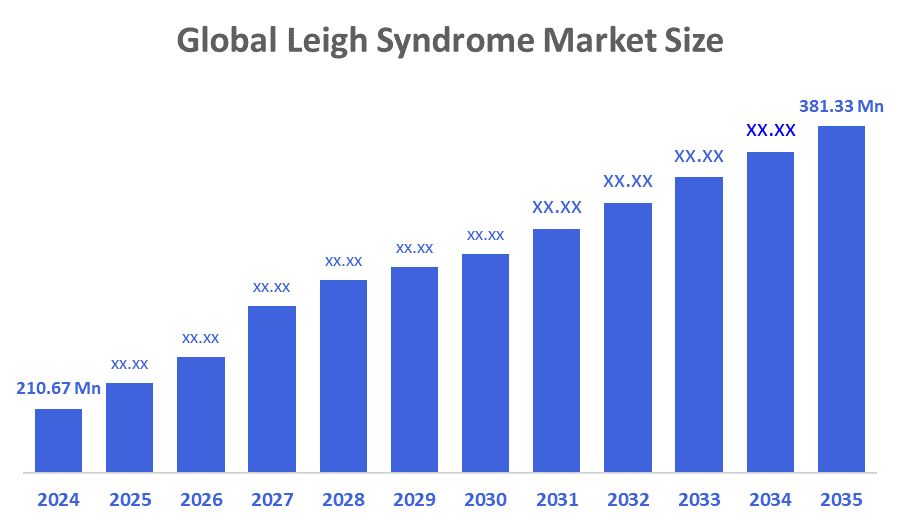
According to a research report published by Decisions Advisors and Consulting, The Global Leigh Syndrome Market Size Was Worth Around USD 210.67 Million In 2024 And Is Predicted To Grow To Around USD 381.33 Million By 2035 With A Compound Annual Growth Rate (CAGR) Of 5.54 % From 2025 To 2035. Advances in medical research, heightened awareness of rare diseases, and the creation of innovative treatment modalities like gene therapy are the main forces behind this expansion. The rapid growth of genetic research and biotechnology, which has made it possible to provide more accurate results. In addition, cutting-edge strategies like mitochondrial replacement treatment present encouraging answers for dealing with the underlying cause of the illness, which propels market expansion even more.
Market Overview
The Leigh syndrome market is defined as the global healthcare and pharmaceutical ecosystem addressing diagnosis, treatment, and management of Leigh Syndrome, a rare, progressive mitochondrial disorder that primarily affects the central nervous system. Leigh syndrome is a rare and progressive mitochondrial disease that usually affects infants and young children. The disease is caused by mutations in either mitochondrial DNA or nuclear DNA that influence the function of mitochondria, which are responsible for energy production in cells. The symptoms of the disease can be varied depending on the genetic mutations and the age of the individual when the disease manifests. Other symptoms of the disease include seizures, cardiac issues, gastrointestinal issues, metabolic acidosis, and many more. The diagnosis of the disease is carried out by a combination of clinical studies, medical history, and genetic analysis. Many blood and urine tests are done to check for high levels of lactic acid, which can be a sign of mitochondrial disease. Genetic analysis is the most definitive test for the disease and involves sequencing of the mitochondrial DNA or nuclear genes responsible for Leigh syndrome. The quick development of biotechnology and genetic research, which has made it possible to provide more individualised treatment plans and more accurate diagnoses for Leigh Syndrome, is one of the most important growth factors.
40,000 children globally suffer from Leigh syndrome spectrum diseases. There is currently no cure and very few therapy options for these disorders, which cause progressive neurological degeneration and are frequently identified in infancy or early childhood.
The Synleigh project received significant funding from the European Rare Diseases Research Alliance (erdera) to accelerate new therapies for Leigh syndrome spectrum (lss) disorders. The consortium includes international mito patients (imp), mitocon, and the Cure Mito Foundation. They have an approximate €380 million budget. The European Commission, EU Member States, and affiliated nations embarked on a co-funded cooperation in 2024.
Report Coverage
This research report categorizes the Leigh syndrome market based on various segments and regions, forecasts revenue growth, and analyzes trends in each submarket. The report analyses the key growth drivers, opportunities, and challenges influencing the Leigh syndrome market. Recent market developments and competitive strategies, such as expansion, product launch, development, partnership, merger, and acquisition, have been included to draw the competitive landscape in the market. The report strategically identifies and profiles the key market players and analyzes their core competencies in each sub-segment of the Leigh syndrome market.
Driving Factors
The Leigh syndrome treatment market is undergoing a significant transformation due to the advancements in genetic research and treatment. As the knowledge about the genetic mutations related to Leigh syndrome increases, there seems to be a growing focus on personalised medicine. This indicates that the treatment options are likely to be increasingly tailored to the specific genetic makeup of the patient, which could significantly improve the efficacy of treatment and reduce side effects. In addition to the advancements in genetic knowledge, the Leigh syndrome treatment market is witnessing a rise in the number of joint initiatives between pharmaceutical companies, research organisations, and patient advocacy organisations. In addition, the growing awareness and education about Leigh syndrome are creating a well-informed patient community, which could translate into earlier diagnosis and treatment.
AAV9-based gene therapy for SURF1-related Leigh syndrome shows promise. Optimised vectors reduced toxicity while restoring mitochondrial function in patient cells and SURF1 knockout pigs. Prenatal delivery potential suggests one of the first disease-modifying interventions, complementing LION and LUCA Science initiatives.
Restraining Factors
Despite these advantages, the market for Leigh Syndrome treatments may be impacted by an assortment of risks and difficulties. The high cost of creating and providing cutting-edge remedies, like gene therapy and enzyme replacement therapies, is one of the primary obstacles. Numerous businesses may not be able to afford the substantial expenditure that these medications frequently demand in clinical trials, research, and regulatory approval procedures. Furthermore, patients' access to these treatments may be restricted by their cost, especially in areas with underdeveloped healthcare systems or inadequate funding.
Market Segmentation
The Leigh syndrome market share is classified into diagnosis, treatment, and end user.
- The MRI segment accounted for the largest market share in 2024 and is anticipated to grow at a remarkable CAGR during the forecast period.
Based on the diagnosis, the Leigh syndrome market is differentiated into MRI, CT, and laboratory tests. Among these, the MRI segment accounted for the largest market share in 2024 and is anticipated to grow at a remarkable CAGR during the forecast period. This is due to its proficiency in comprehensive imaging, which helps doctors make precise diagnoses and arrange treatments. The process of clinical decision-making is greatly improved by its capacity to view the structural alterations in the brain linked to Leigh syndrome.
For instance, A January 2026 study in Brain demonstrated that ultrasound-assisted gene therapy can mitigate pathology in Leigh syndrome (LS).
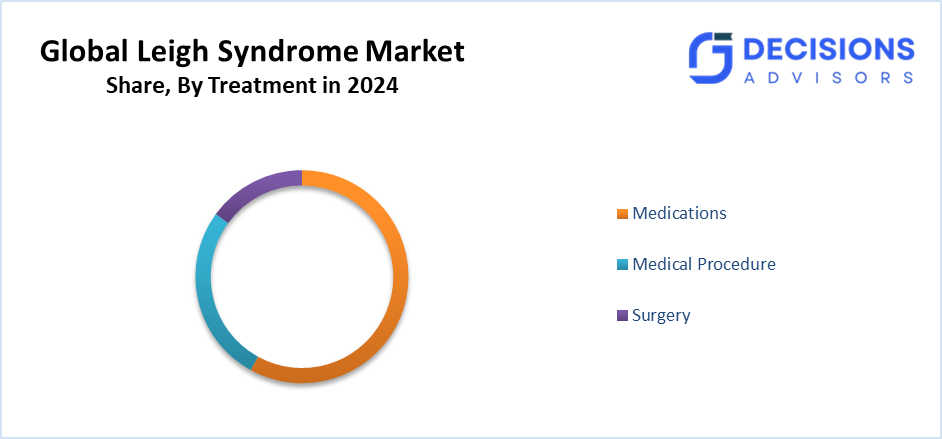
- The medications segment accounted for the highest market share in 2024 and is anticipated to grow at a substantial CAGR during the forecast period.
Based on the treatment, the Leigh syndrome market is divided into medications, medical procedures, and surgery. Among these, the medications segment accounted for the highest market share in 2024 and is anticipated to grow at a substantial CAGR during the forecast period. This segment growth is driven by concentrating on relief from symptoms while improving the standard of living. The vitamins, enzyme replacements, and other medications that are essential to patient care are included in this section.
For instance, PTC Therapeutics announced results from the MIT-E Phase II/III clinical trial evaluating vatiquinone (PTC-743) for mitochondrial disease-associated seizures (MDAS).
- The hospital segment accounted for the largest share in 2024 and is anticipated to grow at a significant CAGR during the forecast period.
Based on the end user, the Leigh syndrome market is divided into hospitals, research organizations and academic institutes. Among these, the hospital segment accounted for the largest share in 2024 and is anticipated to grow at a significant CAGR during the forecast period. This is due to supplying specialised care that is necessary for the treatment of patients. They are positioned as the leading end user in this sector due to their well-established infrastructure and access to a wide range of patients.
Regional Segment Analysis of the Leigh Syndrome Market
- North America (U.S., Canada, Mexico)
- Europe (Germany, France, U.K., Italy, Spain, Rest of Europe)
- Asia-Pacific (China, Japan, India, Rest of APAC)
- South America (Brazil and the Rest of South America)
- The Middle East and Africa (UAE, South Africa, Rest of MEA)
Asia Pacific is anticipated to hold the largest share of the Leigh syndrome market over the predicted timeframe.
Asia Pacific is anticipated to hold the largest share of the Leigh syndrome market over the predicted timeframe. The Asia-Pacific market is driven by the rising expenditure on healthcare, growing awareness about genetic disorders, and advancements in the healthcare infrastructure. Japan and Australia are at the forefront of this development, with the government working towards improving research and development in the area of rare diseases, thus fueling the growth of the market. The market is highly competitive, with both regional and global companies competing for market share. The regulatory framework in the Asia-Pacific region is changing, with governments giving increasing importance to the approval of drugs for rare diseases, thus ensuring that patients have access to timely treatment.
LUCA Science Inc., partnered with Osaka University and Washington University School of Medicine in St. Louis, reveals how mitochondria transfer-based treatments can alleviate symptoms and lower morbidity and mortality in a mouse model of Leigh Syndrome (LS). LS is a severe and frequently fatal mitochondrial illness for which there are now no effective treatments.
Europe is expected to grow at a rapid CAGR in the Leigh syndrome market during the forecast period. The European market is fueled by rising investments in healthcare R&D, favourable regulatory policies, and the rising prevalence of genetic disorders. Germany and France are leading the way, with plans to improve R&D in rare diseases, thus fueling the growth of the market. Germany currently leads the European market, followed by France and the UK, where major players such as Novartis and Roche are actively participating. The market is characterised by collaborations between pharmaceutical companies and research institutions to develop targeted therapies. The European regulatory bodies, such as the European Medicines Agency, play a significant role in ensuring the approval of new therapies, thus providing patients with access to the latest developments in therapy.
The LION project aims to treat Leigh syndrome, which is brought on by SURF1 mutations, by pursuing in utero AAV9-hSURF1 gene therapy and neonatal pharmaceutical therapy. It is supported with €240,000 (2024–2026) to develop [RG1] mitochondrial therapeutics using SURF1 knockout pigs and patient-derived brain organoids.
Competitive Analysis:
The report offers the appropriate analysis of the key organizations/companies involved within the Leigh syndrome market, along with a comparative evaluation primarily based on their product offering, business overviews, geographic presence, enterprise strategies, segment market share, and SWOT analysis. The report also provides an elaborative analysis focusing on the current news and developments of the companies, which includes product development, innovations, joint ventures, partnerships, mergers & acquisitions, strategic alliances, and others. This allows for the evaluation of the overall competition within the market.
List of Key Companies
- AAVLife
- Abeona Therapeutics Inc.
- Astellas Pharma Inc.
- BioElectron Technology Corporation
- CohBar, Inc.
- GenSight Biologics
- Khondrion BV
- Minovia Therapeutics Ltd.
- Mitobridge, Inc.
- Mitochon Pharmaceuticals
- Mitochondria Research Society
- MitoDys Therapeutics
- MitoImmune Therapeutics
- NeuroVive Pharmaceutical AB
- Others
Key Target Audience
- Market Players
- Investors
- End-users
- Government Authorities
- Consulting and Research Firm
- Venture capitalists
- Value-Added Resellers (VARs)
Recent Development
- In January 2026, Thiogenesis Therapeutics, a clinical-stage biotech developing sulfur-based prodrugs for rare mitochondrial and metabolic diseases, announced that the CEO presented clinical updates at the United Mitochondrial Disease Foundation (UMDF) Bench?to?Bedside Webinar. The goal of TTI-0102 is to address mitochondrial oxidative stress, a key pathogenic characteristic of several hereditary mitochondrial diseases for which there aren't any approved treatments at the moment.
- In October 2023, The Cure Mito Foundation, a parent-led advocacy group, launched the first-of-its-kind online resource dedicated to Leigh syndrome, the most common pediatric mitochondrial disease. The goal of the project was to develop a website with reliable and precise medical information, as well as an eye-catching layout, vibrant design, easy-to-use features, engaging visuals, and images of children and their families.
Market Segment
This study forecasts revenue at global, regional, and country levels from 2020 to 2035. Decisions Advisors has segmented the Leigh syndrome market based on the below-mentioned segments:
Global Leigh Syndrome Market, By Diagnosis
- MRI
- CT
- Laboratory Test
Global Leigh Syndrome Market, By Treatment
- Medications
- Medical Procedure
- Surgery
Global Leigh Syndrome Market, By End User
- Hospital
- Research Organisations
- Academic Institutes
Global Leigh Syndrome Market, By Regional Analysis
- North America
- US
- Canada
- Mexico
- Europe
- Germany
- UK
- France
- Italy
- Spain
- Russia
- Rest of Europe
- Asia Pacific
- China
- Japan
- India
- South Korea
- Australia
- Rest of Asia Pacific
- South America
- Brazil
- Argentina
- Rest of South America
- Middle East & Africa
- UAE
- Saudi Arabia
- Qatar
- South Africa
- Rest of the Middle East & Africa
Frequently Asked Questions (FAQ)
1. How does orphan drug designation impact the Leigh Syndrome market?
Orphan drug designation provides incentives such as market exclusivity, tax credits, fee reductions, and accelerated approvals. These benefits significantly encourage pharmaceutical companies to invest in rare mitochondrial disorders like Leigh syndrome, strengthening pipeline development and commercial viability.
2. What role does next-generation sequencing (NGS) play in market expansion?
Next-generation sequencing enables faster and more comprehensive identification of mitochondrial and nuclear DNA mutations. Its increasing adoption in tertiary care centres is improving diagnostic accuracy and shortening diagnostic timelines, indirectly expanding the treatment-eligible patient pool.
3. How are patient advocacy groups influencing market growth?
Patient advocacy organisations are driving awareness campaigns, funding early-stage research, facilitating clinical trial recruitment, and influencing regulatory policies. Their growing involvement is accelerating therapy development and improving patient access to experimental treatments.
4. What is the impact of telemedicine and digital health platforms on Leigh syndrome management?
Telemedicine allows rare disease patients to access mitochondrial specialists remotely, especially in underserved regions. Digital monitoring tools also support long-term symptom tracking, improving disease management and continuity of care.
5. How does genetic counselling contribute to market dynamics?
Genetic counselling services are becoming increasingly important for affected families. Early counselling helps in family planning, carrier screening, and early diagnosis in siblings, contributing to structured clinical management pathways.
6. What reimbursement challenges are expected for advanced therapies?
Given the high cost of gene and mitochondrial replacement therapies, reimbursement negotiations with public and private payers may delay commercial uptake. Outcomes-based pricing models and risk-sharing agreements are expected to emerge in this segment.
7. How could artificial intelligence (AI) support future drug discovery for Leigh syndrome?
AI-driven platforms are being used to analyse mitochondrial dysfunction pathways, identify potential drug targets, and accelerate compound screening. This technology could significantly reduce R&D timelines and improve the probability of clinical success.
Check Licence
Choose the plan that fits you best: Single User, Multi-User, or Enterprise solutions tailored for your needs.
We Have You Covered
- 24/7 Analyst Support
- Clients Across the Globe
- Tailored Insights
- Technology Tracking
- Competitive Intelligence
- Custom Research
- Syndicated Market Studies
- Market Overview
- Market Segmentation
- Growth Drivers
- Market Opportunities
- Regulatory Insights
- Innovation & Sustainability
Report Details
| Scope | Global |
| Pages | 240 |
| Delivery | PDF & Excel via Email |
| Language | English |
| Release | Feb 2026 |
| Access | Download from this page |