
Global Lifestyle Medicine Market
 |
Pages:
245
|
Pages:
245
Global Lifestyle Medicine Market Size, Share, By Type (Nutrition & diet programs, Physical activity & fitness programs, Stress management, Sleep management, Substance abuse cessation), By Application (Chronic disease management, Weight management & obesity, Mental health & wellness, Preventive healthcare), By End User (Hospital, Wellness centers, Corporate organizations, Individuals), and By Region (North America, Europe, Asia-Pacific, Latin America, Middle East & Africa), Analysis and Forecast 2025?2035
REPORT COVERAGE
Global
Market Snapshot
- Market Size (2025): USD 33.84 Billion
- Projected Market Size (2035): USD 55.7 Billion
- Compound Annual Growth Rate (CAGR): 10.37%
- Largest Regional Market: North America
- Fastest Growing Region: Asia-Pacific
- 3rd Largest Region: Europe
- Base Year: 2025
- Historical Period: 2021–2024
- Forecast Period: 2026–2035
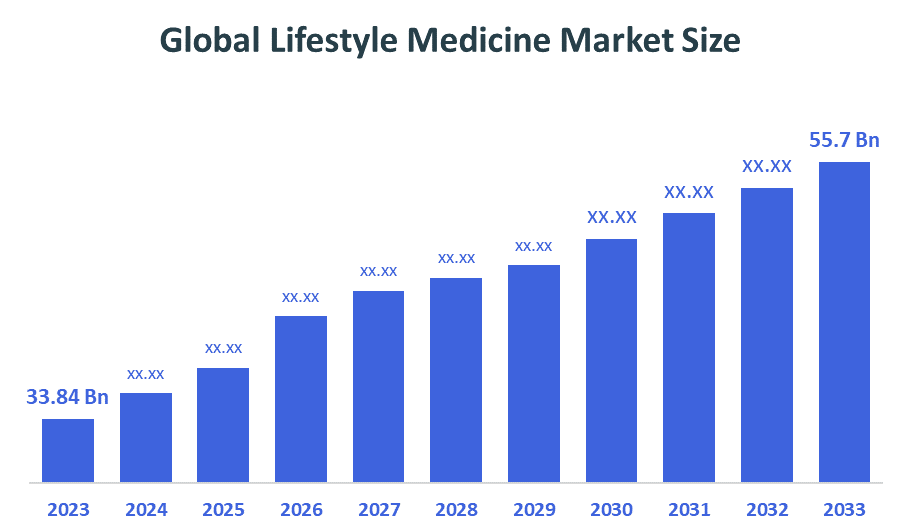
According to Decision Advisors, the Global Lifestyle Medicine Market Size is expected to grow from USD 33.84 billion in 2024 to USD 55.7 billion by 2035, at a CAGR of 10.37% during the forecast period 2025-2035. The global lifestyle medicine market is projected to grow significantly over the next decade due to increasing autoimmune disease prevalence, advancements in biotechnology, biosimilar entry, increased R&D investment, rising awareness & diagnostics, rising chronic disease burden, preventative healthcare focus, digital health adoption, growing health awareness, and demand for personalized care.
Market Overview/ Introduction
The global market for lifestyle medicine functions as a preventive measure against chronic diseases while it assists consumers with existing conditions through scientifically proven methods, which involve dietary changes and exercise programs, stress management techniques, and sleep improvement strategies and methods to stop dangerous habits. The system focuses on achieving permanent health and wellness results, which take precedence over individual symptomatology. The market expands because more consumers develop diabetes and cardiovascular diseases, together with increasing healthcare expenses and greater public awareness about health prevention methods. Medical professionals use digital health systems and wearable monitoring devices to deliver personalized patient care because healthcare technology advancements empower their work. The American College of Lifestyle Medicine, together with government programs and organizations, backs the spread of these practices. The global market growth becomes accelerated through rising demand for comprehensive health methods, which include Ayurveda.
- The Ayushman Arogya Mandir aims to create 1,50,000 centres by upgrading SHCs and PHCs in urban and rural areas. It delivers CPHC covering RCH, communicable diseases, NCDs like hypertension, diabetes, 3 cancers, plus mental health, ENT, ophthalmology, geriatric, palliative, trauma care, and wellness activities like yoga.
- The Centers for Medicare & Medicaid Services launched the MAHA ELEVATE Model, a voluntary payment program funding up to 30 proposals for chronic disease prevention and health promotion using lifestyle or functional medicine. Starting September 1, 2026, it will evaluate cost and quality to assess inclusion in Medicare, with a second cohort beginning in 2027.
- The UK government’s “Fit for the Future” strategy, published in July 2025, shifts focus from treating sickness to preventing illness. It includes £29 billion funding to develop Neighbourhood Health Centres, integrating GPs, specialists, and services like debt advice, employment support, and clinical weight management to promote preventive, lifestyle-based healthcare.
Notable Insights: -
- North America holds the largest regional market share in the global lifestyle medicine market.
- Asia-Pacific is the fastest-growing region in the global lifestyle medicine market.
- The nutrition & diet programs segment dominated the market in 2025 and is projected to grow at a substantial CAGR during the forecast period.
- The chronic disease management segment accounted for the largest share in 2025, and is anticipated to grow at a significant CAGR of during the forecast period.
- The hospitals segment dominated the market in 2025 and is projected to grow at a substantial CAGR during the forecast period.
- The compound annual growth rate of the Global Lifestyle Medicine market is 10.37%.
- The market is likely to achieve a valuation of USD 55.7 billion by 2035.
What is role of technology in grooming the market?
Technology plays a crucial role in shaping the global lifestyle medicine market by enabling personalized, preventive care. Wearable devices, mobile health apps, and telehealth platforms allow continuous monitoring of physical activity, sleep, heart rate, and other health metrics. Advanced analytics and AI help interpret this data to provide tailored recommendations for diet, exercise, and stress management. Digital platforms also improve accessibility to healthcare professionals and wellness programs, making lifestyle interventions more scalable and convenient. Additionally, technology enhances patient engagement and adherence through real-time feedback, reminders, and virtual coaching, ultimately supporting long-term behavior change and better health outcomes globally.
Market Drivers
The global Lifestyle Medicine market is witnessing significant growth driven by the rising rates of obesity, diabetes, and cardiovascular diseases, largely linked to unhealthy lifestyle habits, driving a growing demand for preventive healthcare solutions. Both individuals and healthcare systems are shifting their focus toward enhancing health span and overall quality of life, rather than simply treating illnesses after they occur. Technological advancements, including wearable devices, mobile health applications, and telehealth platforms, are enabling more personalized monitoring and management of daily habits. At the same time, increasing awareness about proper nutrition, regular physical activity, and mental well-being is fueling demand for lifestyle-oriented services and products. This transition toward tailored, data-driven healthcare empowers individuals to effectively manage risk factors such as poor sleep, stress, and unhealthy diets.
Restrain
The global lifestyle medicine market faces restraints such as limited awareness in developing regions, high costs of digital health tools, and lack of standardized guidelines. Additionally, behavioural change challenges and limited reimbursement policies hinder widespread adoption and long-term engagement with lifestyle-based healthcare solutions.
Competitive Analysis:
The report offers the appropriate analysis of the key organizations/companies involved within the Global Lifestyle Medicine Market, along with a comparative evaluation primarily based on their product of offering, business overviews, geographic presence, enterprise strategies, segment market share, and SWOT analysis. The report also provides an elaborative analysis focusing on the current news and developments of the companies, which includes product development, innovations, joint ventures, partnerships, mergers & acquisitions, strategic alliances, and others. This allows for the evaluation of the overall competition within the market.
Top Companies in Global Lifestyle Medicine Market
- Cleveland Clinic
- Mayo Clinic
- AdventHealth
- American College of Lifestyle Medicine
- Ornish Lifestyle Medicine
- Apollo Hospitals
- Pritikin Longevity Center
- Sharecare
- Omada Health
- Noom
- Teladoc Health
- Headspace
Government Initiatives
|
Country |
Key Government Initiatives |
|
UK |
The UK Government’s Life Sciences Sector Plan and NHS 10-Year Plan emphasize strengthening the life sciences industry and healthcare innovation. While not directly focused on lifestyle medicine, they support development of preventive care solutions, digital health tools, and chronic disease management, creating a favorable environment for growth in the global lifestyle medicine market. |
|
US |
The U.S. government, through the Centers for Medicare & Medicaid Services, introduced code G0136 in the 2026 Physician Fee Schedule, enabling reimbursement for standardized assessments of physical activity and nutrition. This transforms lifestyle advice into a billable clinical service, promoting preventive care, standardization, and broader adoption of lifestyle medicine globally. |
|
India |
The India–UK CETA (2025) and India–EU FTA (2026) promote lifestyle medicine through tariff liberalization on 56 pharmaceutical and diagnostic products. By enabling zero-duty access for generics and devices like ECG and X-ray, these agreements support preventive healthcare systems, improving early diagnosis, affordability, and global integration of lifestyle-based medical services. |
Market Segmentation
The lifestyle medicine market share is classified into type, application, and end-user
- The nutrition & diet programs segment dominated the market in 2025 and is projected to grow at a substantial CAGR during the forecast period.
Based on the type, the lifestyle medicine market is divided into nutrition & diet programs, physical activity & fitness programs, stress management, sleep management and substance abuse cessation. Among these, the nutrition & diet programs segment dominated the market in 2025 and is projected to grow at a substantial CAGR during the forecast period. The nutrition & diet programs dominate the lifestyle medicine market because they directly address major chronic diseases like obesity, diabetes, and cardiovascular conditions. They are widely accessible, cost-effective, and easier to integrate into daily life compared to other interventions. Increasing awareness about preventive healthcare and personalized nutrition further drives their strong global demand and adoption.
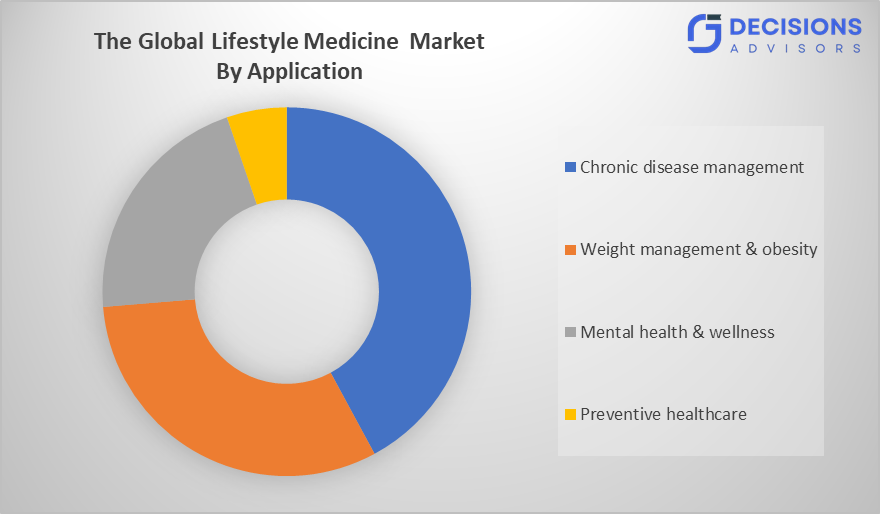
- The chronic disease management segment accounted for the largest share in 2025, and is anticipated to grow at a significant CAGR of during the forecast period.
Based on the application, the lifestyle medicine market is divided into chronic disease management, weight management & obesity, mental health & wellness, and preventive healthcare. Among these, the chronic disease management segment accounted for the largest share in 2025, and it's anticipated to grow at a significant CAGR during the forecast period. The chronic disease management dominates the lifestyle medicine market due to the rising global burden of conditions like diabetes, heart disease, and hypertension. These require long-term lifestyle interventions, continuous monitoring, and sustained healthcare support. Increasing healthcare costs and a strong focus on prevention and management further drive higher adoption and spending in this segment.
- The hospitals segment dominated the market in 2025 and is projected to grow at a substantial CAGR during the forecast period.
Based on the end user, the lifestyle medicine market is divided into hospitals, wellness centers, corporate organizations and individuals. Among these, the hospital segment dominated the market in 2025 and is projected to grow at a substantial CAGR during the forecast period. The hospitals dominate the lifestyle medicine market because they serve as primary healthcare providers for diagnosing and managing chronic diseases. They offer integrated, evidence-based lifestyle interventions supported by trained professionals and advanced infrastructure. Higher patient trust, continuous monitoring, and insurance-backed treatments further drive greater adoption and spending in this segment.
Strategies to Implement for Growth of the Market in Non-Leading Regions
To drive growth in non-leading regions of the global lifestyle medicine market, can be driven by increasing awareness of preventive healthcare and lifestyle-related diseases. Expanding digital health solutions like telemedicine and mobile apps improves accessibility, especially in rural areas. Developing affordable, culturally tailored programs enhances adoption. Strengthening healthcare infrastructure and training professionals supports service delivery. Public–private partnerships can integrate lifestyle medicine into national systems. Promoting workplace wellness programs and leveraging traditional practices such as Ayurveda can further boost acceptance. Innovative delivery models, including home-based care and community outreach, also play a crucial role in expanding market reach.
Regional Segment Analysis of the Lifestyle Medicine Market
- North America (U.S., Canada, Mexico)
- Europe (Germany, France, U.K., Italy, Spain, Rest of Europe)
- Asia-Pacific (China, Japan, India, Rest of APAC)
- South America (Brazil and the Rest of South America)
- The Middle East and Africa (UAE, South Africa, Rest of MEA)
North America is anticipated to hold the largest share of the lifestyle medicine market over the predicted timeframe.
North America is anticipated to hold the largest share of the lifestyle medicine market over the predicted timeframe. The dominance of this region is primarily driven its advanced healthcare infrastructure, high healthcare spending, and strong focus on preventive care. The region has a high prevalence of lifestyle-related diseases such as obesity, diabetes, and cardiovascular conditions, driving demand for lifestyle interventions. Additionally, the presence of organizations like American College of Lifestyle Medicine supports widespread adoption and awareness.
Asia Pacific is expected to grow at a rapid CAGR in the lifestyle medicine market during the forecast period.
Asia Pacific is expected to grow at a rapid CAGR in the lifestyle medicine market during the forecast period. This growth is driven by increasing healthcare demand driven by rising health awareness, rapid urbanization, and increasing prevalence of lifestyle-related diseases. Expanding middle-class populations and higher disposable incomes are boosting demand for preventive healthcare and wellness services. Additionally, strong cultural acceptance of holistic practices like Ayurveda and digital health adoption further accelerates market growth in the region.
Europe is the 3rd largest region to grow in the lifestyle medicine market during the period. Europe holds a significant share in the global lifestyle medicine market due to its well-established healthcare systems and strong emphasis on preventive care and wellness. The rising prevalence of lifestyle-related diseases, including obesity and cardiovascular conditions, increases demand for such services. Additionally, supportive government initiatives and public health policies further encourage adoption across the region, driving steady market growth.
Future Market Trends in Global Lifestyle Medicine Market: -
1. Rise of Digital Health & Personalized Care
The rise of digital health and personalized care is driven by increasing use of telemedicine, mobile health apps, and wearable devices that enable real-time monitoring and data-driven insights. These technologies allow tailored lifestyle interventions based on individual needs, improving outcomes. Growing internet penetration, convenience, and demand for remote healthcare solutions further accelerate adoption globally.
2. Growing Focus on Preventive Healthcare
The growing focus on preventive healthcare is driven by the rising burden of chronic diseases and increasing healthcare costs worldwide. Individuals and healthcare systems are prioritizing early intervention and lifestyle modifications to avoid long-term complications. Greater awareness, government initiatives, and emphasis on wellness and regular screenings are further encouraging adoption of preventive approaches globally.
3. Integration of Holistic & Traditional Practices
The integration of holistic and traditional practices is driven by growing consumer preference for natural and comprehensive healthcare approaches. Systems like Ayurveda are increasingly combined with modern medicine to enhance treatment outcomes. Rising awareness of mind-body wellness and cultural acceptance further support the adoption of integrated lifestyle medicine solutions globally.
Recent Development
In March 2026, Major companies Eli Lilly and Novo Nordisk updated guidance by bundling GLP-1 drugs like Retatrutide with lifestyle protocols, including nutrition and resistance training. Analysts reported increased focus on optimizing lifestyle measures to prevent muscle loss and improve long-term metabolic health outcomes in weight management treatments.
In February 2026, the Centers for Medicare & Medicaid Services signaled a major shift in payment models, emphasizing prevention, nutrition, physical activity, and root causes of chronic disease. Across fee-for-service and value-based care, policies aligned with lifestyle medicine principles, encouraging clinicians and health systems to adopt preventive, behavior-based approaches in healthcare delivery.
In February 2026, the World Health Organization designated Collaborating Centres to strengthen evidence for integrative and lifestyle medicine. Following its global summit roadmap (2025–2034), it promoted combining AI, genomics, yoga, and plant-based nutrition to manage chronic diseases, advancing global adoption of preventive, lifestyle-based healthcare systems.
How is Recent Developments Helping the Market?
Recent developments are significantly boosting the global lifestyle medicine market through advancements in digital health, telemedicine, and wearable technologies, enabling real-time monitoring and personalized interventions. Increased investments by healthcare providers and organizations like American College of Lifestyle Medicine are expanding awareness and professional training. Government initiatives promoting preventive healthcare and wellness programs are also driving adoption. Additionally, integration of holistic approaches such as Ayurveda with modern treatments enhances patient acceptance. Growing corporate wellness programs and improved access to remote care solutions further support market expansion across both developed and emerging regions.
Market Segment
This study forecasts revenue at global, regional, and country levels from 2020 to 2035. Decision Advisors has segmented the Lifestyle Medicine market based on the below-mentioned segments:
Global Lifestyle Medicine Market, By Type
- Nutrition & diet programs
- Physical activity & fitness programs
- Stress management
- Sleep management
- Substance abuse cessation
Global Lifestyle Medicine Market, By Application
- Chronic disease management
- Weight management & obesity
- Mental health & wellness
- Preventive healthcare
Global Lifestyle Medicine Market, By End User
- Hospital
- Wellness centers
- Corporate organizations
- Individuals
Global Lifestyle Medicine Market, By Regional Analysis
- North America
- US
- Canada
- Mexico
- Europe
- Germany
- UK
- France
- Italy
- Spain
- Russia
- Rest of Europe
- Asia Pacific
- China
- Japan
- India
- South Korea
- Australia
- Rest of Asia Pacific
- South America
- Brazil
- Argentina
- Rest of South America
- Middle East & Africa
- UAE
- Saudi Arabia
- Qatar
- South Africa
- Rest of the Middle East & Africa
Frequently Asked Questions (FAQ)
Q How are employers influencing the growth of the global lifestyle medicine market?
A. Corporate organizations are increasingly adopting workplace wellness programs to improve employee productivity and reduce healthcare costs. These programs include fitness plans, mental health support, and nutrition guidance, driving demand for lifestyle medicine services and expanding the market across corporate sectors globally.
Q. What role does consumer behavior play in shaping the lifestyle medicine market?
A. Rising health consciousness and proactive health management among consumers are major drivers of the market. Individuals are increasingly prioritizing preventive care, adopting healthier diets, regular exercise, and stress management practices, which fuels demand for lifestyle-based healthcare services and personalized wellness solutions.
Q. How is the aging population impacting the global lifestyle medicine market?
A. The growing elderly population increases demand for managing chronic diseases and improving quality of life. Lifestyle medicine offers non-invasive, sustainable approaches like nutrition, physical activity, and mental wellness programs, making it highly relevant for aging populations and contributing to steady market growth.
Q. What opportunities exist for startups in the lifestyle medicine market?
A. Startups can leverage opportunities in digital health platforms, AI-driven personalized care, wearable integration, and remote coaching services. There is strong potential in developing scalable, affordable, and user-friendly solutions that support preventive healthcare, especially in emerging markets with limited access to traditional healthcare infrastru
Check Licence
Choose the plan that fits you best: Single User, Multi-User, or Enterprise solutions tailored for your needs.
We Have You Covered
- 24/7 Analyst Support
- Clients Across the Globe
- Tailored Insights
- Technology Tracking
- Competitive Intelligence
- Custom Research
- Syndicated Market Studies
- Market Overview
- Market Segmentation
- Growth Drivers
- Market Opportunities
- Regulatory Insights
- Innovation & Sustainability
Report Details
| Scope | Global |
| Pages | 245 |
| Delivery | PDF & Excel via Email |
| Language | English |
| Release | Mar 2026 |
| Access | Download from this page |