
Global Lip and Oral Cavity Cancer Market
 |
Pages:
210
|
Pages:
210
Global Lip and Oral Cavity Cancer Market Size, Share, By Cancer Type (Oral Squamous Cell Carcinoma, Oral Verrucous Carcinoma, Mucoepidermoid Carcinoma, and Minor Salivary Gland Tumors), By Treatment Type (Surgery, Radiation Therapy, Chemotherapy, Targeted Therapy, Immunotherapy and Others), By End User (Hospitals, Specialty Scanner Clinics, Research Institutes, and Ambulatory Surgical Centers), and By Region (North America, Europe, Asia-Pacific, Latin America, Middle East, and Africa), Analysis and Forecast 2025 ? 2035.
REPORT COVERAGE
Global
Market Snapshot
- Compound Annual Growth Rate (CAGR): 3.74%
- Largest Regional Market: North America
- Fastest Growing Region: Asia Pacific
- 2nd Largest Region: Europe
- Base Year: 2025
- Historical Period: 2021–2024
- Forecast Period: 2025–2035
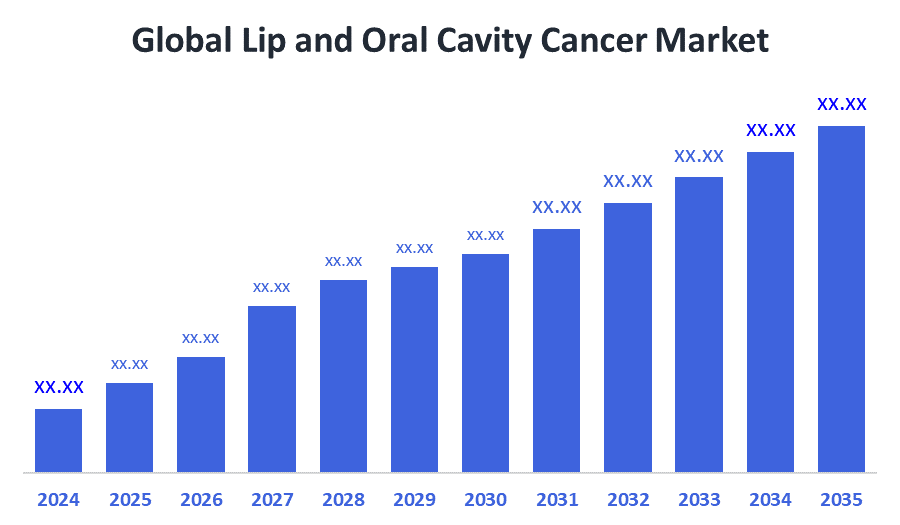
According to Decision Advisors, the Global Lip and Oral Cavity Cancer Market Size is expected to grow at a CAGR of 3.47% during the forecast period 2025-2035. The global lip and oral cavity cancer market is projected to grow significantly over the next decade due to the increasing usage of all tobacco products, which includes cigarettes, cigars, and pipe smoking, has become the main factor driving the growth of the lip and oral cavity cancer treatment market.
Market Overview/ Introduction
The lip and oral cavity cancer market, which includes all activities related to diagnosing, treating and managing lip and oral cavity cancers. The market has witnessed significant growth due to the rising global incidence of oral cancer and increasing awareness about early detection and rapid advancements in medical technology.
Mouth and oral cancer rank as the 16th most prevalent cancer type across the globe. The year 2022 saw the emergence of 389,846 new mouth and oral cancer cases. The tables below display data about countries that show the highest rates and the incidence and mortality rates of mouth and oral cancer, which worldwide organizations classify as lip and oral cavity cancer according to GLOBOCAN. The year 2022 saw 758,000 people worldwide receive a diagnosis of LOCP cancers, among whom 42% had oral cavity cancer, oropharynx cancer affected 19.3% and, nasopharynx cancer 15.9% and, hypopharynx cancer 11.4% and, salivary gland cancer 7.3% and lip cancer 4.2% of the diagnosed cases.
The lip and oral cavity cancer treatment market has developed into a technology-based medical field that focuses on developing new technologies. This market sector will experience strong growth because of rising healthcare investment levels, ongoing research efforts and the development of new treatment methods.
- Jaguar Health launched the FDA-approved prescription product, Gelclair, for oral mucositis in the US.
- The Bangkok Declaration, No Health Without Oral Health, was adopted at the first WHO Global Oral Health Meeting, which took place in Bangkok, Thailand, in November 2024.
Notable Insights: -
- North America holds the largest regional market share, approximately 42.15%, in the global lip and oral cavity cancer market.
- Asia Pacific is the fastest-growing region in the global lip and oral cavity cancer market.
- By cancer type, the oral squamous cell carcinoma segment held a dominant position in terms of market share in 2025.
- By treatment type, the radiation therapy segment is the dominating one, accounting for the global market share in 2025.
- The compound annual growth rate of the global lip and oral cavity cancer market is 3.74%.
What is the role of technology in grooming the market?
The Lip and Oral Cavity Cancer market experiences accelerated growth through technological advancements, which enable better early detection, treatment efficiency and enhanced patient outcomes. The combination of AI-based imaging and fluorescence screening, with molecular diagnostics, provides a method for detecting diseases during their early stages. Early-stage detection can improve survival rates by up to 80–90%, compared to 50% in late-stage cases. AI systems increase oral cancer detection accuracy through their diagnostic capabilities, which improve results between 20 and 30%. Approximately 60 to 70% of developing oncology therapies focus on targeted treatments, while biomarker-based drugs such as Pembrolizumab see increasing usage. Patients who undergo robotic or minimally invasive surgical procedures can expect their hospital stays to decrease between 30 and 50%. The year 2024 saw the international approval of more than 50 oncology medications.
How is Recent Developments Helping the Market?
Recent developments such as product innovation, premiumization, and expansion of digital sales channels are supporting the growth of the global lip and oral cavity cancer market. The oncology sector approved more than 60 new medications in 2024, which included multiple first-in-class treatments that demonstrated strong progress in developing new cancer therapies. The current product launches introduce advanced immunotherapies together with targeted drugs and biologics, which create revolutionary shifts in treatment results. The new cancer treatment option for patients with advanced cancers comes from the regulatory approval of cosibelimab Unloxcyt together with its newly developed therapies. The wider use of immunotherapy drugs such as Pembrolizumab proves beneficial for head and neck cancer treatment because they increase patient survival rates while enhancing treatment efficacy. The introduction of supportive care products, which include oral mucositis treatments, establishes better patient outcomes while enabling patients to maintain their therapy schedules.
Market Drivers
The global lip and oral cavity cancer market is propelled by the rising use of non-invasive and minimally invasive treatment methods, which include advanced laser therapies, cryosurgery and photodynamic therapy. The National Programme for Prevention and Control of Cancer, Diabetes, Cardiovascular Diseases and Stroke (NPCDCS) program in India promotes population-based screening methods to detect oral, breast and cervical cancers. The Indian Institute of Technology Kanpur (IITK) has licensed its patented technology Munh Parikshak, which functions as a portable oral cancer detection device, to Scangenie Scientific Pvt. Ltd.
Restrain
The main restraints on the global lip and oral cavity cancer market include Oro-dental trauma occurs because of dental issues and environmental hazards which include unsafe playgrounds and aggressive physical activities and vehicle collisions and acts of violence. The treatment process demands high expenses and extended time periods because it produces tooth loss which creates difficulties for both facial development and psychological growth and everyday living.
Competitive Analysis:
The report offers the appropriate analysis of the key organizations/companies involved within the lip and oral cavity cancer market, along with a comparative evaluation primarily based on their product of offering, business overviews, geographic presence, enterprise strategies, segment market share, and SWOT analysis. The report also provides an elaborative analysis focusing on the current news and developments of the companies, which includes product development, innovations, joint ventures, partnerships, mergers & acquisitions, strategic alliances, and others. This allows for the evaluation of the overall competition within the market.
Top Companies in Global Lip and Oral Cavity Cancer Market
- Bristol-Myers Squibb Company
- Merck & Co., Inc.
- Novartis AG
- Pfizer Inc.
- AstraZeneca PLC
- F. Hoffmann-La Roche Ltd
- Teva Pharmaceutical Industries Ltd
- Sanofi SA
- Sun Pharmaceutical Industries Ltd
- Hookipa Pharma
- Ono Pharmaceuticals
- Regeneron Pharmaceuticals
- Aveta Biomics
Government Initiatives
|
Country |
Key Government Initiatives |
|
India |
Ayushman Bharat Yojana is ensuring timely treatment of cancer patients within 30 days. The scheme covers chemotherapy, radiotherapy, and surgical oncology for cancer treatment for economically vulnerable families. Till 2024, over 90% of registered cancer patients have commenced treatment under this scheme, reducing out-of-pocket expenses and ensuring financial protection for millions. |
|
US |
In 2024, the FDA approved several key therapies impacting the market, including TEVIMBRA for advanced squamous cell carcinomas. |
Market Segmentation
The lip and oral cavity cancer market share is classified into cancer type, treatment type, and end user.
- The oral squamous cell carcinoma segment dominated the market in 2025 and is projected to grow at a substantial CAGR during the forecast period.
Based on the cancer type, the lip and oral cavity cancer market is divided into oral squamous cell carcinoma, oral verrucous carcinoma, mucoepidermoid carcinoma, and minor salivary gland tumors. Among these, the oral squamous cell carcinoma segment dominated the market in 2025 and is projected to grow at a substantial CAGR during the forecast period. The aggressive nature of the disease leads to its classification as a highly dangerous malignant tumor through its capacity to spread and its tendency to recur. The incidence of OCSCC in Western countries ranges from 1% to 4%, whereas the condition shows the highest occurrence in nonindustrialized Asian nations that experience high death rates from the disease.
- The radiation therapy segment accounted for the largest share in 2025, and is anticipated to grow at a significant CAGR during the forecast period.
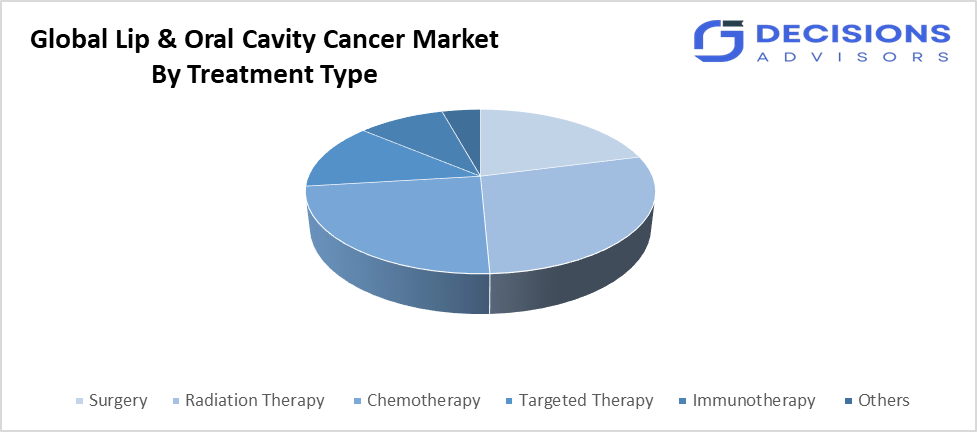
Based on the treatment type, the lip and oral cavity cancer market is divided into surgery, radiation therapy, chemotherapy, targeted therapy, immunotherapy and others. Among these, the radiation therapy segment accounted for the largest share in 2025 and is anticipated to grow at a significant CAGR during the forecast period. The growth of the segment is driven by the right circumstances; it can be very effective unless used in combination with the latest oral cancer knowledge in any of the stages of the disease, at least at a minimum, this is always a treatment worth combining with other modalities.
- The hospitals segment dominated the market in 2025, and is projected to grow at a substantial CAGR during the forecast period.
Based on the end user, the lip and oral cavity cancer market is divided into hospitals, specialty scanner clinics, research institutes, and ambulatory surgical centers. Among these, the hospitals segment dominated the market in 2025 and is projected to grow at a substantial CAGR during the forecast period. Research institutions show considerable potential for growth by focusing on clinical trials and innovative treatment protocols aimed at improving survival rates.
What is the Reason for the Region Dominance?
The dominance of certain regions in the global lip and oral cavity cancer market is primarily driven by a combination of high healthcare spending, advanced technology, strong pharma presence, and high treatment adoption rates. The United States spends heavily on cancer care per patient. Patients can access expensive treatments like immunotherapy, targeted therapy, and reconstructive surgery. High spending directly increases overall market value, even if patient numbers are lower than in Asia. Additionally, the presence of world-class cancer hospitals and research centres is also a highly developed oncology network.
Strategies to Implement for Growth of the Market in Non-Leading Regions
Growth in non-leading regions can be supported through strategic investments, product innovation, and expanding distribution networks. Companies can increase market penetration by shifting the focus from just treatment availability to awareness, access, affordability, and infrastructure. By launching large scale of oral cancer awareness campaigns for tobacco, alcohol, and HPV risk. Integrate screening into primary healthcare and dental visits. Investing in diagnostic tools such as biopsy labs, imaging like CT/MRI, and expanding telemedicine for remote consultations. Collaborate between governments, hospitals, and pharma companies. Expand government insurance schemes and subsidies. Partner with NGOs for financial assistance programs. Introduce tiered pricing models by pharma companies. Include oral cancer in national cancer control programs.
Regional Segment Analysis of the Lip and Oral Cavity Cancer Market
- North America (U.S., Canada, Mexico)
- Europe (Germany, France, U.K., Italy, Spain, Rest of Europe)
- Asia-Pacific (China, Japan, India, Rest of APAC)
- South America (Brazil and the Rest of South America)
- The Middle East and Africa (UAE, South Africa, Rest of MEA)
North America is anticipated to hold the largest share of the lip and oral cavity cancer market over the predicted timeframe.
North America is anticipated to hold the largest share of the lip and oral cavity cancer market over the predicted timeframe. This market is accounting about approximately 42.15% of the total market share. The dominance of this market is driven by the attributes of powerful healthcare systems, and their research capabilities serve as the main requirements. The system includes advanced healthcare facilities, which show excellent development, with rapid implementation of expensive immunotherapy treatments. The treatment expenses for advanced oral cancer in developed nations reach more than 60% of their GDP per capita because of the expensive nature of expert medical services.
Asia Pacific is expected to grow at a rapid CAGR in the lip and oral cavity cancer market during the forecast period. The market growth is driven by the increasing healthcare funding, which presents a major challenge to the current healthcare system. South-Central Asia holds the record for the highest lip and oral cavity cancer rates among all regions in the Asia-Pacific area. India has been described as the "Oral Cancer Capital of the World," accounting for a significant portion of global cases. The governments of India and China are making substantial financial investments to develop healthcare facilities, advance early diagnostic programs, and establish treatment centers that will be easier for patients to access.
Europe is the 2nd largest region to grow in the lip and oral cavity cancer market during the period. It is because Europe has a high disease burden, with a significant number of oral cancer cases. The advanced healthcare systems, high treatment adoption and strong reimbursement frameworks, with substantial disease burden, create a better health system in South Asia than other regions with higher disease incidence.
Future Market Trends in Global Lip and Oral Cavity Cancer Market: -
- Rising Global Disease Burden
The increasing incidence of lip and oral cavity cancer is a major factor driving market growth worldwide. Globally, around 758,000 new cases were reported in recent years, with a significant rise of nearly 60%+ over the past three decades. This surge is largely attributed to the widespread use of tobacco, alcohol consumption, and infections such as Human Papillomavirus.
- Growth of Targeted Therapy & Immunotherapy
The growing adoption of targeted therapy and immunotherapy is transforming the treatment landscape of lip and oral cavity cancer. Drugs such as Pembrolizumab and Nivolumab are increasingly used in advanced-stage cancers. With over 60–70% of oncology drugs under development focusing on targeted approaches, this segment is rapidly expanding.
- Expansion of Minimally Invasive Treatments
Techniques such as laser surgery, photodynamic therapy, and image-guided procedures are increasingly preferred over traditional open surgeries due to reduced pain, minimal scarring, and faster recovery. Advanced therapies reduce hospital stay by 30–50%. Adoption of such treatments is rapidly increasing.
Recent Development
- In April 2025, Genefitletics, a biotech and longevity company that launched an early detection test of Oral Squamous Cell Carcinoma- ORAONCO to detect and prevent the onset of metabolic diseases, entered into the preventive oncology space.
- In December 2024, BOYNTON BEACH, Fla., ioTech International announced the release of ioRinse MR, an advanced oral rinse developed specifically to provide substantial relief for cancer patients suffering from mouth sores, dry mouth, oral pain, and ulcers, debilitating side effects often resulting from chemotherapy and radiation.
- In September 2024, InfuSystem Holdings, Inc., a leading national health care service provider, facilitating outpatient care for durable medical equipment manufacturers and health care providers, and its joint venture partner, Sanara MedTech Inc., announced the execution of an exclusive United States distribution agreement with ChemoMouthpiece, LLC.
Market Segment
This study forecasts revenue at global, regional, and country levels from 2020 to 2035. Decision Advisors has segmented the lip and oral cavity cancer market based on the below-mentioned segments:
Global Lip and Oral Cavity Cancer Market, By Cancer Type
- Oral Squamous Cell Carcinoma
- Oral Verrucous Carcinoma
- Mucoepidermoid Carcinoma
- Minor Salivary Gland Tumors
Global Lip and Oral Cavity Cancer Market, By Treatment Type
- Surgery
- Radiation Therapy
- Chemotherapy
- Targeted Therapy
- Immunotherapy
- Others
Global Lip and Oral Cavity Cancer Market, By End User
- Hospitals
- Specialty Scanner Clinics
- Research Institutes
- Ambulatory Surgical Centers
Global Lip and Oral Cavity Cancer Market, By Regional Analysis
- North America
- US
- Canada
- Mexico
- Europe
- Germany
- UK
- France
- Italy
- Spain
- Russia
- Rest of Europe
- Asia Pacific
- China
- Japan
- India
- South Korea
- Australia
- Rest of Asia Pacific
- South America
- Brazil
- Argentina
- Rest of South America
- Middle East & Africa
- UAE
- Saudi Arabia
- Qatar
- South Africa
- Rest of the Middle East & Africa
Frequently Asked Questions (FAQ)
Q: How is the disease diagnosed?
A: The lip and oral cavity cancer commonly uses diagnostic methods, are Physical oral examination, Biopsy (confirmatory test) and Imaging (CT, MRI, PET scans).
Q: What are pipeline drugs in the lip and oral cavity cancer market?
A: Pipeline drugs in the lip and oral cavity cancer market refer to therapies currently under research, development, or clinical trials that have not yet received full regulatory approval. These drugs aim to improve treatment outcomes by targeting specific cancer pathways, enhancing immune response, or reducing side effects compared to conventional therapies.
Q: What are the current treatment options?
Current treatment options for lip and oral cavity cancer include surgery to remove tumors, radiation therapy to target cancer cells, and chemotherapy for advanced stages. Targeted therapy and immunotherapy are also used to improve outcomes by attacking specific cancer pathways or boosting the immune system. Treatment choice depends on cancer stage, location, and patient health.
Q: Which regions dominate the market?
North America dominates the lip and oral cavity cancer market due to advanced healthcare infrastructure, high diagnosis rates, and strong adoption of innovative therapies. Europe follows with well-established treatment facilities and research support. The Asia-Pacific region is rapidly growing, driven by increasing patient population, rising awareness, and improving healthcare access, especially in countries like India and China.
Check Licence
Choose the plan that fits you best: Single User, Multi-User, or Enterprise solutions tailored for your needs.
We Have You Covered
- 24/7 Analyst Support
- Clients Across the Globe
- Tailored Insights
- Technology Tracking
- Competitive Intelligence
- Custom Research
- Syndicated Market Studies
- Market Overview
- Market Segmentation
- Growth Drivers
- Market Opportunities
- Regulatory Insights
- Innovation & Sustainability
Report Details
| Scope | Global |
| Pages | 210 |
| Delivery | PDF & Excel via Email |
| Language | English |
| Release | Mar 2026 |
| Access | Download from this page |