
Global Lipid Regulators Market
 |
Author:
Disha B
|
Pages:
240
|
Author:
Disha B
|
Pages:
240
Global Lipid Regulators Market Size, Share, By Drug Type (Statins, Fibrates, Cholesterol Absorption Inhibitors, PCSK9 Inhibitors, Omega-3 Fatty Acid Derivatives, Niacin (Nicotinic Acid) & Derivatives, Bile Acid Sequestrants, ATP-Citrate Lyase (ACL) Inhibitors and RNA-based Lipid-Lowering Therapies), By Indication (Hypercholesterolemia, Hypertriglyceridemia, Coronary Artery Disease, and Other lipid disorders) By Application (Pharmaceuticals, Nutrition & Supplements, Scientific Research, and Food & Beverages) By End User (Hospitals, Ambulatory Surgical Centres, Specialty bariatric clinics, and Surgical centres), and By Region (North America, Europe, Asia-Pacific, Latin America, Middle East, and Africa), Analysis and Forecast 2026-2035.
CAGR
4.07%
REVENUE 2025
USD Billion 33.58
FORECAST 2035
USD Billion 50.03
REPORT COVERAGE
Global
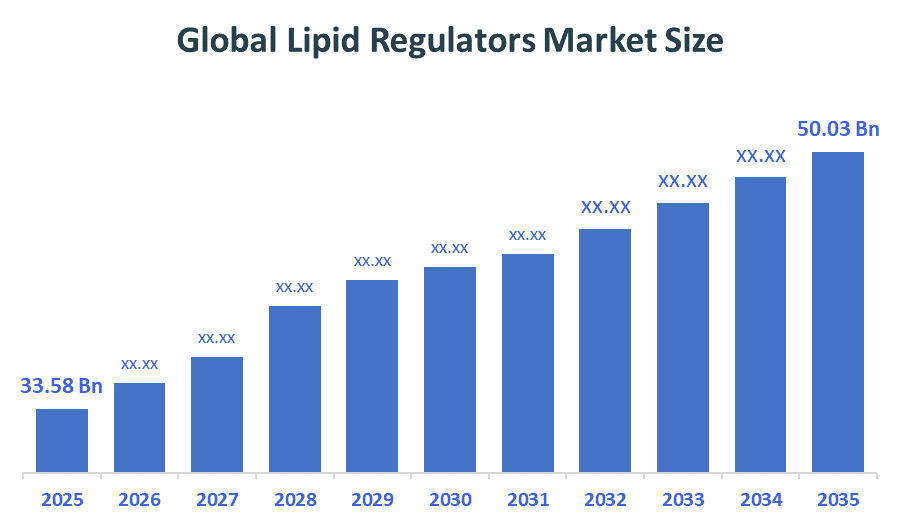
The Global Lipid Regulators Market Size is projected USD 33.58 Billion in 2025 and is forecasted to reach around USD 50.03 Billion by 2035. According to Decision Advisors, a detailed report on analysis of the Global Lipid Regulators Market indicates that the Shift toward PCSK9 inhibitors and RNA-based lipid-lowering therapies trend dominates the market, accounting for approx. 8–12% of the total global demand worldwide. Pfizer Inc. dominates the Global Lipid Regulators Market, supported by revenue of approx. USD 18–20 billion, due to rising cardiovascular diseases, aging population, and increasing demand for cholesterol-lowering therapies worldwide.
Market Snapshot
- Global Lipid Regulators Market Size (2025): USD 33.58 Billion
- Projected Global Lipid Regulators Market Size (2035): USD 50.03 Billion
- Global Lipid Regulators Market Compound Annual Growth Rate (CAGR): 4.07%
- Largest Regional Market: Asia pacific
- Fastest Growing Region: North America
- 3rd Largest Region: Europe
- Base Year: 2025
- Historical Period: 2021–2024
- Forecast Period: 2026–2035
Market Overview/ Introduction
The Global Lipid Regulators Market encompasses the international industry that involves the creation, manufacturing, and marketing of medicinal products that regulate abnormal levels of lipids, primarily cholesterol and triglycerides. Lipid regulators can be described as medicines responsible for reducing the levels of LDL cholesterol, raising the levels of HDL cholesterol, and regulating triglycerides in order to decrease the likelihood of heart diseases. Lipid regulator medicine can take several forms, including statins, fibrates, PCSK9 inhibitors, cholesterol absorption inhibitors, and RNA-based treatments. These medicines have applications in treating various medical conditions, such as high levels of cholesterol, high triglycerides, and coronary artery disease. As such, the main use of these medicines lies in minimizing the risk of heart diseases and preventive health care. This market enjoys consistent growth due to the growing incidence of heart diseases, obesity, and diabetes and increased knowledge about the importance of early diagnosis and treatment. Moreover, the aging population plays a significant role in driving demand since lipids are often prevalent among elderly people. Innovation and technology are vital factors that influence the market. Biologics, gene-silencing drugs, and long-acting injections have revolutionized the lipid management process. RNAi and PCSK9 inhibitors are being preferred by many because of their efficacy and enhanced compliance among patients. Various government initiatives have helped the market grow by creating awareness and increasing screening. Generally, the market is moving towards personalized and effective methods of managing lipids.
- In March 2024, US FDA expanded bempedoic acid (Nexletol/Nexlizet) indications in 2024 for broader cardiovascular risk reduction, increasing eligible primary prevention patients and supporting wider adoption of lipid-lowering therapies in high-risk populations.
- In China’s Healthy China 2030 strategy prioritizes prevention and control of cardiovascular and metabolic diseases, strengthening healthcare systems and indirectly driving demand for lipid-lowering therapies in chronic disease management
Notable Insights: -
- Asia-Pacific holds the largest regional market share approximately 31% in the global Lipid Regulators market.
- North America is the fastest growing region market share approximately 36% in the global Lipid Regulators market.
- By Drug Type, the Statins segment held a dominant position with 58% in terms of market share in 2025.
- By Indication, Hypercholesterolemia segment is the dominating accounting for market is approximately 62%.
- By end user, Hospitals segment held a dominant position market is approximately 53%.
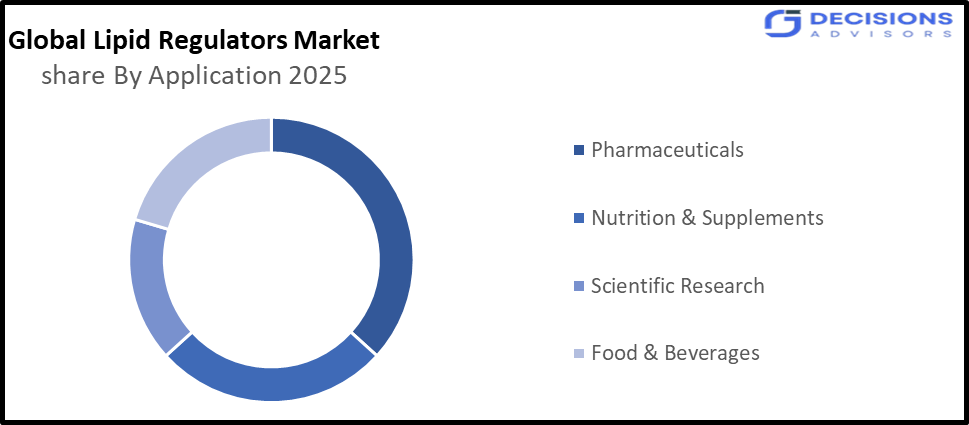
- By Application, Pharmaceuticals segment held a dominant position market is approximately 62%.
- The market is likely to achieve a valuation of USD 50.03 Billion by 2035.
What is role of technology in grooming the market?
Technological advancement is integral in the formulation of strategies that influence the Global Lipid Regulators Market by facilitating research into more effective and precise solutions for treating lipid disorders. For instance, the emergence of drugs based on RNA interference and PCSK9 inhibitors has led to more efficient results as compared to conventional medicines used previously. Moreover, digital health innovations such as remote monitoring and artificial intelligence diagnostics allow for timely identification of patients suffering from cholesterol-related conditions and provision of tailor-made treatments. Improvements in delivery systems, like long-lasting shots, increase compliance among patients receiving medication. Biotechnology and genomics are promoting precision medicine in this sector by personalizing treatments according to individual risk levels.
How is Recent Developments Helping the Market?
The recent trends that have been observed in the market are greatly contributing to the accelerated growth of the Global Lipid Regulators Market. The market value has been estimated to reach around USD 33.6 billion by 2025 owing to technological advancements and expansion of the product pipeline. Some of the notable innovations in the market include PCSK9 inhibitors and RNA therapies, wherein the market size of the PCSK9 market segment is expected to cross USD 2.5 billion in 2024 with a CAGR of around 19%.
Market Drivers
The global lipid regulators market growth is majorly attributed to the rising prevalence rate of CVDs, which continue to be the major cause of deaths globally. The rising number of patients with high cholesterol levels, obesity, and diabetes has led to increased usage of lipid lowering drugs. Factors such as inactive lifestyles, poor eating habits, and increasing urbanization are further contributing to an increase in the patient pool. Aging population around the world is another factor that has been observed to contribute to the global lipid regulators market growth. Older patients are at higher risks of developing dyslipidaemia and other related conditions. Growing health awareness and screening procedures for cholesterol among people are driving the market growth positively. Innovations and advancements in pharmaceutical products are also one of the factors that drive the global lipid regulators market. Development of PCSK9 inhibitors and RNA based therapeutics is expected to drive the market growth.
Restrain
The Global Lipid Regulators Market faces restraints due to high costs of advanced therapies such as PCSK9 inhibitors and RNA-based drugs, limiting accessibility. Side effects of statins, including muscle-related issues, reduce patient adherence. Additionally, patent expirations and generic competition impact revenue growth. Limited awareness in developing regions and strict regulatory approvals further challenge market expansion.
Competitive Analysis:
The report offers the appropriate analysis of the key organizations/companies involved within the Lipid Regulators market, along with a comparative evaluation primarily based on their Product of offering, business overviews, geographic presence, enterprise strategies, segment market share, and SWOT analysis. The report also provides an elaborative analysis focusing on the current news and developments of the companies, which includes Product development, innovations, joint ventures, partnerships, mergers & acquisitions, strategic alliances, and Others. This allows for the evaluation of the overall competition within the market.
Top Companies in Global Lipid Regulators Market
- Pfizer Inc.
- Novartis AG
- Amgen Inc.
- Sanofi S.A.
- Regeneron Pharmaceuticals
- Merck & Co., Inc.
- AstraZeneca plc
- Eli Lilly and Company
- Bristol-Myers Squibb
- AbbVie Inc.
Government Initiatives
|
Country |
Key Government Initiatives |
|
U.S.
|
In March 2026 ACC/AHA dyslipidaemia guideline emphasizes earlier cardiovascular risk assessment, lower LDL-C targets based on risk, and expanded use of non-statin therapies for long-term prevention. |
|
China |
In March 2023, China’s lipid management guidelines recommend statins as first-line therapy with lifestyle modification, and add non-statin agents when required, strengthening long-term LDL-C control and cardiovascular risk reduction strategies. |
Study on the Supply, Demand, Distribution, and Market Environment of Lipid Regulators Market
The Global Lipid Regulators Market showcases a well-defined market structure of supply, demand, distribution, and market environment, which ensures continued expansion. The market was estimated to have a worth of around USD 33.6 billion in 2025, owing to the high demand from across the globe. With regards to the demand factors, an increase in the number of cardiovascular disorders and dyslipidaemia can be cited as the major drivers for the market, since more than 244 million individuals suffer from ischemic heart disease worldwide, hence making it necessary to provide patients with lipid-lowering drugs. In respect to the supply, the leading pharmaceuticals manufacture a stable supply of various types of statins, biologics, and novel agents in accordance with the R&D initiatives. Further, with regard to the distribution, the hospital pharmacies segment leads, contributing a revenue share of approximately 57% in 2025.
Price Analysis and Consumer Behaviour Analysis
Factors that affect prices within the Global Lipid Regulators Market include the availability of affordable generics in statins and high-end pricing of innovative treatments such as PCSK9 inhibitors and RNA medicines. Statins continue to be popular because of their relatively lower price point and widespread availability, representing almost 46–60% market share in 2025. In terms of consumer behaviour, patients tend to use affordable oral drugs with safety considerations, which explains why statins are widely used. Nevertheless, the use of innovative therapies continues to grow in patients who are at higher risk.
Market Segmentation
The Lipid Regulators Market share is classified into mounting drug type, indication, application, and end user
- The Statins segment dominated the market in 2025, and is projected to grow at a substantial CAGR of approximately 4.2% during the forecast period.
Based on the Drug Type, the Lipid Regulators market is divided into Statins, Fibrates, Cholesterol Absorption Inhibitors, PCSK9 Inhibitors, Omega-3 Fatty Acid Derivatives, Niacin (Nicotinic Acid) & Derivatives, Bile Acid Sequestrants, ATP-Citrate Lyase (ACL) Inhibitors, and RNA-based Lipid-Lowering Therapies. Among these, Statins dominate the global lipid regulators market, accounting for approximately 55–60% of total revenue in 2025, driven by widespread use, strong clinical evidence, and cost-effective generics. This segment continues to lead despite rising competition from novel therapies. However, its growth is relatively moderate, with an expected CAGR of around 3.5–4.5%, as market maturity and patent expirations limit expansion. Meanwhile, newer classes like PCSK9 inhibitors and RNA-based therapies are growing faster but from smaller bases.
- The Hypercholesterolemia segment accounted for the largest share in 2025, and is anticipated to grow at a significant CAGR of approximately 7.2% during the forecast period.
Based on the indication, the lipid regulators market is divided into hypercholesterolemia, hypertriglyceridemia, coronary artery disease, and other lipid disorders. Among these, Hypercholesterolemia dominates the global lipid regulators market, accounting for approximately 60–65% of total revenue in 2025, driven by its high global prevalence and strong reliance on statins and newer lipid-lowering therapies. The segment benefits from widespread screening and long-term treatment adoption. It is expected to grow at a CAGR of around 6-8%, supported by rising cardiovascular risk awareness and increasing use of advanced therapies such as PCSK9 inhibitors and RNA-based treatments.
- The Hospitals segment dominated the market in 2025, and is projected to grow at a substantial CAGR of approximately 5.3% during the forecast period.
Based on the end user, the lipid regulators market is divided into hospitals, ambulatory surgical centres, specialty bariatric clinics, and surgical centres. Among these, Hospitals dominate the global lipid regulators market, accounting for approximately 50–55% of total revenue in 2025, driven by high patient volume, advanced treatment infrastructure, and access to a wide range of lipid-lowering therapies. Hospitals remain the primary point of care for cardiovascular and metabolic disorders. This segment is projected to grow at a CAGR of around 4.5–5.5%, supported by increasing hospitalization rates and expanding cardiology services worldwide.
- The Pharmaceuticals segment dominated the market in 2025, and is projected to grow at a substantial CAGR of approximately 5.7% during the forecast period.
Based on the application, the lipid regulators market is divided into pharmaceuticals, nutrition & supplements, scientific research, and food & beverages. Among these, pharmaceuticals segment dominates the global lipid regulators market by application. In 2025, it holds approximately 55–65% of total market revenue, driven by high demand for prescription drugs such as statins and PCSK9 inhibitors to manage cholesterol and cardiovascular diseases. Strong clinical adoption and increasing prevalence of hyperlipidaemia support its leadership. The segment is projected to grow at a CAGR of around 4%–6% during the forecast period, supported by ongoing drug innovations and rising focus on preventive healthcare worldwide.
Strategies to Implement for Growth of the Market in Non-Leading Regions
The global lipid regulators market price and consumer behaviour trends are highly influenced by the difference between cheap statins and expensive innovations. Statins make up most of the sales because of their relatively low prices, as well as their availability as generics at much lower costs than branded products. The latest technologies, including PCSK9 inhibitors, cost 5 to 10 times higher than statins and are prescribed only in cases of high-risk patients. Patient preferences include oral, once-a-day drugs, thus leading to a steady intake of statins. At the same time, there has been an increase in the use of biologicals in patients with intolerance or at high risk of heart diseases, even when affordability is not always possible. Consumer behaviours are also greatly influenced by insurance coverages and reimbursements, as well as prior authorizations. Increasing awareness regarding cardiovascular prevention and using technology to monitor adherence leads to consumers moving towards lipid regulation drugs.
Regional Segment Analysis of the Lipid Regulators Market
- North America (U.S., Canada, Mexico)
- Europe (Germany, France, U.K., Italy, Spain, Rest of Europe)
- Asia-Pacific (China, Japan, India, Rest of APAC)
- South America (Brazil and the Rest of South America)
- The Middle East and Africa (UAE, South Africa, Rest of MEA)
Asia pacific is anticipated to hold the largest share of the Lipid Regulators market over the predicted timeframe.
Asia-Pacific is expected to hold the largest share of the Global Lipid Regulators Market, accounting for approximately 35–38% of total revenue in 2025, driven by its large patient population, rising cardiovascular disease burden, and increasing diabetes and obesity prevalence. Rapid urbanization, improving healthcare infrastructure, and growing access to affordable generics further support dominance. The region is projected to grow at a CAGR of around 5.5–6.5%, higher than developed markets, due to expanding healthcare spending and strong pharmaceutical penetration in countries like China and India.
North America is expected to grow at a rapid CAGR in the Lipid Regulators market during the forecast period. North America is expected to account for approximately 30–33% of the Global Lipid Regulators Market revenue in 2025, driven by high prevalence of cardiovascular diseases, strong healthcare infrastructure, and widespread adoption of advanced therapies such as PCSK9 inhibitors. The region is also witnessing rapid uptake of biologics and RNA-based treatments due to strong R&D investments and favourable reimbursement policies. It is projected to grow at a CAGR of around 5.0–6.0%, supported by increasing obesity rates, aging population, and continuous innovation in lipid-lowering drug development and preventive cardiovascular care programs.
Europe is the 3rd largest region to grow in the Lipid Regulators market during the region. Europe is the third-largest region in the Global Lipid Regulators Market, accounting for approximately 22–25% of total revenue in 2025, driven by a high prevalence of cardiovascular diseases and strong adoption of statins and combination therapies. The region benefits from well-established healthcare systems, favourable reimbursement policies, and increasing preventive care programs. However, growth is relatively moderate compared to Asia-Pacific and North America. Europe is projected to expand at a CAGR of around 4.0–5.0%, supported by rising elderly population, improved screening, and gradual adoption of advanced lipid-lowering biologics.
Future Market Trends in Global Lipid Regulators Market: -
- Rise of Advanced Biologics (PCSK9 & RNA-based therapies)
The future of the Global Lipid Regulators Market will be driven by rapid adoption of advanced biologics such as PCSK9 inhibitors and RNA-based therapies. These treatments offer superior LDL cholesterol reduction compared to traditional statins and are increasingly used for high-risk and statin-intolerant patients. Ongoing clinical advancements, long-acting formulations, and improved safety profiles are boosting demand. Although currently expensive, expanding approvals and broader insurance coverage are expected to significantly increase market penetration over the forecast period.
2. Shift Toward Personalized Cardiovascular Therapy
Personalized medicine is becoming a major trend in lipid management, focusing on genetic profiling and patient-specific risk assessment. This approach helps physicians select the most effective lipid-lowering therapy based on individual response. Advances in genomics, biomarkers, and AI-driven diagnostics are enabling tailored treatment plans. This reduces trial-and-error prescribing and improves patient outcomes. As healthcare systems move toward precision medicine, lipid regulators will increasingly be prescribed based on individualized cardiovascular risk profiles.
- Expansion of Digital Health & Adherence Technologies
Digital health solutions are transforming lipid disorder management through remote monitoring, mobile health apps, and AI-based medication adherence tools. These technologies help patients track cholesterol levels, improve drug compliance, and enable physicians to adjust treatment in real time. Wearable devices and telemedicine platforms are also supporting long-term disease management. As cardiovascular diseases require lifelong therapy, digital integration is expected to significantly enhance treatment efficiency and drive sustained growth in the lipid regulators market.
Recent Development
In February 2026, Merck’s investigational oral PCSK9 inhibitor enlicitide showed ~60% LDL-C reduction in Phase 3 trials, demonstrating efficacy comparable to injectable therapies and advancing oral lipid-lowering treatment innovation.
In December 2025, FDA approved Lerodalcibep (Lerochol), a once-monthly PCSK9 inhibitor for adults with hypercholesterolemia and HeFH, offering significant LDL-C reduction and expanding injectable lipid-lowering treatment options.
In July 2025, FDA updated Novartis’ Leqvio (inclisiran) label, enabling monotherapy use with diet and exercise for LDL-C reduction in hypercholesterolemia, including HeFH, expanding treatment flexibility and patient access.
Market Segment
This study forecasts revenue at global, regional, and country levels from 2021 to 2035. Decision Advisors has segmented the Lipid Regulators market based on the below-mentioned segments:
Global Lipid Regulators Market, By Drug Type
- Statins
- RNA-based Lipid-Lowering Therapies
Global Lipid Regulators Market, By Indication
- Hypercholesterolemia
- Hypertriglyceridemia
- Coronary Artery Disease
- Other lipid disorders
- Revision bariatric surgery
- Biliopancreatic diversion with duodenal switch
- Non-invasive bariatric procedures
Global Lipid Regulators Market, By Application
- Pharmaceuticals
- Nutrition & Supplements
- Scientific Research
- Energy-based devices
- Suturing & closure devices
- Food & Beverages
Global Lipid Regulators Market, By End User
- Hospitals
- Ambulatory Surgical centres
- Specialty bariatric clinics
- Surgical centres
Global Lipid Regulators Market, By Regional Analysis
- North America
- US
- Canada
- Mexico
- Europe
- Germany
- UK
- France
- Italy
- Spain
- Russia
- Rest of Europe
- Asia Pacific
- China
- Japan
- India
- South Korea
- Australia
- Rest of Asia Pacific
- South America
- Brazil
- Argentina
- Rest of South America
- Middle East & Africa
- UAE
- Saudi Arabia
- Qatar
- South Africa
- Rest of the Middle East & Africa
Frequently Asked Questions (FAQ)
1. What is the future outlook of combination therapies in lipid regulation?
Combination therapies that integrate statins with novel agents such as ezetimibe or PCSK9 inhibitors are expected to gain importance. These therapies improve LDL-C reduction efficiency and are increasingly prescribed for patients who do not achieve targets with monotherapy, supporting better cardiovascular risk management outcomes.
2. How is artificial intelligence influencing drug development in this market?
Artificial intelligence is accelerating drug discovery by identifying new lipid-regulating targets, predicting drug responses, and optimizing clinical trial design. AI-driven platforms reduce development time and cost, enabling faster introduction of innovative therapies into the global market.
3. What role do lifestyle intervention programs play alongside lipid regulators?
Lifestyle interventions such as dietary management, physical activity programs, and weight control initiatives significantly complement pharmacological treatment. These programs help reduce dependency on medication, improve treatment effectiveness, and lower long-term cardiovascular risk in patients.
4. Are there any emerging biomarkers used in lipid disorder diagnosis?
Yes, emerging biomarkers such as ApoB, lipoprotein(a), and inflammatory markers like hs-CRP are increasingly used for more precise cardiovascular risk assessment. These biomarkers help physicians tailor lipid-lowering therapies more effectively for individual patients.
5. How is patient adherence being improved in long-term lipid therapy?
Patient adherence is improving through digital reminders, telemedicine consultations, fixed-dose combination drugs, and long-acting injectable formulations. These innovations reduce treatment complexity and enhance long-term compliance, leading to better lipid control outcomes.
Check Licence
Choose the plan that fits you best: Single User, Multi-User, or Enterprise solutions tailored for your needs.
We Have You Covered
- 24/7 Analyst Support
- Clients Across the Globe
- Tailored Insights
- Technology Tracking
- Competitive Intelligence
- Custom Research
- Syndicated Market Studies
- Market Overview
- Market Segmentation
- Growth Drivers
- Market Opportunities
- Regulatory Insights
- Innovation & Sustainability
Report Details
| Scope | Global |
| Pages | 240 |
| Delivery | PDF & Excel via Email |
| Language | English |
| Release | Apr 2026 |
| Access | Download from this page |