
Global Liposarcoma Treatment Market
 |
Pages:
240
|
Pages:
240
Global Liposarcoma Treatment Market Size, Share, and COVID-19 Impact Analysis, By Treatment Type (Chemotherapy, Targeted Therapy, Immunotherapy, and Others), By Route of Administration (Oral, Parenteral, and Others) and By Region (North America, Europe, Asia-Pacific, Latin America, Middle East, and Africa), Analysis and Forecast 2025-2035
REPORT COVERAGE
Global
Global Liposarcoma Treatment Market Size Insights Forecasts to 2035
- The Global Liposarcoma Treatment Market Size Was valued at USD 1.3 Billion in 2024
- The Global Liposarcoma Treatment Market Size is Expected to Grow at a CAGR of around 8.22% from 2025 to 2035
- The Worldwide Liposarcoma Treatment Market Size is Expected to Reach USD 3.1 Billion by 2035
- Asia-Pacific is expected to grow the fastest during the forecast period.
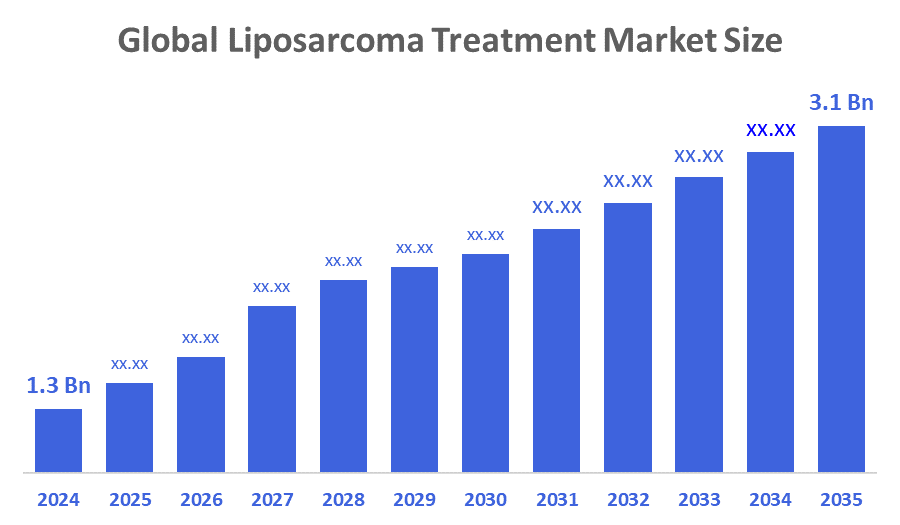
According to a research report published by Decisions Advisors and Consulting, The Global Liposarcoma Treatment Market Size Was Worth Around USD 1.3 Billion In 2024 And Is Predicted To Grow To Around USD 3.1 Billion By 2035 With A Compound Annual Growth Rate (CAGR) Of 8.22% From 2025 To 2035. The global liposarcoma treatment market provides growth opportunities through dedicated treatment methods, new immunotherapy developments, orphan drug development programs, increased research studies, better initial cancer detection methods, and rising global healthcare funding for uncommon cancer treatment research.
Market Overview
The Global Liposarcoma Treatment Market Size refers to the worldwide market for therapies used to treat liposarcoma, a rare type of soft tissue cancer that develops in fat cells, including surgery, chemotherapy, radiation therapy, and targeted treatments. Additionally, the current progress of liposarcoma treatment market shows active changes because of new treatment methods and better understanding of the disease's genetic makeup. The research findings show increasing demand for personalized medicine, which customizes medical treatments based on specific characteristics of each patient. The new approach will bring better treatment results through reduced side effects which will lead to better results for patients. The treatment landscape is undergoing a transformation through the introduction of new therapies which include targeted drugs and immunotherapeutic treatments, which provide patients with this uncommon cancer new treatment possibilities.
Moreover, the liposarcoma treatment market undergoes changes through two main factors which include new treatment methods and increased public understanding of the disease together with better methods for detecting the disease. The combination of advanced imaging systems with biomarker research enables healthcare professionals to discover medical conditions at earlier stages, which helps them provide suitable treatments. The ability of healthcare professionals to identify liposarcoma symptoms effectively leads to better chances of starting treatment during the disease's early stages. The Liposarcoma Treatment Market shows positive developments because the current trend which investigates innovative treatment methods through clinical research, together with stakeholder efforts to fulfill medical requirements, leads to better healthcare results for patients.
Report Coverage
This research report categorizes the liposarcoma treatment market based on various segments and regions, forecasts revenue growth, and analyzes trends in each submarket. The report analyses the key growth drivers, opportunities, and challenges influencing the liposarcoma treatment market. Recent market developments and competitive strategies such as expansion, type launch, development, partnership, merger, and acquisition, have been included to draw the competitive landscape in the market. The report strategically identifies and profiles the key market players and analyses their core competencies in each sub-segment of the liposarcoma treatment market.
Driving Factors
Several factors are driving the growth of the liposarcoma treatment market. The rising rate of liposarcoma cases which affects adults starting at age 50 serves as a primary force driving market expansion. As populations age, the prevalence of cancers, including rare types like liposarcoma, is expected to rise. The market expansion receives additional support through improvements in diagnostic methods that use MRI and genetic profiling to enable earlier disease detection and enhanced treatment strategies.
Restraining Factors
Market expansion suffers from multiple obstacles which include high treatment expenses, small patient groups, postponed disease identification, demanding approval processes, chemotherapy treatment side effects, absence of suitable targeted treatment options, and limited availability of modern cancer treatment facilities.
Market Segmentation
The liposarcoma treatment market share is classified into treatment type and route of administration.
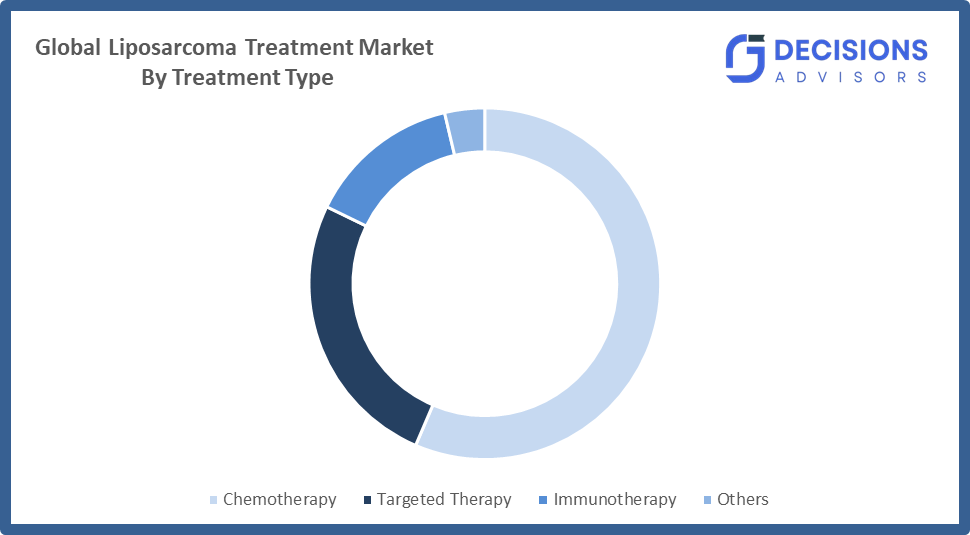
- The chemotherapy segment dominated the market in 2024, approximately 55% and is projected to grow at a substantial CAGR during the forecast period.
Based on the treatment type, the liposarcoma treatment market is divided into chemotherapy, targeted therapy, immunotherapy, and others. Among these, the chemotherapy segment dominated the market in 2024, approximately 55% and is projected to grow at a substantial CAGR during the forecast period. The treatment remains available because it has been used for many years as the primary treatment option which doctors use to treat advanced and metastatic cases. The treatment exists as a common option which patients receive together with surgical procedures and radiation therapy. The treatment maintains its market dominance because of its solid clinical research backing established treatment protocols and its accessibility in developing countries and its lower price compared to advanced medical treatments.
- The parenteral segment accounted for the largest share in 2024, approximately 60% and is anticipated to grow at a significant CAGR during the forecast period.
Based on the route of administration, the liposarcoma treatment market is divided into oral, parenteral, and others. Among these, the parenteral segment accounted for the largest share in 2024, approximately 60% and is anticipated to grow at a significant CAGR during the forecast period. The extensive application of intravenous chemotherapy together with targeted biologics for advanced liposarcoma cases shows that doctors require these treatments in hospitals. The hospital-based treatment method provides three advantages which include correct medication administration and fast medication effects and continuous observation of patients. The majority of initial cancer treatments require injection, which leads to increased treatment adoption rates. The segment maintains its dominant market position because of improved bioavailability and controlled drug delivery and doctors who prefer to administer cancer treatments in supervised environments.
Regional Segment Analysis of the Liposarcoma Treatment Market
- North America (U.S., Canada, Mexico)
- Europe (Germany, France, U.K., Italy, Spain, Rest of Europe)
- Asia-Pacific (China, Japan, India, Rest of APAC)
- South America (Brazil and the Rest of South America)
- The Middle East and Africa (UAE, South Africa, Rest of MEA)
North America is anticipated to hold the largest share of the liposarcoma treatment market over the predicted timeframe.
North America is anticipated to hold the largest share of the liposarcoma treatment market over the predicted timeframe. The region advantages from its developed medical facilities and its substantial research funding and its rising cases of liposarcoma. The FDA and other regulatory bodies enable better access to new treatment solutions which leads to expansion in the market. The growing recognition of uncommon tumors together with the increased need for specialized treatment solutions drives this market development. The United States is the primary contributor to this market, with significant participation from key players such as Bristol-Myers Squibb, Merck & Co., and Eli Lilly. The industry needs to compete between major pharmaceutical companies together with new biotech startups which create the current business environment. The region benefits from its strong clinical trial networks and research organizations which help it produce innovative solutions through ongoing development of new medical treatments.
Asia-Pacific is expected to grow at a rapid CAGR in the liposarcoma treatment market during the forecast period. The region experiences increased patient numbers who require medical treatment while healthcare costs continue to rise, which creates a need for better medical solutions. The growing trend of regulatory agencies to grant approval for novel treatment methods will result in increased market expansion. The increasing understanding of rare cancers by healthcare professionals and patients drives this particular growth. The pharmaceutical market in Japan, China, and Australia shows competition between domestic and foreign companiesfor market leadership. The market competition sees more clinical studies and research partnerships which focus on creating new medical treatments. The main companies Amgen and Pfizer work to establish their business operations in this area, which results in highly competitive market conditions.
Competitive Analysis:
The report offers the appropriate analysis of the key organizations/companies involved within the liposarcoma treatment market, along with a comparative evaluation primarily based on their type of offering, business overviews, geographic presence, enterprise strategies, segment market share, and SWOT analysis. The report also provides an elaborative analysis focusing on the current news and developments of the companies, which includes type development, innovations, joint ventures, partnerships, mergers & acquisitions, strategic alliances, and others. This allows for the evaluation of the overall competition within the market.
List of Key Companies
- Johnson & Johnson
- Pfizer Inc.
- Eli Lilly and Company
- Sanofi SA
- Novartis AG
- Baxter International Inc.
- Bristol Laboratories Ltd.
- Teva Pharmaceutical Industries Ltd.
- Viatris Inc. (formerly Mylan N.V.)
- Actavis (a subsidiary of Teva)
- Others
Key Target Audience
- Market Players
- Investors
- End-users
- Government Authorities
- Consulting and Research Firm
- Venture capitalists
- Value-Added Resellers (VARs)
Market Segment
This study forecasts revenue at global, regional, and country levels from 2020 to 2035. Decisions Advisors has segmented the liposarcoma treatment market based on the below-mentioned segments:
Global Liposarcoma Treatment Market, By Treatment Type
- Chemotherapy
- Targeted Therapy
- Immunotherapy
- Others
Global Liposarcoma Treatment Market, By Route of Administration
- Oral
- Parenteral
- Others
Global Liposarcoma Treatment Market, By Regional Analysis
- North America
- US
- Canada
- Mexico
- Europe
- Germany
- UK
- France
- Italy
- Spain
- Russia
- Rest of Europe
- Asia Pacific
- China
- Japan
- India
- South Korea
- Australia
- Rest of Asia Pacific
- South America
- Brazil
- Argentina
- Rest of South America
- Middle East & Africa
- UAE
- Saudi Arabia
- Qatar
- South Africa
- Rest of the Middle East & Africa
Frequently Asked Questions (FAQ)
1. What is the projected growth of the Global Liposarcoma Treatment Market by 2035?
A: The market is expected to grow from USD 1.3 billion in 2024 to USD 3.1 billion by 2035, registering a CAGR of 8.22% during the forecast period.
2. Which treatment type dominated the market in 2024?
A: Chemotherapy dominated with approximately 55% share in 2024, supported by long-standing clinical use, established protocols, affordability, and strong effectiveness in advanced and metastatic liposarcoma cases.
3. Which route of administration held the largest share?
A: Parenteral administration led the market with around 60% share in 2024 due to widespread hospital-based intravenous chemotherapy and targeted biologic treatments for advanced disease management.
4. Which region holds the largest market share?
A: North America holds the largest share due to advanced healthcare infrastructure, strong research funding, regulatory support, and high awareness of rare cancers like liposarcoma.
5. What factors are driving market growth?
A: Growth is driven by rising incidence in aging populations, improved diagnostic technologies, increasing personalized medicine adoption, expanding clinical research, orphan drug programs, and growing global healthcare investments.
Check Licence
Choose the plan that fits you best: Single User, Multi-User, or Enterprise solutions tailored for your needs.
We Have You Covered
- 24/7 Analyst Support
- Clients Across the Globe
- Tailored Insights
- Technology Tracking
- Competitive Intelligence
- Custom Research
- Syndicated Market Studies
- Market Overview
- Market Segmentation
- Growth Drivers
- Market Opportunities
- Regulatory Insights
- Innovation & Sustainability
Report Details
| Scope | Global |
| Pages | 240 |
| Delivery | PDF & Excel via Email |
| Language | English |
| Release | Mar 2026 |
| Access | Download from this page |