
Global Lithotripsy Market
 |
Author:
David J
|
Pages:
240
|
Author:
David J
|
Pages:
240
Global Lithotripsy Market Size, Share, By Product Type (Extracorporeal Shock Wave Lithotripsy (ESWL), Intracorporeal Lithotripsy), By Application (Kidney Stones, Ureteral Stones, Pancreatic Stones, Bile Duct Stones), By End User (Hospitals, Specialty Clinics, Ambulatory Surgical Centres), and By Region (North America, Europe, Asia-Pacific, Latin America, Middle East & Africa), Analysis and Forecast 2025-2035
CAGR
5.2%
REVENUE 2025
USD Million 1901.1
FORECAST 2035
USD Million 3157.1
REPORT COVERAGE
Global
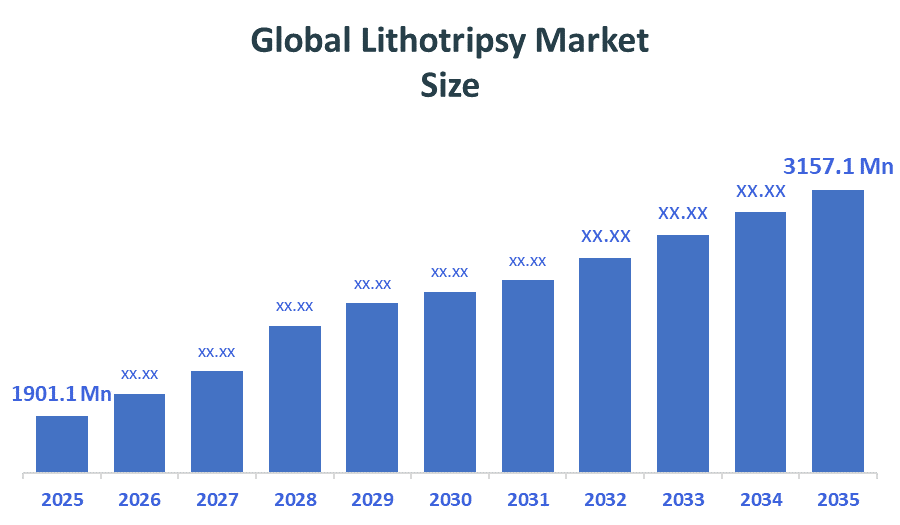
The Global Lithotripsy Market Size is foreseen to grow from USD 1901.1 Million in 2025 and is govern to reach around USD 3157.1 Million by 2035. According to Decision Advisors, a detailed research report on the global lithotripsy market is boosted by technological innovations in Laser and Imaging, accounting for nearly upto the 20% to 30% share of the total share worldwide. Boston Scientific Corporation is the prime player in the market with approximately USD 2 billion – 3 billion in annual turnover and a 20-30% market share, positioning it as the primary driver of the global lithotripsy market.
Market Snapshot
- Global Lithotripsy Market Size (2025): USD 1901.1 Million
- Projected Global Lithotripsy Market Size (2035): USD 3157.1 Million
- Global Lithotripsy Market Compound Annual Growth Rate (CAGR): 5.2%
- Fastest Regional Market: Asia Pacific
- Largest Growing Region: North America
- 2nd Largest Region: Europe
- Base Year: 2025
- Historical Period: 2021–2024
- Forecast Period: 2026–2035
Market Overview/ Introduction
The Global Lithotripsy Market is all about a simple but powerful medical goal, breaking down painful stones in the body, whether in the kidneys or arteries, without the need for invasive surgery. This growth is really being driven by a human need for quicker, less painful recoveries, as more patients globally are dealing with kidney and vascular stones due to lifestyle and ageing. The big players like Boston Scientific and Johnson & Johnson are currently in an arms race to make these procedures even gentler. Instead of just focusing on the kidneys, they are moving into the heart. To use those same stone-shattering sound waves to clear out clogged arteries. It's a huge shift that turns a standard urology tool into a life-saving cardiac device. The real win for patients in the coming years will be convenience. We are moving away from giant, clunky machines toward portable, handheld devices that can be used in local clinics or outpatient centres. With the help of AI to help doctors aim more accurately and new cool lasers that work faster with less heat, the future of lithotripsy is making a once-terrifying diagnosis feel like a routine, in-and-out afternoon appointment.
- Boston Scientific recently spent over $660 million to acquire a company called Bolt Medical. the developer of an intravascular lithotripsy (IVL) advanced laser-based platform for the treatment of coronary and peripheral artery disease.
- Johnson & Johnson entered into a strategic partnership by acquiring Shockwave Medical for approximately $13.1 billion, significantly strengthening its position in intravascular lithotripsy (IVL) technology
Notable Insights: -
- North America is anticipated to hold approximately 39% share of the Global Lithotripsy Market over the predicted timeframe.
- Asia Pacific is the fastest-growing region in the Global Lithotripsy Market during the forecast period, holding approximately 29% share.
- By product type, the Extracorporeal Shock Wave Lithotripsy (ESWL) segment dominated the market and holds approximately 57% share in 2025, and is projected to grow at a substantial CAGR during the forecast period.
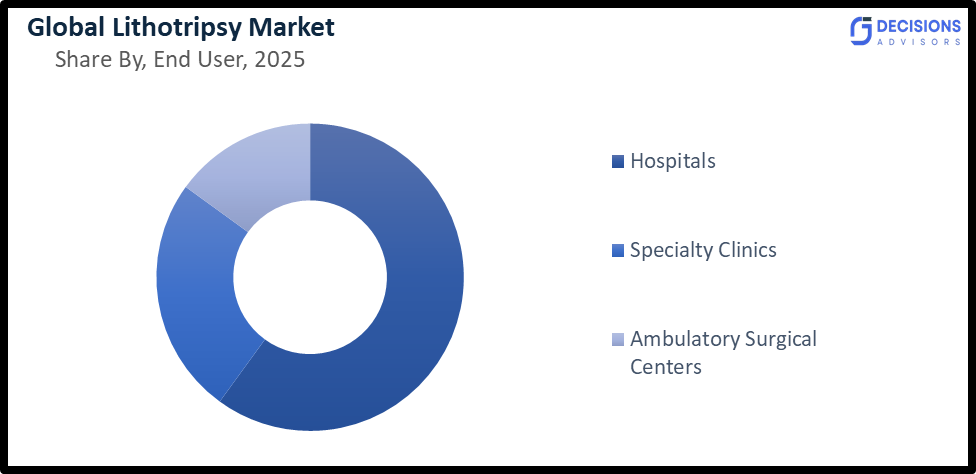
- By end user, the hospitals segment dominated the market and holds approximately 49% share in 2025 and is projected to grow at a substantial CAGR during the forecast period.
- The compound annual growth rate of the global lithotripsy market is 5.2%.
- The market is likely to achieve a valuation of USD 3157.1 Million by 2035.
What is the role of technology in grooming the market?
Technology plays a critical role in advancing lithotripsy procedures by improving precision, safety, and patient outcomes. Innovations such as holmium laser lithotripsy, digital imaging guidance, and robotic-assisted systems have enhanced stone fragmentation efficiency. Advanced imaging techniques (like fluoroscopy and ultrasound guidance) allow precise targeting of stones, minimising damage to surrounding tissues. Additionally, portable lithotripsy devices and AI-integrated diagnostics are improving accessibility and treatment planning
Market Drivers
Several key factors are bringing the lithotripsy market to life, but it really starts with a simple reality. Between ageing populations and changing global diets, kidney and gallstones are becoming much more common. This has created a massive, urgent demand for relief, but patients today aren't looking for traditional surgery. There is a powerful human preference for non-invasive care. The idea that you can get a problem fixed with sound waves or lasers and be back home on your couch the same evening is a huge selling point. At the same time, the technology itself is having a smartphone moment. We are moving away from bulky, older systems toward ultra-precise lasers and AI-guided tools that can dust a stone in minutes with incredible accuracy. This isn't just happening in urology, either, the market is getting a massive boost from heart health innovations. Doctors are now using these same gentle sound waves to clear out hardened calcium in heart arteries, essentially saving lives by applying kidney stone tech to the cardiovascular world. Because these devices are becoming smaller and more portable, they are moving out of giant hospitals and into local neighbourhood clinics, making a once-scary procedure feel as routine and accessible as a standard check-up.
Restrain
The lithotripsy market faces several challenges, including the high cost of advanced lithotripsy devices and procedures, which can limit adoption in low- and middle-income regions. Additionally, limited access to skilled professionals and advanced healthcare infrastructure restricts market growth in developing countries.
Competitive Analysis:
The report offers the appropriate analysis of the key organizations/companies involved within the global lithotripsy market, along with a comparative evaluation primarily based on their product of offering, business overviews, geographic presence, enterprise strategies, segment market share, and SWOT analysis. The report also provides an elaborative analysis focusing on the current news and developments of the companies, which includes product development, innovations, joint ventures, partnerships, mergers & acquisitions, strategic alliances, and others. This allows for the evaluation of the overall competition within the market.
Top Companies in the Global Lithotripsy Market
- Boston Scientific
- Dornier MedTech
- Olympus Corporation
- Siemens Healthineers
- EDAP TMS
- Karl Storz
- Cook Medical
- Storz Medical
- DirexGroup
- Lumenis
Government Initiatives
|
Country |
Key Government Initiatives |
|
India |
Government hospitals are upgrading their urology departments with high-end ESWL machines costing over ?4 crore, such as at the Government Medical College and Hospital (GMCH) in Nagpur. |
|
Europe |
The Japanese government is investing heavily in healthcare, including a budget increase of ¥1 trillion (approximately $9 billion) aimed at improving medical technology access. |
|
US |
Calyxo raised $40 million in a Series F funding round (as of April 15, 2026) to generate further clinical and economic evidence for its CVAC system, which focuses on kidney stone removal |
Study on the Supply, Demand, Distribution, and Market Environment of the Global Lithotripsy Market
The global lithotripsy market is supported by a structured supply chain of medical device manufacturers and distributors supplying hospitals, specialty clinics, and ambulatory surgical centers. Demand is driven by the rising prevalence of kidney and urinary stones and increasing preference for minimally invasive treatments. Distribution is primarily hospital-centric, with growing adoption in outpatient and specialty settings. The overall market environment remains favorable due to technological advancements, increasing healthcare spending, and improved awareness, although cost constraints and limited access in developing regions continue to impact growth.
Price Analysis and Consumer Behaviour Analysis
Lithotripsy procedures are relatively high-cost due to the use of advanced technologies such as shock wave and laser systems, along with associated hospital and specialist fees. However, patients increasingly prefer lithotripsy over traditional surgery because it offers minimal invasiveness, quicker recovery, and reduced hospitalization time. From a consumer behaviour perspective, rising awareness, improved insurance coverage, and a growing preference for safe and efficient outpatient treatments are encouraging patients to opt for lithotripsy despite the higher initial cost.
Market Segmentation
The Global Lithotripsy Market is classified into product type, application and end user.
- The Extracorporeal Shock Wave Lithotripsy (ESWL) segment dominated the market and holds approximately 57% share in 2025, and is projected to grow at a substantial CAGR during the forecast period.
Based on the product type, the global lithotripsy market is divided into Extracorporeal Shock Wave Lithotripsy (ESWL) and Intracorporeal Lithotripsy. Among these, the ESWL segment dominated the market and holds approximately 57% share in 2025, and is projected to grow at a substantial CAGR during the forecast period. This dominance is attributed to its non-invasive nature, widespread availability, and strong clinical adoption for treating kidney and ureteral stones. The procedure is widely preferred due to minimal patient discomfort, reduced hospital stay, and lower complication rates compared to surgical alternatives. Additionally, continuous technological advancements in shockwave delivery systems and increasing patient preference for non-invasive treatments are further driving segment growth.
- The kidney stones segment accounted for the largest share of approximately 65% in 2025 and is anticipated to grow at a significant CAGR during the forecast period.
Based on the application, the global lithotripsy market is divided into kidney stones, ureteral stones, pancreatic stones, and bile duct stones. Among these, the kidney stones segment accounted for the largest share of approximately 65% in 2025 and is anticipated to grow at a significant CAGR during the forecast period. This is primarily due to the high global prevalence of kidney stone disease driven by lifestyle changes, dietary habits, and dehydration. Lithotripsy is increasingly used in kidney stone treatment due to its effectiveness in breaking stones with minimal invasion. Furthermore, rising awareness regarding early diagnosis and advancements in imaging technologies are significantly contributing to the growth of this segment.
- The hospitals segment dominated the market and holds approximately 49% share in 2025 and is projected to grow at a substantial CAGR during the forecast period.
Based on end user, the global lithotripsy market is divided into hospitals, specialty clinics, and ambulatory surgical centers. Among these, the hospitals segment dominated the market and holds approximately 49% share in 2025 and is projected to grow at a substantial CAGR during the forecast period, owing to the availability of advanced lithotripsy equipment and skilled healthcare professionals. Hospitals serve as primary centres for diagnosis, treatment, and post-procedure care of stone-related conditions. The increasing number of lithotripsy procedures, rising patient inflow, and expansion of urology departments are further supporting segment growth. Additionally, growing healthcare expenditure and improved access to advanced treatment options are strengthening the dominance of this segment.
Strategies to Implement for Growth of the Market in Non-Leading Regions
Growth in non-leading regions of the lithotripsy market can be achieved by improving healthcare infrastructure and increasing awareness about minimally invasive stone treatment options. Companies should focus on training healthcare professionals in advanced lithotripsy techniques and expanding access through partnerships with local hospitals and clinics. Additionally, introducing cost-effective devices, strengthening reimbursement policies, and leveraging government healthcare programs can enhance adoption. Expanding distribution networks and targeting rural and underserved areas will further support market penetration.
Regional Segment Analysis of the Global Lithotripsy Market
- North America (U.S., Canada, Mexico)
- Europe (Germany, France, U.K., Italy, Spain, Rest of Europe)
- Asia-Pacific (China, Japan, India, Rest of APAC)
- South America (Brazil and the Rest of South America)
- The Middle East and Africa (UAE, South Africa, Rest of MEA)
North America is anticipated to hold approximately 39% share of the Global Lithotripsy Market over the predicted timeframe.
North America is anticipated to hold approximately 39% share of the Global Lithotripsy Market over the predicted timeframe. It maintains a dominant market position due to the presence of advanced healthcare infrastructure, high adoption of minimally invasive urology procedures, and strong reimbursement frameworks. The United States is the key contributor, supported by a high prevalence of kidney stone cases and increasing preference for non-invasive treatments such as shock wave and laser lithotripsy. Continuous technological advancements, strong presence of key market players, and increasing number of urology procedures are further strengthening the region’s leadership. Moreover, high patient awareness and willingness to opt for advanced treatment options are driving sustained market growth.
Asia Pacific is the fastest-growing region in the Global Lithotripsy Market during the forecast period, holding approximately 29% share.
Asia Pacific is the fastest-growing region in the Global Lithotripsy Market during the forecast period, holding approximately 29% share. This growth is driven by the rising prevalence of kidney stones, increasing awareness about urological health, and improving healthcare infrastructure in countries such as China, India, and Japan. The region is witnessing a growing shift toward minimally invasive lithotripsy procedures, supported by rising disposable incomes and expanding access to advanced medical technologies. Additionally, increasing investments in hospitals and government healthcare initiatives are accelerating market growth. The presence of a large patient pool and expansion of global medical device companies are further enhancing market accessibility in the region.
Europe is expected to hold approximately 21% share and is the second-largest region in the Global Lithotripsy Market during the forecast period.
Europe is expected to hold approximately 21% share and is the second-largest region in the Global Lithotripsy Market during the forecast period. The region’s growth is supported by well-established healthcare systems, an increasing ageing population, and rising demand for advanced stone treatment procedures. Countries such as Germany, the United Kingdom, and France are leading the market due to strong adoption of minimally invasive lithotripsy technologies and the availability of skilled urologists. Additionally, increasing investments in medical technology and favourable healthcare policies are contributing to innovation and adoption. The growing focus on early diagnosis and preventive healthcare is further supporting market expansion across the region.
Future Market Trends in the Global Lithotripsy Market: -
1. Rising Adoption of Laser Lithotripsy
There is a growing shift toward laser-based lithotripsy, particularly holmium laser technology, due to its high precision, effectiveness in fragmenting stones of all sizes, and reduced risk of complications. This trend is significantly improving treatment outcomes and driving adoption across healthcare facilities.
2. Increasing Preference for Minimally Invasive and Outpatient Procedures
Patients and healthcare providers are increasingly opting for minimally invasive lithotripsy procedures that offer faster recovery, shorter hospital stays, and lower overall treatment risks. This is accelerating the shift toward ambulatory surgical centres and outpatient care settings.
3. Technological Advancements in Imaging and Device Integration
Continuous innovations in imaging technologies such as ultrasound and fluoroscopy, along with the integration of AI and smart navigation systems, are enhancing the accuracy and efficiency of lithotripsy procedures. These advancements are improving patient safety and expanding the scope of treatment.
Recent Development
- In January 2026, SonoMotion announced that it had received U.S. FDA 510(k) clearance for its Break Wave lithotripsy device for the treatment of kidney stones. The device uses low-pressure focused ultrasound to non-invasively fragment stones without the need for anesthesia, marking a significant advancement in minimally invasive kidney stone treatment.
- In May 2025, Avvio Medical announced that the first patients were successfully treated using its investigational Enhanced Lithotripsy System (ELS), marking the official launch of its FDA-approved clinical trial. The novel system utilizes microbubble-enhanced acoustic cavitation technology to break down kidney stones and is designed to enable minimally invasive treatment in outpatient and office-based settings, eliminating the need for general anesthesia, fluoroscopy, or expensive hospital infrastructure
- In March 2025, Shockwave Medical announced the U.S. launch of its Shockwave Javelin peripheral intravascular lithotripsy (IVL) catheter, designed to treat patients with peripheral artery disease (PAD). The device introduces a forward IVL platform that enables physicians to modify calcium and cross severely narrowed or calcified vessels more effectively.
- In March 2025, Abbott initiated a new clinical trial for its investigational Coronary Intravascular Lithotripsy (IVL) System after receiving U.S. FDA approval for an investigational device exemption (IDE). The study, named the TECTONIC Coronary Artery Disease (CAD) IVL trial, aimed to enroll up to 335 patients across 47 sites in the U.S. to evaluate the device’s effectiveness in treating severe calcified coronary artery blockages prior to stent placement
- In May 2023, a shock wave lithotripsy centre was launched at Government Kilpauk Medical College and Hospital, Chennai, enhancing access to non-invasive kidney stone treatment. The facility introduced extracorporeal shock wave lithotripsy (ESWL) technology, enabling stone removal through a daycare procedure with minimal blood loss and reduced hospital stay.
How is Recent Developments Helping the Market?
Recent developments are significantly supporting the growth of the lithotripsy market by improving treatment precision, efficiency, and patient outcomes. Advancements in laser technologies, enhanced imaging systems, and portable lithotripsy devices have made procedures safer and more accessible. These innovations reduce recovery time and complications, increasing patient preference for minimally invasive treatments. Additionally, ongoing product launches, clinical research, and strategic collaborations are boosting adoption and expanding the availability of advanced lithotripsy solutions across healthcare settings.
Market Segment
This study forecasts revenue at global, regional, and country levels from 2020 to 2035. Decision Advisors has segmented the global lithotripsy market based on the below-mentioned segments:
Global Lithotripsy Market, By Product Type
- Extracorporeal Shock Wave Lithotripsy (ESWL)
- Intracorporeal Lithotripsy
Global Lithotripsy Market, By Applications
- Kidney Stones
- Ureteral Stones
- Pancreatic Stones
- Bile Duct Stones
Global Lithotripsy Market, By End User
- Hospitals
- Specialty Clinics
- Ambulatory Surgical Centers
Global Lithotripsy Market, By Regional Analysis
- North America
- US
- Canada
- Mexico
- Europe
- Germany
- UK
- France
- Italy
- Spain
- Russia
- Rest of Europe
- Asia Pacific
- China
- Japan
- India
- South Korea
- Australia
- Rest of Asia Pacific
- South America
- Brazil
- Argentina
- Rest of South America
- Middle East & Africa
- UAE
- Saudi Arabia
- Qatar
- South Africa
- Rest of the Middle East & Africa
Frequently Asked Questions (FAQ)
Q1. What are the key factors influencing the choice between ESWL and laser lithotripsy?
A. Factors such as stone size, density, location, patient anatomy, and physician expertise influence the choice of treatment method.
Q2. How does stone composition affect the success rate of lithotripsy?
A. Harder stones like cystine or calcium oxalate monohydrate are more resistant to fragmentation, which may reduce lithotripsy effectiveness.
Q3. What role does insurance coverage play in lithotripsy adoption?
A. Favourable reimbursement policies and insurance coverage significantly increase patient access and adoption of lithotripsy procedures.
Q4. Are there any emerging alternatives to traditional lithotripsy techniques?
A. Yes, newer approaches such as ultrasonic propulsion and micro-robotic stone removal technologies are being explored as alternatives.
Q5. How does hospital infrastructure impact lithotripsy procedure outcomes?
A. Availability of advanced imaging systems, skilled urologists, and modern equipment in hospitals directly improves treatment success rates and patient safety.
Check Licence
Choose the plan that fits you best: Single User, Multi-User, or Enterprise solutions tailored for your needs.
We Have You Covered
- 24/7 Analyst Support
- Clients Across the Globe
- Tailored Insights
- Technology Tracking
- Competitive Intelligence
- Custom Research
- Syndicated Market Studies
- Market Overview
- Market Segmentation
- Growth Drivers
- Market Opportunities
- Regulatory Insights
- Innovation & Sustainability
Report Details
| Scope | Global |
| Pages | 240 |
| Delivery | PDF & Excel via Email |
| Language | English |
| Release | Apr 2026 |
| Access | Download from this page |