
Global Liver Fibrosis Market
 |
Pages:
240
|
Pages:
240
Global Liver Fibrosis Market Size, Share, and COVID-19 Impact Analysis, By Condition (Chronic Liver Diseases, Hepatitis C, and Nonalcoholic Steatohepatitis), By Treatment (Peroxisome Proliferator-activated Receptors (PPAR)-alpha agonist, ACE Inhibitors, Hepatotropic Drug, and Others), and By Region (North America, Europe, Asia-Pacific, Latin America, Middle East, and Africa), Analysis and Forecast 2025-2035
REPORT COVERAGE
Global
Global Liver Fibrosis Market Size Insights Forecasts to 2035
- The Global Liver Fibrosis Market Size Was Estimated at USD 2.61 Billion in 2024
- The Market Size is Expected to Grow at a CAGR of around 7.31 % from 2025 to 2035
- The Worldwide Liver Fibrosis Market Size is Expected to Reach USD 5.67 Billion by 2035
- North America is expected to grow the fastest during the forecast period.
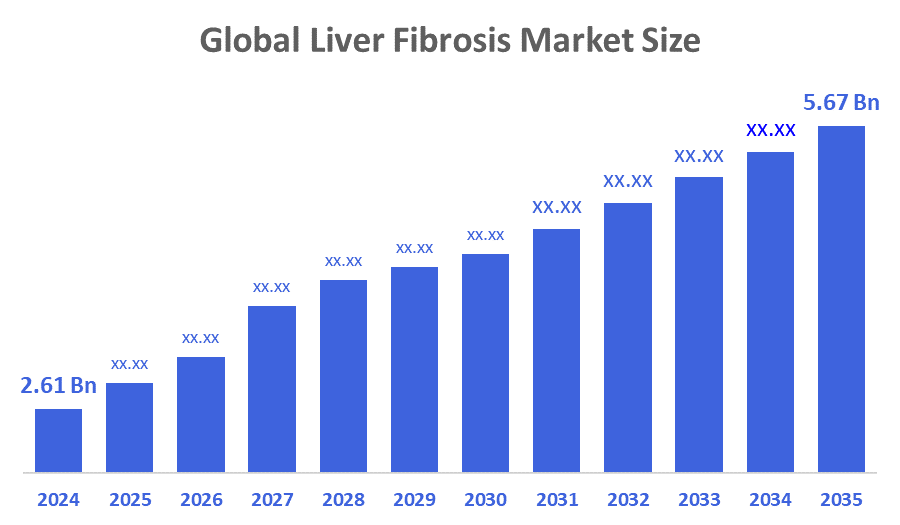
According to a research report published by Decisions Advisors and Consulting, The Global Liver Fibrosis Market Size Was Worth Around USD 2.61 Billion In 2024 And Is Predicted To Grow To Around USD 5.67 Billion By 2035 With A Compound Annual Growth Rate (CAGR) Of 7.31 % From 2025 To 2035. The global ageing population is another important factor. Age-related illnesses, such as liver ailments, are becoming more common as life expectancy rises. Further, this is due to long-term exposure to risk factors like alcohol, drugs, and metabolic syndrome; the older patient pool is more likely to develop chronic liver disease, which expands the market for medications that treat liver disease.
Market Overview
Liver fibrosis can be defined as a type of fibrosis or scarring that occurs in the liver as a result of damage or injury. This leads to a situation wherein the liver becomes stiff and is therefore not able to function properly. People affected by this particular disorder may experience a reduced appetite, difficulty thinking clearly, accumulation of fluid in the legs or stomach, shortness of breath, nausea, unexplained weight loss, etc. Later on, this disorder leads to manifestations such as the appearance of a yellowish hue on the skin and eyes, confusion, abdominal enlargement, reduced levels of hormones, bruises on the skin, dark urine, gastrointestinal bleeding, etc. This disorder can be diagnosed by considering a combination of the medical history of the patient, underlying indications, and blood tests. The healthcare professional may also conduct a series of diagnostic tests, such as ultrasonography, computed tomography, magnetic resonance imaging, etc., on the patient to detect changes in the hepatic parenchyma, which are associated with a moderate or severe form of this disorder.
About 2 million people die each year from chronic liver illnesses, which include cirrhosis and fibrosis, accounting for about 4% of all fatalities worldwide. Significant liver fibrosis affects around 7.3% of the global population, according to a comprehensive meta-analysis. The frequency of advanced liver fibrosis is around 3.3% worldwide. The frequency of cirrhosis is approximately 1.2–1.3% worldwide.
Singapore-based HistoIndex secured a $9 million (SGD) investment to expand its AI-powered liver disease diagnostics, focusing on fibrosis assessment in metabolic dysfunction-associated steatohepatitis (MASH). The funding, led by OCBC Bank with support from ZIG Ventures and SEEDS Capital, will accelerate U.S. market entry and development of next-generation digital pathology tools.
Report Coverage
This research report categorizes the liver fibrosis market based on various segments and regions, forecasts revenue growth, and analyzes trends in each submarket. The report analyses the key growth drivers, opportunities, and challenges influencing the liver fibrosis market. Recent market developments and competitive strategies, such as expansion, product launch, development, partnership, merger, and acquisition, have been included to draw the competitive landscape in the market. The report strategically identifies and profiles the key market players and analyzes their core competencies in each sub-segment of the liver fibrosis market.
Driving Factors
The rise in the incidence of injury and inflammation in the liver, resulting in an excessive amount of proteins like collagen and glycoproteins between the hepatic cells, is mainly responsible for propelling the liver fibrosis market forward. Apart from this, the rise in various associated risk factors for liver fibrosis, such as excessive consumption of alcoholic beverages, obesity, autoimmune hepatitis, damage to bile ducts, etc., is also contributing to the growth of the market. Additionally, the increased use of antifibrotic medications like belapectin, cenicriviroc, liraglutide, etc., to assist in reducing the chances of permanent scarring in the liver is acting as another important growth-inducing factor for the market. Moreover, the increased use of advanced plasma protein profiling techniques, which can assist in identifying various potential markers for liver fibrosis and understanding the mechanisms of the illness that can assist in personalisation of treatments for the disease, is also creating a favourable market outlook for the market. Additionally, the increased demand for cell therapy for the treatment of the illness.
Restraining Factors
The market is restrained by the lack of healthcare infrastructure and qualified personnel in developing economies. Furthermore, market expansion is hampered by the high cost of handling and implementing strict government rules. Additionally, low patient screening rates and treatment ignorance will impede market expansion.
Market Segmentation
The liver fibrosis market share is classified into condition and treatment.
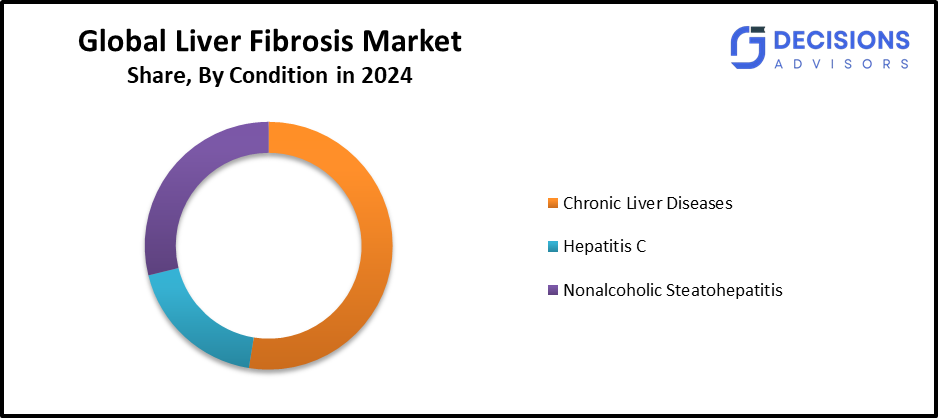
- The hepatitis C segment accounted for the largest market share in 2024 and is anticipated to grow at a substantial CAGR over the forecast period.
Based on the condition, the liver fibrosis market is segmented into chronic liver diseases, hepatitis C, and nonalcoholic steatohepatitis. Among these, the hepatitis C segment accounted for the largest market share in 2024 and is anticipated to grow at a substantial CAGR over the forecast period. Hepatitis C is a viral illness that primarily affects the liver and can cause both acute and chronic liver disease. The sharing of needles, syringes, and other sharp objects, getting an improper blood transfusion, or undergoing other risky medical procedures involving unscreened blood products are additional ways of transmission.
- The hepatotropic drug segment accounted for the largest share in 2024 and is anticipated to grow at a significant CAGR during the forecast period.
Based on the treatment, the liver fibrosis market is differentiated into peroxisome proliferator-activated receptors (PPAR)-alpha agonist, ace inhibitors, hepatotropic drugs, and others. Among these, the hepatotropic drug segment accounted for the largest share in 2024 and is anticipated to grow at a significant CAGR during the forecast period. This increase is explained by people's growing knowledge of new medications. Additionally, hepatitis is a disease that first affects the liver and eventually spreads to the brain and digestive system. HCV, HBV, and HAV are the three main forms of hepatitis. HCV is a serious public health issue where infection causes inflammation of the liver.
For instance, A new drug candidate has shown the ability to reverse metabolic liver disease and fibrosis in pre-clinical studies, offering hope for patients with conditions such as MASLD/MASH.
Regional Segment Analysis of the Liver Fibrosis Market
- North America (U.S., Canada, Mexico)
- Europe (Germany, France, U.K., Italy, Spain, Rest of Europe)
- Asia-Pacific (China, Japan, India, Rest of APAC)
- South America (Brazil and the Rest of South America)
- The Middle East and Africa (UAE, South Africa, Rest of MEA)
Asia Pacific is anticipated to hold the largest share of the Liver Fibrosis market over the predicted timeframe.
Asia Pacific is anticipated to hold the largest share of the Liver Fibrosis market over the predicted timeframe. This is due to its huge population and increasing rates of hepatitis B, hepatitis C, NAFLD, and alcoholic liver disease; the Asia Pacific liver disease therapeutics market is growing quickly. High rates of viral hepatitis are prevalent in nations like China, India, and Southeast Asia because of poor immunisation rates, poor sanitation, and vertical transmission.
In 2022, 35.3 million cases of hepatitis occurred in India alone, accounting for 11% of the world's total. With around 75 million hepatitis B patients, nearly one-third of the world's HBV population, China's market is expanding rapidly. China is a major growth driver in the region thanks to government-led screening, immunisation, and awareness campaigns that are enhancing early diagnosis and increasing demand for antivirals and liver fibrosis treatments.
North America is expected to grow at a rapid CAGR in the Liver Fibrosis market during the forecast period. The high and rising prevalence of liver diseases, such as hepatitis C, non-alcoholic fatty liver disease (NAFLD), and non-alcoholic steatohepatitis (NASH), which are mostly caused by lifestyle factors like obesity, diabetes, and alcohol consumption, makes the United States dominate the global market.
The CDC reports that 38% of Americans currently have NAFLD, a 50% increase over the previous 30 years. Strong market demand is supported by this sizable patient base, early screening initiatives, raised awareness, and easy access to cutting-edge medical services. Medicare and Medicaid are examples of public and private insurance programs that increase access to expensive antiviral and specialised treatments. The United States continues to lead the liver disease therapies market with the help of top research institutes, specialist liver clinics, and national awareness campaigns.
Competitive Analysis:
The report offers the appropriate analysis of the key organizations/companies involved within the liver fibrosis market, along with a comparative evaluation primarily based on their product offering, business overviews, geographic presence, enterprise strategies, segment market share, and SWOT analysis. The report also provides an elaborative analysis focusing on the current news and developments of the companies, which includes product development, innovations, joint ventures, partnerships, mergers & acquisitions, strategic alliances, and others. This allows for the evaluation of the overall competition within the market.
List of Key Companies
- Amgen
- AbbVie
- Bristol-Myers Squibb
- Bayer
- GSK plc
- Gilead Sciences
- Hoffmann-La Roche
- Intercept Pharmaceuticals
- Johnson & Johnson Services
- Merck & Co.
- Novartis
- Pfizer
- Sanofi
- Takeda Pharmaceutical Company Limited
- Others
Key Target Audience
- Market Players
- Investors
- End-users
- Government Authorities
- Consulting and Research Firm
- Venture capitalists
- Value-Added Resellers (VARs)
Recent Development
- In March 2026, Japanese researchers at the University of Osaka identified a new molecular pathway linking chronic liver congestion to fibrosis, portal hypertension, and liver tumour formation. This breakthrough explains how long-term blood stasis in the liver drives disease progression and offers a potential new therapeutic target.
- In May 2025, Roche launched the Elecsys PRO-C3 test, a rapid blood-based diagnostic designed to improve precision in evaluating liver fibrosis severity, particularly in patients with metabolic dysfunction–associated steatotic liver disease (MASLD). The test delivers results in just 18 minutes on Roche’s cobas analysers, enabling earlier identification and management of significant fibrosis.
Market Segment
This study forecasts revenue at global, regional, and country levels from 2020 to 2035. Decisions Advisors has segmented the liver fibrosis market based on the below-mentioned segments:
Global Liver Fibrosis Market, By Condition
- Chronic Liver Diseases
- Hepatitis C
- Nonalcoholic Steatohepatitis
Global Liver Fibrosis Market, By Treatment
- Peroxisome Proliferator-activated Receptors (PPAR)
- Alpha Agonist
- ACE Inhibitors
- Hepatotropic Drug
- Others
Global Liver Fibrosis Market, By Regional Analysis
- North America
- US
- Canada
- Mexico
- Europe
- Germany
- UK
- France
- Italy
- Spain
- Russia
- Rest of Europe
- Asia Pacific
- China
- Japan
- India
- South Korea
- Australia
- Rest of Asia Pacific
- South America
- Brazil
- Argentina
- Rest of South America
- Middle East & Africa
- UAE
- Saudi Arabia
- Qatar
- South Africa
- Rest of the Middle East & Africa
Frequently Asked Questions (FAQ)
1. What are the major diagnostic methods used to detect liver fibrosis?
Liver fibrosis is commonly diagnosed using a combination of imaging techniques, blood tests, and invasive procedures. Imaging technologies such as ultrasound elastography, CT scans, and MRI help evaluate liver stiffness and structural changes. Blood-based biomarker tests and fibrosis scoring systems are also widely used, while liver biopsy remains the gold standard for confirming the severity of fibrosis.
2. Why is non-alcoholic steatohepatitis (NASH) considered a major risk factor for liver fibrosis?
Non-alcoholic steatohepatitis is an advanced form of fatty liver disease characterised by liver inflammation and fat accumulation. Persistent inflammation damages liver cells and stimulates excessive collagen deposition, leading to fibrotic tissue formation. Over time, untreated NASH can progress to advanced fibrosis, cirrhosis, or liver cancer.
3. How do hepatotropic drugs help in managing liver fibrosis?
Hepatotropic drugs are designed to support liver function and protect hepatocytes from further damage. These drugs help reduce inflammation, improve liver metabolism, and prevent progression of fibrosis by targeting underlying causes such as viral hepatitis or metabolic disorders.
4. What role does lifestyle modification play in the management of liver fibrosis?
Lifestyle changes are considered a critical component in managing liver fibrosis. Reducing alcohol consumption, maintaining a healthy weight, controlling diabetes, and following a balanced diet can significantly slow disease progression and improve liver function.
5. Why is early detection important in the treatment of liver fibrosis?
Early detection enables healthcare providers to initiate treatment before irreversible liver damage occurs. Timely diagnosis allows for effective management through medication, lifestyle changes, and monitoring, reducing the risk of progression to cirrhosis or liver failure.
6. How are emerging technologies improving liver fibrosis diagnosis and monitoring?
Advances in digital pathology, artificial intelligence, and biomarker profiling are transforming liver fibrosis diagnostics. AI-powered imaging systems and non-invasive blood-based biomarker tests allow clinicians to assess fibrosis severity more accurately and monitor treatment response without repeated biopsies.
7. What opportunities exist for pharmaceutical companies in the liver fibrosis market?
Pharmaceutical companies have significant opportunities in developing antifibrotic drugs, targeted therapies for metabolic liver diseases, and innovative diagnostic technologies. Increasing global disease prevalence and rising investment in research and development are encouraging the introduction of new treatment options and precision medicine approaches.
Check Licence
Choose the plan that fits you best: Single User, Multi-User, or Enterprise solutions tailored for your needs.
We Have You Covered
- 24/7 Analyst Support
- Clients Across the Globe
- Tailored Insights
- Technology Tracking
- Competitive Intelligence
- Custom Research
- Syndicated Market Studies
- Market Overview
- Market Segmentation
- Growth Drivers
- Market Opportunities
- Regulatory Insights
- Innovation & Sustainability
Report Details
| Scope | Global |
| Pages | 240 |
| Delivery | PDF & Excel via Email |
| Language | English |
| Release | Mar 2026 |
| Access | Download from this page |