
Global Long QT Syndrome Market
 |
Author:
David J
|
Pages:
240
|
Author:
David J
|
Pages:
240
Global Long QT Syndrome Market Size, Share, By Type (Congenital Long QT Syndrome, Acquired Long QT Syndrome, and Drug-Induced Long QT Syndrome), By Diagnostic Method (Electrocardiogram, Genetic Testing, and Electrophysiological Study), By Treatment Type (Medications, Implantable Cardioverter Defibrillator, and Surgery), By End User (Hospitals, Cardiology Clinics, Research Institutes, and Others), and By Region (North America, Europe, Asia-Pacific, South America, and Middle East & Africa), Analysis and Forecast 2025?2035.
CAGR
5.89%
REVENUE 2025
USD Billion 0.85
FORECAST 2035
USD Billion 1.5
REPORT COVERAGE
Global
The Global Long QT Syndrome Market encompasses diagnostic, therapeutic, and monitoring solutions used for the identification and management of long QT syndrome (LQTS), a cardiac electrical disorder associated with prolonged QT intervals and an increased risk of potentially dangerous arrhythmias. The market includes congenital, acquired, and drug-induced forms of the condition, along with diagnostic methods such as electrocardiography and genetic testing and treatment options including medications and implantable cardioverter defibrillators. Increasing awareness of inherited cardiac disorders, improved genetic testing, advances in cardiac monitoring technologies, and greater access to specialized electrophysiology services are supporting market development.
Market Snapshot
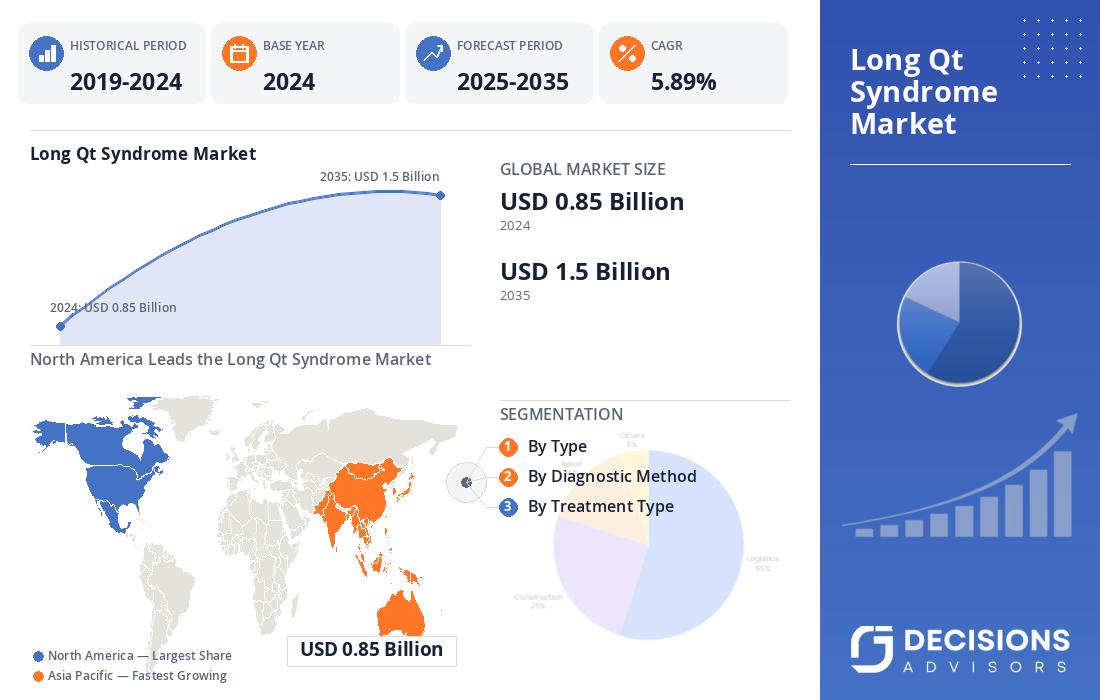
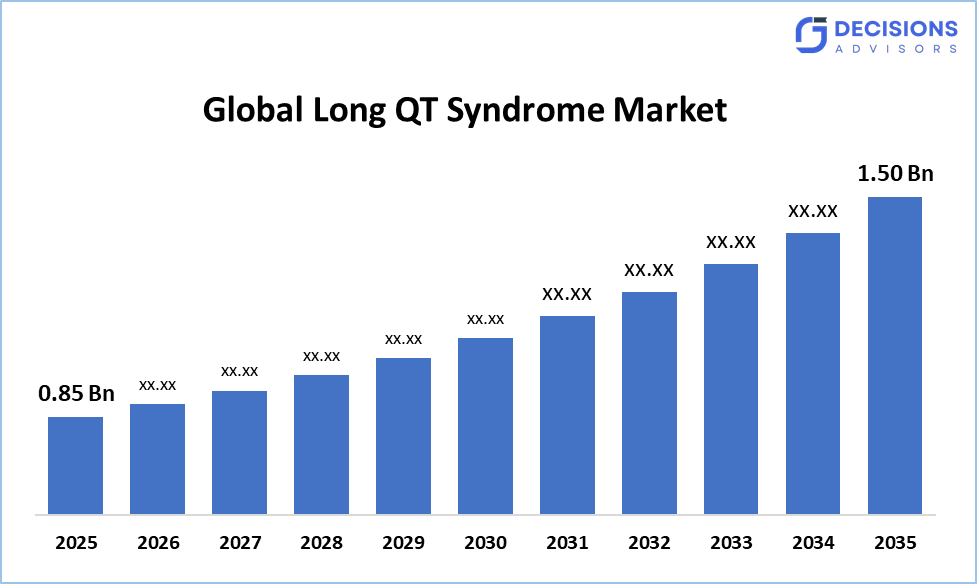
- Global Long QT Syndrome Market Size (2025): USD 0.85 Billion
- Projected Market Size (2035): USD 1.50 Billion
- Global Market CAGR (2025–2035): Approximately 5.89%
- Largest Regional Market: North America
- Fastest Growing Region: Asia-Pacific
- Base Year: 2024
- Historical Period: 2019–2024
- Forecast Period: 2025–2035
Market Overview/ Introduction
The Global Long QT syndrome is a rare cardiac rhythm disorder characterized by an abnormally prolonged QT interval on an electrocardiogram. The condition can increase the risk of torsades de pointes, fainting, seizures, and sudden cardiac arrest. LQTS may be inherited or acquired through certain medications, electrolyte abnormalities, or other medical conditions. The market is supported by improvements in cardiac diagnostics, increasing awareness of inherited arrhythmias, broader availability of genetic testing, development of advanced implantable cardiac devices, and expanding electrophysiology services. The United States represents an important market because of its large patient pool and developed cardiac-care infrastructure.
- The U.S. governments and regulatory authorities across major economies are increasingly emphasizing insurance penetration, consumer protection, financial inclusion, solvency requirements, transparency, and digital security.
- Several Asia-Pacific countries are increasing investments in digital financial infrastructure, insurance technology, financial inclusion programs, and retirement-planning initiatives.
Notable Insights: -
- North America maintains a leading position due to advanced healthcare infrastructure, greater awareness of inherited cardiac disorders, availability of specialized electrophysiology services, and strong adoption of advanced diagnostic and treatment technologies.
- Asia-Pacific is expected to witness strong growth as healthcare investment, cardiovascular awareness, genetic testing capabilities, and access to specialized cardiac services improve.
- Congenital Long QT Syndrome represents the largest type of segment, while acquired LQTS is also gaining importance.
- Electrocardiography remains a fundamental diagnostic method, while genetic testing is becoming increasingly important for identifying inherited forms and supporting family screening.
- Medications represent a major treatment category, particularly beta-blocker therapy, while ICD implantation is important for selected high-risk patients.
- Increasing use of remote cardiac monitoring, wearable ECG technologies, genetic testing, and personalized treatment approaches is expected to create additional market opportunities.
Market Drivers
The Global Long QT Syndrome Market is primarily driven by increasing awareness and recognition of inherited cardiac disorders. Improvements in ECG technology and genetic testing are enabling earlier diagnosis and identification of patients who may otherwise remain undiagnosed. Another important driver is the expansion of specialized electrophysiology services. Healthcare providers are increasingly adopting advanced cardiac monitoring and implantable technologies for patients at elevated risk of life-threatening arrhythmias. Growing investment in precision medicine and genetic diagnostics is also supporting market development because genetic information can help identify disease-associated variants and facilitate screening of relatives.
Restrain
The Global Long QT Syndrome market faces challenges including the rarity of LQTS, limited awareness in some developing regions, high costs associated with genetic testing and implantable cardiac devices, shortage of specialized electrophysiologists, and differences in healthcare reimbursement. The complexity of genetic interpretation can also create challenges in diagnosis. In addition, access to advanced cardiac devices and specialized treatment remains uneven across emerging markets.
Competitive Analysis:
The report offers the appropriate analysis of the key organizations/companies involved within the Global Long QT Syndrome Market, along with a comparative evaluation primarily based on their product offerings, business overviews, geographic presence, enterprise strategies, segment market share, and SWOT analysis. The report also provides an elaborative analysis focusing on the current news and developments of the companies, which includes product development, innovations, joint ventures, partnerships, mergers & acquisitions, strategic alliances, and others. This allows for the evaluation of the overall competition within the market.
Top Companies in the Global Long QT Syndrome Market
- Abbott Laboratories
- Boston Scientific Corporation
- Medtronic plc
- Pfizer Inc.
- AstraZeneca plc
- Bayer AG
- Sanofi
- Bristol Myers Squibb
- GSK plc
- Merck & Co., Inc.
- Invitae Corporation
- GeneDx
- Laboratory Corporation of America Holdings
- Zydus Pharmaceuticals
- Cipla Inc.
- Lupin Pharmaceuticals
- Torrent Pharmaceuticals
- Teva Pharmaceutical Industries Ltd.
- Biotronik SE & Co. KG
- Thryv Therapeutics
Government Initiatives
|
Country |
Key Government Initiatives |
|
Us |
Government-supported cardiovascular research, genetic testing, and rare-arrhythmia programs are improving the diagnosis and management of Long QT Syndrome. |
|
Germany |
Government and healthcare initiatives focused on rare diseases, genetic diagnostics, and specialized cardiovascular care are supporting improved identification and management of inherited cardiac disorders. |
|
China |
National rare-disease programs, diagnostic networks, patient registries, and cardiovascular research initiatives are strengthening diagnosis, treatment, and research for rare inherited cardiac conditions. |
Market Segmentation
The Global Long QT Syndrome Market is classified into type, diagnostic method, treatment type, end user, and region.
The Congenital Long QT Syndrome Segment Accounts for a Significant Share
Based on type, Congenital Long QT Syndrome represents the largest segment, supported by growing awareness of inherited cardiac conditions and increasing availability of genetic testing. Acquired and drug-induced LQTS are also important because various medications and underlying medical conditions can contribute to QT prolongation.
- The Electrocardiography Represents a Major Diagnostic Method
Based on diagnostic method, Electrocardiography remains a fundamental diagnostic tool because it is non-invasive, widely available, and essential for identifying QT-interval abnormalities. Genetic testing is gaining importance because it can help confirm inherited forms of LQTS and support cascade screening among family members.
- The Medications Represent a Major Treatment Segment
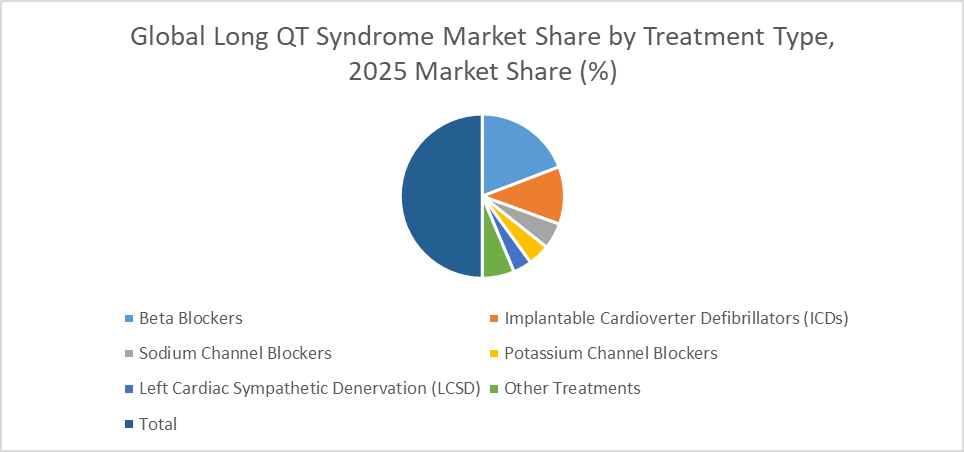
Based on treatment type, Medication-based treatment, particularly beta-blocker therapy, represents an important component of LQTS management. ICDs are used for selected patients who have a high risk of life-threatening arrhythmias. Other interventions may be considered for patients who do not adequately respond to conventional therapy.
Regional Segment Analysis of the Global Long QT Syndrome Market
- North America (U.S., Canada, Mexico)
- Europe (Germany, U.K., France, Italy, Spain, Netherlands, Rest of Europe)
- Asia-Pacific (China, Japan, India, Australia, South Korea, Rest of Asia-Pacific)
- South America (Brazil, Argentina, Rest of South America)
- Middle East & Africa (UAE, Saudi Arabia, South Africa, Rest of MEA)
North America Maintains a Leading Share
North America maintains a leading position because of advanced cardiac-care infrastructure, high awareness of inherited arrhythmias, availability of genetic testing, established electrophysiology services, and adoption of implantable cardiac devices. The United States also represents the largest patient pool among the seven major markets covered by IMARC.
Europe Holds a Significant Share
Europe represents an important market due to developed healthcare systems, increasing access to genetic diagnostics, established cardiology services, and growing emphasis on rare-disease diagnosis and treatment.
Asia-Pacific Witnesses Strong Growth
Asia-Pacific is expected to experience strong growth due to improving healthcare infrastructure, increasing cardiovascular awareness, rising healthcare expenditure, expanding genetic-testing capabilities, and growing access to specialized cardiac services. Market Research Future identifies Asia-Pacific as an emerging fast-growing region.
Future Market Trends in Global Long QT Syndrome Market: -
- Expansion of Genetic Testing
The Increasing availability of genetic testing is expected to improve identification of inherited LQTS and enable screening of family members.
- Growth of Remote Cardiac Monitoring
Wearable ECG devices and remote monitoring technologies are creating new opportunities for continuous rhythm monitoring and patient management.
- Increasing Adoption of Personalized Treatment
Greater understanding of genetic variants is supporting personalized approaches to LQTS management.
- Advances in Implantable Cardiac Devices
Next-generation ICD and cardiac rhythm-management technologies are expected to improve treatment options for high-risk patients.
Recent Development
- In November 2025, researchers published a review highlighting the growing role of precision medicine and gene-specific therapies for Long QT Syndrome (LQTS), including approaches targeting specific ion-channel defects and emerging gene-therapy strategies.
- In July 2025, a study published in Heart Rhythm evaluated the temporal variability of the electromechanical window in LQTS and drug-induced QT prolongation, supporting further development of advanced electrophysiological measurements for improved arrhythmia-risk assessment.
- In February 2025, the European Society of Cardiology's Cardiovascular Genomics program highlighted the increasing importance of genetic testing and genomic interpretation in LQTS management, particularly the interaction between rare and common genetic variants and acquired factors affecting cardiac repolarization.
Market Segment
This study forecasts revenue at global, regional, and country levels from 2026 to 2035. The Global Long QT Syndrome Market can be segmented based on Syndrome Type, Treatment Type, Diagnosis Method, End User, and Region.
Global Long QT Syndrome Market, By Type
- Congenital Long QT Syndrome
- Acquired Long QT Syndrome
- Drug-Induced Long QT Syndrome
- Others
Global Long QT Syndrome Market, By Diagnostic Method
- Electrocardiogram
- Genetic Testing
- Electrophysiological Study
- Others
Global Long QT Syndrome Market, By Treatment Type
- Medications
- Implantable Cardioverter Defibrillator
- Surgery
Global Long QT Syndrome Market, By Regional Analysis
- North America
- US
- Canada
- Mexico
Europe
- Germany
- UK
- France
- Italy
- Spain
- Russia
- Rest of Europe
- Asia Pacific
- China
- Japan
- India
- South Korea
- Australia
- Rest of Asia Pacific
- South America
- Brazil
- Argentina
- Rest of South America
Middle East & Africa
- UAE
- Saudi Arabia
- Qatar
- South Africa
- Rest of the Middle East & Africa
Frequently Asked Questions (FAQ)
- What is driving the growth of the Global Long QT Syndrome Market?
The market is primarily driven by increasing awareness of inherited cardiac disorders, improvements in ECG diagnostics, expanding genetic testing, advances in cardiac monitoring, and increasing availability of specialized electrophysiology services.
- What is Long QT Syndrome?
Long QT Syndrome is a cardiac electrical disorder characterized by a prolonged QT interval on an ECG, which can increase the risk of dangerous arrhythmias and sudden cardiac events.
- What role does genetic testing play in LQTS?
Genetic testing can help identify inherited forms of LQTS and support screening of family members who may carry disease-associated genetic variants.
- Which region dominates the Long QT Syndrome Market?
North America is currently the leading regional market, while Asia-Pacific is expected to be among the fastest-growing regions.
Check Licence
Choose the plan that fits you best: Single User, Multi-User, or Enterprise solutions tailored for your needs.
We Have You Covered
- 24/7 Analyst Support
- Clients Across the Globe
- Tailored Insights
- Technology Tracking
- Competitive Intelligence
- Custom Research
- Syndicated Market Studies
- Market Overview
- Market Segmentation
- Growth Drivers
- Market Opportunities
- Regulatory Insights
- Innovation & Sustainability
Report Details
| Scope | Global |
| Pages | 240 |
| Delivery | PDF & Excel via Email |
| Language | English |
| Release | Aug 2026 |
| Access | Download from this page |