
Global Medical Aesthetics Market
 |
Author:
David J
|
Pages:
240
|
Author:
David J
|
Pages:
240
Global Medical Aesthetics Market Size, Share, By Type (Aesthetic Laser Devices, Energy Devices, Facial Aesthetic Devices, Aesthetic Implants, Skin Aesthetic Devices), By Application (Skin Resurfacing & Tightening, Body Contouring & Cellulite Reduction, Hair & Tattoo Removal, Breast Augmentation, Facial & Skin Rejuvenation), By End-user (Hospitals, Specialty & Dermatology Clinics), and By Region (North America, Europe, Asia-Pacific, Latin America, Middle East & Africa), Analysis and Forecast 2026-2035
CAGR
13.1%
REVENUE 2025
USD Billion 19.84
FORECAST 2035
USD Billion 67.95
REPORT COVERAGE
Global
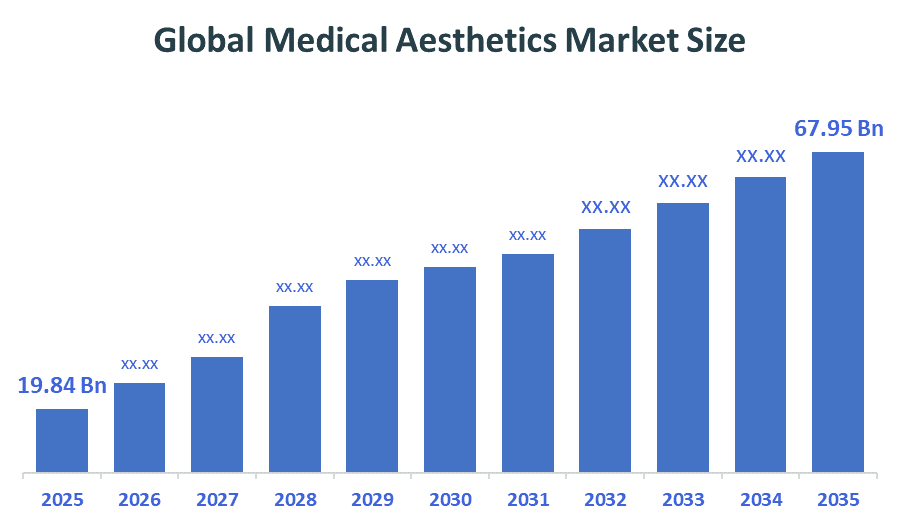
The Global Medical Aesthetics Market Size is forecast to grow from USD 19.84 Billion in 2025 to approximately USD 67.95 Billion by 2035. According to Decision Advisors, a detailed research report on the medical aesthetics market indicates that clear aligners dominate the market, accounting for approximately 54.57% of the total share globally. Align Technology, Inc. the market with an estimated 18-20% global market share. The company reported a 2025 revenue of approximately USD 4 billion, making it one of the most influential forces shaping industry trends and overall market growth.
Market Snapshot
- Global Medical Aesthetics Market Size (2025): USD 19.84 Billion
- Projected Global Medical Aesthetics Market Size (2035): USD 67.95 Billion
- Global Medical Aesthetics Market Compound Annual Growth Rate (CAGR): 13.1%
- Largest Regional Market: North America
- Fastest Growing Region: Asia-Pacific
- 2nd Largest Region: Europe
- Base Year: 2025
- Historical Period: 2021–2024
- Forecast Period: 2026–2035
Market Overview/ Introduction
The Global Medical Aesthetics Market refers to the industry that is associated with cosmetic medical procedures and the devices that are utilized to improve body appearance, such as less invasive to non-invasive procedures like injectables, laser-based technologies, and body contouring products. Medical aesthetics are cosmetic medical procedures that utilize innovative medical technologies to improve body as well as facial appearance and to minimize aging symptoms and enhance the health of the skin. The market is driven by an increasing demand for anti-aging solutions, the greater emphasis on being beauty-conscious, and the impact of social media. Future scope includes AI-based personalization of treatments, regeneration, and the demand for aesthetic applications in the emerging countries. With the technological innovations, rising discretionary income, and rising demand for cosmetic procedures among both genders, it forms a fast-growing healthcare sector.
- The UK government is introducing a national licensing scheme for non-surgical cosmetic procedures such as Botox and dermal fillers. It aims to regulate practitioners, improve patient safety, restrict unqualified providers, and standardize aesthetic treatments under local authority and healthcare oversight, strengthening consumer protection in the rapidly growing aesthetics industry.
- The EU Medical Device Regulation strictly governs aesthetic devices like dermal fillers, lasers, and skin treatment equipment. It enforces CE marking, clinical evaluation, and safety compliance to ensure high-quality standards, reduce risks, and maintain uniform regulation across member states, supporting safe and innovative medical aesthetics growth.
Notable Insights: -
- North America is anticipated to hold the largest share of approximately 44% in the medical aesthetics market over the forecast period.
- Asia Pacific is expected to grow at a rapid CAGR of approximately 13.5% in the medical aesthetics market during the forecast period.
- The energy devices segment dominated the market in 2025, approximately 45%, and is projected to grow at a substantial CAGR during the forecast period.
- The skin resurfacing & tightening segment dominated the market in 2025, approximately 50%, and is projected to grow at a substantial CAGR during the forecast period.
- The specialty & dermatology clinics segment dominated the market in 2025, approximately 55%, and is projected to grow at a substantial CAGR during the forecast period.
- The compound annual growth rate of the Global Medical Aesthetics Market is 13.1%.
- The market is likely to achieve a valuation of USD 67.95 Billion by 2035.
What is role of technology in grooming the market?
Technology plays a crucial role in grooming the Global Medical Aesthetics Market by enhancing treatment precision, safety, and patient satisfaction. Advanced laser systems, radiofrequency devices, and ultrasound-based technologies have made procedures more effective with minimal downtime and reduced risks. Artificial intelligence and machine learning are improving diagnostic accuracy, skin analysis, and personalized treatment planning, allowing practitioners to deliver customized aesthetic solutions. 3D imaging and virtual simulation tools help patients visualize expected outcomes, increasing confidence and adoption rates. Innovations in injectable formulations and biocompatible materials have improved longevity and natural results in treatments like Botox and dermal fillers. Additionally, digital platforms and tele-aesthetics are expanding access to consultations and follow-ups, especially in remote areas. Continuous technological advancements are also reducing procedural costs and improving efficiency in clinics. Overall, technology is driving innovation, expanding accessibility, and significantly accelerating global market growth.
Market Drivers
The Global Medical Aesthetics Market is expanding rapidly due to safety, convenience, and effectiveness of the less invasive procedure, which takes no more time to heal are a few reasons of which dermal fillers, Botulinum toxin, laser-based treatment procedures, etc., are gaining importance. The trend of the less invasive procedures is widely seen to be adopted by people due to increased consciousness among them about aesthetic treatment and its influences from social media, particularly among the young generation. Increased growth of the elderly population in the world, which is highest in developed regions such as the US, UK, Germany, etc., is encouraging demand for skin rejuvenation age-defying treatment. The rapid growth of developing countries in the Asia-Pacific, particularly China, South Korea, and Japan, is increasing the spending on aesthetic treatments, and the increase in participation of males in cosmetic procedures.
Restrain
The Global Medical aesthetics market faces restraints due to the high treatment costs, limited insurance coverage, and strict regulatory approvals for devices and injectables. Additionally, risks of side effects, lack of skilled professionals in emerging regions, and social stigma in some cultures hinder wider adoption, slowing overall market penetration and growth.
Competitive Analysis:
The report offers the appropriate analysis of the key organizations/companies involved within the global medical aesthetics market, along with a comparative evaluation primarily based on their product offerings, business overviews, geographic presence, enterprise strategies, segment market share, and SWOT analysis. The report also provides an elaborative analysis focusing on the current news and developments of the companies, which includes product development, innovations, joint ventures, partnerships, mergers & acquisitions, strategic alliances, and others. This allows for the evaluation of the overall competition within the market.
Top Companies in Global Medical Aesthetics Market
- AbbVie (Allergan Aesthetics)
- Galderma
- Johnson & Johnson
- Merz Aesthetics
- Bausch Health Companies (Solta Medical)
- Cynosure (Lutronic)
- Cutera Inc.
- Lumenis Ltd.
- InMode Ltd.
- Revance Therapeutics
- Alma Lasers
- Ipsen
Government Initiatives
|
Country |
Key Government Initiatives |
|
US |
The FDA continues to modernize its oversight of the aesthetics market, recently setting new schedules for MoCRA (Modernization of Cosmetics Regulation Act) rulemakings to enhance product safety and facility standards. Additionally, the FDA has accelerated approvals for innovative aesthetic therapies, such as next-generation dermal fillers and neuromodulators, to meet the rising demand for minimally invasive treatments. |
|
UK |
Under the Health and Care Act 2022, the government is developing a mandatory licensing scheme for non-surgical cosmetic procedures in England, set for full implementation by July 2026. This initiative aims to ensure only qualified, accredited practitioners perform high-risk treatments like Botox and dermal fillers, effectively criminalizing unregulated practice to protect public health. |
|
India |
The government is boosting the sector through the Production Linked Incentive (PLI) scheme and the National Medical Devices Policy 2023, aimed at reducing import dependency and fostering domestic manufacturing. Furthermore, the CDSCO has reclassified several dermatological and plastic surgery devices to streamline approval processes and ensure rigorous safety compliance across all states. |
Study on the Supply, Demand, Distribution, and Market Environment of the Medical Aesthetics Market
The Global Medical Aesthetics Market is shaped by a strong interaction between supply, demand, distribution, and market environment factors. On the supply side, leading manufacturers continuously introduce advanced injectables, laser systems, and energy-based devices supported by high R&D investment and technological innovation. Demand is rising rapidly due to increasing aesthetic consciousness, aging populations, and growing preference for minimally invasive and non-invasive procedures that offer quick recovery and natural results. Younger consumers are also driving preventive aesthetic treatments. Distribution mainly occurs through hospitals, dermatology clinics, and specialized aesthetic centers, with expanding availability through medical tourism and digital consultation platforms improving access globally. The market environment is highly competitive, influenced by strict regulatory approvals, rapid innovation, and strong social media impact on beauty trends. Favorable healthcare infrastructure, rising disposable income, and increasing acceptance of cosmetic procedures collectively support sustained global market growth and expansion across developed and emerging regions.
Price Analysis and Consumer Behaviour Analysis
Price analysis in the Global Medical Aesthetics Market shows a wide range depending on procedure type, technology, and geography. Non-invasive treatments like Botox and dermal fillers are relatively affordable and often repeated, while advanced laser and body contouring procedures are more expensive due to high equipment and expertise costs. Prices are higher in developed regions due to advanced infrastructure, whereas emerging markets offer cost-sensitive packages to attract consumers. Consumer behaviour is strongly influenced by social media trends, beauty standards, and increasing awareness of anti-aging solutions. Patients now prefer minimally invasive procedures with quick recovery, safety, and natural-looking results. Demand is rising among both younger individuals for preventive aesthetics and older populations for corrective treatments. Additionally, financing options, celebrity influence, and rising disposable income are encouraging more frequent adoption. Overall, consumers are becoming more informed, quality-focused, and willing to invest in personalized aesthetic care.
Market Segmentation
The Medical Aesthetics Market share is classified into type, application, and end-user.
- The energy devices segment dominated the market in 2025, approximately 45%, and is projected to grow at a substantial CAGR during the forecast period.
Based on the type, the medical aesthetics market is divided into aesthetic laser devices, energy devices, facial aesthetic devices, aesthetic implants, and skin aesthetic devices. Among these, the energy devices segment dominated the market in 2025, approximately 45%, and is projected to grow at a substantial CAGR during the forecast period. The growth of the energy devices segment is driven by widespread use of laser, radiofrequency, and ultrasound technologies. Their effectiveness in non-invasive procedures like skin tightening, fat reduction, and hair removal boosts adoption. Continuous innovation, minimal downtime, and expanding cosmetic applications across dermatology and aesthetic clinics further strengthen their leading position globally.
- The skin resurfacing & tightening segment dominated the market in 2025, approximately 50%, and is projected to grow at a substantial CAGR during the forecast period.
Based on the application, the medical aesthetics market is divided into skin resurfacing & tightening, body contouring & cellulite reduction, hair & tattoo removal, breast augmentation, and facial & skin rejuvenation. Among these, the skin resurfacing & tightening segment dominated the market in 2025, approximately 50%, and is projected to grow at a substantial CAGR during the forecast period. The skin resurfacing & tightening segment dominated due to rising demand for anti-aging treatments and improved skin appearance. Increasing awareness of aesthetic procedures, growing aging population, and preference for non-surgical solutions drive growth. Advanced technologies like fillers, botulinum toxin, and laser resurfacing significantly enhance treatment outcomes, making this segment the most widely adopted globally.
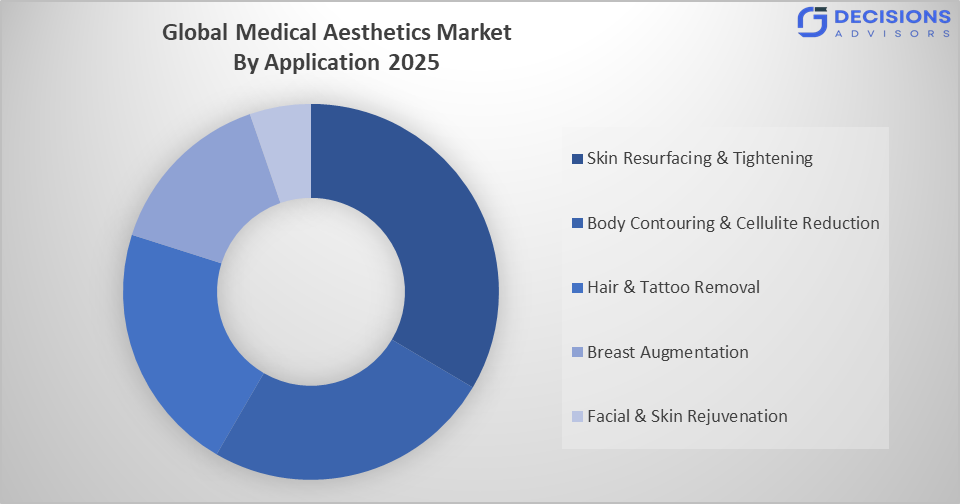
- The specialty & dermatology clinics segment dominated the market in 2025, approximately 55%, and is projected to grow at a substantial CAGR during the forecast period.
Based on the end-user, the medical aesthetics market is divided into hospitals and specialty & dermatology clinics. Among these, the specialty & dermatology clinics segment dominated the market in 2025, approximately 55%, and is projected to grow at a substantial CAGR during the forecast period. The growth of the specialty & dermatology clinics segment is because they are preferred destinations for advanced aesthetic procedures. Patients trust skilled dermatologists and specialized practitioners for safety and precision. Availability of modern aesthetic technologies, the increasing number of clinics, and rising cosmetic treatment demand contribute to dominance. These centers offer comprehensive services, ensuring higher procedural volumes and market leadership globally.
Strategies to Implement for Growth of the Market in Non-Leading Regions
To drive growth in non-leading regions of the Global Medical Aesthetics Market, companies should focus on improving accessibility, affordability, and awareness. Expanding distribution networks and establishing partnerships with local dermatology clinics and hospitals can strengthen market penetration. Offering cost-effective treatment options and flexible financing plans will help address price sensitivity in emerging economies. Educational campaigns and digital marketing should be used to increase awareness about safe, minimally invasive aesthetic procedures and reduce social stigma. Training programs for healthcare professionals are essential to improve skill levels and ensure safe adoption of advanced technologies. Additionally, investing in mobile aesthetic clinics and tele-aesthetic consultations can reach underserved populations. Collaborating with local governments to align with healthcare regulations and promote medical tourism will further enhance growth. These combined strategies can significantly boost adoption rates and support sustainable expansion in developing and underpenetrated regions.
Regional Segment Analysis of the Medical Aesthetics Market
- North America (U.S., Canada, Mexico)
- Europe (Germany, France, U.K., Italy, Spain, Rest of Europe)
- Asia-Pacific (China, Japan, India, Rest of APAC)
- South America (Brazil and the Rest of South America)
- The Middle East and Africa (UAE, South Africa, Rest of MEA)
North America is anticipated to hold the largest share of approximately 44% the medical aesthetics market over the forecast period.
North America is anticipated to hold the largest share of approximately 44% the medical aesthetics market over the forecast period. The dominance of this region driven by strong healthcare infrastructure, high consumer spending on cosmetic procedures, early adoption of advanced injectables and energy-based devices, and the presence of major industry players such as AbbVie and Johnson & Johnson. High awareness and acceptance of minimally invasive procedures further reinforce its leading position.
Asia Pacific is expected to grow at a rapid CAGR of approximately 13.5% in the medical aesthetics market during the forecast period.
Asia Pacific is expected to grow at a rapid CAGR of approximately 13.5% in the medical aesthetics market during the forecast period. This growth is fueled by rising disposable incomes, expanding medical tourism, increasing beauty consciousness, and growing demand for non-invasive aesthetic treatments in countries like China, India, South Korea, and Japan. Rapid urbanization and a young population base further accelerate adoption of aesthetic procedures.
Europe is the 2nd largest region to grow in the medical aesthetics market during the period.
Europe ranks as the second-largest region in the Global Medical Aesthetics Market due to strong demand for minimally invasive cosmetic procedures, high aesthetic awareness, and advanced healthcare systems. Rising aging population, increasing acceptance of beauty treatments, and presence of skilled practitioners and key market players further support steady market expansion.
Future Market Trends in Global Medical Aesthetics Market: -
1. Rising demand for non-invasive procedures
Non-invasive treatments like Botox, dermal fillers, and laser resurfacing are gaining strong popularity due to minimal downtime, lower risk, and faster results. Patients increasingly prefer safer alternatives to surgery, while technological advancements improve outcomes and comfort, driving consistent market expansion globally across all age groups and demographics.
2. Integration of AI and digital aesthetics
AI-powered imaging, skin analysis tools, and virtual treatment simulations are transforming the medical aesthetics market. These technologies enable personalized treatment planning, better accuracy, and improved patient satisfaction. Clinics are adopting digital consultation platforms, enhancing accessibility and decision-making, which significantly boosts procedure adoption rates and operational efficiency.
3. Growing demand from aging population
The rising global aging population is increasing demand for anti-aging treatments such as wrinkle reduction, skin tightening, and facial rejuvenation. Longer life expectancy and higher disposable income among older adults are fueling aesthetic care adoption. This demographic shift is a key long-term growth driver for the market.
Recent Development
- In April 2026, Galderma launched the Alastin Regenerating Skin Nectar with TriHex+ expanding its regenerative skincare portfolio within the global medical aesthetics market. The company introduced this advanced peptide-based formulation to enhance skin recovery, collagen production, and peri-procedural treatment outcomes, strengthening its position in regenerative aesthetic skincare solutions. The product aimed to improve skin preparation and post-procedure healing for cosmetic treatments such as laser therapy and microneedling.
- In March 2026, Allergan Aesthetics, an AbbVie company, expanded its professional aesthetics portfolio by introducing advanced chemical peel formulations designed for acne scars and skin rejuvenation. The new treatments targeted dermatology clinics and aesthetic centers, strengthening its position in minimally invasive skin resurfacing solutions.
- In March 2026, Revance Therapeutics and Teoxane announced the launch of RHA Dynamic Volume, expanding their dermal filler portfolio for cheek augmentation and midface contour restoration. The product was developed to deliver natural-looking volume enhancement with improved structural support and flexibility.
- In September 2025, Dermalogica announced that the FDA had granted 510(k) clearance for its PRO Pen Microneedling System, marking its entry into medical aesthetics. The device was scheduled for U.S. distribution starting in 2026, strengthening minimally invasive skincare innovation in the Global Medical Aesthetics Market.
How is Recent Developments Helping the Market?
Recent developments are significantly accelerating the growth of the Global Medical Aesthetics Market by improving safety, effectiveness, and accessibility of procedures. Continuous innovation in energy-based devices, advanced laser systems, and next-generation injectables such as biostimulators and neuromodulators has enhanced treatment outcomes and reduced downtime, making procedures more appealing to a wider consumer base. Digital technologies, AI-assisted diagnostics, and personalized treatment planning are improving precision and patient satisfaction. Expansion of minimally invasive and non-invasive techniques is also lowering risk perception, encouraging first-time users. Additionally, increased investment by key players in R&D and product launches is expanding treatment options across skin rejuvenation, body contouring, and anti-aging segments. Growing influence of social media trends and tele-aesthetic consultations is further boosting awareness and demand. These advancements collectively support higher adoption rates, market penetration, and sustained global market expansion.
Market Segment
This study forecasts revenue at global, regional, and country levels from 2020 to 2035. Decision Advisors has segmented the Medical aesthetics market based on the below-mentioned segments:
Global Medical Aesthetics Market, By Type
- Aesthetic Laser Devices
- Energy Devices
- Facial Aesthetic Devices
- Aesthetic Implants
- Skin Aesthetic Devices
Global Medical Aesthetics Market, By Application
- Skin Resurfacing & Tightening
- Body Contouring & Cellulite Reduction
- Hair & Tattoo Removal
- Breast Augmentation
- Facial & Skin Rejuvenation
Global Medical Aesthetics Market, By End-User
- Hospitals
- Specialty & Dermatology Clinics
Global Medical Aesthetics Market, By Regional Analysis
- North America
- US
- Canada
- Mexico
- Europe
- Germany
- UK
- France
- Italy
- Spain
- Russia
- Rest of Europe
- Asia Pacific
- China
- Japan
- India
- South Korea
- Australia
- Rest of Asia Pacific
- South America
- Brazil
- Argentina
- Rest of South America
- Middle East & Africa
- UAE
- Saudi Arabia
- Qatar
- South Africa
- Rest of the Middle East & Africa
Frequently Asked Questions (FAQ)
Q. What factors are influencing patient preference in medical aesthetics today?
A. Patient preference is mainly influenced by safety, minimal downtime, natural-looking results, and affordability. Increasing trust in clinically approved procedures, combined with strong social media influence and celebrity endorsements, is also encouraging individuals to choose non-surgical cosmetic treatments over traditional surgical options globally.
Q. How is medical tourism contributing to the medical aesthetics industry?
A. Medical tourism is significantly boosting the Global Medical Aesthetics Market as patients travel to countries offering high-quality treatments at lower costs. Nations in Asia and Latin America attract international patients due to skilled professionals, advanced clinics, and affordable cosmetic procedures, increasing cross-border demand for aesthetic services.
Q. What role do clinics and practitioners play in market expansion?
A. Clinics and trained dermatologists are central to market growth by ensuring safe, effective, and personalized treatments. Their adoption of advanced technologies and continuous upskilling builds patient trust, increases procedure success rates, and drives higher adoption of aesthetic services across both developed and emerging markets.
Q. How is product innovation shaping competition in this market?
A. Continuous product innovation in injectables, laser systems, and skin treatment devices is intensifying competition among key players. Companies are focusing on longer-lasting results, improved safety profiles, and multifunctional devices. This innovation-driven environment is expanding treatment options and enhancing overall market growth globally.
Check Licence
Choose the plan that fits you best: Single User, Multi-User, or Enterprise solutions tailored for your needs.
We Have You Covered
- 24/7 Analyst Support
- Clients Across the Globe
- Tailored Insights
- Technology Tracking
- Competitive Intelligence
- Custom Research
- Syndicated Market Studies
- Market Overview
- Market Segmentation
- Growth Drivers
- Market Opportunities
- Regulatory Insights
- Innovation & Sustainability
Report Details
| Scope | Global |
| Pages | 240 |
| Delivery | PDF & Excel via Email |
| Language | English |
| Release | Apr 2026 |
| Access | Download from this page |