
Global Medical Orthodontic Market
 |
Author:
Disha B
|
Pages:
240
|
Author:
Disha B
|
Pages:
240
Global Medical Orthodontic Market Size, Share, By Product Type (Braces, Clear Aligners, Orthodontic Appliances, Orthodontic Equipment), By Application (Malocclusion, Orthognathic Disorders, Cleft Lip & Palate, Craniofacial Abnormalities), By End-user (Orthodontic Clinics, Hospitals, Dental Academic & Research Institutes, Dental Laboratories), and By Region (North America, Europe, Asia-Pacific, Latin America, Middle East & Africa), Analysis and Forecast 2026-2035
CAGR
13.1%
REVENUE 2025
USD Billion 19.84
FORECAST 2035
USD Billion 67.95
REPORT COVERAGE
Global
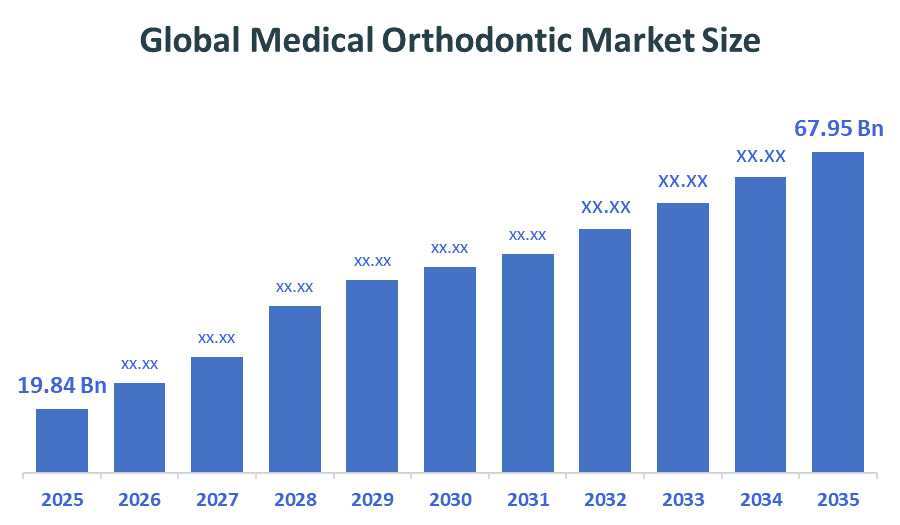
The Global Medical Orthodontic Market Size is forecast to grow from USD 19.84 Billion in 2025 to approximately USD 67.95 Billion by 2035. According to Decision Advisors, a detailed research report on the medical orthodontic market indicates that clear aligners supported by digital technologies (AI, 3D printing, intraoral scanning) dominate the market, accounting for approximately 40-43% of the total share globally. Align Technology Inc. the market with an estimated 60-70% global market share. The company reported a 2025 revenue of approximately USD 4 billion, making it one of the most influential forces shaping industry trends and overall market growth.
Market Snapshot
- Global Medical Orthodontic Market Size (2025): USD 19.84 Billion
- Projected Global Medical Orthodontic Market Size (2035): USD 67.95 Billion
- Global Medical Orthodontic Market Compound Annual Growth Rate (CAGR): 13.1%
- Largest Regional Market: North America
- Fastest Growing Region: Asia-Pacific
- 2nd Largest Region: Europe
- Base Year: 2025
- Historical Period: 2021–2024
- Forecast Period: 2026–2035
Market Overview/ Introduction
The Global Medical Orthodontic Market refers to the market for products and services that are used in the diagnosis, prevention, and correction of misalignment of teeth and jaw structure (malocclusion). Orthodontic products include braces, invisible aligners, retainers, and digital orthodontic systems. Orthodontics is a specialization within dentistry, concerned with both aesthetics and functional correction of the alignment of the teeth and the jaws. It is related to correcting misalignment so as to improve oral function, like eating, speech, and to improve dental outcome over time. 'Malocclusion' refers to teeth or bite misalignment. The growth in this market is rapid, with a rise in oral aesthetic consciousness among people and rise in disposable income, and increasing innovation in the field of technology, like 3-d imaging, treatment planning with the help of artificial intelligence. The market scope in the coming time is mainly for clear aligners, digital orthodontics, developing countries, and emerging markets. This market plays an essential role as it helps in preventative healthcare, better quality of life, and addresses a large section of the world's population suffering from corrective dental requirements.
- The WHO Global Oral Health Strategy (2023–2030) aims to integrate oral healthcare, including orthodontic services, into universal health coverage. It focuses on prevention, early diagnosis, and equitable access to dental care, targeting 80% population coverage by 2030, thereby supporting demand for orthodontic treatments globally.
- The WHO mOralHealth program uses mobile technologies to improve oral healthcare delivery, awareness, and early diagnosis. It enhances digital orthodontic consultation and monitoring capabilities, especially in underserved regions, thereby supporting tele-orthodontics and expanding access to orthodontic care worldwide.
- India’s National Oral Health Programme strengthens dental infrastructure and integrates oral healthcare into primary health systems. It promotes preventive and curative services, including orthodontic care at district levels, increasing access and supporting market growth in emerging economies.
Notable Insights: -
- North America is anticipated to hold the largest share of approximately 43% in the medical orthodontic market over the forecast period.
- Asia Pacific is expected to grow at a rapid CAGR of approximately 15.5% in the medical orthodontic market during the forecast period.
- The orthodontic clinics segment dominated the market in 2025, approximately 45%, and is projected to grow at a substantial CAGR during the forecast period.
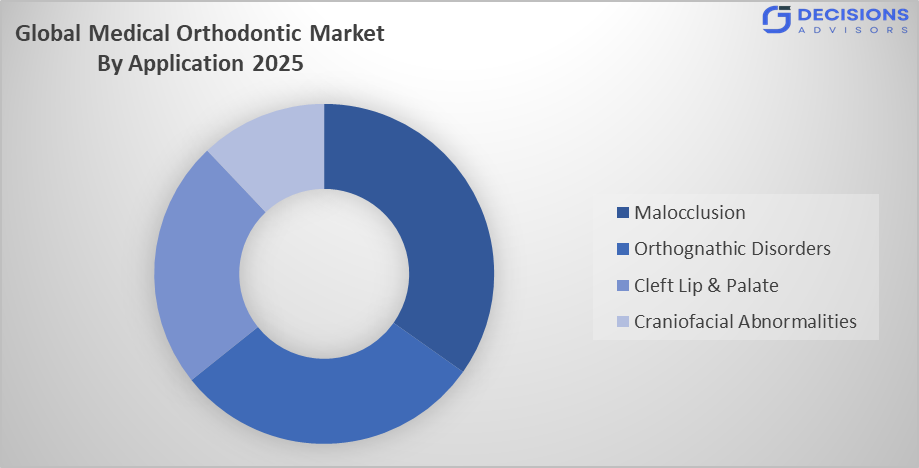
- The malocclusion segment dominated the market in 2025, approximately 55%, and is projected to grow at a substantial CAGR during the forecast period.
- The orthodontic clinics segment dominated the market in 2025, approximately 60%, and is projected to grow at a substantial CAGR during the forecast period.
- The compound annual growth rate of the Global Medical Orthodontic Market is 13.1%.
- The market is likely to achieve a valuation of USD 67.95 Billion by 2035.
What is role of technology in grooming the market?
Technology plays a transformative role in shaping the Global Medical Orthodontic Market by improving precision, efficiency, and patient outcomes. Advanced digital orthodontics, including 3D imaging, intraoral scanners, and CAD/CAM systems, enables accurate diagnosis and customized treatment planning. The integration of artificial intelligence supports predictive modeling and reduces treatment time. Additionally, 3D printing has streamlined the production of clear aligners and orthodontic appliances, lowering turnaround times and enhancing scalability. Teledentistry platforms are expanding access to care, especially in remote regions, by enabling virtual consultations and monitoring. Furthermore, innovations in biocompatible and aesthetic materials have improved comfort and patient satisfaction. These technological advancements not only enhance clinical effectiveness but also drive adoption, increase accessibility, and support overall market growth globally.
Market Drivers
The Global Medical Orthodontic Market is driven by the rising prevalence of dental malocclusion and greater attention on aesthetics among adults and teenagers, which contributes to the growth. The rising disposable incomes of people and increasing middle-class sections in developing countries are expanding the demand for complex orthodontic procedures. Emerging technologies such as the application of clear aligners, 3D imaging techniques, and AI-powered treatment planning are contributing to the market with precise treatment and patient ease. Increased inclination to orthodontic treatment, with social media and cosmetic dentistry influence, is expanding the market at an accelerated pace. Better development of dental infrastructure and availability of dedicated clinics and supportive governments in the oral health sector are also driving factors in global market growth.
Restrain
The Global Medical Orthodontic Market faces restraints due to the high cost of advanced treatments such as clear aligners and digital orthodontics, limiting adoption in price-sensitive regions. Additionally, a lack of skilled orthodontists, low awareness in developing areas, and stringent regulatory requirements further hinder market growth and accessibility worldwide.
Competitive Analysis:
The report offers the appropriate analysis of the key organizations/companies involved within the global medical orthodontic market, along with a comparative evaluation primarily based on their product offerings, business overviews, geographic presence, enterprise strategies, segment market share, and SWOT analysis. The report also provides an elaborative analysis focusing on the current news and developments of the companies, which includes product development, innovations, joint ventures, partnerships, mergers & acquisitions, strategic alliances, and others. This allows for the evaluation of the overall competition within the market.
Top Companies in Global Medical Orthodontic Market
- Align Technology, Inc.
- 3M Company
- Danaher Corporation
- Dentsply Sirona Inc.
- Henry Schein, Inc.
- Institut Straumann AG
- Envista Holdings Corporation
- American Orthodontics Corporation
- G&H Orthodontics, Inc.
- TP Orthodontics, Inc.
- Rocky Mountain Orthodontics, Inc.
- DENTAURUM GmbH & Co. KG
Government Initiatives
|
Country |
Key Government Initiatives |
|
US |
The U.S. Food and Drug Administration regulates orthodontic devices through strict approval (510(k)) and safety monitoring systems. It recently evaluated risks in dental devices and continues approving innovative orthodontic technologies like aligners, ensuring safety and encouraging innovation in digital orthodontics across the country. |
|
UK |
Under the Health and Care Act 2022, the government is developing a mandatory licensing scheme for non-surgical cosmetic procedures in England, set for full implementation by July 2026. This initiative aims to ensure only qualified, accredited practitioners perform high-risk treatments like Botox and dermal fillers, effectively criminalizing unregulated practice to protect public health. |
|
Europe |
European governments regulate orthodontic devices through the Medical Device Regulation (MDR) and CE marking system, which ensures product safety, quality, and free movement across EU markets. This unified regulatory initiative supports innovation while maintaining strict compliance standards for orthodontic materials and appliances. |
Study on the Supply, Demand, Distribution, and Market Environment of the Medical Orthodontic Market
The global medical orthodontic market demonstrates a dynamic interplay between supply, demand, distribution, and overall market environment. On the supply side, major manufacturers and dental product companies dominate through advanced product portfolios and strong global networks, ensuring the steady availability of braces, aligners, and appliances. Demand is primarily driven by the rising prevalence of malocclusion and increasing preference for aesthetic dental treatments, especially among adults. Distribution is largely managed through wholesalers, e-commerce platforms, and direct supply to dental clinics and hospitals, improving accessibility worldwide. The market environment is highly competitive yet innovation-driven, with technological advancements such as 3D printing and AI-based treatment planning shaping growth. However, high equipment costs and regulatory variations remain key challenges affecting market expansion, particularly in developing regions.
Price Analysis and Consumer Behaviour Analysis
Price analysis in the Global Medical Orthodontic Market highlights a wide cost range influenced by product type, technology integration, and geographic region. Clear aligners are generally priced higher than traditional braces due to customization, digital workflows, and brand positioning, while conventional metal braces remain more affordable. In developed regions, insurance coverage and financing options help offset high treatment costs, whereas in emerging markets, affordability remains a key barrier, encouraging demand for low-cost alternatives. From a consumer behavior perspective, patients increasingly prioritize aesthetics, comfort, and convenience, leading to strong adoption of nearly invisible and removable solutions. Adult consumers are a major growth segment, driven by rising awareness and disposable income. Additionally, online consultations, brand trust, flexible payment plans, and shorter treatment duration significantly influence purchasing decisions, ultimately supporting increased adoption and sustained market expansion globally.
Market Segmentation
The Medical Orthodontic Market share is classified into type, application, and end-user.
- The clear aligners segment dominated the market in 2025, approximately 45%, and is projected to grow at a substantial CAGR during the forecast period.
Based on the product type, the medical orthodontic market is divided into braces, clear aligners, orthodontic appliances, and orthodontic equipment. Among these, the clear aligners segment dominated the market in 2025, approximately 45%, and is projected to grow at a substantial CAGR during the forecast period. The growth of the clear aligners segment is driven by increasing demand for aesthetically pleasing and removable orthodontic solutions. Their transparency, comfort, and shorter treatment cycles attract adult patients. Additionally, advancements in digital scanning and 3D printing technologies have improved treatment precision, accelerating adoption over traditional braces globally.
- The malocclusion segment dominated the market in 2025, approximately 55%, and is projected to grow at a substantial CAGR during the forecast period.
Based on the application, the medical orthodontic market is divided into malocclusion, orthognathic disorders, cleft lip & palate, and craniofacial abnormalities. Among these, the malocclusion segment dominated the market in 2025, approximately 55%, and is projected to grow at a substantial CAGR during the forecast period. The malocclusion segment dominated due to rising awareness of dental alignment, increasing prevalence of misaligned teeth, and early diagnosis among children and adolescents, which have driven demand. Orthodontic treatments primarily focus on correcting bite irregularities, making this application the core revenue contributor
- The orthodontic clinics segment dominated the market in 2025, approximately 60%, and is projected to grow at a substantial CAGR during the forecast period.
Based on the end-user, the medical orthodontic market is divided into orthodontic clinics, hospitals, dental academic & research institutes, and dental laboratories. Among these, the orthodontic clinics segment dominated the market in 2025, approximately 60%, and is projected to grow at a substantial CAGR during the forecast period. The growth of the orthodontic clinics segment is due to their specialized services and high patient inflow. These clinics offer advanced treatment options, including clear aligners and customized braces, supported by skilled orthodontists. Greater accessibility, shorter waiting times, and increasing preference for outpatient care have strengthened their dominance over hospitals and research institutes.
Strategies to Implement for Growth of the Market in Non-Leading Regions
Growth in non-leading regions of the Global Medical Orthodontic Market can be accelerated through targeted affordability, awareness, and infrastructure strategies. Companies should introduce cost-effective orthodontic solutions, including low-cost clear aligners and flexible financing options, to address price sensitivity. Expanding dental care infrastructure through partnerships with local clinics and mobile dental units can improve access in underserved areas. Increasing awareness via school programs and digital campaigns can drive early diagnosis and treatment demand. Adoption of teledentistry and digital orthodontics can bridge gaps in specialist availability. Training programs for general dentists to provide basic orthodontic services can further expand reach. Additionally, collaborations with governments and insurance providers to include orthodontic treatments in coverage will support long-term market penetration and sustainable growth.
Regional Segment Analysis of the Medical Orthodontic Market
- North America (U.S., Canada, Mexico)
- Europe (Germany, France, U.K., Italy, Spain, Rest of Europe)
- Asia-Pacific (China, Japan, India, Rest of APAC)
- South America (Brazil and the Rest of South America)
- The Middle East and Africa (UAE, South Africa, Rest of MEA)
North America is anticipated to hold the largest share of approximately 43% the medical orthodontic market over the forecast period.
North America is anticipated to hold the largest share of approximately 43% the medical orthodontic market over the forecast period. The dominance of this region is driven by advanced healthcare infrastructure, high adoption of digital orthodontics, and the strong presence of key players. Increasing demand for aesthetic dental treatments, higher disposable income, and favourable insurance coverage further supported growth, along with early adoption of clear aligners and innovative orthodontic technologies.
Asia Pacific is expected to grow at a rapid CAGR of approximately 15.5% in the medical orthodontic market during the forecast period.
Asia Pacific is expected to grow at a rapid CAGR of approximately 15.5% in the medical orthodontic market during the forecast period. This growth is fueled by rising disposable incomes, increasing awareness of dental aesthetics, expanding middle-class population, and growing adoption of advanced technologies like clear aligners and digital orthodontics across countries such as China and India.
Europe is the 2nd largest region to grow in the medical orthodontic market during the period.
Europe emerged as the second-largest region in the medical orthodontic market due to well-established healthcare systems and high awareness of dental aesthetics. Strong government support for oral healthcare, increasing adoption of advanced orthodontic technologies, and rising demand for clear aligners among adults contributed to steady growth across countries such as Germany, the UK, and France.
Future Market Trends in Global Medical Orthodontic Market: -
1. Rapid Expansion of Clear Aligners
Clear aligners will remain a dominant trend due to increasing demand for aesthetically appealing, removable, and comfortable orthodontic solutions. Growing adult patient populations and advancements in digital treatment planning are accelerating adoption. Their convenience, shorter treatment cycles, and improved outcomes continue to shift preference away from traditional braces globally.
2. Growth of Digital Orthodontics and AI Integration
The integration of digital technologies such as 3D imaging, CAD/CAM systems, and AI-driven treatment planning is transforming orthodontic care. These innovations enhance precision, reduce treatment time, and enable personalized solutions. Increasing adoption of intraoral scanners and virtual simulations is improving efficiency, driving market growth, and clinical outcomes.
3. Rising Adoption of Teledentistry and Remote Monitoring
Teledentistry is gaining traction by improving access to orthodontic care, especially in underserved regions. Remote monitoring tools allow continuous patient tracking, reducing clinic visits and increasing convenience. This trend is driven by growing digital health adoption, cost-effectiveness, and the need for accessible orthodontic services worldwide.
Recent Development
- In December 2025, Biolux Technology introduced OrthoPulse Lite, an accessible platform for light-enabled orthodontic therapy. The device was designed to deliver near-infrared photobiomodulation technology in a more affordable format, aiming to enhance treatment efficiency, reduce discomfort, and expand adoption across orthodontic practices.
- In May 2025, Align Technology expanded its digital orthodontics portfolio during 2024–2025, introducing advanced solutions such as enhanced digital workflows via its iTero platform. The company announced that its Invisalign Palatal Expander System received regulatory approval in China, enabling planned commercial rollout and strengthening its presence in Asia-Pacific markets.
- In September 2024, Institut Straumann AG announced the launch of its new intraoral scanner, SIRIOS, marking its re-entry into the intraoral scanning segment. The device expanded the company’s digital dentistry portfolio and strengthened its integrated workflow solutions supporting orthodontic treatments.
How is Recent Developments Helping the Market?
Recent developments are significantly accelerating growth in the global medical orthodontic market by enhancing treatment efficiency, accuracy, and patient experience. Innovations in digital orthodontics, including 3D imaging, intraoral scanners, and CAD/CAM systems, enable precise customization of appliances such as clear aligners. The rise of AI-driven treatment planning has reduced treatment time and improved outcomes. Additionally, advancements in materials like transparent ceramics and smart polymers have increased comfort and aesthetics, attracting adult patients. Companies are also expanding direct-to-consumer models and teledentistry, improving accessibility and affordability. Strategic collaborations, product launches, and regulatory approvals are further strengthening market penetration. Together, these developments are boosting adoption rates, expanding patient pools, and driving sustained market growth globally.
Market Segment
This study forecasts revenue at global, regional, and country levels from 2020 to 2035. Decision Advisors has segmented the Medical orthodontic market based on the below-mentioned segments:
Global Medical Orthodontic Market, By Product Type
- Braces
- Clear Aligners
- Orthodontic Appliances
- Orthodontic Equipment
Global Medical Orthodontic Market, By Application
- Malocclusion
- Orthognathic Disorders
- Cleft Lip & Palate
- Craniofacial Abnormalities
Global Medical Orthodontic Market, By End-User
- Orthodontic Clinics
- Hospitals
- Dental Academic & Research Institutes
- Dental Laboratories
Global Medical Orthodontic Market, By Regional Analysis
- North America
- US
- Canada
- Mexico
- Europe
- Germany
- UK
- France
- Italy
- Spain
- Russia
- Rest of Europe
- Asia Pacific
- China
- Japan
- India
- South Korea
- Australia
- Rest of Asia Pacific
- South America
- Brazil
- Argentina
- Rest of South America
- Middle East & Africa
- UAE
- Saudi Arabia
- Qatar
- South Africa
- Rest of the Middle East & Africa
Frequently Asked Questions (FAQ)
Q. How is the shift toward adult orthodontics influencing the global market?
A. The increasing number of adults seeking orthodontic treatment is significantly expanding the market. Adults prioritize aesthetics and convenience, driving demand for clear aligners and invisible braces. Higher disposable income and growing awareness about oral health are encouraging late-age treatments, thereby diversifying the patient base and boosting overall market revenue.
Q. What role do dental insurance and reimbursement policies play in market growth?
A. Dental insurance and reimbursement policies strongly impact treatment adoption. In developed regions, partial coverage for orthodontic procedures reduces financial burden, encouraging more patients to opt for advanced treatments. However, limited or absent insurance coverage in developing countries restricts access, making affordability a key factor influencing market penetration and growth.
Q. How are direct-to-consumer (DTC) orthodontic models changing the industry landscape?
A. Direct-to-consumer orthodontic models are transforming accessibility by offering remote consultations and at-home aligner solutions. These models reduce costs and eliminate frequent clinic visits, appealing to tech-savvy consumers. However, concerns regarding clinical supervision and treatment accuracy remain, influencing regulatory scrutiny and shaping the competitive environment.
Q. What impact does the shortage of skilled orthodontists have on the global market?
A. The limited availability of trained orthodontists, especially in emerging regions, restricts access to specialized care. This gap slows market growth despite rising demand. It also increases reliance on general dentists and digital solutions like AI-based planning and teledentistry, which help bridge the expertise gap and expand treatment reach.
Check Licence
Choose the plan that fits you best: Single User, Multi-User, or Enterprise solutions tailored for your needs.
We Have You Covered
- 24/7 Analyst Support
- Clients Across the Globe
- Tailored Insights
- Technology Tracking
- Competitive Intelligence
- Custom Research
- Syndicated Market Studies
- Market Overview
- Market Segmentation
- Growth Drivers
- Market Opportunities
- Regulatory Insights
- Innovation & Sustainability
Report Details
| Scope | Global |
| Pages | 240 |
| Delivery | PDF & Excel via Email |
| Language | English |
| Release | Apr 2026 |
| Access | Download from this page |