
Global Menopausal Hot Flashes Therapeutics Market
 |
Author:
David J
|
Pages:
210
|
Author:
David J
|
Pages:
210
Global Menopausal Hot Flashes Therapeutics Market Size, Share, By Treatment Type (Hormonal Treatment- [Oestrogen, Progesterone and Oestrogen-Progesterone Combination], and Non-Hormonal Treatment- [NK-3 Receptor Antagonists, Selective Serotonin Reuptake Inhibitors (SSRIs), Serotonin-Norepinephrine Reuptake Inhibitors (SNRIs), Gabapentin and Others]), By Route of Administration (Oral, Transdermal, Vaginal, and Parenteral) By Menopause Stage (Pre-Menopause , and Post-Menopause) By End User (Hospital Pharmacies, Retail Pharmacies, and Online Pharmacies), and By Region (North America, Europe, Asia-Pacific, Latin America, Middle East, and Africa), Analysis and Forecast 2026-2035
CAGR
4.96%
REVENUE 20225
USD Billion 3.15
FORECAST 2035
USD Billion 5.11
REPORT COVERAGE
Global
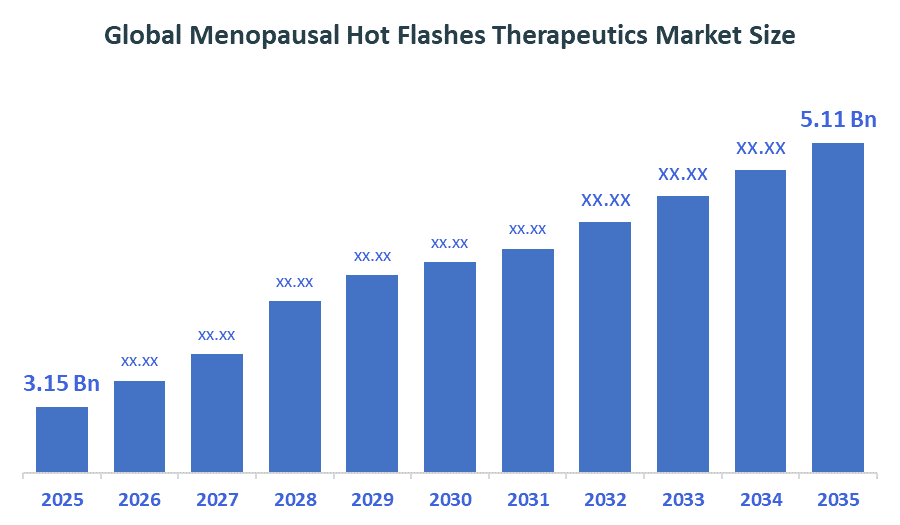
The Global Menopausal Hot Flashes Therapeutics Market Size is projected USD 3.15 Billion in 2025 and is forecasted to reach around USD 5.11 Billion by 2035. According to Decision Advisors, a detailed report on analysis of the Shift toward non-hormonal NK-3 receptor antagonists trend dominates the market, accounting for approx. 10–15% of the total global demand worldwide. Pfizer’s dominates the Global Menopausal Hot Flashes Therapeutics Market, supported by revenue of approx. USD 0.6–0.9 billion, due to strong global presence, established hormone therapy portfolio, robust clinical pipeline, strategic partnerships, and widespread adoption of branded therapies drive Pfizer’s leadership worldwide.
Market Snapshot
- Global Menopausal Hot Flashes Therapeutics Market Size (2025): USD 3.15 Billion
- Projected Global Menopausal Hot Flashes Therapeutics Market Size (2035): USD 5.11 Billion
- Global Menopausal Hot Flashes Therapeutics Market Compound Annual Growth Rate (CAGR): 4.96%
- Largest Regional Market: Asia pacific
- Fastest Growing Region: North America
- 3rd Largest Region: Europe
- Base Year: 2025
- Historical Period: 2021–2024
- Forecast Period: 2026–2035
Market Overview/ Introduction
The Menopausal Hot Flashes Therapeutics Market entails the worldwide business sector devoted to researching, manufacturing, and commercializing therapeutics used to control menopausal hot flashes, including night sweats. The hot flashes experienced during menopause can be attributed to fluctuating hormonal levels, most commonly reduced oestrogen levels. They manifest as a wave of hot flushes characterized by perspiration, redness, and palpitations. Menopausal hot flashes have been found to affect women's quality of life and sleep, thereby requiring an efficient treatment approach. Menopausal hot flash therapeutics serve to alleviate these symptoms, improve sleeping habits, relieve discomfort, and facilitate day-to-day functioning. The market continues to grow in response to the rising number of menopausal women globally, increased health consciousness among females, and better healthcare access. Potential growth drivers include the transition from HRT to alternative medications and the growing prevalence of chronic conditions. Technology innovations consist of NK-3 receptor blocker medicines, neuroendocrine targeting treatments, and new drug delivery mechanisms like transdermal patches and extended-release medicines. Digital monitoring technologies and precision medicines have improved the efficacy of treatments for women's diseases. Other factors that are fuelling the global market growth include government initiatives for the development of research on women's health, menopause programs, and approval of non-hormonal medicines.
In October 2025, Ministry of Ayush marked World Menopause Day 2025 promoting Ayurveda, yoga, and herbal care for holistic menopause management, focusing on hot flashes, sleep issues, and women’s health empowerment.
In October 2025, the U.S. Food and Drug Administration approve Lynkuet (elinzanetant) and remove black-box warnings from hormone therapies, boosting innovation and confidence in the menopausal Hot Flashes Therapeutics market.
Notable Insights: -
- Asia-Pacific holds the largest regional market share approximately 25% in the global Menopausal Hot Flashes Therapeutics market.
- North America is the fastest growing region market share approximately 30% in the global Menopausal Hot Flashes Therapeutics market.
- By type, the Hormonal Treatment- [Oestrogen, Progesterone and Oestrogen-Progesterone Combination] segment held a dominant position with 57% in terms of market share in 2025.
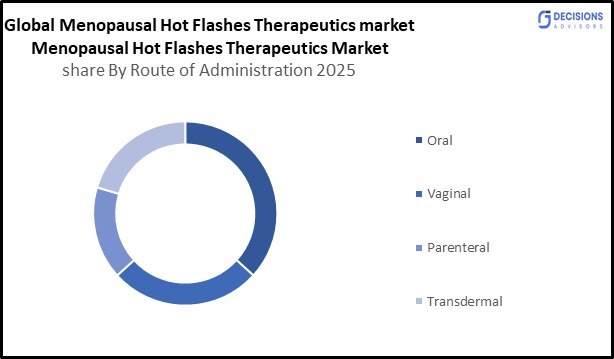
- By Route of Administration, Oral segment is the dominating accounting for market is approximately 62%.
- By end user, Retail Pharmacies segment held a dominant position market is approximately 47%.
- By Robot, Post-Menopause segment held a dominant position market is approximately 63%.
- The market is likely to achieve a valuation of USD 5.11 Billion by 2035.
What is role of technology in grooming the market?
Technological advancements are playing a critical role in the evolution of the Menopausal Hot Flashes Therapeutics Market through the development of innovative drugs that are safe, effective, and can be targeted to specific areas. With advancements in the field of neuroendocrine science, NK-3 receptor antagonists are among some of the emerging drug types that help regulate brain functions related to temperature control. There are also improvements in drug delivery technologies in the form of transdermal patches. There have been developments in the area of AI drug discovery and computational biology.
How is Recent Developments Helping the Market?
The current advancements are making tremendous progress in the expansion of the Menopausal Hot Flashes Therapeutics Market through the provision of more effective treatment alternatives. There is notable success in the introduction of NK-3 receptor antagonist drugs like those in the class of fezolinetant, which represent an important development in the realm of non-hormone therapy and provide effective solutions that have a lower risk profile than hormone-based treatments. Moreover, pharmaceutical manufacturers are conducting clinical trials of future neurokinin inhibitors and combination medicines. Further developments include improvements in the fields of personalized medicine and biomarker research.
Market Drivers
There are several significant drivers for the growth of the Menopausal Hot Flashes Therapeutics Market. First of all, the growing number of menopausal women around the world is due to longer life expectancies. Awareness about women's health issues and menopause symptoms leads to more frequent diagnoses and treatment. The increasing prevalence of vasomotor symptoms like hot flashes and night sweats, reducing the quality of life and working capacity, is another factor affecting this market. The trend towards shifting away from hormonal treatments like HRT to less harmful alternative approaches, including NK-3 receptor antagonists, SSRIs, and SNRIs, is also contributing greatly to the market demand. Innovations in drug development, advanced medicine, and neuroendocrine treatments are making a positive contribution. Other factors, such as improved access to healthcare and growing coverage by insurance programs, are promoting the market growth, too. Increasing investments in R&D on behalf of pharmaceutical companies also plays an essential role in innovation and advancement.
Restrain
The Menopausal Hot Flashes Therapeutics Market is restrained by safety concerns associated with hormone replacement therapy, including risks of cardiovascular disease and cancer. High treatment costs and limited access in low-income regions also hinder growth. Additionally, side effects of non-hormonal drugs, strict regulatory approvals, and low awareness in developing countries further restrict market expansion globally.
Competitive Analysis:
The report offers the appropriate analysis of the key organizations/companies involved within the Menopausal Hot Flashes Therapeutics market, along with a comparative evaluation primarily based on their Product of offering, business overviews, geographic presence, enterprise strategies, segment market share, and SWOT analysis. The report also provides an elaborative analysis focusing on the current news and developments of the companies, which includes Product development, innovations, joint ventures, partnerships, mergers & acquisitions, strategic alliances, and Others. This allows for the evaluation of the overall competition within the market.
Top Companies in Global Menopausal Hot Flashes Therapeutics Market
- Pfizer Inc.
- Novo Nordisk A/S
- Bayer AG
- Abbott Laboratories
- Eli Lilly and Company
- Astellas Pharma Inc.
- Novartis AG
- Teva Pharmaceutical Industries Ltd.
- Amgen Inc.
- Viatris Inc.
Government Initiatives
|
Country |
Key Government Initiatives |
|
US
|
In June 2025: Rhode Island became the first U.S. state in to mandate workplace accommodations for menopause, requiring employers to provide reasonable support, boosting awareness of hot flash management solutions. |
|
US |
In April 2025: The Servicewomen and Veterans Menopause Research Act was introduced in 2025 to address research gaps in menopause among military personnel, supporting future innovation in hot flash therapeutics. |
Study on the Supply, Demand, Distribution, and Market Environment of Menopausal Hot Flashes Therapeutics Market
The supply, demand, distribution, and market environment characteristics of the Menopausal Hot Flashes Therapeutics Market have been influenced heavily by the increasing demand across the globe because of the increase in the number of women undergoing menopause worldwide, especially in North America and Asia-Pacific. Supply of products in this market is provided by various pharmaceutical firms manufacturing hormones as well as non-hormone therapies, but there are times when supply is limited because of production issues as well as the increasing demand. Demand in the market has been greatly influenced by increased awareness among consumers concerning the issue of menopause, high diagnoses, and the preference of non-hormones. On the other hand, the market environment has become highly competitive and innovative because of the huge investments by pharmaceuticals in research and development concerning NK-3 receptor antagonists and neuroendocrine targeted therapies. Approval of new drugs has also been on the rise from regulatory authorities.
Price Analysis and Consumer Behaviour Analysis
The cost analysis of the Menopausal Hot Flashes Therapeutics Market reflects a relatively high level of volatility based on therapy categories. Hormonal therapies tend to be less costly than their non-hormonal alternatives, which include NK-3 receptor antagonists, due to the innovativeness and intellectual property involved. The total expenditure on therapy depends on the dose, length of use, and regional reimbursement strategies, and North America experiences the highest levels of prices. From a consumer behaviour perspective, an increasing number of women prefer safe, non-hormonal treatments because of the potential risks associated with hormonal therapies. Moreover, there is a tendency towards more customized approaches to treatment as well as towards long-term treatment, which increases adherence. Oral medication adherence rates tend to be higher because of convenience factors. In addition, digital health literacy and online pharmacies increase accessibility and encourage education, particularly among urban consumers worldwide.
Market Segmentation
The Menopausal Hot Flashes Therapeutics market share is classified into mounting treatment type, route of administration, menopause stage, and end user
- The treatment type segment dominated the market in 2025, and is projected to grow at a subsantial CAGR of approximately 4.5% during the forecast period.
Based on the type, the menopausal hot flashes therapeutics market is divided into Hormonal Treatment- [Oestrogen, Progesterone and Oestrogen-Progesterone Combination], and Non-Hormonal Treatment- [NK-3 Receptor Antagonists, Selective Serotonin Reuptake Inhibitors (SSRIs), Serotonin-Norepinephrine Reuptake Inhibitors (SNRIs), Gabapentin and Others]. Among these, Hormonal Treatment segment (especially oestrogen and oestrogen–progesterone combinations) is the most dominating, accounting for approximately 55–60% of global revenue in 2025. It continues to lead due to its long-established clinical effectiveness and widespread prescription. However, its growth is moderate at a CAGR of around 3–5%, as usage is gradually constrained by safety concerns and the increasing shift toward non-hormonal alternatives such as NK-3 receptor antagonists and SSRIs.
Top of Form
- The Route of Administration segment accounted for the largest share in 2025, and is anticipated to grow at a significant CAGR of approximately 3.6% during the forecast period.
Based on the route of administration, the menopausal hot flashes therapeutics market is divided into oral, transdermal, vaginal, and parenteral. Among these, oral formulations dominate the Menopausal Hot Flashes Therapeutics market in 2025, accounting for approximately 60–65% of total revenue. Their dominance is driven by ease of use, higher patient compliance, and widespread availability of both hormonal and non-hormonal drugs in tablet and capsule form. However, oral therapies show moderate growth with a CAGR of around 3–4%, as transdermal and other advanced delivery systems gradually gain traction due to improved safety profiles and reduced systemic side effects.
Bottom of Form
- The end user segment dominated the market in 2025, and is projected to grow at a substantial CAGR of approximately 4.6% during the forecast period.
Based on the end user, the menopausal hot flashes therapeutics market is divided into hospital pharmacies, retail pharmacies, and online pharmacies. Among these, retail pharmacies dominate the Menopausal Hot Flashes Therapeutics market in 2025, accounting for approximately 45–50% of total revenue. This dominance is driven by easy accessibility, strong prescription fulfillment rates, and widespread presence of community drugstores. Retail pharmacies benefit from frequent refills of hormonal and non-hormonal therapies. The segment is expected to grow at a CAGR of around 4–5%, while online pharmacies show faster growth due to digital adoption and convenience trends.
- The Menopause Stage segment dominated the market in 2025, and is projected to grow at a substantial CAGR of approximately 4.7% during the forecast period.
Based on the menopause stage, the menopausal hot flashes therapeutics market is divided into pre-menopause, and post-menopause. Among these, post-menopause segment is the most dominating in 2025, accounting for approximately 60–65% of global market revenue. This dominance is driven by the higher prevalence and longer duration of vasomotor symptoms such as hot flashes and night sweats after menopause, leading to sustained therapeutic use. The segment is expected to grow at a CAGR of around 3–5%, while pre-menopause shows comparatively lower but steady growth due to early intervention and increasing awareness of symptom management.
Top of Form
Bottom of Form
Strategies to Implement for Growth of the Market in Non-Leading Regions
For speeding up the development of the market for Menopausal Hot Flashes Therapeutics in emerging regions, corporations should concentrate on providing affordable access to treatments such as generic medicines and inexpensive non-hormonal products. The improvement of distribution channels by using the networks of retail pharmacy stores and hospitals in semi-urban and rural areas is necessary. Awareness campaigns concerning menopause and therapeutic options can contribute to the mitigation of underdiagnosis problems. Collaborations with governmental organizations and non-governmental organizations will be helpful for providing women's health programs and reduced fees. In addition, the creation of local production facilities and license agreements will allow decreasing expenditures. The implementation of digital health solutions such as telemedicine services can increase access to consultations and prescriptions. Lastly, education programs for medical professionals on new guidelines about NK-3 receptor antagonists and selective serotonin reuptake inhibitors can promote their use in practice.
Regional Segment Analysis of the Menopausal Hot Flashes Therapeutics Market
- North America (U.S., Canada, Mexico)
- Europe (Germany, France, U.K., Italy, Spain, Rest of Europe)
- Asia-Pacific (China, Japan, India, Rest of APAC)
- South America (Brazil and the Rest of South America)
- The Middle East and Africa (UAE, South Africa, Rest of MEA)
Asia pacific is anticipated to hold the largest share of the Menopausal Hot Flashes Therapeutics market over the predicted timeframe.
Asia Pacific is expected to hold the largest share of the Menopausal Hot Flashes Therapeutics Market in 2025, accounting for about 38–42% of global revenue, driven by a large aging female population, especially in China, Japan, and India. Growing awareness, improving healthcare access, and expansion of pharmaceutical distribution support demand. The region is projected to grow at a CAGR of 6–8% (2025–2035) due to rising disposable income, urbanization, and increasing adoption of both hormonal and non-hormonal therapies.
North America is expected to grow at a rapid CAGR in the Menopausal Hot Flashes Therapeutics market during the forecast period. North America is expected to grow at a rapid pace in the Menopausal Hot Flashes Therapeutics Market, accounting for approximately 28–32% of global revenue in 2025. The region’s growth is driven by high awareness of menopause management, strong healthcare infrastructure, and early adoption of advanced therapies such as NK-3 receptor antagonists and SSRIs. It is projected to expand at a CAGR of around 5–7%, supported by increasing R&D investments, favourable regulatory approvals, and a high prevalence of menopausal symptoms among the aging female population.
Top of Form
Bottom of Form
Europe is the 3rd largest region to grow in the Menopausal Hot Flashes Therapeutics market during the region. Europe is expected to be the third-largest region in the Menopausal Hot Flashes Therapeutics Market, accounting for approximately 22–26% of global revenue in 2025. Growth is driven by a large aging female population, strong healthcare systems, and high awareness of menopause management. However, strict regulatory policies and cautious adoption of hormone replacement therapy moderate expansion. The region is projected to grow at a CAGR of around 4–6%, supported by increasing use of safer non-hormonal therapies and improved access to specialty care.
Future Market Trends in Global Menopausal Hot Flashes Therapeutics Market: -
- Shift Toward Non-Hormonal Therapies
The future market is strongly moving toward non-hormonal treatments, especially NK-3 receptor antagonists, SSRIs, and SNRIs. This shift is driven by safety concerns linked to hormone replacement therapy, including risks of cardiovascular disease and cancer. Patients and physicians increasingly prefer safer, targeted, and long-term treatment options. Pharmaceutical innovation is focusing on neuroendocrine pathways to control hot flashes more effectively. This trend is expected to redefine treatment guidelines and significantly increase adoption of advanced non-hormonal drugs globally.
2. Rise of Precision and Personalized Medicine
Personalized medicine is emerging as a key trend in menopausal Hot Flashes Therapeutics. Advances in genetics, biomarkers, and patient profiling are enabling tailored treatment approaches based on individual symptom severity and health risks. This improves treatment effectiveness and reduces side effects. AI and data analytics are also helping predict patient response to therapies. As a result, healthcare providers are shifting toward customized hormone and non-hormone therapy combinations, improving long-term outcomes and patient satisfaction worldwide.
- Growth of Digital Health and Telemedicine Integration
Digital health and telemedicine are transforming menopause care by improving access, monitoring, and treatment adherence. Women increasingly use mobile apps and wearable devices to track hot flash frequency, sleep patterns, and hormone-related changes. Virtual consultations allow easier access to specialists, especially in underserved regions. Pharmaceutical companies are also integrating digital platforms with therapies for better patient engagement. This trend is enhancing awareness, reducing stigma, and supporting continuous care, driving overall market expansion globally
Recent Development
- In March 2026, Fezolinetant gained momentum after National Institute for Health and Care Excellence issued draft guidance, expanding access, while no major new drug approvals emerged beyond recent elinzanetant rollout.
- In January 2026, Maharashtra launched 510 menopause clinics across public hospitals, improving diagnosis and treatment of hot flashes, sleep disorders, and menopause-related health issues for thousands of women statewide.
Market Segment
This study forecasts revenue at global, regional, and country levels from 2021 to 2035. Decision Advisors has segmented the Menopausal Hot Flashes Therapeutics market based on the below-mentioned segments:
Global Menopausal Hot Flashes Therapeutics Market, By Treatment Type
- Hormonal Treatment- [Oestrogen, Progesterone and Oestrogen-Progesterone Combination]
- Non-Hormonal Treatment- [NK-3 Receptor Antagonists, Selective Serotonin Reuptake Inhibitors (SSRIs), Serotonin-Norepinephrine Reuptake Inhibitors (SNRIs), Gabapentin and Others]
Global Menopausal Hot Flashes Therapeutics Market, By Route of Administration
- Oral
- Transdermal
- Vaginal
- Parenteral
Global Menopausal Hot Flashes Therapeutics Market, By Menopause Stage
- Pre-Menopause
- Post-Menopause
Global Menopausal Hot Flashes Therapeutics Market, By End User
- Hospital Pharmacies
- Retail Pharmacies
- Online Pharmacies
Global Menopausal Hot Flashes Therapeutics Market, By Regional Analysis
- North America
- US
- Canada
- Mexico
- Europe
- Germany
- UK
- France
- Italy
- Spain
- Russia
- Rest of Europe
- Asia Pacific
- China
- Japan
- India
- South Korea
- Australia
- Rest of Asia Pacific
- South America
- Brazil
- Argentina
- Rest of South America
- Middle East & Africa
- UAE
- Saudi Arabia
- Qatar
- South Africa
- Rest of the Middle East & Africa
Frequently Asked Questions (FAQ)
1. What are the key challenges in patient adherence to menopausal hot flashes treatments?
Patient adherence is often affected by factors such as side effects, long treatment durations, inconsistent symptom relief, and lack of patient education. Simplified dosing regimens and better counselling can improve adherence rates.
2. How do lifestyle modifications complement pharmacological treatments for hot flashes?
Lifestyle changes such as maintaining a healthy weight, reducing caffeine and alcohol intake, practicing stress management, and improving sleep hygiene can enhance the effectiveness of medical treatments and reduce symptom severity.
3. What role do healthcare providers play in improving menopause management outcomes?
Healthcare providers are essential in early diagnosis, personalized treatment planning, patient education, and continuous monitoring. Their guidance ensures safe and effective use of both hormonal and non-hormonal therapies.
4. How is the stigma surrounding menopause affecting treatment uptake?
Social stigma and lack of open discussion about menopause often lead to underreporting of symptoms and delayed treatment. Increasing awareness and education can help normalize conversations and improve healthcare-seeking behaviour.
5. What opportunities exist for new entrants in the menopausal Hot Flashes Therapeutics market?
New entrants can focus on developing cost-effective therapies, innovative drug delivery systems, digital health integration, and expanding access in underserved regions to gain a competitive advantage in the market.
Check Licence
Choose the plan that fits you best: Single User, Multi-User, or Enterprise solutions tailored for your needs.
We Have You Covered
- 24/7 Analyst Support
- Clients Across the Globe
- Tailored Insights
- Technology Tracking
- Competitive Intelligence
- Custom Research
- Syndicated Market Studies
- Market Overview
- Market Segmentation
- Growth Drivers
- Market Opportunities
- Regulatory Insights
- Innovation & Sustainability
Report Details
| Scope | Global |
| Pages | 210 |
| Delivery | PDF & Excel via Email |
| Language | English |
| Release | Apr 2026 |
| Access | Download from this page |