
Global Metastatic Castration-Sensitive Prostate Cancer Market
 |
Pages:
190
|
Pages:
190
Global Metastatic Castration-Sensitive Prostate Cancer Market Size, Share, By Type (Androgen Deprivation Therapy (ADT), ADT + Chemotherapy, ADT + Novel Hormonal Agents, ADT + Immunotherapy, ADT + Targeted Therapy, and Others) By Distribution Channel (Hospitals and Clinics, Specialty Oncology Centers, Retail Pharmacies, Online Pharmacies, and Others) By Region (North America, Europe, Asia-Pacific, Latin America, Middle East, and Africa), Analysis and Forecast 2025 ? 2035
REPORT COVERAGE
Global
Market Snapshot
- Market Size (2025): USD 5187.3 Million
- Projected Market Size (2035): USD 18672.1 Million
- Compound Annual Growth Rate (CAGR): 13.6%
- Largest Regional Market: North America
- Fastest Growing Region: Asia Pacific
- 3rd Largest Region: Europe
- Base Year: 2025
- Historical Period: 2021–2024
- Forecast Period: 2025–2035
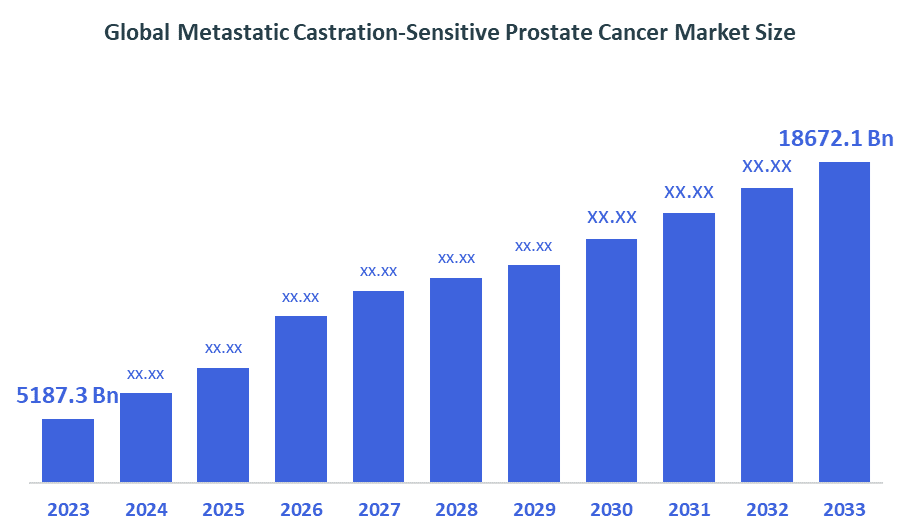
According to Decision Advisors, the Global Metastatic Castration-Sensitive Prostate Cancer Market Size is expected to grow from USD 5187.3 million in 2025 to USD 18672.1 million by 2035, at a CAGR of 13.6% during the forecast period 2025-2035. The global metastatic castration-sensitive prostate cancer market is driven by rising prostate cancer prevalence, expanded early screening, increasing adoption of combination therapies, growing patient awareness, and demand for personalized treatment, alongside technological advancements improving diagnostics, efficacy, and overall patient outcomes.
Market Overview/ Introduction
The global metastatic castration?sensitive prostate cancer (mCSPC) market covers diagnosis, treatment, and management of prostate cancer that has spread beyond the prostate gland but remains responsive to hormonal therapy. This segment includes clinical practices, therapeutic regimens, and technologies focused on delaying disease progression and improving survival outcomes for patients sensitive to androgen deprivation. Metastatic castration?sensitive prostate cancer refers to advanced prostate cancer that continues to respond to androgen deprivation therapy (ADT). In this stage, cancer cells still rely on androgens for growth, allowing treatment strategies that suppress or block androgen activity to slow disease progression while maintaining patient quality of life. The market scope includes conventional ADT, novel hormonal agents, chemotherapy combinations, targeted therapies, immunotherapy, and advanced diagnostics such as PSMA?PET imaging and genomic profiling. Adoption of combination regimens (ADT + ARPI + chemotherapy) is expanding as clinical evidence supports enhanced progression?free survival and overall outcomes. Rising prostate cancer prevalence, increased screening programs, and broader treatment guideline updates are driving therapy uptake globally. Future opportunities include precision medicine approaches using biomarkers and genomic insights, development of next?generation hormonal and targeted therapies, integration of digital health and remote patient monitoring, and expanded access in emerging regions, contributing to sustained market growth.
- The United States’ Medicare program provides coverage for ARPIs, ADT, and combination therapies for eligible patients, ensuring broader access to advanced mCSPC treatments, reducing out-of-pocket expenses, and strengthening adoption of innovative therapies in the market.
- In India, the PM-JAY scheme covers hospitalization and specialized mCSPC treatments, expanding accessibility to advanced therapies across public healthcare, supporting patient affordability, and enabling nationwide reach of critical prostate cancer care.
- Canada’s provincial reimbursement plans fund ADT, novel hormonal agents, and other mCSPC therapies, promoting early treatment adoption, improving patient access, and facilitating growth of the advanced prostate cancer therapeutics market.
- The United Kingdom’s Cancer Drugs Fund finances advanced oncology drugs including mCSPC therapies, accelerating patient access to newer treatments, driving adoption of cutting-edge therapies, and supporting market expansion.
- In Australia, the PBS subsidizes approved prostate cancer medicines such as ADT and targeted therapies, enhancing affordability, enabling widespread adoption, and reinforcing market growth for advanced mCSPC treatment options.
Notable Insights: -
- North America holds the largest regional market share, approximately 45%, in the global metastatic castration-sensitive prostate cancer market.
- Asia-Pacific is the fastest growing region in the global metastatic castration-sensitive prostate cancer market, accounting for around 30% of total market share.
- Europe holds the third-largest share, approximately 30%, in the metastatic castration-sensitive prostate cancer market.
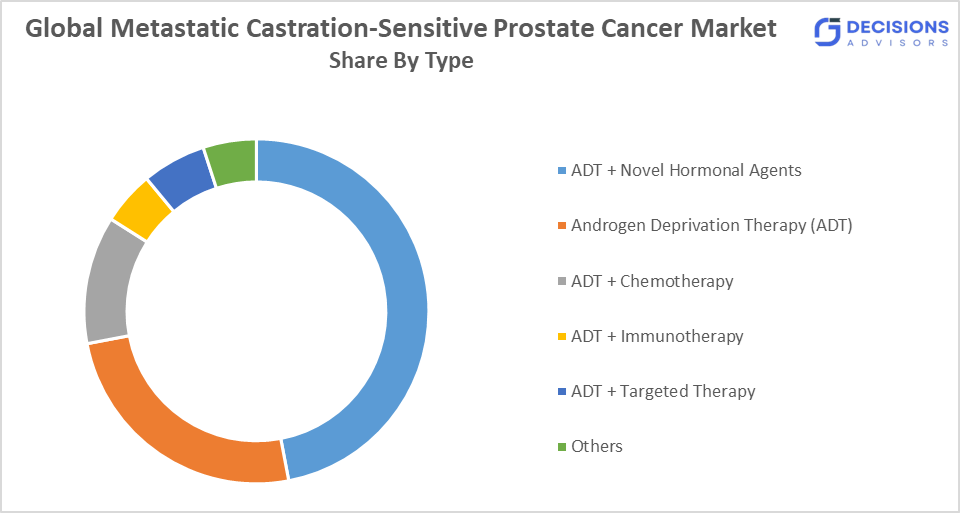
- By type, the ADT + novel hormonal agents segment held a dominant position with approximately 47% in terms of market share in 2025.
- By distribution channel, the hospitals and clinics segment is dominating, accounting for approximately 52% of the global market share in 2025.
- The compound annual growth rate of the global metastatic castration-sensitive prostate cancer market is 13.6%.
- The market is likely to achieve a valuation of USD 18672.1 million by 2035.
What is role of technology in grooming the market?
Technology is crucial in advancing the global metastatic castration-sensitive prostate cancer market by improving drug development, patient monitoring, and supply chain management. AI and data analytics enable predictive modeling for patient outcomes, identify high-risk populations, and optimize clinical trial designs. Telemedicine and wearable devices support remote monitoring, ensuring timely intervention and adherence to treatment regimens. Automation in manufacturing and IoT-enabled tracking improves efficiency, quality control, and distribution accuracy. Additionally, digital platforms enhance patient engagement, education, and access to therapies, enabling broader market penetration and fostering long-term growth.
How is Recent Developments Helping the Market?
Recent developments are accelerating growth in the global metastatic castration-sensitive prostate cancer market by improving patient access, treatment adoption, and therapy effectiveness. Expanded approval of combination therapies and label extensions allows earlier intervention, increasing the eligible patient pool. Enhanced clinical evidence and trial outcomes build physician confidence, driving higher prescription rates. Innovation in treatment protocols and infrastructure expansion in emerging markets ensures broader reach and better adherence. Additionally, increased awareness and availability of advanced therapies support patient-centric care, enabling personalized treatment strategies, improving survival outcomes, and strengthening market demand globally. These factors collectively enhance market expansion and long-term revenue potential.
Market Drivers
The global metastatic castration-sensitive prostate cancer market is driven by rising prostate cancer prevalence, expanded screening programs, and increasing adoption of advanced diagnostics such as PSMA-PET imaging. The growing use of combination therapies, including ADT with novel hormonal agents or chemotherapy, is improving survival outcomes, fueling demand. Rising disposable incomes, healthcare access, and government initiatives supporting cancer care contribute to market growth. Rapid urbanization in Asia-Pacific and the expanding elderly population in North America and Europe further strengthen the market. Additionally, increasing patient awareness, improved clinical infrastructure, and the trend toward personalized treatment strategies enhance treatment uptake, creating opportunities for new product launches and strengthening market presence.
Restrain
The global metastatic castration-sensitive prostate cancer market faces restraints from high treatment costs, stringent regulatory approvals, and reimbursement limitations. Limited patient access in low-income regions, coupled with variations in healthcare infrastructure, slows adoption. Growing patient preference for non-invasive or alternative therapies, potential adverse effects of combination treatments, and pricing pressures from generics and biosimilars constrain market growth and impact profitability.
Competitive Analysis:
The report offers the appropriate analysis of the key organizations/companies involved within the global metastatic castration-sensitive prostate cancer market, along with a comparative evaluation primarily based on their product of offering, business overviews, geographic presence, enterprise strategies, segment market share, and SWOT analysis. The report also provides an elaborative analysis focusing on the current news and developments of the companies, which includes product development, innovations, joint ventures, partnerships, mergers & acquisitions, strategic alliances, and others. This allows for the evaluation of the overall competition within the market.
Top Companies in Global Metastatic Castration-Sensitive Prostate Cancer Market
- Bayer AG
- Johnson & Johnson
- Pfizer Inc.
- Astellas Pharma Inc.
- Sanofi S.A.
- Merck & Co., Inc.
- Novartis AG
- Ipsen Pharma
- Bausch Health Companies Inc.
Government Initiatives
|
Country |
Key Government Initiatives |
|
US |
The FDA has approved label expansions for earlier stages of prostate cancer, including XTANDI for nmCSPC, supporting broader treatment adoption and improving patient access to advanced therapies in the metastatic castration-sensitive segment. |
|
India |
The Union Budget 2025-26 prioritized cancer care, including the establishment of 200 Day Care Cancer Centres, customs duty exemptions on 36 essential cancer drugs, and expansion of the National Cancer Grid, enhancing infrastructure and treatment accessibility. |
|
Canada |
The government allocated funding to the Canadian Partnership Against Cancer (CPAC) for cancer screening, awareness, and data initiatives, strengthening early detection and management infrastructure for prostate and other cancers. |
Market Segmentation
The global Metastatic Castration-Sensitive Prostate Cancer market share is classified into type and distribution channel.
- The ADT + Novel Hormonal Agents segment dominated the market in 2025, and is projected to grow at a substantial CAGR of approximately 47%during the forecast period.
Based on type, the global Metastatic Castration-Sensitive Prostate Cancer market is divided into Androgen Deprivation Therapy (ADT), ADT + Chemotherapy, ADT + Novel Hormonal Agents, ADT + Immunotherapy, ADT + Targeted Therapy, and Others. Among these, the ADT + Novel Hormonal Agents segment dominated the market in 2025, representing approximately 47% of total type share. This growth is driven by widespread adoption of combination therapies, improved efficacy in advanced prostate cancer, expanded treatment guidelines supporting early intensification, strong clinical trial evidence, and increasing physician preference for ARPI plus ADT regimens.
- The hospitals and clinics segment accounted for the largest share in 2025, and is anticipated to grow at a significant CAGR of approximately 52% during the forecast period.
Based on the distribution channel, the global metastatic castration-sensitive prostate cancer market is divided into hospitals and clinics, specialty oncology centers, retail pharmacies, online pharmacies, and others. Among these, the hospitals and clinics segment accounted for the largest share in 2025, representing approximately 52% of total distribution channel share. The growth is attributed to centralized administration of therapies, professional monitoring requirements, higher patient compliance, physician-driven prescriptions, clinical setting preference, and better management of complex cancer treatments ensuring patient safety.
What is the Reason of the Region Dominance?
The dominance of certain regions in the global metastatic castration-sensitive prostate cancer market is primarily driven by high consumption rates, strong cultural acceptance of spirits, and increasing disposable incomes. Asia-Pacific leads due to massive demand in countries like China and India, where both traditional local spirits and premium imported beverages are widely consumed. Rapid urbanization, expanding middle-class populations, and strong domestic production capabilities further support growth. Additionally, increasing consumer preference for premium, craft, and artisanal products reinforces regional market dominance.
Strategies to Implement for Growth of the Market in Non-Leading Regions
Market growth in non-leading regions can be accelerated through targeted investments, localized product innovation, and expansion of retail and e-commerce networks. Introducing affordable, culturally adapted spirits that align with regional taste preferences can enhance adoption. Collaborations with local distributors, bars, and hospitality chains can strengthen brand visibility and consumer engagement. Marketing campaigns emphasizing premium experiences, cocktail culture, and lifestyle branding can attract younger consumers. Further investment in local production facilities and sustainable distillation technologies can improve supply chain efficiency and reduce operational costs.
Regional Segment Analysis of the Metastatic Castration-Sensitive Prostate Cancer Market
- North America (U.S., Canada, Mexico)
- Europe (Germany, France, U.K., Italy, Spain, Rest of Europe)
- Asia-Pacific (China, Japan, India, Rest of APAC)
- South America (Brazil and the Rest of South America)
- The Middle East and Africa (UAE, South Africa, Rest of MEA)
Asia Pacific is anticipated to hold the largest share of the global Metastatic Castration-Sensitive Prostate Cancer market. Asia Pacific accounts for approximately 30% of the market. Growth is driven by large populations in China and India, rising disposable incomes, rapid urbanization, and growing middle-class consumer bases. Increasing preference for premium, imported, and locally crafted spirits, alongside expanding awareness of luxury and artisanal alcoholic beverages, supports consumption. Strong cultural acceptance of spirits and emerging retail and e-commerce channels further reinforce regional market growth and adoption of high-value products.
North America is expected to grow rapidly in the global Metastatic Castration-Sensitive Prostate Cancer market. North America represents approximately 45% of the market. Growth is propelled by high demand for premium, small-batch, and craft spirits, including bourbon, tequila, and flavored vodkas. Consumers are increasingly choosing quality over volume, favoring aged and artisanal beverages. Innovative product launches, bold flavors, and premiumization trends, combined with strong retail and on-trade channels, are driving both value growth and higher adoption rates across the region.
Europe is the third-largest region in the global metastatic castration-sensitive prostate cancer market. Europe holds around approximately 30% of the market. Growth is supported by a long tradition of spirit production and consumption, with strong demand for luxury brands like whisky, gin, and cognac. Consumers favor premium and super-premium products, while established distribution networks, heritage brands, and high-value sales reinforce market stability. Cultural affinity for high-quality spirits and consistent adoption of craft and luxury beverages drive ongoing growth in volume and value across major European countries.
Future Market Trends in Global Metastatic Castration-Sensitive Prostate Cancer Market: -
- Expansion of Advanced ARPI and Triplet Therapy Adoption
The market is witnessing a shift toward early treatment intensification using ARPIs and triplet regimens (ADT + ARPI + chemotherapy). Increased physician preference for combination therapies is expected to drive long-term adoption and improve patient outcomes globally.
- Integration of Precision Diagnostics and Imaging
Rising use of PSMA-PET imaging, genomic testing, and biomarker-driven diagnostics is enabling personalized treatment strategies. These innovations improve patient stratification, early detection, and treatment monitoring, creating new opportunities for advanced therapy adoption and clinical differentiation.
- Digital Health and Telemedicine Solutions
Telehealth platforms, remote monitoring, and AI-driven patient management are enhancing access to care, adherence to therapy, and real-time decision-making. Growth of digital health solutions supports broader treatment reach and improves engagement in both developed and emerging markets.
Recent Development
In June 2025, FDA approved Darolutamide (Nubeqa) for high-risk metastatic castration-sensitive prostate cancer (mCSPC), enabling broader adoption of ARPI-based therapies and strengthening treatment options for patients globally.
In April 2024, FDA approved Enzalutamide (Xtandi) for mCSPC, expanding access to ARPI therapies and supporting early treatment intensification in combination with ADT for high-risk patients.
In July 2024, the ARANOTE trial demonstrated Nubeqa’s efficacy in improving radiological progression-free survival (rPFS) in mCSPC, validating clinical benefits and influencing prescribing patterns worldwide.
Market Segment
This study forecasts revenue at global, regional, and country levels from 2020 to 2035. Decision Advisor has segmented the global metastatic castration-sensitive prostate cancer market based on the below-mentioned segments:
Global Metastatic Castration-Sensitive Prostate Cancer Market, By Type
- Androgen Deprivation Therapy (ADT)
- ADT + Chemotherapy
- ADT + Novel Hormonal Agents
- ADT + Immunotherapy
- ADT + Targeted Therapy
- Others
Global Metastatic Castration-Sensitive Prostate Cancer Market, By Distribution Channel
- Hospitals and Clinics
- Specialty Oncology Centers
- Retail Pharmacies
- Online Pharmacies
- Others
Global Metastatic Castration-Sensitive Prostate Cancer Market, By Regional Analysis
- North America
- US
- Canada
- Mexico
- Europe
- Germany
- UK
- France
- Italy
- Spain
- Russia
- Rest of Europe
- Asia Pacific
- China
- Japan
- India
- South Korea
- Australia
- Rest of Asia Pacific
- South America
- Brazil
- Argentina
- Rest of South America
- Middle East & Africa
- UAE
- Saudi Arabia
- Qatar
- South Africa
- Rest of the Middle East & Africa
Frequently Asked Questions (FAQ)
Q: What emerging digital platforms are being developed to improve patient engagement in mCSPC management?
A: Startups and healthcare tech companies are designing AI-driven mobile apps and virtual reality platforms to educate patients on treatment options, provide symptom tracking, and connect patients with oncology support communities.
Q: How are environmental sustainability practices influencing mCSPC pharmaceutical production?
A: Companies are increasingly adopting green chemistry, energy-efficient manufacturing, and waste reduction strategies to minimize environmental impact while maintaining quality and compliance in oncology drug production.
Q: Are alternative medicine approaches being integrated with conventional mCSPC therapies?
A: Research is exploring complementary interventions such as nutraceuticals, lifestyle modifications, and physiotherapy to support conventional mCSPC treatments, potentially improving patient well-being and adherence without replacing standard care.
Q: What role do patient advocacy groups play in shaping the mCSPC market?
A: Advocacy organizations influence market trends by raising awareness, lobbying for expanded coverage, facilitating clinical trial participation, and educating patients on emerging therapies, indirectly impacting adoption rates and market growth.
Check Licence
Choose the plan that fits you best: Single User, Multi-User, or Enterprise solutions tailored for your needs.
We Have You Covered
- 24/7 Analyst Support
- Clients Across the Globe
- Tailored Insights
- Technology Tracking
- Competitive Intelligence
- Custom Research
- Syndicated Market Studies
- Market Overview
- Market Segmentation
- Growth Drivers
- Market Opportunities
- Regulatory Insights
- Innovation & Sustainability
Report Details
| Scope | Global |
| Pages | 190 |
| Delivery | PDF & Excel via Email |
| Language | English |
| Release | Mar 2026 |
| Access | Download from this page |