
Global Metastatic Hormone Refractory Prostate Cancer Market
 |
Pages:
230
|
Pages:
230
Global Metastatic Hormone Refractory Prostate Cancer Market Size, Share, and COVID-19 Impact Analysis, By Product Type (Chemotherapy, Hormonal Therapy, and Immunotherapy), By Technology (Therapeutic Techniques, Diagnostic Techniques) and By Region (North America, Europe, Asia-Pacific, Latin America, Middle East, and Africa), Analysis and Forecast 2025-2035
REPORT COVERAGE
Global
Global Metastatic Hormone Refractory Prostate Cancer Market Size Insights Forecasts to 2035
- The Global Metastatic Hormone Refractory Prostate Cancer Market Size Was valued at USD 8.4 Billion in 2024
- The Global Metastatic Hormone Refractory Prostate Cancer Market Size is Expected to Grow at a CAGR of around 6.15% from 2025 to 2035
- The Worldwide Metastatic Hormone Refractory Prostate Cancer Market Size is Expected to Reach USD 16.2 Billion by 2035
- Asia-Pacific is expected to grow the fastest during the forecast period.
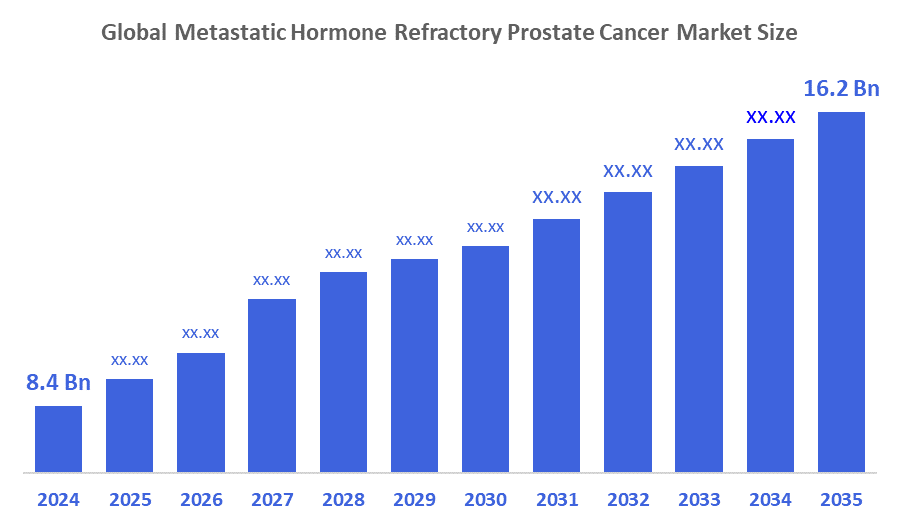
According to a research report published by Decisions Advisors and Consulting, The Global Metastatic Hormone Refractory Prostate Cancer Market Size Was Worth Around USD 8.4 Billion In 2024 And Is Predicted To Grow To Around USD 16.2 Billion By 2035 With A Compound Annual Growth Rate (CAGR) Of 6.15% From 2025 To 2035. The Global Metastatic Hormone Refractory Prostate Cancer Market provides future growth opportunities through its development of new immunotherapy and targeted therapy and radiopharmaceutical and combination treatment and personalized medicine and emerging market expansion and digital healthcare integration for better patient management systems.
Market Overview
Metastatic Hormone Refractory Prostate Cancer (mHRPC) which doctors also refer to as metastatic castration?resistant prostate cancer (mCRPC) represents the advanced stage of prostate cancer where the disease continues to worsen despite androgen deprivation therapy because it has already spread to bones and lymph nodes and other organs. The global market encompasses therapies such as hormonal agents and chemotherapy and immunotherapies and targeted treatments and radiopharmaceuticals, which medical professionals use to enhance patient survival and life quality. The market experiences strong expansion because of increasing prostate cancer cases and the growth of older adults and advances in medical research for diagnostic tests and personalized treatment methods. The U.S. FDA and European EMA join other governments and regulators to promote market growth through their approval of new medical treatments and their establishment of reimbursement systems and their financial support for research, which creates better access to cutting-edge medical treatment throughout the globe.
Report Coverage
This research report categorizes the metastatic hormone refractory prostate cancer market based on various segments and regions, forecasts revenue growth, and analyzes trends in each submarket. The report analyses the key growth drivers, opportunities, and challenges influencing the metastatic hormone refractory prostate cancer market. Recent market developments and competitive strategies such as expansion, type launch, development, partnership, merger, and acquisition, have been included to draw the competitive landscape in the market. The report strategically identifies and profiles the key market players and analyses their core competencies in each sub-segment of the metastatic hormone refractory prostate cancer market.
Driving Factors
The global metastatic hormone refractory prostate cancer market undergoes growth because of increasing prostate cancer cases, aging population demographics, and rising public knowledge about the disease. The development of targeted therapies, immunotherapies, radiopharmaceuticals, and personalized medicine solutions improves treatment results. Market expansion receives support from government initiatives, healthcare system advancements, and rapid medication approval processes, which create opportunities for improved patient care and innovative treatment methods throughout the world.
Restraining Factors
The global metastatic hormone refractory prostate cancer market experiences growth restrictions due to five primary factors which include expensive treatment costs, limited patient access to developing regions, complex treatment side effects, strict regulatory standards, and the gradual implementation of new medical therapies.
Market Segmentation
The metastatic hormone refractory prostate cancer market share is classified into product type and technology.
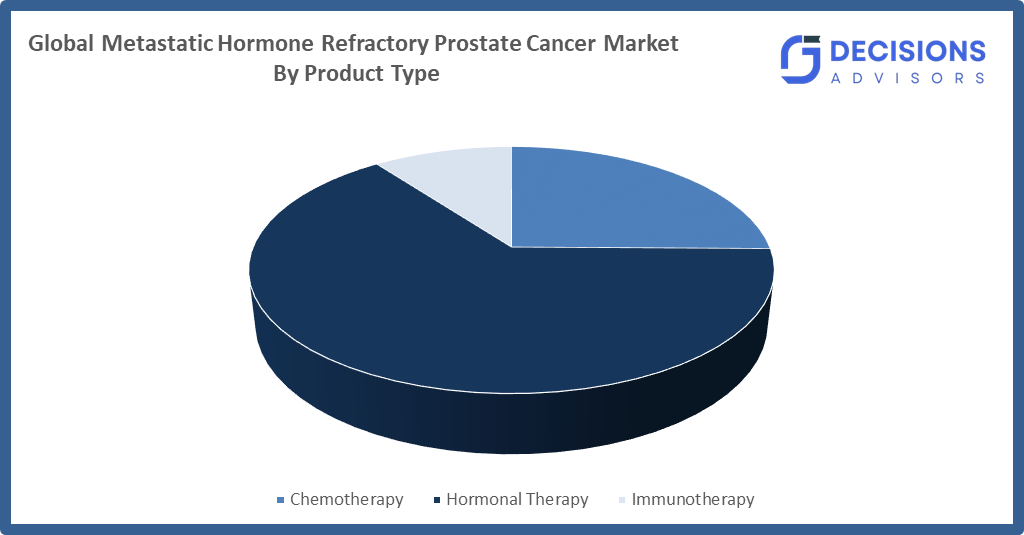
- The hormonal therapy segment dominated the market in 2024, approximately 45% and is projected to grow at a substantial CAGR during the forecast period.
Based on the product type, the metastatic hormone refractory prostate cancer market is divided into chemotherapy, hormonal therapy, and immunotherapy. Among these, the hormonal therapy segment dominated the market in 2024, approximately 45% and is projected to grow at a substantial CAGR during the forecast period. The first-line treatment for metastatic prostate cancer uses androgen deprivation which effectively slows disease progression. The introduction of next-generation androgen receptor inhibitors and combination therapies has improved patient outcomes. The market leadership of hormonal therapy which doctors prefer and medical facilities use extensively and which guidelines recommend strongly has made it the most common and financially important treatment option for 2024
- The therapeutic techniques segment accounted for the largest share in 2024, approximately 52% and is anticipated to grow at a significant CAGR during the forecast period.
Based on the grade, the metastatic hormone refractory prostate cancer market is divided into therapeutic techniques and diagnostic techniques. Among these, the therapeutic techniques segment accounted for the largest share in 2024, approximately 52% and is anticipated to grow at a significant CAGR during the forecast period. Advanced metastatic cases require more treatment resources because they need fewer diagnostic tests. The ongoing development of chemotherapy and hormonal therapy and immunotherapy and radiopharmaceuticals produces better survival outcomes and improved quality of life for patients. The market maintains steady growth because therapeutic treatments become the main market focus while diagnostic tests show increasing demand from physicians and patients.
Regional Segment Analysis of the Metastatic Hormone Refractory Prostate Cancer Market
- North America (U.S., Canada, Mexico)
- Europe (Germany, France, U.K., Italy, Spain, Rest of Europe)
- Asia-Pacific (China, Japan, India, Rest of APAC)
- South America (Brazil and the Rest of South America)
- The Middle East and Africa (UAE, South Africa, Rest of MEA)
North America is anticipated to hold the largest share of the metastatic hormone refractory prostate cancer market over the predicted timeframe.
North America is anticipated to hold the largest share of the metastatic hormone refractory prostate cancer market over the predicted timeframe. The high number of prostate cancer cases in combination with the advanced medical facilities and the quick implementation of new treatment methods. The market will maintain its leading position because of government backing and strong research development activities and reimbursement systems and the wide distribution of modern hormonal treatments and chemotherapy and immunotherapy therapies.
Asia-Pacific is expected to grow at a rapid CAGR in the metastatic hormone refractory prostate cancer market during the forecast period. The growing rates of prostate cancer cases together with the increasing number of older people and the rising public knowledge about healthcare services. The market expansion occurs because hospitals develop better medical facilities and more patients receive modern treatment options and governments support cancer care and hospitals increase their use of hormonal and immunotherapy and targeted therapies.
Competitive Analysis:
The report offers the appropriate analysis of the key organizations/companies involved within the metastatic hormone refractory prostate cancer market, along with a comparative evaluation primarily based on their type of offering, business overviews, geographic presence, enterprise strategies, segment market share, and SWOT analysis. The report also provides an elaborative analysis focusing on the current news and developments of the companies, which includes type development, innovations, joint ventures, partnerships, mergers & acquisitions, strategic alliances, and others. This allows for the evaluation of the overall competition within the market.
List of Key Companies
- Johnson & Johnson (Janssen Biotech)
- Pfizer Inc.
- Astellas Pharma Inc.
- Sanofi S.A.
- Bayer AG
- Novartis AG
- Bristol Myers Squibb
- Merck & Co., Inc.
- AstraZeneca plc
- Roche Holding AG
- Others
Key Target Audience
- Market Players
- Investors
- End-users
- Government Authorities
- Consulting and Research Firm
- Venture capitalists
- Value-Added Resellers (VARs)
Market Segment
This study forecasts revenue at global, regional, and country levels from 2020 to 2035. Decisions Advisors has segmented the metastatic hormone refractory prostate cancer market based on the below-mentioned segments:
Global Metastatic Hormone Refractory Prostate Cancer Market, By Product Type
- Chemotherapy
- Hormonal Therapy
- Immunotherapy
Global Metastatic Hormone Refractory Prostate Cancer Market, By Technology
- Therapeutic Techniques
- Diagnostic Techniques
Global Metastatic Hormone Refractory Prostate Cancer Market, By Regional Analysis
- North America
- US
- Canada
- Mexico
- Europe
- Germany
- UK
- France
- Italy
- Spain
- Russia
- Rest of Europe
- Asia Pacific
- China
- Japan
- India
- South Korea
- Australia
- Rest of Asia Pacific
- South America
- Brazil
- Argentina
- Rest of South America
- Middle East & Africa
- UAE
- Saudi Arabia
- Qatar
- South Africa
- Rest of the Middle East & Africa
Frequently Asked Questions (FAQ)
1. What is the projected growth of the Global Metastatic Hormone Refractory Prostate Cancer Market?
A: The market is projected to grow from USD 8.4 billion in 2024 to USD 16.2 billion by 2035, registering a CAGR of 6.15% during 2025–2035.
2. Which product segment dominated the market in 2024?
A: The hormonal therapy segment dominated in 2024, accounting for approximately 45% share, driven by androgen deprivation therapy usage and next-generation androgen receptor inhibitors improving patient outcomes significantly.
3. Why does the therapeutic techniques segment hold the largest share?
A: Therapeutic techniques held about 52% share in 2024 due to higher treatment demand, continuous drug innovation, improved survival benefits, and strong clinical preference over diagnostic techniques.
4. Which region leads the market and why?
A: North America leads the market because of high prostate cancer prevalence, advanced healthcare infrastructure, strong reimbursement systems, regulatory approvals, and rapid adoption of innovative hormonal and immunotherapy treatments.
5. What factors drive market growth globally?
A: Market growth is driven by rising prostate cancer incidence, aging populations, innovation in targeted therapies and immunotherapy, supportive government policies, expanding healthcare infrastructure, and increasing access to advanced treatments worldwide.
Check Licence
Choose the plan that fits you best: Single User, Multi-User, or Enterprise solutions tailored for your needs.
We Have You Covered
- 24/7 Analyst Support
- Clients Across the Globe
- Tailored Insights
- Technology Tracking
- Competitive Intelligence
- Custom Research
- Syndicated Market Studies
- Market Overview
- Market Segmentation
- Growth Drivers
- Market Opportunities
- Regulatory Insights
- Innovation & Sustainability
Report Details
| Scope | Global |
| Pages | 230 |
| Delivery | PDF & Excel via Email |
| Language | English |
| Release | Mar 2026 |
| Access | Download from this page |