
Global Microbiome-Based Skincare Market
 |
Pages:
195
|
Pages:
195
Global Microbiome-Based Skincare Market Size, Share, By Product Type (Creams, Serums, Masks, Cleansers, and Others), By Ingredient (Probiotic, Prebiotic, Postbiotic), By Application (Acne, Anti-aging, Eczema, Skin Sensitivity, and Others), and By Region (North America, Europe, Asia-Pacific, Latin America, Middle East, and Africa), Analysis and Forecast 2025 ? 2035
REPORT COVERAGE
Global
Market Snapshot
- Market Size (2025): USD 497.4 million
- Projected Market Size (2035): USD 1557.1 million
- Compound Annual Growth Rate (CAGR): 12.09%
- Largest Regional Market: North America
- Fastest Growing Region: Asia-Pacific
- 3rd Largest Region: Europe
- Base Year: 2025
- Historical Period: 2021–2024
- Forecast Period: 2025–2035
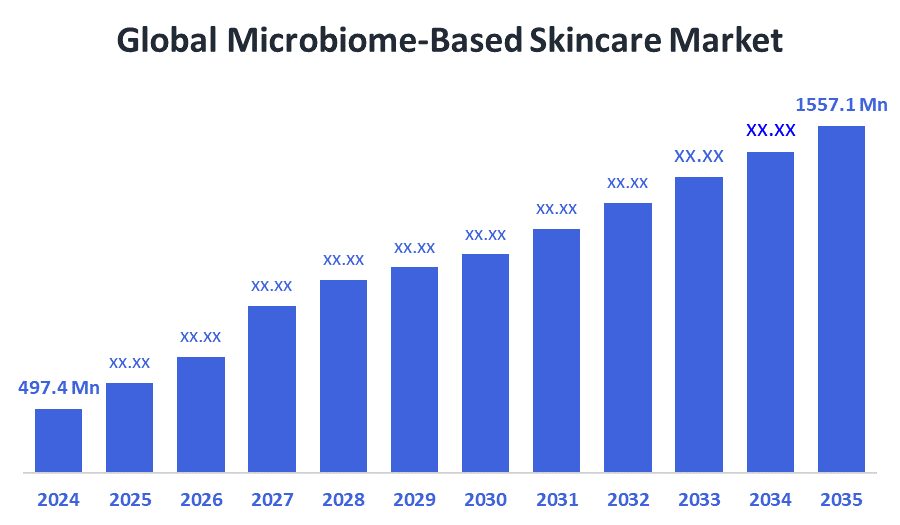
According to Decision Advisors, the Microbiome-Based Skincare Market Size is expected to grow from USD 497.4 million in 2025 to USD 1557.1 million by 2035, at a CAGR of 12.09% during the forecast period 2025-2035. The microbiome-based skincare market is projected to grow significantly over the next decade due to increasing consumer awareness regarding skin microbiota, growing preference for natural and chemical-free products, and rising demand for personalised skincare solutions. The shift toward preventive skincare and skin barrier protection is also significantly contributing to market growth.
Market Overview/ Introduction
The microbiome-based skincare market refers to products formulated to support, protect, and restore the skin’s natural microbiota. These products have things like probiotics, prebiotics and postbiotics that help keep the skin's living things in balance. This can help reduce redness and improve skin problems like acne, eczema and sensitivity. The idea of using skincare is getting more support from doctors who study skin and tiny living things. Consumers want products that are natural and backed by science. Governments are also playing a role in shaping the market. Some places, like the European Union, have made rules to make sure skincare products are safe. In countries like China, the government is making rules to help companies make new and safe products. There are also groups like the International Cooperation on Cosmetics Regulation that are working to make sure companies are honest about what their products can do. Large companies like L’Oreal Group, Unilever and Estee Lauder Companies are spending a lot of money to learn more about microbiomes and make products. New companies are also coming out with products that have probiotics and are targeting skin problems. This is making the market very competitive and innovative. New technology, like biotechnology and artificial intelligence, is helping companies to make microbiome-based skincare products.
- L’Oreal Group is a leading global cosmetics company, which generated over $44 billion in revenue in 2025. The company has been actively investing in microbiome research through its advanced research division, developing products focused on skin barrier repair and microbiome balance, strengthening its leadership in science-driven skincare.
- Governments and regulatory bodies are increasingly supporting microbiome research and clean beauty innovation. For instance, the European Union, under its Cosmetics Regulation framework, is promoting safe, sustainable, and microbiome-friendly ingredients, while global initiatives such as ICCR (International Cooperation on Cosmetics Regulation) are working toward standardizing microbiome-related claims and testing methods, supporting innovation and consumer trust.
- The United States remains a key market, supported by high consumer awareness and strong demand for advanced skincare solutions. According to the American Academy of Dermatology, acne affects approximately 50 million people annually in the U.S., making it the most common skin condition. This high prevalence of skin disorders is contributing to increased demand for dermatologically tested and microbiome-friendly skincare products
Notable Insights: -
- North America holds the largest regional market in the microbiome-based skincare market.
- Asia-Pacific is the fastest-growing region in the microbiome-based skincare market.
- By product type, the probiotic segment held a dominant position of the market share in 2025.
- The compound annual growth rate of the global microbiome-based skincare market is 12.09%.
- The market is likely to achieve a valuation of USD 1557.1 million by 2035.
What is role of technology in grooming the market?
Technology plays a crucial role in advancing the microbiome-based skincare market through innovations in biotechnology, genomics, and artificial intelligence. Advanced sequencing technologies enable detailed analysis of the skin microbiome, allowing companies to develop highly targeted and personalized skincare solutions. Artificial intelligence and data analytics are increasingly used to study individual skin profiles and recommend customized products, improving treatment effectiveness by nearly 20–30%. Additionally, biotechnology innovations have led to the development of stable probiotic formulations that maintain efficacy over longer shelf lives. E-commerce platforms and digital dermatology consultations are also expanding market reach, with online skincare sales growing by over 25% annually. These technological advancements are enhancing product development, consumer engagement, and overall market growth.
How is Recent Developments Helping the Market?
Recent developments, such as product innovation, partnerships, and increased research investments, are significantly supporting market growth. In 2025, over 1,200 new microbiome-friendly skincare products were launched globally, reflecting strong innovation trends. The demand for probiotic skincare has increased by nearly 40% in recent years, driven by rising consumer awareness and dermatologist recommendations. Additionally, collaborations between biotech firms and cosmetic companies are accelerating the commercialization of advanced skincare solutions. Sustainability initiatives, including eco-friendly packaging and natural ingredient sourcing, are also gaining importance, improving brand value and consumer preference.
Market Drivers
The microbiome-based skincare market is driven by increasing awareness of skin health, rising demand for natural and organic products, and advancements in microbiome research. Consumers are becoming more conscious of the impact of harsh chemicals on skin health, leading to a shift toward gentle and microbiome-friendly formulations. The global skincare industry is witnessing strong growth, with probiotic skincare emerging as a key segment. The increasing prevalence of skin conditions such as acne and eczema is also driving demand for targeted treatments. Additionally, the rise of personalized skincare solutions and growing disposable incomes are encouraging consumers to invest in premium and scientifically advanced products.
In June 2025, Bausch Health partnered with YUN to launch probiotic-based skincare products for acne-prone skin. The collaboration aimed to launch microbiome-focused formulations in Poland as the first step, with plans for further global expansion
Restrain
Key restraints in the market include high product costs, limited consumer awareness in developing regions, regulatory challenges, and stability issues associated with live probiotic formulations. Additionally, lack of standardized testing methods and scientific validation can hinder market growth.
Competitive Analysis:
The report offers the appropriate analysis of the key organizations/companies involved within the microbiome-based skincare market, along with a comparative evaluation primarily based on their product of offering, business overviews, geographic presence, enterprise strategies, segment market share, and SWOT analysis. The report also provides an elaborative analysis focusing on the current news and developments of the companies, which includes product development, innovations, joint ventures, partnerships, mergers & acquisitions, strategic alliances, and others. This allows for the evaluation of the overall competition within the market.
Top Companies in Microbiome-Based Skincare Market
- L’Oreal Group
- Unilever
- Estee Lauder Companies
- Johnson & Johnson
- Amorepacific Corporation
- Gallinee Ltd
- Aurelia Skincare
- Tula Life Inc.
- Mother Dirt (AOBiome)
- LaFlore Probiotic Skincare
- Glowbiotics
- Esse Skincare
Government Initiatives
|
Country |
Key Government Initiatives |
|
US |
The U.S. regulates microbiome-based skincare under general cosmetic laws through the Food and Drug Administration (FDA). There are no specific regulations for probiotic or microbiome cosmetics, but manufacturers must ensure product safety and proper labeling. Additionally, new frameworks like the Modernization of Cosmetics Regulation Act (MoCRA) strengthen oversight by requiring facility registration and product listing. |
|
Europe |
The EU regulates microbiome skincare under Cosmetics Regulation (EC) No. 1223/2009, focusing on consumer safety, ingredient approval, and product claims. However, there are no dedicated rules specifically for microbiome or probiotic ingredients, creating a need for regulatory harmonization and standardized testing protocols. |
|
China |
China’s regulatory environment is rapidly evolving toward innovation-driven and science-based skincare development. While microbiome-specific regulations are still emerging, the introduction of microecology standards, faster approval systems, and advanced testing frameworks is strongly supporting the growth of microbiome-based skincare products in the country. |
Market Segmentation
The microbiome-based skincare market share is classified into product type, application, and distribution channel.
- The creams and serums accounted for the highest market revenue in 2025 and are anticipated to grow at a significant CAGR during the forecast period.
Based on the product type, the microbiome-based skincare market is increasingly driven by diverse product types, including creams, serums, masks, and cleansers, each designed to target specific skin concerns and consumer preferences. Among these, the creams and serums accounted for the highest market revenue in 2025 and are anticipated to grow at a significant CAGR during the forecast period due to their high efficacy in delivering active probiotic, prebiotic, and postbiotic ingredients, improving skin barrier function, and enhancing overall skin health.
- The probiotics segment accounted for the highest market revenue in 2025 and is anticipated to grow at a significant CAGR during the forecast period.
Based on the ingredient, the microbiome-based skincare market is divided into probiotic, prebiotic, postbiotic. Among these, the probiotics segment accounted for the highest market revenue in 2025 and is anticipated to grow at a significant CAGR during the forecast period due to their widespread adoption is largely driven by scientifically backed benefits, including enhancing skin barrier function, reducing inflammation, regulating sebum production, and improving overall skin resilience. Probiotic-based formulations are particularly effective in addressing acne, sensitive skin, and signs of premature ageing, making them highly attractive to consumers seeking both preventive and therapeutic skincare solutions.
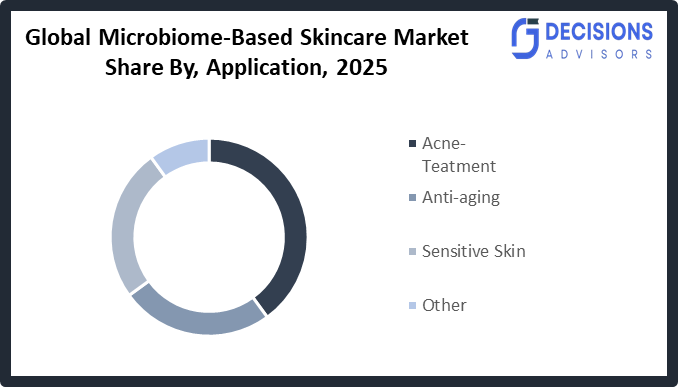
- The acne treatment segment accounted for the highest market revenue in 2025 and is anticipated to grow at a significant CAGR during the forecast period.
Based on the application, the microbiome-based skincare market is divided into acne treatment, anti-ageing, sensitive skin, and others. Among these, the acne treatment segment accounted for the highest market revenue in 2025 and is anticipated to grow at a significant CAGR due to the increasing prevalence of acne and demand for gentle, microbiome-friendly treatments.
What is the Reason of the Region Dominance?
The dominance of certain regions in the global microbiome-based skincare market is primarily driven by high consumer awareness regarding skin health, increasing demand for scientifically backed and dermatologically tested products, and rising spending on premium skincare solutions. Regions such as North America lead the market due to strong consumer demand in countries like the United States and Canada, where consumers are highly inclined toward advanced, clean-label, and microbiome-friendly formulations. The presence of leading skincare companies, well-established research and development infrastructure, and early adoption of innovative technologies further support regional dominance. Additionally, the growing prevalence of skin conditions such as acne, eczema, and sensitivity, along with increasing preference for personalized and preventive skincare, is contributing to higher product adoption. Strong distribution networks, including e-commerce expansion and dermatologist-backed product availability, also play a crucial role in strengthening market leadership in dominant regions.
Strategies to Implement for Growth of the Market in Non-Leading Regions
Growth in non-leading regions can be supported through strategic investments, product innovation, and expansion of distribution networks. Companies can increase market penetration by introducing affordable and locally adapted microbiome-based skincare products that address region-specific skin concerns such as pollution, humidity, and sensitivity. Expanding retail presence, along with strengthening e-commerce platforms, can significantly improve product accessibility in emerging markets. Additionally, partnerships with local dermatologists, clinics, and beauty retailers can help build consumer trust and awareness regarding microbiome-friendly formulations. Marketing campaigns focusing on skin health, clean beauty, and scientifically proven benefits can further attract younger and health-conscious consumers. Investment in local manufacturing facilities and sustainable ingredient sourcing can also reduce costs, enhance supply chain efficiency, and support long-term market growth.
Regional Segment Analysis of the Microbiome-Based Skincare Market
- North America (U.S., Canada, Mexico)
- Europe (Germany, France, U.K., Italy, Spain, Rest of Europe)
- Asia-Pacific (China, Japan, India, Rest of APAC)
- South America (Brazil and the Rest of South America)
- The Middle East and Africa (UAE, South Africa, Rest of MEA)
North America is anticipated to hold the largest share of the microbiome-based skincare market over the predicted timeframe.
North America is anticipated to hold the largest share of the microbiome-based skincare market over the predicted timeframe. This dominance is attributed to high consumer awareness regarding skin health, strong demand for premium and science-backed skincare products, and the early adoption of advanced dermatological solutions. The United States plays a major role in driving regional growth due to the presence of leading skincare companies, robust research and development infrastructure, and high spending on personal care products. Additionally, the increasing prevalence of skin conditions such as acne and eczema, along with growing preference for clean-label and microbiome-friendly formulations, is further supporting market expansion in the region.
Asia Pacific is expected to grow at a rapid CAGR in the microbiome-based skincare market during the forecast period. Asia Pacific is expected to grow at a rapid CAGR in the microbiome-based skincare market during the forecast period. This growth is driven by increasing skincare awareness, rising disposable incomes, and a growing middle-class population across countries such as China, Japan, and India. The region is witnessing a strong shift toward natural, clean-label, and microbiome-friendly skincare products, supported by evolving consumer preferences and expanding urbanization. Additionally, the increasing influence of K-beauty and J-beauty trends, along with rapid growth in e-commerce platforms, is enhancing product accessibility and market penetration. The rising prevalence of skin sensitivity issues and demand for preventive skincare solutions.
Europe is the 3rd largest region to grow in the global microbiome-based skincare market. Europe is the 3rd largest region to grow in the global microbiome-based skincare market. It is because Europe has a strong foundation in dermatological research and a long-standing preference for science-backed and natural skincare products. Countries such as Germany, France, and the UK contribute significantly to market growth due to high consumer awareness and demand for premium skincare solutions. The region is also a major hub for clean beauty and sustainable skincare, supported by stringent cosmetic regulations that promote safe and microbiome-friendly formulations. Additionally, the presence of leading companies and increasing demand for anti-aging, sensitive skin, and dermocosmetic products is driving higher value sales, even as overall volume growth remains steady.
Future Market Trends in Global Microbiome-Based Skincare Market: -
- Premiumization and Science-Backed Skincare Demand
Consumers are increasingly shifting towards premium and clinically proven skincare products, preferring high-quality, dermatologically tested, and microbiome-friendly formulations. Premium skincare is contributing significantly to overall market growth, as consumers are willing to pay higher prices for products that offer proven efficacy, skin barrier protection, and long-term skin health benefits. This trend is especially strong among urban and high-income consumers seeking personalized and science-driven skincare solutions.
- Rising Demand for Probiotic and Microbiome-Friendly Products
Innovation in probiotic, prebiotic, and postbiotic formulations is attracting a wide range of consumers, particularly those with sensitive or acne-prone skin. The microbiome skincare segment is growing at a dominant CAGR, reflecting increasing demand for products that restore skin balance and reduce inflammation. The shift toward gentle, non-disruptive skincare is encouraging brands to develop formulations that support the skin’s natural ecosystem rather than altering it.
- Growth Of Personalised and AI-Driven Skincare Solutions
Personalized skincare solutions are gaining popularity, with advancements in artificial intelligence and skin microbiome analysis enabling customized product recommendations. Consumers are increasingly seeking tailored skincare routines based on individual skin conditions, lifestyle, and environmental factors. This segment is expected to witness strong growth as brands invest in digital skin diagnostics, at-home testing kits, and data-driven product development, enhancing customer engagement and treatment effectiveness.
Recent Development
In October 2025, Unilever reported new scientific findings highlighting the relationship between the skin microbiome and premature aging, which helped guide the development of next-generation microbiome-based skincare formulations. The research emphasized how microbial balance influences visible skin health and opened new opportunities for anti-aging product innovation
In September 2025, Leucine Rich Bio launched its Rychbiome Balancing Cream along with the BugSpeaks Skin Test, a diagnostic tool designed to analyze individual skin microbiome profiles. This innovation marked a major step toward personalized microbiome skincare solutions, allowing consumers to receive customized product recommendations based on scientific skin analysis.
In May 2025, Codex Labs received a U.S. patent for its Shaant Clear Skin Probiotic technology, developed for acne-prone skin. The product also achieved microbiome-friendly certification, highlighting the increasing focus on clinically validated and regulatory-approved microbiome skincare products.
Market Segment
This study forecasts revenue at global, regional, and country levels from 2020 to 2035. Decision Advisors has segmented the microbiome-based skincare market based on the below-mentioned segments:
Global Microbiome-Based Skincare Market, By Product Type
- Creams
- Serums
- Masks
- Cleanser
- Others
Global Microbiome-Based Skincare Market, By Ingredient
- Probiotics
- Prebiotics
- Postbiotics
Global Microbiome-Based Skincare Market, By Application
- Acne Treatment
- Anti-ageing
- Sensitive Skin
- Others
Global Microbiome-Based Skincare Market, By Regional Analysis
- North America
- US
- Canada
- Mexico
- Europe
- Germany
- UK
- France
- Italy
- Spain
- Russia
- Rest of Europe
- Asia Pacific
- China
- Japan
- India
- South Korea
- Australia
- Rest of Asia Pacific
- South America
- Brazil
- Argentina
- Rest of South America
- Middle East & Africa
- UAE
- Saudi Arabia
- Qatar
- South Africa
- Rest of the Middle East & Africa
Frequently Asked Questions (FAQ)
Q. What is the long-term growth outlook for the microbiome-based skincare market?
A. The market shows strong long-term growth potential due to increasing awareness of skin microbiome health, continuous innovation in biotechnology, and rising demand for personalised and preventive skincare solutions globally.
Q. How is the personalisation transforming the Microbiome-Based skincare market?
A. Personalisation is playing a key role by enabling brands to offer customised skincare products based on individual skin microbiome profiles, improving treatment effectiveness and enhancing consumer satisfaction.
Q. What key innovations are shaping the Microbiome-based skincare products?
A. Innovations include AI-based skin analysis tools, microbiome sequencing technologies, and the development of advanced probiotic, prebiotic, and postbiotic formulations targeting specific skin concerns.
Q. What opportunities exist for new market entrants in this industry?
A. Rising health awareness among consumers has encouraged producers to develop low-calorie, low-sugar, and lower-ABV Microbiome-Based Skincare. The drink less but better mindset is shifting demand toward premium, high-quality Microbiome-Based Skincare consumed in moderation.
Check Licence
Choose the plan that fits you best: Single User, Multi-User, or Enterprise solutions tailored for your needs.
We Have You Covered
- 24/7 Analyst Support
- Clients Across the Globe
- Tailored Insights
- Technology Tracking
- Competitive Intelligence
- Custom Research
- Syndicated Market Studies
- Market Overview
- Market Segmentation
- Growth Drivers
- Market Opportunities
- Regulatory Insights
- Innovation & Sustainability
Report Details
| Scope | Global |
| Pages | 195 |
| Delivery | PDF & Excel via Email |
| Language | English |
| Release | Mar 2026 |
| Access | Download from this page |