
Global Microbiome Modulation Market
 |
Author:
David J
|
Pages:
240
|
Author:
David J
|
Pages:
240
Global Microbiome Modulation Market Size, Share By Product (Probiotics, Prebiotics, Synbiotics, Live Biotherapeutic Products, and Others), By Application (Gastrointestinal Disorders, Metabolic Disorders, Infectious Diseases, Immune & Inflammatory Disorders, and Others), By End User (Functional Food & Beverage Manufacturers, Pharmaceutical & Biotechnology Companies, Healthcare Providers, Research & Academic Institutions, and Others), and By Region (North America, Europe, Asia-Pacific, Latin America, Middle East & Africa), Analysis and Forecast 2026-2035.
CAGR
11.57%
REVENUE 2025
USD Billion 8.64
FORECAST 2035
USD Billion 25.78
REPORT COVERAGE
Global
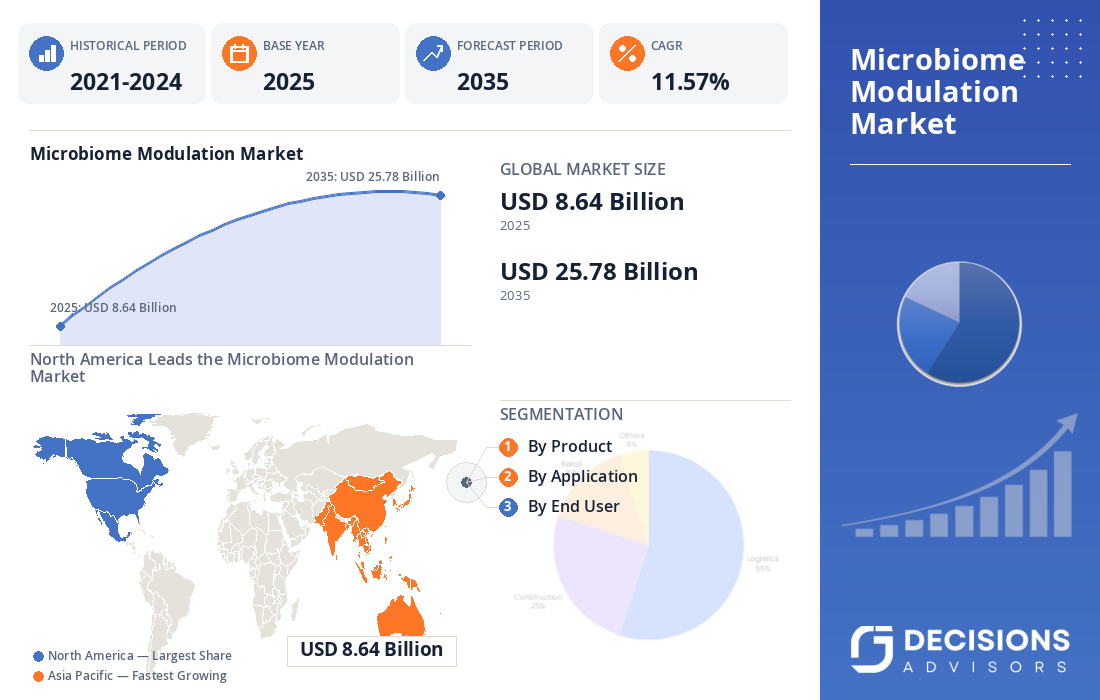
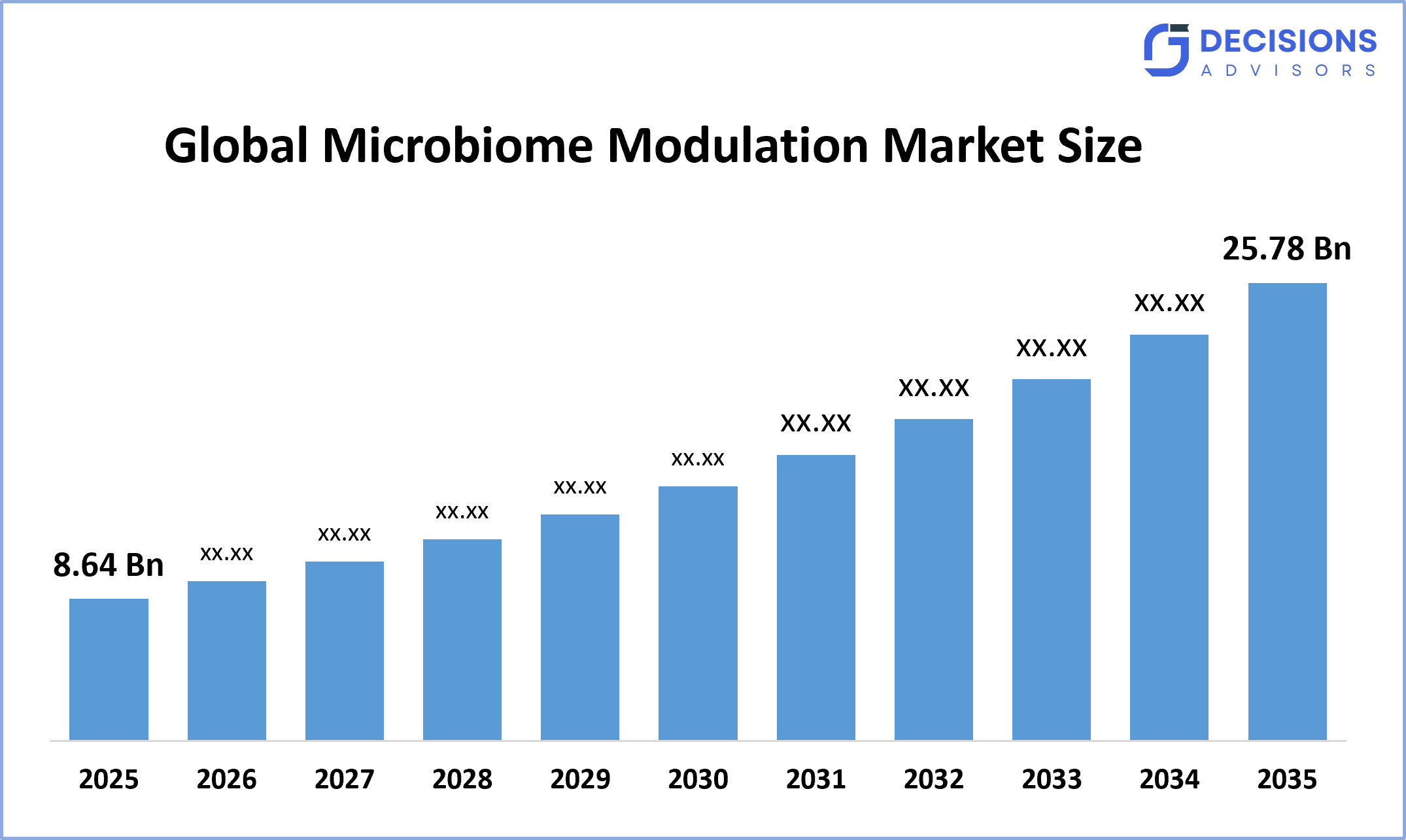
The Global Microbiome Modulation Market Size is predicted to grow from USD 8.64 Billion in 2025 and is likely to reach around USD 25.78 Billion by 2035 with a CAGR of 11.57%. According to Decision Advisors, a detailed research report on the market reflects that the growing adoption of microbiome-based therapeutics, personalized nutrition, and preventive healthcare dominates the Global Microbiome Modulation Market. Increasing scientific understanding of the relationship between the human microbiome and gastrointestinal, metabolic, immune, and infectious diseases is accelerating global market development. Nestlé Health Science, supported by its broad nutrition and health portfolio and investments in microbiome-related healthcare solutions, remains an important contributor to market growth dynamics.
Market Snapshot
- Global Microbiome Modulation Market Size (2025): USD 8.64 Billion
- Projected Global Microbiome Modulation Market Size (2035): USD 25.78 Billion
- Global Microbiome Modulation Market Compound Annual Growth Rate (CAGR): 11.57%
- Largest Regional Market: North America
- 2nd Largest Region: Europe
- Fastest Growing Region: Asia-Pacific
- Base Year: 2025
- Historical Period: 2021-2024
- Market Forecast Period: 2026-2035.
Market Overview/ Introduction
The Global Microbiome Modulation Market refers to the industry focused on products, technologies, and therapeutic approaches designed to modify, restore, or optimize the composition and function of microbial communities within the human body. The market includes probiotics, prebiotics, synbiotics, live biotherapeutic products, microbiota-based therapies, and microbiome-focused nutritional interventions. The growing understanding of the relationship between the microbiome and human health is creating substantial opportunities across healthcare, pharmaceuticals, biotechnology, nutrition, and functional food industries. The market is experiencing significant growth due to rising consumer awareness regarding digestive health, immunity, metabolic wellness, and preventive healthcare.
- The United States, is supporting microbiome innovation through biomedical research funding, advanced biotechnology infrastructure, and regulatory frameworks for microbiota-based therapies and live biotherapeutic products.
- Japan, has a well-established probiotic and functional food industry, supported by strong consumer adoption of digestive-health products and extensive research into the relationship between microbiota and human health.
- China, is expanding biotechnology, precision medicine, and advanced healthcare research capabilities, creating opportunities for microbiome-based therapeutics, functional foods, and personalized health solutions.
Notable Insights: -
- North America is anticipated to hold approximately 37% share of the Global Microbiome Modulation Market over the predicted timeframe.
- Asia-Pacific is expected to grow at a rapid CAGR in the Global Microbiome Modulation Market by holding approximately 25% of the share during the forecast period.
- By Product, the Probiotics segment dominated the market and holds approximately 42% share in 2025 and is projected to grow at a substantial CAGR during the forecast period.
- By Application, the Gastrointestinal Disorders segment dominated the market and holds approximately 34% share in 2025 and is projected to grow at a substantial CAGR during the forecast period.
- By End User, the Functional Food & Beverage Manufacturers segment dominated the market and holds approximately 36% share in 2025 and is projected to grow at a substantial CAGR during the forecast period.
- The compound annual growth rate of the Global Microbiome Modulation Market is 11.57%.
- The market is likely to achieve a valuation of USD 25.78 Billion by 2035.
Market Drivers
The Global Microbiome Modulation Market is experiencing strong growth because of increasing awareness regarding the relationship between gut microbiota and overall health. Rising prevalence of gastrointestinal disorders, obesity, diabetes, inflammatory diseases, and immune-related conditions is increasing interest in microbiome-focused interventions. Consumers are increasingly adopting probiotics, prebiotics, synbiotics, and functional foods as part of preventive healthcare and wellness routines. Technological advancements are also transforming the market. Next-generation sequencing, metagenomics, metabolomics, artificial intelligence, and advanced bioinformatics enable researchers to analyze complex microbial ecosystems and identify disease-related microbial patterns. The growing focus on personalized medicine and precision nutrition is creating additional demand for targeted microbiome modulation strategies. Furthermore, increasing pharmaceutical and biotechnology investment in live biotherapeutic products and microbiota-based treatments is expanding the commercial potential of the market.
Restrain
The Global Microbiome Modulation Market faces several challenges, including the biological complexity and significant variability of the human microbiome. Microbial composition can vary depending on genetics, diet, age, geography, lifestyle, medication use, and environmental factors, making it difficult to develop universally effective microbiome interventions. Regulatory complexity is another major challenge because microbiome products may be classified differently as foods, dietary supplements, biologics, or pharmaceutical products across different countries. Manufacturing live microbial products also requires specialized production capabilities, strict quality control, strain stability management, and controlled storage conditions.
Competitive Analysis:
The report offers the appropriate analysis of the key organizations/companies involved within the Global Microbiome Modulation Market, along with a comparative evaluation primarily based on their product offerings, business overviews, geographic presence, enterprise strategies, segment market share, and SWOT analysis. The report also provides an elaborative analysis focusing on the current news and developments of the companies, which includes product development, innovations, joint ventures, partnerships, mergers & acquisitions, strategic alliances, and others. This allows for the evaluation of the overall competition within the market.
Top Companies in the Global Microbiome Modulation Market
- Nestlé Health Science
- Yakult Honsha Co., Ltd.
- IFF
- Seres Therapeutics, Inc.
- Ferring Pharmaceuticals
- MaaT Pharma
- BioGaia AB
- Archer Daniels Midland Company
- Lallemand Health Solutions
- Vedanta Biosciences.
Government Initiatives
|
Country |
Key Government Initiatives |
|
United States |
The U.S. government supports biotechnology and biomedical research through institutions such as the NIH and other federal research programs, supporting research into human microbiomes, precision medicine, and advanced therapeutic technologies |
|
Japan |
Japan supports biotechnology and life sciences research through national research programs and maintains strong policies supporting functional foods, preventive healthcare, and advanced medical innovation |
|
China |
China's biotechnology and healthcare development initiatives support precision medicine, genomics, biomedical innovation, and advanced therapeutic research, creating opportunities for microbiome-focused technologies |
Market Segmentation
The Global Microbiome Modulation Market share is classified into Product, Application, and End User.
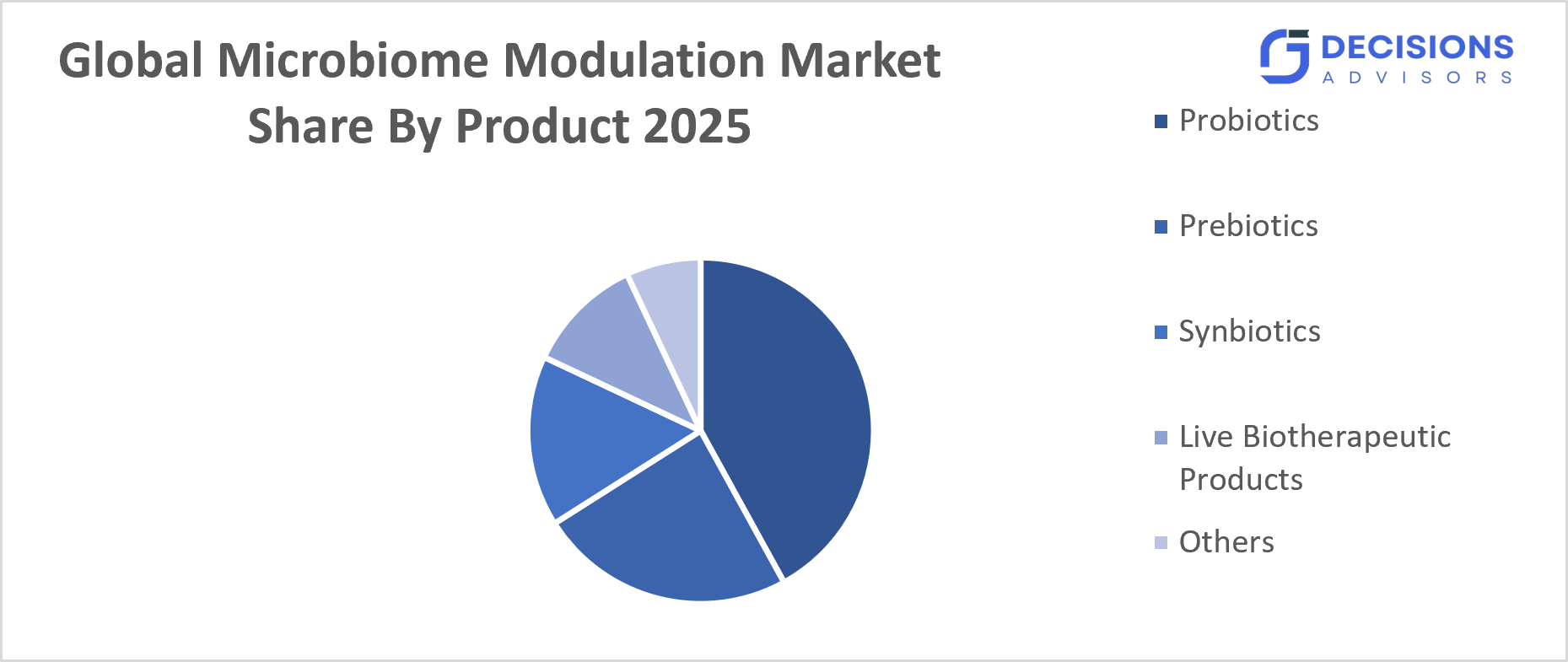
- The Probiotics segment dominated the market and holds approximately 42% share in 2025 and is projected to grow at a substantial CAGR during the forecast period.
Based on the Product, the Global Microbiome Modulation Market is divided into Probiotics, Prebiotics, Synbiotics, Live Biotherapeutic Products, and Others. Among these, the Probiotics segment dominates the market and holds approximately 42% share in 2025. This dominance is primarily due to strong consumer awareness, widespread availability, and extensive adoption across dietary supplements and functional food products. Probiotics are widely associated with digestive health, immunity, and preventive wellness, making them highly accessible to a broad consumer base.
- The Gastrointestinal Disorders segment accounted for the largest share of approximately 34% in 2025 and is anticipated to grow at a significant CAGR during the forecast period.
Based on Application, the market is divided into Gastrointestinal Disorders, Metabolic Disorders, Infectious Diseases, Immune & Inflammatory Disorders, and Others. Among these, Gastrointestinal Disorders accounted for the largest share and hold approximately 34% share in 2025. This dominance is due to the direct relationship between gut microbial composition and digestive health. Rising prevalence of digestive disorders, increasing awareness of gut health, and growing adoption of probiotics and microbiome-based therapies are strengthening demand. Research into microbiota-based interventions for gastrointestinal conditions is also expanding the segment's long-term growth opportunities.
- The Functional Food & Beverage Manufacturers segment accounted for the largest share of approximately 36% in 2025 and is anticipated to grow at a significant CAGR during the forecast period.
Based on End User, the market is divided into Functional Food & Beverage Manufacturers, Pharmaceutical & Biotechnology Companies, Healthcare Providers, Research & Academic Institutions, and Others. Among these, Functional Food & Beverage Manufacturers dominate the market and hold approximately 36% share in 2025. The segment benefits from growing consumer demand for foods and beverages offering digestive, immune, and wellness benefits. Manufacturers are increasingly incorporating probiotics, prebiotics, and other microbiome-supporting ingredients into mainstream consumer products. Strong retail distribution networks and recurring consumer purchases further strengthen the position of this segment.
Regional Segment Analysis of the Global Microbiome Modulation Market
- North America (U.S., Canada, Mexico)?
- Europe (Germany, U.K., France, Italy, Spain, Netherlands, Rest of Europe).
- Asia-Pacific (China, Japan, India, Australia, South Korea, Rest of Asia-Pacific).
- South America (Brazil, Argentina, Rest of South America).
- Middle East & Africa (UAE, Saudi Arabia, South Africa, Rest of MEA).
North America is anticipated to hold approximately 37% share of the Global Microbiome Modulation Market over the predicted timeframe.
North America holds a leading position in the Global Microbiome Modulation Market due to its advanced biotechnology infrastructure, substantial healthcare expenditure, strong pharmaceutical research capabilities, and well-developed dietary supplement industry. The United States is a major contributor because of its extensive network of biotechnology companies, academic institutions, pharmaceutical organizations, and research centers involved in microbiome science. The region is also experiencing growing adoption of personalized nutrition and preventive healthcare solutions.
Europe is expected to hold approximately 28% share of the Global Microbiome Modulation Market during the forecast period.
Europe represents the second-largest regional market due to its strong pharmaceutical, biotechnology, nutrition, and functional food industries. Countries such as Germany, France, the United Kingdom, Switzerland, and the Netherlands have active microbiome research ecosystems and advanced healthcare infrastructure. Growing consumer demand for preventive healthcare and scientifically supported nutrition products is accelerating the adoption of probiotics and microbiome-focused interventions. European biotechnology companies are also investing in advanced microbiome therapeutics and clinical research.
Asia-Pacific is the fastest-growing region in the Global Microbiome Modulation Market, holding approximately 25% share.
Asia-Pacific is expected to experience rapid growth due to its large population, increasing healthcare expenditure, rising disposable incomes, and expanding awareness of digestive and preventive healthcare. Japan has an established probiotic industry and strong consumer acceptance of functional foods, while China, India, South Korea, and other countries are expanding biotechnology and precision healthcare capabilities.
Future Market Trends in Global Microbiome Modulation Market: -
-
- Expansion of Precision Microbiome Medicine.
The industry is moving from generalized probiotic formulations toward personalized and disease-specific microbiome interventions. Advances in sequencing, metagenomics, and computational biology are allowing researchers to identify microbial patterns associated with specific diseases and patient populations.
-
- Growth in Live Biotherapeutic Products.
Live biotherapeutic products are expected to become an increasingly important part of the microbiome modulation industry. Pharmaceutical and biotechnology companies are developing defined microbial consortia designed to prevent or treat specific diseases.
-
- Integration of AI and Multi-Omics Technologies.
Artificial intelligence, metagenomics, metabolomics, and advanced bioinformatics are increasingly being integrated into microbiome research. These technologies enable companies to analyze large and complex biological datasets and identify relationships between microbial communities and human health.
-
- Rising Adoption of Microbiome-Focused Functional Foods.
Consumers are increasingly demanding food and beverage products that support digestive health, immunity, and general wellness. This trend is creating significant opportunities for probiotics, prebiotics, synbiotics, and other microbiome-supporting ingredients.
Recent Development
- In January 2025, MaaT Pharma announced positive topline results from its pivotal Phase 3 ARES study evaluating MaaT013 for acute graft-versus-host disease, marking an important clinical milestone for its microbiome-based therapeutic pipeline.
- On June 6, 2024, Nestlé Health Science agreed to acquire the global rights to VOWST from Seres Therapeutics, strengthening its presence in microbiota-based therapeutics and gastrointestinal healthcare.
- On January 9, 2025, Seres Therapeutics announced new translational biomarker results from its SER-155 Phase 1b study, supporting the potential of live biotherapeutics for inflammatory and immune diseases.
Market Segment
This study forecasts revenue at global, regional, and country levels from 2021 to 2035. Decision Advisors has segmented the global microbiome modulation market based on the below-mentioned segment:
Global Microbiome Modulation Market, By Product.
- Probiotics
- Prebiotics
- Synbiotics
- Live Biotherapeutic Products
- Others.
Global Microbiome Modulation Market, By Application.
- Gastrointestinal Disorders
- Metabolic Disorders
- Infectious Diseases
- Immune & Inflammatory Disorders
- Others.
Global Microbiome Modulation Market, By End User.
- Functional Food & Beverage Manufacturers
- Pharmaceutical & Biotechnology Companies
- Healthcare Providers
- Research & Academic Institutions
- Others.
Global Microbiome Modulation Market, By Regional Analysis.
- North America
- US
- Canada
- Mexico
- Europe
- Germany
- UK
- France
- Italy
- Spain
- Russia
- Rest of Europe
- Asia Pacific
- China
- Japan
- India
- South Korea
- Australia
- Rest of Asia Pacific
- South America
- Brazil
- Argentina
- Rest of South America
- Middle East & Africa
- UAE
- Saudi Arabia
- Qatar
- South Africa
- Rest of the Middle East & Africa
Frequently Asked Questions (FAQ)
Q. What is microbiome modulation and how does it support human health?
A. Microbiome modulation involves changing or supporting the composition and activity of microbial communities through probiotics, prebiotics, dietary interventions, and microbiota-based therapies. These approaches are increasingly being studied.
Q. How do probiotics differ from live biotherapeutic products?
A. Probiotics are commonly used in foods and dietary supplements to support general health and wellness. Live biotherapeutic products are developed specifically for clinical applications and are designed to prevent, treat, or manage particular diseases under more rigorous pharmaceutical development and regulatory requirements.
Q. Which applications are creating the strongest opportunities in the microbiome modulation market?
A. Gastrointestinal disorders currently represent one of the strongest application areas because of the direct relationship between gut microbiota and digestive health. However, metabolic diseases, immune disorders, infectious diseases, and personalized healthcare are emerging as important growth opportunities.
Q. What technologies are shaping the future of microbiome modulation?
A. Next-generation sequencing, metagenomics, metabolomics, artificial intelligence, and bioinformatics are transforming microbiome research and product development. These technologies are enabling more precise identification of microbial patterns and supporting the development of personalized microbiome therapies and nutrition solutions.
Check Licence
Choose the plan that fits you best: Single User, Multi-User, or Enterprise solutions tailored for your needs.
We Have You Covered
- 24/7 Analyst Support
- Clients Across the Globe
- Tailored Insights
- Technology Tracking
- Competitive Intelligence
- Custom Research
- Syndicated Market Studies
- Market Overview
- Market Segmentation
- Growth Drivers
- Market Opportunities
- Regulatory Insights
- Innovation & Sustainability
Report Details
| Scope | Global |
| Pages | 240 |
| Delivery | PDF & Excel via Email |
| Language | English |
| Release | Sep 2026 |
| Access | Download from this page |