
Global Microcatheters Market
 |
Author:
David J
|
Pages:
210
|
Author:
David J
|
Pages:
210
Global Microcatheters Market Size, Share By Product Type (Delivery Microcatheters, Aspiration Microcatheters, Diagnostic Microcatheters), By Application (Cardiovascular, Neurovascular, Oncology, Peripheral Vascular), By End User (Hospitals & Clinics, Ambulatory Surgical Centers, Specialty Clinics, Others) and By Region (North America, Europe, Asia-Pacific, Latin America, Middle East & Africa), Analysis and Forecast 2025?2035.
CAGR
4.67%
REVENUE 2025
USD Billion 2.28
FORECAST 2035
USD Billion 3.6
REPORT COVERAGE
Global
Market Snapshot
- Global Microcatheters Market Size (2025): USD 2.28 Billion
- Projected Global Microcatheters Market Size (2035): USD 3.6 Billion
- Global Microcatheters Market Compound Annual Growth Rate (CAGR): 4.67%
- Largest Regional Market: North America
- 2nd Largest Region: Europe
- Fastest Growing Region: Asia-Pacific
- Base Year: 2025
- Historical Period: 2021–2024
- Forecast Period: 2026–2035
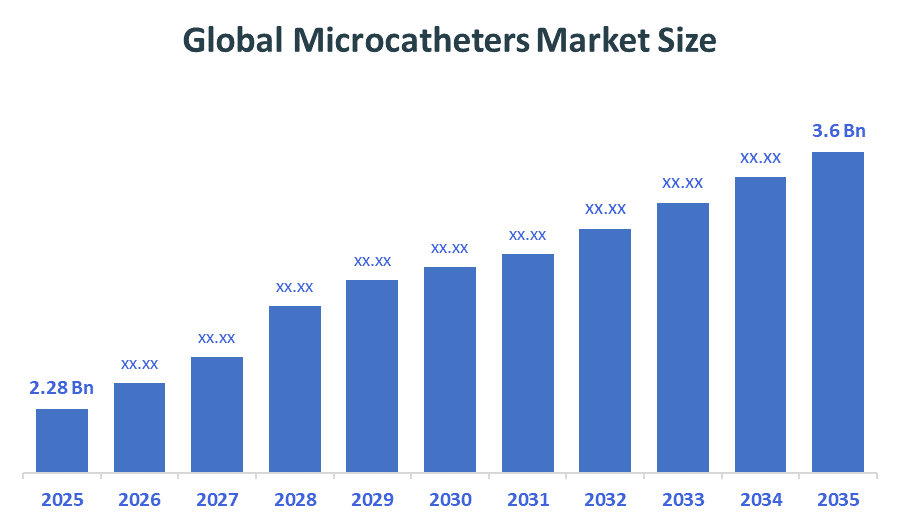
According to Decision Advisors, the Global Microcatheters Market Size is expected to grow from USD 2.28 Billion in 2025 to USD 3.6 Billion by 2035, at a CAGR of 4.67% during the forecast period 2025-2035. The Global Microcatheters Market is projected to grow significantly over the next decade. The growth is driven by rising demand for minimally invasive procedures and advancements in interventional technologies.
Market Overview/ Introduction
The global microcatheters market is defined as ultra-thin, highly flexible tubes used to navigate the body's smallest vessels. These devices are indispensable for delivering stents, coils, and drugs in cardiology, neurology, and oncology. Market growth is primarily fueled by a global surge in chronic diseases affecting over 500 million patients and an ageing population that increasingly requires minimally invasive interventions. While single-lumen designs currently dominate due to their cost-effectiveness, dual-lumen microcatheters are the fastest-growing segment because they allow surgeons to perform multiple tasks, like drug delivery and imaging, simultaneously. Looking ahead, the real magic will happen when we pair these catheters with robotic navigation and AI basically a GPS for the human body. This will make complex brain surgeries safer and more precise than ever, which is a huge win for patients everywhere, especially in rapidly growing medical hubs across Asia. Governments are also stepping up, with the World Health Organisation pushing for better global care for these conditions. On the business side, it’s a race to innovate.
- Companies like Penumbra and Bendit Technologies are already changing the game with steerable tools like the ACCESS25 and Bendit17, which make tricky surgeries much smoother for doctors.
- India's Production Linked Incentive (PLI) scheme, which offers ?3,420 crores to boost local manufacturing of high-end medical tech.
Notable Insights: -
- North America is anticipated to hold approximately 40% share of the Global Microcatheters Market over the predicted timeframe.
- Europe is expected to grow at a rapid CAGR in the Global Microcatheters Market by holding approximately 28% of the share during the forecast period.
- By product type, the delivery microcatheters segment dominated the market and holds approximately 60% share in 2025, and is projected to grow at a substantial CAGR during the forecast period.
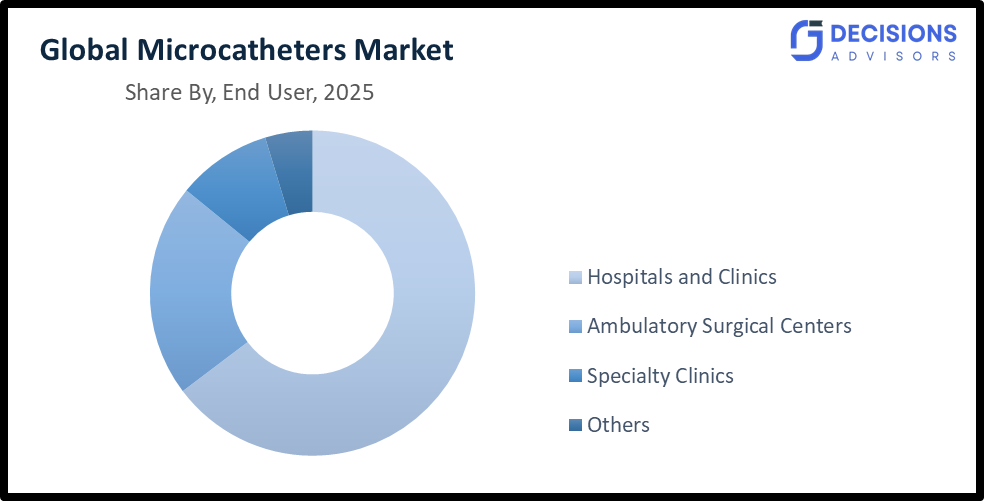
- By end user, the hospitals & clinics segment dominated the market and holds approximately 55% share in 2025 and is projected to grow at a substantial CAGR during the forecast period.
- The compound annual growth rate of the Global Microcatheters Market is 4.67%.
- The market is likely to achieve a valuation of USD 3.6 Billion by 2035.
What is the role of technology in grooming the market?
Technology is significantly enhancing the performance and application of microcatheters. Advanced materials such as polymer-based flexible shafts and hydrophilic coatings improve navigation through narrow and tortuous vessels. Imaging integration, including fluoroscopy and digital subtraction angiography, enables real-time visualization, increasing procedural precision. AI-assisted imaging is also improving procedural planning and reducing complications. Additionally, innovations such as dual-lumen microcatheters allow simultaneous delivery of therapeutic agents and guidewire support, improving efficiency in complex procedures.
Market Drivers
What’s really pushing the microcatheters market forward is the simple fact that more patients are dealing with heart and brain conditions than ever before. Since cardiovascular issues cause nearly a third of deaths worldwide, doctors are in a race to find better ways to treat them. Patients are also steering the market. Moving toward these types of procedures can cut recovery times in half, which means getting people back on their feet and out of the hospital much faster. Beyond just heart and brain health, these tiny tubes are being used more often to treat tumors in the liver and kidneys by cutting off their blood supply. The success rate of these procedures has jumped by over 25%, making these catheters a must-have tool in modern medicine. Combined with more funding for healthcare and new specialized labs opening up globally.
Restrain
The market faces challenges such as the high cost of advanced microcatheters and interventional procedures. Limited access to specialized healthcare facilities in developing regions can restrict adoption. Additionally, the requirement for highly skilled professionals and risks associated with catheter-based procedures, such as vessel damage or infection, may hinder market growth.
Competitive Analysis:
The report offers the appropriate analysis of the key organizations/companies involved within the Global Microcatheters Market, along with a comparative evaluation primarily based on their product of offering, business overviews, geographic presence, enterprise strategies, segment market share, and SWOT analysis. The report also provides an elaborative analysis focusing on the current news and developments of the companies, which includes product development, innovations, joint ventures, partnerships, mergers & acquisitions, strategic alliances, and others. This allows for the evaluation of the overall competition within the market.
Top Companies in the Global Microcatheters Market
- Medtronic
- Terumo Corporation
- Merit Medical Systems
- Stryker Corporation
- Penumbra, Inc.
- Boston Scientific Corporation
- Teleflex Incorporated
- Asahi Intecc Co., Ltd.
- Cook Medical
- Johnson & Johnson Services, Inc.
Government Initiatives
|
Country |
Key Government Initiatives |
|
India |
Innovative Devices Access Pathway (IDAP) £10 Million Funding (2024) |
|
US |
Scientia Vascular has announced the US Food and Drug Administration (FDA) clearance of two uniquely engineered catheters: the Plato 17, a dimethyl sulfoxide (DMSO)-compatible microcatheter, and the Socrates 38, an aspiration catheter engineered for ischaemic stroke. |
|
Europe |
The European Commission approved a €403 million public funding package under the Important Project of Common European Interest (IPCEI) to support innovation in medical devices, including advanced interventional technologies. |
Study on the Supply, Demand, Distribution, and Market Environment of the Global Microcatheters Market
The microcatheters market shows strong demand driven by increasing interventional procedures. Supply is supported by continuous innovation and expansion of manufacturing capabilities. Hospitals, specialty clinics, and ambulatory surgical centers are key distribution channels. Favorable reimbursement policies and growing healthcare investments are creating a positive market environment.
Price Analysis and Consumer Behaviour Analysis
Advanced microcatheters are priced at a premium due to their technological sophistication. However, healthcare providers prefer them due to improved clinical outcomes and reduced complications. Consumers are increasingly opting for minimally invasive treatments, prioritizing faster recovery and lower hospitalization costs.
Market Segmentation
The Global Microcatheters Market share is classified into product type, application and end user
- The delivery microcatheters segment dominated the market and holds approximately 60% share in 2025, and is projected to grow at a substantial CAGR during the forecast period.
Based on the product type, the global microcatheters market is divided into delivery microcatheters, aspiration microcatheters, and diagnostic microcatheters. Among these, the delivery microcatheters segment dominated the market and holds approximately 60% share in 2025, and is projected to grow at a substantial CAGR during the forecast period. This dominance is attributed to their extensive use in embolization procedures, drug delivery, and stent placement across cardiovascular and neurovascular interventions. These devices offer superior trackability, flexibility, and precise navigation through complex vascular anatomies, making them highly preferred. Aspiration microcatheters are gaining traction in thrombectomy procedures, while diagnostic microcatheters hold a smaller share due to their limited but essential role in imaging and contrast delivery.
- The cardiovascular segment accounted for the largest share of approximately 45% in 2025 and is anticipated to grow at a significant CAGR during the forecast period
Based on the application, the global microcatheters market is divided into cardiovascular, neurovascular, oncology, and peripheral vascular. Among these, the cardiovascular segment accounted for the largest share of approximately 45% in 2025 and is anticipated to grow at a significant CAGR during the forecast period. This is primarily due to the high global burden of cardiovascular diseases and the increasing number of angioplasty and catheter-based interventions. The neurovascular segment is also witnessing strong growth driven by rising stroke incidence and increasing adoption of minimally invasive neuro-interventions. Oncology applications are expanding steadily with the growing use of tumor embolization procedures, while peripheral vascular applications are growing at a moderate pace.
- The hospitals & clinics segment dominated the market and holds approximately 55% share in 2025 and is projected to grow at a substantial CAGR during the forecast period
Based on end user, the global microcatheters market is divided into hospitals & clinics, ambulatory surgical centers, specialty clinics, and others. Among those, the hospitals & clinics segment dominated the market and holds approximately 55% share in 2025 and is projected to grow at a substantial CAGR during the forecast period, owing to the presence of advanced catheterization laboratories, skilled healthcare professionals, and high patient volumes for interventional procedures. Ambulatory surgical centers are witnessing rapid growth due to the increasing shift toward outpatient minimally invasive procedures, offering cost-effectiveness and reduced hospital stays. Specialty clinics are also expanding steadily, particularly in developed regions.
Strategies to Implement for Growth of the Market in Non-Leading Regions
Companies should focus on expanding access to affordable devices and training healthcare professionals.Partnerships with governments and local distributors can improve penetration. Developing cost-effective microcatheters and investing in portable imaging technologies will enhance adoption in emerging markets.
Regional Segment Analysis of the Global Microcatheters Market
- North America (U.S., Canada, Mexico)
- Europe (Germany, France, U.K., Italy, Spain, Rest of Europe)
- Asia-Pacific (China, Japan, India, Rest of APAC)
- South America (Brazil and the Rest of South America)
- The Middle East and Africa (UAE, South Africa, Rest of MEA)
North America is anticipated to hold approximately 40% share of the Global Microcatheters Market over the predicted timeframe.
North America is anticipated to hold approximately 40% share of the global microcatheters market over the predicted timeframe. It maintains dominant market leadership due to well-established healthcare infrastructure, high volume of interventional procedures, and strong adoption of advanced catheter-based technologies. The United States is the key driver, supported by high healthcare expenditure and the increasing prevalence of cardiovascular and neurovascular diseases. Additionally, the growing adoption of minimally invasive procedures such as angioplasty, embolization, and thrombectomy across hospitals and specialty centers further strengthens regional demand. The presence of major market players and continuous technological advancements also contribute to market growth.
Europe is expected to grow at a rapid CAGR in the Global Microcatheters Market by holding approximately 28% of the share during the forecast period.
Europe is expected to grow at a rapid CAGR in the global microcatheters market by holding approximately 28% of the share during the forecast period. Europe’s market is supported by advanced healthcare systems, favorable reimbursement policies, and increasing adoption of minimally invasive interventional procedures. Key countries such as Germany, France, and the United Kingdom emphasize early diagnosis and treatment of cardiovascular and neurovascular conditions, contributing to increased procedural volumes. Additionally, rising investments in healthcare infrastructure and growing awareness about minimally invasive treatments are driving steady market growth across the region.
Asia Pacific is the fastest-growing region in the Microcatheters Market during the period, holding approximately 22% share.
Asia Pacific is the fastest-growing region in the microcatheters market during the period, holding approximately 22% share. This growth is driven by rising healthcare investments, increasing prevalence of cardiovascular diseases, and improving access to interventional procedures. Countries such as China, India, and Japan are witnessing significant growth due to large patient populations and expanding healthcare infrastructure. Government initiatives to improve cardiac care, increasing number of catheterization laboratories, and growing medical tourism are further contributing to the rising demand and overall market expansion in the region.
Future Market Trends in the Global Microcatheters Market: -
- Rapid Shift Toward Minimally Invasive and Image-Guided Procedures
The market is witnessing a strong shift from traditional open surgeries to minimally invasive, catheter-based interventions. Microcatheters are becoming essential tools in procedures such as angioplasty, embolization, and thrombectomy due to their ability to navigate complex vascular pathways with high precision. These procedures reduce hospital stays by 30–50% and lower complication risks, making them highly preferred by both patients and healthcare providers. The increasing demand for outpatient and same-day procedures is expected to further accelerate the adoption of microcatheters.
- Technological Advancements in Microcatheter Design and Materials.
Continuous innovation in microcatheter technology is significantly shaping the market. Advancements such as hydrophilic coatings, dual-lumen designs, improved torque control, and enhanced flexibility are improving device performance and procedural success rates. Manufacturers are also focusing on developing next-generation microcatheters with better trackability and pushability, especially for neurovascular and complex cardiovascular interventions. These innovations have improved procedural efficiency by over 20–25%, making advanced microcatheters a critical component in modern interventional medicine.
- Expanding Applications in Neurovascular and Oncology Procedures
The application scope of microcatheters is expanding beyond cardiovascular treatments into neurovascular and oncology interventions. The rising incidence of stroke (affecting nearly 15 million people annually) is driving demand for microcatheters in clot retrieval and cerebral interventions. Additionally, the growing use of tumor embolization procedures in cancer treatment is increasing their adoption in oncology. As precision medicine and targeted therapies continue to evolve, microcatheters are expected to play a crucial role in site-specific drug delivery and minimally invasive tumor management, driving long-term market growth.
Recent Development
- In September 2025, ASAHI INTECC announced the U.S. commercial launch of its Veloute and Tellus microcatheters. These medical devices were indicated for angiography and the infusion of therapeutic and diagnostic agents, including embolization, in the peripheral vasculature.
- In February 2024, BIOTRONIK, in collaboration with Interventional Medical Device Solutions (IMDS), announced the launch of the Micro Rx coronary microcatheter. The device was developed to enhance guidewire support during percutaneous coronary interventions (PCI), particularly in complex vascular anatomies.
- February 2024, BIOTRONIK, in partnership with Interventional Medical Device Solutions (IMDS), announced the launch of the Micro Rx™ rapid-exchange microcatheter for use in percutaneous coronary interventions (PCI).
- In March 2022, Guerbet announced the expansion of its interventional imaging portfolio by significantly increasing its range of microcatheters and guidewires for embolization procedures.
- In May 2021, Scientia Vascular announced that it had raised $50 million in growth equity funding from Vivo Capital to support the development of its guidewires and microcatheters for stroke and cancer treatment.
How is Recent Developments Helping the Market?
Recent innovations are improving procedural accuracy, reducing complications, and expanding clinical applications. Advanced microcatheters have increased procedural success rates by over 20%, while reducing procedure time significantly. The integration of AI and imaging technologies is enhancing decision-making and workflow efficiency, supporting market growth.
Market Segment
This study forecasts revenue at global, regional, and country levels from 2020 to 2035. Decision Advisors has segmented the global microcatheters market based on the below-mentioned segments:
Global Microcatheters Market, By Product Type
- Delivery Microcatheters
- Aspiration Microcatheters
- Diagnostic Microcatheters
Global Microcatheters Market, By Application
- Cardiovascular
- Neurovascular
- Oncology
- Peripheral Vascular
Global Microcatheters Market, By End User
- Hospitals and Clinics
- Ambulatory surgical centers
- Specialty Clinics
Global Microcatheters Market, By Regional Analysis
- North America
- US
- Canada
- Mexico
- Europe
- Germany
- UK
- France
- Italy
- Spain
- Russia
- Rest of Europe
- Asia Pacific
- China
- Japan
- India
- South Korea
- Australia
- Rest of Asia Pacific
- South America
- Brazil
- Argentina
- Rest of South America
- Middle East & Africa
- UAE
- Saudi Arabia
- Qatar
- South Africa
- Rest of the Middle East & Africa
Frequently Asked Questions (FAQ)
Q. What factors influence the selection of a specific microcatheter for a procedure?
A. Selection depends on vessel size, lesion complexity, required flexibility, compatibility with guidewires, and the type of procedure such as embolization or thrombectomy.
Q. How do microcatheters contribute to targeted drug delivery in modern treatments?
A. Microcatheters enable precise delivery of drugs directly to the affected site, improving treatment efficacy while minimizing systemic side effects, especially in oncology and vascular therapies.
Q. What are the key challenges faced by manufacturers in developing microcatheters?
A. Challenges include achieving optimal balance between flexibility and strength, ensuring biocompatibility, maintaining cost efficiency, and meeting stringent regulatory requirements.
Q. How is the increasing use of robotic-assisted interventions impacting the microcatheters market?
A. Robotic-assisted procedures enhance precision and control, increasing the demand for highly compatible and advanced microcatheters designed for integration with robotic systems.
Q. What role do training and physician expertise play in the adoption of microcatheters?
A. Skilled professionals are essential for successful outcomes, as microcatheter-based procedures require high precision and expertise. Increased training programs are boosting adoption rates globally.
Check Licence
Choose the plan that fits you best: Single User, Multi-User, or Enterprise solutions tailored for your needs.
We Have You Covered
- 24/7 Analyst Support
- Clients Across the Globe
- Tailored Insights
- Technology Tracking
- Competitive Intelligence
- Custom Research
- Syndicated Market Studies
- Market Overview
- Market Segmentation
- Growth Drivers
- Market Opportunities
- Regulatory Insights
- Innovation & Sustainability
Report Details
| Scope | Global |
| Pages | 210 |
| Delivery | PDF & Excel via Email |
| Language | English |
| Release | Apr 2026 |
| Access | Download from this page |