
Global Migraine Market
 |
Pages:
240
|
Pages:
240
Global Migraine Market Size, Share, and COVID-19 Impact Analysis, By Type (Episodic and Chronic), By Treatment Type (Preventive, and Abortive), By Therapeutic Class (CGRP monoclonal antibodies, CGRP small molecule antagonists, Acetylcholine inhibitors/ neurotoxins, Triptans, Ditans, Ergot alkaloids, NSAIDs, and Others), and By Region (North America, Europe, Asia-Pacific, Latin America, Middle East, and Africa), Analysis and Forecast 2025-2035
REPORT COVERAGE
Global
Global Migraine Market Size Insights Forecasts to 2035
- The Global Migraine Market Size Was Estimated at USD 5.87 Billion in 2024
- The Market Size is Expected to Grow at a CAGR of around 5.37 % from 2025 to 2035
- The Worldwide Migraine Market Size is Expected to Reach USD 10.44 Billion by 2035
- Europe is expected to grow the fastest during the forecast period.
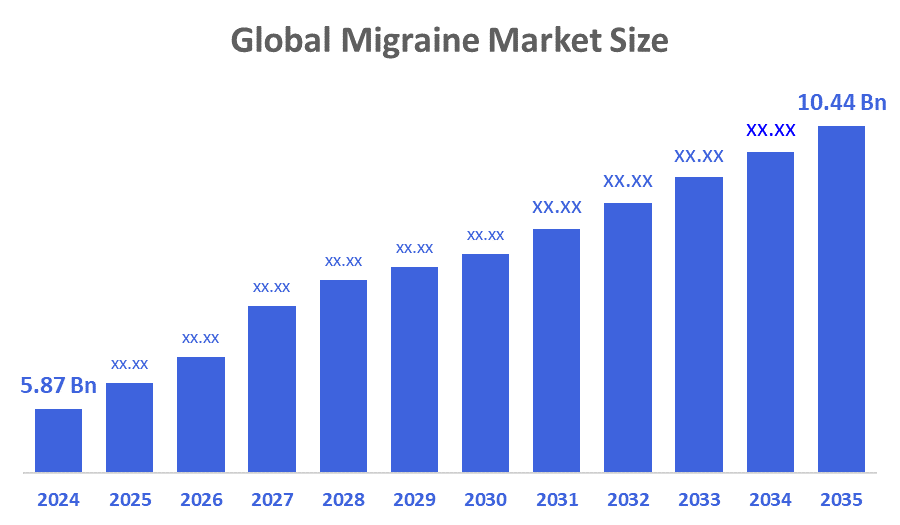
According to a research report published by Decisions Advisors and Consulting, The Global Migraine Market Size Was Worth Around USD 5.87 Billion In 2024 And Is Predicted To Grow To Around USD 10.44 Billion By 2035 With A Compound Annual Growth Rate (CAGR) Of 5.37 % From 2025 To 2035. The increasing occurrence of migraine headaches drives the expansion of the migraine treatment market. The rising number of patients who smoke and the increasing rate of alcohol consumption will drive the development of migraine treatment products, which will impact market trends.
Market Overview
The Global Migraine Market Size includes products, therapies, and services aimed at the diagnosis, treatment, and prevention of migraine disorders. Migraine is a neurological illness that causes people to experience pulsating headaches that affect either their forehead or one side of their head or their eye area. The pain comes with autonomic symptoms, which include nausea and vomiting, photophobia and phonophobia. Professional personal establish a migraine diagnosis through assessment of the patient's medical history and clinical symptoms, which they need to confirm through blood tests, MRI and CT scans. The current treatment options for migraine symptoms include over-the-counter (OTC) medications and prescription injections, which help reduce both the number and severity of migraine attacks.
In 2021, 3.1 billion individuals worldwide, roughly 40% of the population, will suffer from headache disorders, which are more common in women than in men. Beginning at age 5 and continuing until age 80, these are in the top three most prevalent neurological diseases for the majority of age groups.
Salvia BioElectronics raised $60 million (€53 million) in an oversubscribed Series B funding round to advance its MySalvia neuromodulation therapy for chronic migraine. The therapy uses minimally invasive implants that target key nerves involved in migraine, aiming to reduce both the frequency and intensity of attacks.
Hemi Health, a female-led HealthTech startup based in Frederiksberg, raised €4 million in Seed funding to expand its migraine, headache disorder, and concussion care solutions internationally. The company plans to begin its expansion in the Netherlands, with further global ambitions.
Report Coverage
This research report categorizes the migraine market based on various segments and regions, forecasts revenue growth, and analyzes trends in each submarket. The report analyses the key growth drivers, opportunities, and challenges influencing the migraine market. Recent market developments and competitive strategies, such as expansion, product launch, development, partnership, merger, and acquisition, have been included to draw the competitive landscape in the market. The report strategically identifies and profiles the key market players and analyzes their core competencies in each sub-segment of the migraine market.
Driving Factors
The migraine market is currently undergoing fundamental changes because of improved treatment options and better medical understanding of migraine disorders. As awareness increases, more individuals are seeking effective solutions, leading to a rise in demand for innovative therapies. The market appears to be shifting towards personalised medicine, where treatments are tailored to individual patient profiles, which helps doctors achieve better treatment results with fewer adverse effects. Digital health technologies will become essential tools for migraine management because they provide patients with resources to monitor their symptoms and follow their treatment schedule. The migraine market is currently experiencing a research and development boom, which focuses on finding new treatment methods. Pharmaceutical companies are investing in clinical trials to explore new drug formulations and delivery methods. The current trend shows that patients will receive better treatment results because they will have access to more treatment options.
Merz Therapeutics announced that the first patients have been enrolled in two global Phase III clinical trials investigating XEOMIN (incobotulinumtoxinA) for migraine prevention. This marks an important step in diversifying migraine prevention strategies beyond current standards like CGRP inhibitors and botulinum toxin type A (Botox).
Biohaven and Pfizer entered a strategic collaboration for the commercialisation of Rimegepant (marketed in the U.S. as Nurtec ODT) outside the United States. This collaboration significantly expands the global reach of Rimegepant, positioning Pfizer to leverage its international infrastructure while Biohaven benefits from milestone payments and royalties.
Restraining Factors
The main barrier to progress in this field comes from two factors, which include the high costs of current treatments and their uncertain reimbursement status. Many advanced migraine medications (e.g. biologics) have premium pricing and may not be fully reimbursed in many markets, thereby limiting access in lower-income regions or constrained health systems. The market expansion faces challenges because lack of knowledge about the condition and because they do not receive proper treatment in emerging markets.
Market Segmentation
The Migraine market share is classified into type, treatment type, and therapeutic class.
- The chronic segment accounted for the largest share in 2024 and is anticipated to grow at a significant CAGR during the forecast period.
Based on the type, the migraine market is divided into episodic and chronic. Among these, the chronic segment accounted for the largest share in 2024 and is anticipated to grow at a significant CAGR during the forecast period. This is due to the prevalence they're and how severe their symptoms are for sufferers. It has a significant negative influence on quality of life, leading to the need for effective therapies and control techniques.
For instance, 1,630 patients were included in the I-GRAINE Registry, with 18.3% having chronic migraine. The average age was 45.7 years, with chronic cases being somewhat older. The majority of cases (73.6%) had migraine without aura, whereas 8.1% had aura.
- The preventive segment accounted for the highest market share in 2024 and is anticipated to grow at a substantial CAGR over the forecast period.
Based on the treatment type, the migraine market is divided into preventive and abortive. Among these, the preventive segment accounted for the highest market share in 2024 and is anticipated to grow at a substantial CAGR over the forecast period. This is because they help with long-term health management and address the root causes of migraines. These include drugs that are well known for their efficacy, such as topiramate and onabotulinumtoxin A.
In August 2025, the U.S. Food and Drug Administration (FDA) expanded the use of AJOVY from its original approval for the prevention of migraine in adults to include the prevention of episodic migraine in children and adolescents aged 6-17 years who weigh 45 kilograms (99 pounds) or more.
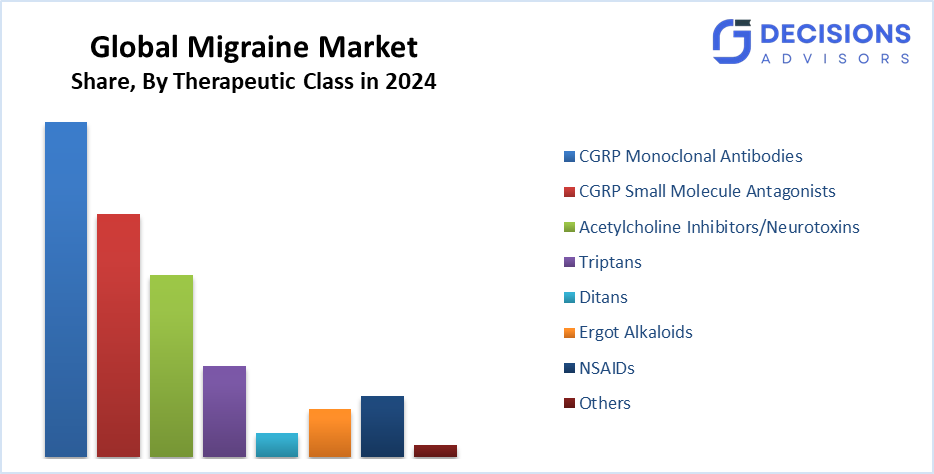
- The CGRP monoclonal antibodies segment accounted for the highest market revenue in 2024 and is anticipated to grow at a significant CAGR during the forecast period.
Based on the therapeutic class, the migraine market is divided into CGRP monoclonal antibodies, CGRP small molecule antagonists, acetylcholine inhibitors/ neurotoxins, triptans, ditans, ergot alkaloids, NSAIDs, and others. Among these, the CGRP monoclonal antibodies segment accounted for the highest market revenue in 2024 and is anticipated to grow at a significant CAGR during the forecast period. Their superior safety profile, long-lasting preventative effect, and high efficacy over traditional treatments are the reasons for their prominent position. The development of drugs like eptinezumab, galcanezumab, fremanezumab, and erenumab has greatly increased the use of preventative therapy, propelling this market's dominance.
Anti-CGRP Monoclonal Antibodies are medications that target the calcitonin gene-related peptide (CGRP) pathway, which is a key mechanism in the pathophysiology of migraines. The frequency and intensity of migraines have been demonstrated to be significantly reduced by these treatments.
Regional Segment Analysis of the Migraine Market
- North America (U.S., Canada, Mexico)
- Europe (Germany, France, U.K., Italy, Spain, Rest of Europe)
- Asia-Pacific (China, Japan, India, Rest of APAC)
- South America (Brazil and the Rest of South America)
- The Middle East and Africa (UAE, South Africa, Rest of MEA)
Asia Pacific is anticipated to hold the largest share of the migraine market over the predicted timeframe.
Asia Pacific is anticipated to hold the largest share of the migraine market over the predicted timeframe. The migraine market in the Asia-Pacific region experiences fast growth because it currently holds about 15 per cent of the worldwide market. The region experiences development because people become more knowledgeable about migraine disorders, healthcare spending increases, and the population continues to grow. The market expansion process receives support from regulatory programs that aim to enhance healthcare accessibility. The market environment in the Asia-Pacific region currently undergoes changes because new domestic and international companies are establishing their presence in the region. The market environment operates as a dynamic growth space because healthcare systems in the region differ, and treatment access levels operate at various standards.
Pfizer launched Rimegepant Orally Disintegrating Tablets (ODT) in India for the acute treatment of migraine (with or without) in adults who previously had an insufficient response to triptans. This launch positions Rimegepant as a new standard in migraine care in India, offering both speed and durability of relief compared to traditional therapies.
Europe is expected to grow at a rapid CAGR in the migraine market during the forecast period. The region experiences growth because healthcare spending increases, more people develop migraine disorders, and new treatment methods become available. The market is dominated by Germany and France, which together hold 12% of the total market share. The region experiences growth because regulatory bodies approve new treatment methods for advanced medical solutions. The combination of an established healthcare system and supportive reimbursement procedures makes it easier for new treatments to enter the market. The European Medicines Agency, which ensures migraine treatment safety and effectiveness, creates a market environment that supports treatment development.
NHS England announced improved migraine care as part of its Long Term Plan, aiming to save thousands of hospital stays each year. By enhancing diagnosis and treatment pathways, the initiative could prevent up to 16,500 emergency hospital admissions annually. Key strategies include encouraging the use of headache diaries and providing faster access to specialist advice for GPs. With around 10 million people aged 15–69 in the UK suffering from migraines, these measures are expected to significantly improve quality of life while reducing pressure on frontline services.
Competitive Analysis:
The report offers the appropriate analysis of the key organizations/companies involved within the migraine market, along with a comparative evaluation primarily based on their product offering, business overviews, geographic presence, enterprise strategies, segment market share, and SWOT analysis. The report also provides an elaborative analysis focusing on the current news and developments of the companies, which includes product development, innovations, joint ventures, partnerships, mergers & acquisitions, strategic alliances, and others. This allows for the evaluation of the overall competition within the market.
List of Key Companies
- AbbVie
- Allergan
- Axsome Therapeutics
- Bausch Health
- Biohaven
- Cefaly Technology
- Eli Lilly
- eNeura
- GlaxoSmithKline (GSK)
- Medtronic
- Merck & Co.
- Pfizer
- Sanofi
- Theranica
- Others
Key Target Audience
- Market Players
- Investors
- End-users
- Government Authorities
- Consulting and Research Firm
- Venture capitalists
- Value-Added Resellers (VARs)
Recent Development
- In January 2026, Ultrahuman and Click Therapeutics partnered to launch the world’s first biomarker-driven migraine management tool built on FDA-authorised prescription digital therapeutic technology. The solution, called Migraine PowerPlug, integrates into the Ultrahuman wearable health platform and leverages Click Therapeutics’ regulated digital therapeutic framework.
- In October 2025, Amneal Pharmaceuticals launched Brekiya®, the first and only dihydroergotamine (DHE) autoinjector. It is approved in the U.S. for adults with migraine (with or without aura) and cluster headaches. This innovation provides a faster, more accessible option for managing severe migraine and cluster headache attacks.
Market Segment
This study forecasts revenue at global, regional, and country levels from 2020 to 2035. Decisions Advisors has segmented the migraine market based on the below-mentioned segments:
Global Migraine Market, By Type
- Episodic
- Chronic
Global Migraine Market, By Treatment Type
- Preventive
- Abortive
Global Migraine Market, By Therapeutic Class
- CGRP monoclonal antibodies
- CGRP small molecule antagonists
- Acetylcholine inhibitors/ neurotoxins
- Triptans
- Ditans
- Ergot alkaloids
- NSAIDs
- Others
Global Migraine Market, By Regional Analysis
- North America
- US
- Canada
- Mexico
- Europe
- Germany
- UK
- France
- Italy
- Spain
- Russia
- Rest of Europe
- Asia Pacific
- China
- Japan
- India
- South Korea
- Australia
- Rest of Asia Pacific
- South America
- Brazil
- Argentina
- Rest of South America
- Middle East & Africa
- UAE
- Saudi Arabia
- Qatar
- South Africa
- Rest of the Middle East & Africa
Frequently Asked Questions (FAQ)
1. How is the growing adoption of biologics influencing the competitive landscape of the migraine market?
The increasing adoption of biologic therapies, particularly targeted treatments, is intensifying competition among pharmaceutical companies. These therapies often command premium pricing and differentiate companies through innovation, improved patient adherence, and longer dosing intervals compared to traditional oral medications.
2. What role does patient adherence play in shaping migraine treatment demand?
Patient adherence significantly impacts treatment outcomes and market growth. Long-term preventive therapies and user-friendly drug delivery systems—such as autoinjectors and orally disintegrating tablets—improve compliance, reduce relapse rates, and enhance overall treatment effectiveness.
3. How are wearable technologies and digital health tools transforming migraine management?
Wearable devices and digital tracking platforms allow patients to monitor triggers, symptoms, sleep cycles, and medication schedules in real time. This data-driven approach supports early intervention, improves physician decision-making, and enhances personalised treatment planning.
4. Why is reimbursement policy considered a critical factor in migraine market expansion?
Reimbursement policies determine patient access to high-cost therapies, particularly advanced biologics and neuromodulation devices. Favourable reimbursement frameworks encourage the adoption of innovative treatments, whereas restrictive policies can limit penetration in certain healthcare systems.
5. How is the rising working-age population affecting migraine treatment demand?
Migraines disproportionately impact individuals during their most productive years, leading to absenteeism and reduced workplace efficiency. Employers and healthcare systems are increasingly investing in effective preventive solutions to reduce economic burden and productivity losses.
6. What strategic opportunities exist for companies entering emerging migraine markets?
Emerging markets offer growth potential due to expanding healthcare infrastructure, increasing awareness, and improving diagnostic capabilities. Strategic partnerships, localised manufacturing, pricing adjustments, and physician education initiatives can help companies establish a strong presence in these regions.
Check Licence
Choose the plan that fits you best: Single User, Multi-User, or Enterprise solutions tailored for your needs.
We Have You Covered
- 24/7 Analyst Support
- Clients Across the Globe
- Tailored Insights
- Technology Tracking
- Competitive Intelligence
- Custom Research
- Syndicated Market Studies
- Market Overview
- Market Segmentation
- Growth Drivers
- Market Opportunities
- Regulatory Insights
- Innovation & Sustainability
Report Details
| Scope | Global |
| Pages | 240 |
| Delivery | PDF & Excel via Email |
| Language | English |
| Release | Feb 2026 |
| Access | Download from this page |