
Global Motor Protection Market
 |
Author:
Achal E
|
Pages:
220
|
Author:
Achal E
|
Pages:
220
Global Motor Protection Market Size, Share, By Protection Device Type (Motor Protection Relays, Thermal Overload Relays, Contractor, Soft Starters, Motor protection relays), By Voltage Range(Low Voltage(0-1 kV, Medium Voltage (1-36 kV), High Voltage (36 kV and above)), By Motor Type (AC Motors, DC Motors, Steppers, Servos) and By Region (North America, Europe, Asia-Pacific, Latin America, Middle East, and Africa), Analysis and Forecast 2026-2035.
CAGR
4.9%
REVENUE 2025
USD Billion 18.43
FORECAST 2035
USD Billion 29.73
REPORT COVERAGE
Global
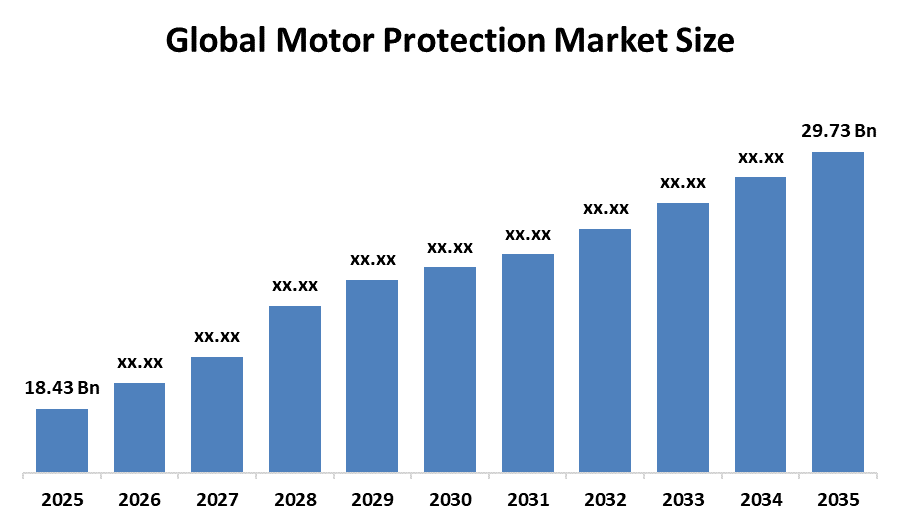
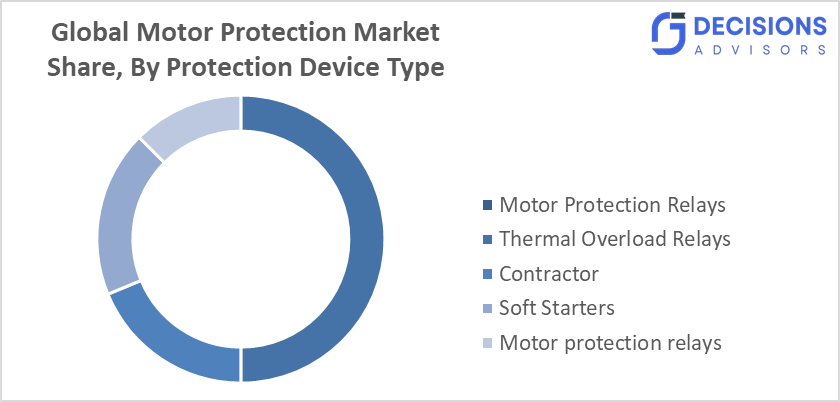
The Global Motor Protection Market Size is forecasted to grow from USD 18.43 Billion in 2025 and is going to reach approx. USD 29.73 Billion by 2035. According to Decision Advisors, there is a detailed research report on the Global Motor Protection Market that highlights that Motor Protection Relays dominate the global market, accounting for approximately 40-45% of the total share worldwide. Schneider Electric SE generates strong revenue through their electrical distribution and industrial automation segment, which accounts for approximately 10–14% market share, thus acting as a key driver supporting innovation in smart motor control, energy-efficient protection systems, and global industrial safety solutions across manufacturing and utility sectors.
Market Snapshot
- Global Motor Protection Market Size (2025): USD 18.43 Billion
- Projected Global Motor Protection Market Size (2035): USD 29.73 Billion
- Global Motor Protection Market Compound Annual Growth Rate (CAGR): 4.9%
- Largest Regional Market: Asia- Pacific
- Fastest Growing Region: North America
- 3rd Largest Region: Europe
- Base Year: 2025
- Historical Period: 2021–2025
- Forecast Period: 2025–2035
Market Overview/ Introduction
The Motor Protection Market consists of equipment and systems which protect electric motors from damage which occurs during overloads, short circuits and phase failures, voltage changes and overheating situations. The systems function as essential components in all industrial sectors which depend on motors for their operational needs including manufacturing, oil, gas, utility and HVAC system operations. The operation of motor protection technologies delivers two benefits which include better equipment reliability and increased operational uptime together with longer equipment lifespan. The market experiences strong expansion because of two factors which are increased industrial automation and development of smart grid systems and growing need for energy-efficient motor solutions. The traditional protection systems become advanced monitoring systems through their integration with Internet of Things technology and artificial intelligence-based predictive maintenance systems. The deployment of smart motor protection systems which use Industry 4.0 frameworks started to progress faster in June 2025 throughout industrial modernization projects in the United States and Germany and China.
- In April 2026, India’s PLI Schemes, including the ?7,280 crore Sintered Rare Earth Permanent Magnets program and electronics manufacturing incentives, strengthened self-reliance and boosted demand for motor starters and protection systems in industrial infrastructure.
- In April 2026, The PLI scheme for rare earth permanent magnets strengthened motor protection demand by boosting domestic manufacturing of critical components like motor starters and protection systems, improving self-reliance and supporting industrial infrastructure growth.
Notable Insights: -
- North America is the fastest growing region with approximately 7% market share in the Global Motor Protection Market.
- Asia Pacific holds the largest regional market share approximately 45% in the Global Motor Protection Market.
- By Protection Device Type, the Motor Protection Relays segment held a dominant position approximately 8% in terms of market share in 2025.
- By Voltage range, Low Voltage (0–1 kV) segment is the dominating, accounting for approximately 7.5% of the global market share in 2025.
- The compound annual growth rate of the Global Motor Protection Market is 4.9%.
- The market is likely to achieve a valuation of USD 29.73Billion by 2035.
What is the role of technology in grooming the market?
Technological advancements play a critical role in shaping the Motor Protection Market by enhancing system intelligence, efficiency, and reliability. The shift from conventional thermal and magnetic protection devices to electronic and smart protection systems enables real-time monitoring of motor parameters such as current, voltage, temperature, and vibration. Advanced motor protection relays now incorporate IoT connectivity, allowing remote diagnostics and predictive maintenance through cloud-based platforms. AI and machine learning algorithms help detect early fault conditions, reducing unexpected failures and maintenance costs. Integration with industrial automation systems and SCADA platforms further improves operational efficiency. Additionally, the development of compact, energy-efficient semiconductor components enhances performance while reducing power consumption, making modern motor protection systems more adaptable to diverse industrial environments.
Market Drivers
The Motor Protection Market is driven by increasing industrialization and the growing need for reliable motor operations across manufacturing and process industries. Expansion of smart factories and Industry 4.0 adoption is accelerating demand for intelligent motor protection systems. Rising investments in power generation and distribution infrastructure are also contributing to market growth. The increasing use of electric motors in HVAC systems, water treatment plants, and renewable energy applications is further boosting demand. Strict energy efficiency regulations and safety standards encourage industries to adopt advanced motor protection solutions. Additionally, the growing focus on reducing downtime and maintenance costs is pushing industries toward predictive and automated protection technologies.
Restrain
The Motor Protection Market faces certain challenges that may limit its growth. High initial installation and integration costs of advanced protection systems can restrict adoption among small and medium enterprises. Complexity in system configuration and lack of skilled professionals also pose challenges. Compatibility issues with legacy systems can hinder integration in existing industrial setups. Furthermore, fluctuations in raw material costs and competition from low-cost conventional protection devices may impact market growth.
Competitive Analysis:
The report offers the appropriate analysis of the key organizations/companies involved within the Global Motor Protection Market, along with a comparative evaluation primarily based on their product of offering, business overviews, geographic presence, enterprise strategies, segment market share, and SWOT analysis. The report also provides an elaborative analysis focusing on the current news and developments of the companies, which includes product development, innovations, joint ventures, partnerships, mergers & acquisitions, strategic alliances, and more. This allows for the evaluation of the overall competition within the market.
Top Companies in Global Motor Protection Market
- ABB Ltd.
- Siemens AG
- Schneider Electric SE
- Eaton Corporation plc
- General Electric Company
- Mitsubishi Electric Corporation
- Rockwell Automation, Inc.
- Larsen & Toubro Limited
- Fuji Electric Co., Ltd.
- Danfoss A/S
Government Initiatives
|
Country |
Key Government Initiatives |
|
China
|
In March 2026, China dominated the Asia-Pacific Motor Protection Market with approximately 38.6% share, driven by strong manufacturing base, rapid industrial automation, and government support for advanced electrical safety and motor protection technologies.
|
|
Japan |
In April 2026, Japan and South Korea focused on advanced, high-precision, and AI-enabled motor controllers for robotics and automated production systems, driven by strong semiconductor industries, robotics leadership, and Industry 4.0 adoption.
|
|
India |
In April 2026, India was the fastest-growing Motor Protection Market in Asia Pacific, driven by “Make in India” initiatives, smart city projects, and rising industrial automation demand for efficient motor safety systems. |
Study on the Supply, Demand, Steppers and Market Environment of Global Motor Protection Market
The motor protection ecosystem is composed of multiple stakeholders, including component manufacturers, system integrators, original equipment manufacturers (OEMs), and end users across various industries. Component manufacturers develop essential devices such as relays, circuit breakers, and protection modules, while system integrators ensure seamless integration into industrial systems. OEMs play a critical role in distributing motor protection solutions as part of larger equipment packages. The Asia-Pacific region dominates global supply due to its strong manufacturing base in countries like China, Japan, and South Korea, supported by cost-effective production and advanced industrial infrastructure. Demand is primarily driven by industrial and utility sectors where reliable motor performance is essential. Growing investments in automation, smart infrastructure, and Industry 4.0 technologies are further strengthening supply chain dynamics and expanding market opportunities.
Price Analysis and Consumer Behaviour Analysis
Motor protection devices vary significantly in price depending on their technology, features, and level of complexity. Basic thermal overload relays are generally priced between USD 20–100, making them suitable for small-scale and low-cost applications. More advanced electronic motor protection systems, offering enhanced monitoring and control, typically range from USD 150–500. Smart motor protection systems equipped with IoT integration and real-time diagnostics can exceed USD 500, depending on functionality and industrial use cases. Industrial consumers tend to prioritize reliability, operational efficiency, and long-term cost savings rather than initial investment costs. Around 60% of buyers focus on predictive maintenance capabilities, while nearly 50% prefer solutions compatible with existing automation systems. Rising awareness of energy efficiency, safety regulations, and operational optimization continues to influence purchasing decisions.
Market Segmentation
The Global Motor Protection Market share is classified into Protection Device Type, Voltage Range and Motor Type
- The Motor Protection Relays segment dominated the market in 2024, and is projected to grow at a substantial CAGR of approximately 8% during the forecast period.
Based on the Protection Device Type, the Global Motor Protection Market is divided into Motor Protection Relays, Thermal Overload Relays, Contractor, Soft Starters, Motor protection relays. Among these, the Motor Protection Relays segment dominated the market in 2024, and is projected to grow at a substantial CAGR of approximately8% during the forecast period. Motor Protection Relays dominate the market due to their advanced real-time monitoring, precise fault detection, and compatibility with smart industrial automation systems. They enhance operational safety, reduce downtime, and support predictive maintenance, making them highly preferred in modern Industry 4.0 environments, driving strong growth at around 8% CAGR.
- The Low Voltage (0–1 kV) segment accounted for the largest share in 2024, and is anticipated to grow at a significant CAGR of approximately 7.5% during the forecast period.
Based on the Voltage range, the Global Motor Protection Market is divided into Low Voltage (0-1 kV), Medium Voltage (1-36 kV), High Voltage (36 kV and above). Among these, the Low Voltage (0–1 kV) segment accounted for the largest share in 2024, and is anticipated to grow at a significant CAGR of approximately 7.5% during the forecast period. The Low Voltage (0–1 kV) segment dominated the Global Motor Protection Market in 2024 due to its widespread use in industrial automation, HVAC, and commercial equipment applications. It is expected to grow at a significant CAGR of around 7.5% during the forecast period, driven by rising demand for efficient, safe, and cost-effective motor protection solutions in low-power electrical systems.
- The Residential and Commercial segment dominated the market in 2024, and is projected to grow at a substantial CAGR approximately 7.5% during the forecast period.
Based on the Motor Type, the Global Motor Protection Market is divided into AC Motors, DC Motors and Steppers, Servos. Among these, the Residential and Commercial segment dominated the market in 2024, and is projected to grow at a substantial CAGR approximately 7.5% during the forecast period. This dominance is driven by rapid urbanization, increasing housing developments, expanding commercial infrastructure, and rising electrification needs, which significantly boost the demand for reliable low-voltage circuit protection devices.
Strategies to Implement for Growth of the Market in Non-Leading Regions
Growth of the Global Motor Protection Market in non-leading regions such as Latin America, the Middle East, and Africa can be accelerated through targeted industrial modernization and localized production strategies. Companies should focus on offering cost-effective motor protection solutions suitable for small and medium-scale industries, especially in utilities, agriculture, and infrastructure sectors. Strengthening partnerships with regional distributors and OEMs will improve product accessibility and after-sales service. Governments can support adoption through incentives, infrastructure development programs, and energy efficiency regulations. Additionally, awareness campaigns and technical training programs can help industries understand the benefits of advanced motor protection systems. Establishing regional manufacturing units and supply chain hubs will reduce costs and improve delivery efficiency. Integration of smart and IoT-enabled protection systems will further enhance adoption in emerging industrial markets.
Regional Segment Analysis of the Global Motor Protection Market
- North America (U.S., Canada, Mexico)
- Europe (Germany, France, U.K., Italy, Spain, Rest of Europe)
- Asia-Pacific (China, Japan, India, Rest of APAC)
- South America (Brazil and the Rest of South America)
- The Middle East and Africa (UAE, South Africa, Rest of MEA)
Asia Pacific is anticipated to hold the largest share approximately 45% of the Global Motor Protection Market over the predicted timeframe.
Asia Pacific is anticipated to hold the largest share of approximately 45% of the Global Motor Protection Market over the forecast period. This dominance is driven by rapid industrialization, strong manufacturing bases, and expanding infrastructure development in countries such as China, India, Japan, and South Korea. The region benefits from high adoption of automation, smart factories, and industrial safety systems. Increasing investments in power generation, renewable energy, and utility modernization are further boosting demand for advanced motor protection solutions. Additionally, growing emphasis on energy efficiency, equipment reliability, and reduced downtime is encouraging industries to adopt modern protection technologies. Supportive government policies promoting industrial growth and digital transformation also contribute significantly. The presence of major electrical equipment manufacturers further strengthens Asia Pacific’s leading position in the global market.
North America is expected to grow at a rapid CAGR approximately 7% in the Global Motor Protection Market during the forecast period. North America is expected to grow at a rapid CAGR of approximately 7% in the Global Miniature Circuit Breaker (Motor Protection Relays) and Molded Case Circuit Breaker (Thermal Overload Relays) Market during the forecast period. This growth is driven by increasing investments in smart grid infrastructure, modernization of aging power distribution systems, and the rising adoption of renewable energy sources such as solar and wind. The expansion of electric vehicle charging infrastructure is further accelerating demand for reliable circuit protection devices. Additionally, strong industrial automation, data center expansion, and high electricity consumption across residential and commercial sectors contribute to market growth. Continuous technological advancements, along with strict safety regulations and standards, are also encouraging the adoption of advanced and smart circuit breakers across the region.
Europe is the 3rd largest region to grow in the Global Motor Protection Market during the region.
Europe is the third-largest region in the Global Miniature Circuit Breaker Motor Protection Relays and Molded Case Circuit Breaker (Thermal Overload Relays) Market during the forecast period. The region’s growth is driven by increasing demand for reliable electrical infrastructure across countries such as Germany, France, and the United Kingdom. Strong emphasis on energy efficiency, sustainability, and strict safety regulations supports the adoption of advanced circuit protection devices. Additionally, the expansion of renewable energy projects, including wind and solar power, is increasing the need for efficient power distribution systems. Growing industrial automation, modernization of aging grid infrastructure, and rising investments in smart building technologies further contribute to market expansion. Europe’s focus on reducing carbon emissions also accelerates the deployment of advanced and energy-efficient circuit breakers.
Future Market Trends in Global Motor Protection Market: -
1. Rising Adoption of Smart and IoT-Enabled Circuit Breakers
Smart circuit breakers integrated with IoT technology are gaining traction, enabling real-time monitoring, remote operation, and predictive maintenance. These systems enhance safety, reduce downtime, and improve energy efficiency, especially in smart buildings, industrial automation, and advanced power distribution networks globally.
2. Increasing Integration with Renewable Energy Systems
The rapid expansion of solar, wind, and hybrid energy systems is driving demand for advanced circuit breakers capable of handling variable loads and bidirectional power flow. This trend is pushing manufacturers to develop more efficient, durable, and adaptive protection solutions for modern energy infrastructure.
3. Growth in Compact, Modular, and Energy-Efficient Designs
Manufacturers are focusing on compact and modular circuit breaker designs that save installation space and improve flexibility. Energy-efficient solutions with enhanced thermal performance and lower power losses are increasingly preferred, aligning with global sustainability goals and stricter energy efficiency regulations.
Recent Development
- In April 2026, Valeo introduced a 5-in-1 “Deep Integration” Module and next-generation dual inverters at Auto China, leveraging Predict4Range software to improve EV efficiency and extend driving range by up to 24%, enhancing electrification performance.
- In March 2026, Sensata Technologies launched FaultBreak Contactor and STEV series, strengthening EV motor protection systems with advanced resettable fault control and high-voltage switching solutions for improved safety and reliability.
- In March 2026, OJ Drive NexGen Engine Oil was launched in Pakistan to enhance powertrain performance and efficiency, supporting advanced engine protection and improved lubrication technology for modern automotive systems.
- In April 2025, Schneider Electric enhanced its TeSys motor management solutions with advanced AI and IoT integration, focusing on improved energy efficiency, predictive maintenance, and accelerated digital transformation in industrial motor protection systems.
How is Recent Developments Helping the Market?
Recent developments are significantly enhancing the Global Motor Protection Market by shifting it toward smart, connected, and predictive technologies. The integration of IoT-enabled relays, AI-based fault detection, and cloud monitoring improves real-time performance and reduces downtime. Advanced products with remote diagnostics and cybersecurity features are increasing operational safety and reliability. Industry 4.0 adoption and automation trends are also driving demand for intelligent motor protection systems. These innovations help industries optimize energy usage, extend equipment life, and lower maintenance costs. Additionally, retrofittable and compact designs support easy upgrades in existing plants. Overall, technological advancements are transforming traditional protection systems into intelligent solutions, boosting efficiency, safety, and long-term market growth across industrial and utility sectors worldwide.
Market Segment
This study forecasts revenue at global, regional, and country levels from 2025 to 2035. Decision Advisors has segmented the Global Motor Protection Market based on the below-mentioned segments:
Global Motor Protection Market, By Protection Device Type
- Motor Protection Relays
- Thermal Overload Relays
- Contractor
- Soft Starters
- Motor protection relays
Global Motor Protection Market, By Voltage range
- Low Voltage0-1 kV
- Medium Voltage (1-36 kV)
- High Voltage (36 kV and above)
Global Motor Protection Market, By Motor Type
- AC Motors
- DC Motors
- Steppers
- Servos
Global Motor Protection Market, By Regional Analysis
- North America
- US
- Canada
- Mexico
- Europe
- Germany
- UK
- France
- Italy
- Spain
- Russia
- Rest of Europe
- Asia Pacific
- China
- Japan
- India
- South Korea
- Australia
- Rest of Asia Pacific
- South America
- Brazil
- Argentina
- Rest of South America
- Middle East & Africa
- UAE
- Saudi Arabia
- Qatar
- South Africa
- Rest of the Middle East & Africa
Frequently Asked Questions (FAQ)
1. What percentage of global electrical faults are prevented by circuit breakers?
Modern Motor Protection Relays and Thermal Overload Relays help prevent nearly 70–80% of electrical faults, including overloads and short circuits, significantly reducing equipment damage and fire risks in residential, commercial, and industrial systems.
2. How much energy loss can be reduced using advanced circuit breakers?
Energy-efficient and smart circuit breakers can reduce electrical losses by approximately 10–15%, especially in large industrial and commercial installations with optimized load management and monitoring systems.
3. What share of new installations is expected to adopt smart circuit breakers by 2030?
It is estimated that over 60–65% of new electrical installations will incorporate smart or IoT-enabled circuit breakers by 2030, driven by smart grid expansion and automation trends.
4. How does urbanization impact demand for Motor Protection Relays and Thermal Overload Relays?
Urbanization contributes to nearly 40–45% of total market demand, as increasing residential construction, commercial infrastructure, and electrification projects require reliable circuit protection solutions.
5. What proportion of demand comes from renewable energy applications?
Renewable energy systems such as solar and wind contribute approximately 20–25% of incremental demand, as they require advanced circuit protection for fluctuating loads and grid integration.
Check Licence
Choose the plan that fits you best: Single User, Multi-User, or Enterprise solutions tailored for your needs.
We Have You Covered
- 24/7 Analyst Support
- Clients Across the Globe
- Tailored Insights
- Technology Tracking
- Competitive Intelligence
- Custom Research
- Syndicated Market Studies
- Market Overview
- Market Segmentation
- Growth Drivers
- Market Opportunities
- Regulatory Insights
- Innovation & Sustainability
Report Details
| Scope | Global |
| Pages | 220 |
| Delivery | PDF & Excel via Email |
| Language | English |
| Release | Apr 2026 |
| Access | Download from this page |