
Global Myocarditis Market
 |
Pages:
245
|
Pages:
245
Global Myocarditis Market Size, Share, By Type (Acute Myocarditis, Chronic Myocarditis, and Lymphocytic Myocarditis), By Treatment (Medication, Surgery, and Others), By Diagnosis (Blood Test, Imaging Test, Cardia Catheterization, Heart Muscle Biopsy, and Others), and By Region (North America, Europe, Asia-Pacific, Latin America, Middle East, and Africa), Analysis and Forecast 2025 ? 2035
REPORT COVERAGE
Global
Market Snapshot
- Market Size (2025): USD 1.51Billion
- Projected Market Size (2035): USD 2.47 Billion
- Compound Annual Growth Rate (CAGR): 5.04%
- Largest Regional Market: North America
- Fastest Growing Region: Asia Pacific
- 2nd Largest Region: Europe
- Base Year: 2025
- Historical Period: 2021–2024
- Forecast Period: 2025–2035
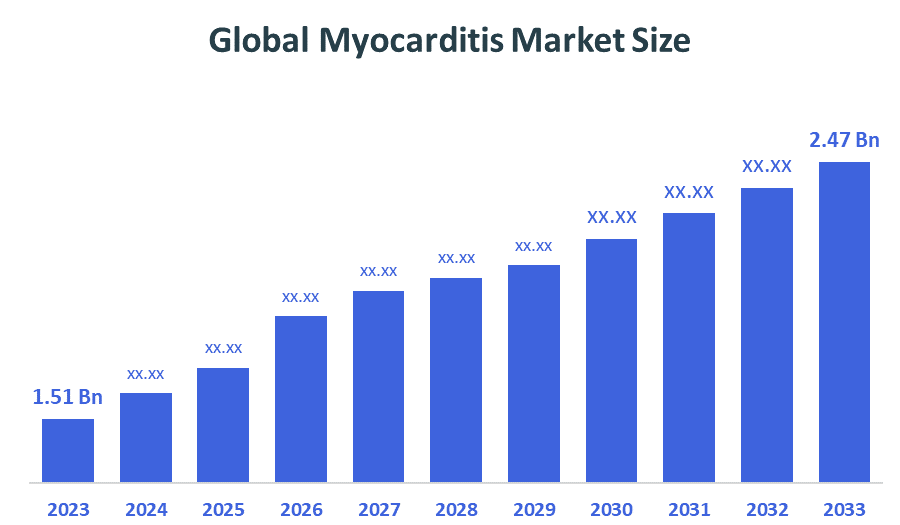
According to Decision Advisors, the Global Myocarditis Market Size is expected to grow from USD 1.51billion in 2025 to USD 2.47 billion by 2035, at a CAGR of 5.04% during the forecast period 2025-2035. The global myocarditis market is projected to grow significantly over the next decade as the increasing number of viral infections and autoimmune diseases, with the development of new treatments which include immune modulation and anti-inflammatory drugs and the increasing number of healthcare product approvals and rising healthcare expenses, are driving market growth. The combination of better public understanding and improved diagnostic methods has created a growing market for myocarditis assessments.
Market Overview/ Introduction
The global myocarditis market refers to the market for diagnostics, treatments, and therapeutic interventions for myocarditis, a rare but potentially serious inflammatory disease of the heart muscle (myocardium). Myocarditis is a medical condition that causes inflammation in the heart muscle, which doctors refer to as myocardium. The condition results in decreased blood-pumping capacity from the heart. The condition can result from viral infections, autoimmune disorders, toxins, or drug reactions, leading to symptoms that include chest pain, arrhythmias and shortness of breath, while severe cases can cause heart failure or sudden cardiac death. The global myocarditis market experiences steady growth because more people develop the disease, and people have better disease knowledge.
The development of new immunomodulating drugs, anti-inflammatory medications and biologic therapies provides pharmaceutical companies with growth possibilities. Telecardiology systems, with remote monitoring platforms, enable better patient access in developing regions worldwide. The increasing healthcare facilities and patient education in Asia-Pacific and Latin America lead to the emergence of new healthcare demands and additional patient populations.
- Myocarditis causes about 20% of sudden cardiac deaths, which occur across multiple population groups that include adults below 40 years, young athletes, United States Air Force recruits and elite Swedish orienteers.
- New ESC guidelines introduce a unified approach to improve myocarditis and pericarditis care.
Notable Insights: -
- North America holds the largest regional market share, approximately 39.5% in the global Allergic Rhino Conjunctivitis market.
- Asia Pacific is the fastest-growing region in the global myocarditis market.
- By type, the acute myocarditis segment held a dominant position of over 47% in terms of market share in 2025.
- By treatment, the medication segment is the dominating one, accounting for over 70% of the global market share in 2025.
- The compound annual growth rate of the global myocarditis market is 5.04%.
- The market is likely to achieve a valuation of USD 2.47 billion by 2035.
What is the role of technology in grooming the market?
Technology plays a crucial role in advancing the global myocarditis market by the process of developing diagnostic methods and treatment approaches, with patient monitoring systems, will contribute to market expansion. The field of early myocarditis diagnosis relies on advanced imaging technologies, which include cardiac MRI and echocardiography, while the diagnostic equipment industry is projected to increase its value from approximately $2.5 billion in 2025 to $4.5 billion by 2033, with a growth rate of about 7% because of upcoming technological advancements. The combination of artificial intelligence (AI) with machine learning (ML) technologies enables better diagnostic results for cardiovascular magnetic resonance (CMR) scans because they can match human analytical abilities in both speed and accuracy. The global market for AI-based diagnostic tools is expected to grow from USD 2.39 billion in 2026 to USD 7.91 billion by 2040, which will enhance precise diagnostic methods used in cardiology and other medical fields. Telemedicine and remote monitoring systems create better patient access for ongoing follow-up treatment, with early medical intervention capabilities, which proves especially valuable for areas that lack enough medical specialists. The combination of these technologies enables personalized myocarditis treatment through data-driven methods, which decrease misdiagnoses and improve patient outcomes while creating new business opportunities.
Market Drivers
The global myocarditis market is propelled by the increasing occurrence of myocarditis because more people are developing viral infections and autoimmune diseases, which lead to heart muscle inflammation. Physician and patient awareness about medical conditions results in better diagnostic procedures and treatment methods, which are further supported by advanced cardiac MRI diagnostic tools, imaging technologies, and biomarkers that enable early disease detection and improved treatment results. The healthcare market experiences greater demand because of enhanced medical therapies, which include anti-inflammatory medications, immunomodulatory treatments and heart support systems. The market experiences growth because healthcare spending increases and the elderly population develops more cardiovascular health problems, especially in developed countries and emerging markets that are developing better healthcare systems.
Restrain
The main restraints on the global myocarditis market include that the diagnosis and management process requires substantial financial investment for its execution. The two medical examination methods of cardiac MRI and endomyocardial biopsy, which serve as definitive diagnostic methods for myocarditis diagnosis to their high costs and limited availability in most medical facilities. The public and healthcare professionals fail to recognize myocarditis despite its increasing epidemiological impact. The majority of hospitals and clinics do not possess vital diagnostic equipment such as MRI machines and cardiac catheterization labs, which medical professionals need to conduct proper myocarditis evaluations.
Competitive Analysis:
The report offers the appropriate analysis of the key organizations/companies involved within the myocarditis market, along with a comparative evaluation primarily based on their product of offering, business overviews, geographic presence, enterprise strategies, segment market share, and SWOT analysis. The report also provides an elaborative analysis focusing on the current news and developments of the companies, which includes product development, innovations, joint ventures, partnerships, mergers & acquisitions, strategic alliances, and others. This allows for the evaluation of the overall competition within the market.
Top Companies in Global Myocarditis Market
- Pfizer Inc.
- Merck & Co., Inc.
- Bristol?Myers Squibb Company
- AstraZeneca PLC
- Novartis AG
- Eli Lilly and Company
- Gilead Sciences Inc.
- Teva Pharmaceutical Industries Ltd.
- Sanofi S.A.
- Johnson & Johnson
Government Initiatives
|
Country |
Key Government Initiatives |
|
US |
National Strategic Action Plans & Public Health Programs: The U.S. supports cardiovascular health via national action plans focused on heart disease and stroke prevention, promoting early detection, chronic disease management, and community?based interventions to lower risk factors like hypertension and high cholesterol, which also indirectly reduce myocarditis burden |
|
UK |
Public Health Surveillance & Outbreak Response, while specific myocarditis programs are limited, UK authorities monitor myocarditis cases through public health surveillance systems and outbreak response protocols, such as managing enterovirus?associated myocarditis clusters among neonates, with clinician advisories on early diagnosis and supportive care. |
|
Japan |
Japan, through professional bodies like the Japanese Circulation Society, regularly updates myocarditis diagnosis and treatment guidelines to reflect global best practices, aiming to standardise care and improve outcomes. National CVD prevention strategies also improve awareness of risk factors contributing to myocarditis |
|
India |
Heart Health Campaigns & NCD Prevention: India’s Ministry of Health has launched campaigns to improve cardiovascular health awareness, particularly on World Heart Day, focusing on lifestyle modifications (diet, exercise, tobacco cessation) and reducing hypertension and diabetes—key risk factors for heart inflammation and myocarditis outcomes. |
Market Segmentation
The myocarditis market share is classified into type, treatment, and diagnosis.
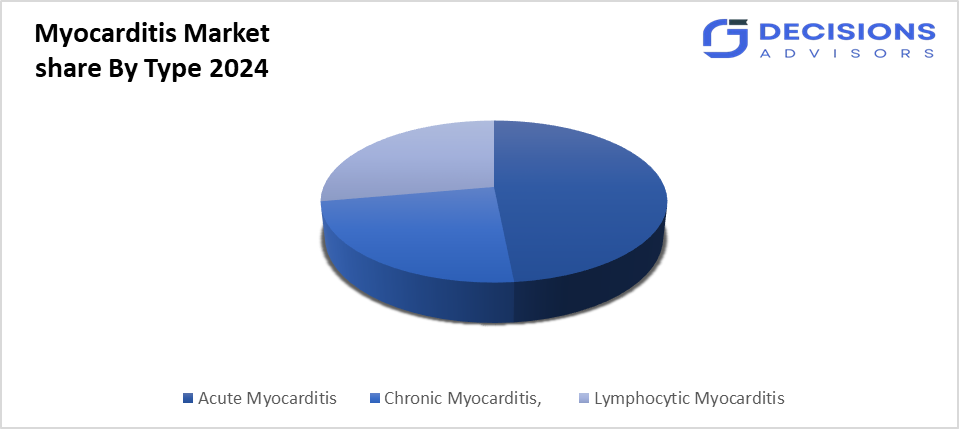
- The acute myocarditis segment dominated the market in 2025, and is projected to grow at a substantial CAGR of approximately 47% during the forecast period.
Based on the type, the myocarditis market is divided into acute myocarditis, chronic myocarditis, and lymphocytic myocarditis. Among these, the acute myocarditis segment dominated the market in 2025 and is projected to grow at a substantial CAGR of approximately 47% during the forecast period. The growth of the segment is driven by its showing more frequent hospitalizations which occur with sudden medical emergencies than chronic and lymphocytic forms of the condition. Patients with acute myocarditis need urgent medical care because the condition develops from viral infections, which require doctors to conduct extensive testing that includes cardiac MRI and blood biomarker analysis. The need for urgent treatment in this condition leads to increased healthcare resource demands, which result in more treatment adoption and higher revenue growth when compared to chronic and lymphocytic myocarditis treatments.
- The medication segment accounted for the largest share in 2025, and is anticipated to grow at a significant CAGR of approximately 70% during the forecast period.
Based on the treatment, the myocarditis market is divided into medication, surgery, and others. Among these, the medication segment accounted for the largest share in 2025 and is anticipated to grow at a significant CAGR of approximately 70% during the forecast period. The treatment works because of the widespread use of anti-inflammatory drugs, corticosteroids, beta-blockers, ACE inhibitors, and immunosuppressants, which are essential for managing both acute and chronic myocarditis. Medications are preferred because they provide non-invasive treatment at a lower cost and simple administration, while doctors use surgery only for severe conditions that endanger life, such as heart failure and ventricular damage.
- The blood test segment dominated the market in 2025, and is projected to grow at a substantial CAGR of approximately 42% during the forecast period.
Based on the diagnosis, the myocarditis market is divided into blood test, imaging test, cardia catheterization, heart muscle biopsy, and others. Among these, the blood test segment dominated the market in 2025 and is projected to grow at a substantial CAGR of approximately 42% during the forecast period. This is due to their low cost, rapid results, and wide availability, making them the first-line diagnostic tool in both developed and emerging regions. The combination of troponins, CK-MB and BNP as biomarkers enables accurate detection of myocardial damage and inflammation, which allows for prompt medical treatment. The higher diagnostic accuracy of imaging tests and invasive heart muscle biopsy procedures remains restricted to specialized medical facilities because both methods demand expert knowledge and incur high costs.
Regional Segment Analysis of the Myocarditis Market
- North America (U.S., Canada, Mexico)
- Europe (Germany, France, U.K., Italy, Spain, Rest of Europe)
- Asia-Pacific (China, Japan, India, Rest of APAC)
- South America (Brazil and the Rest of South America)
- The Middle East and Africa (UAE, South Africa, Rest of MEA)
North America is anticipated to hold the largest share of the Myocarditis market over the predicted timeframe.
North America is anticipated to hold the largest share of the Myocarditis market over the predicted timeframe. This market is accounting about approximately 39.5% of the total market share. The largest region in the global myocarditis market is North America, driven by the United States market, which maintains its status as the leading global market because the region generates substantial market revenue from its extensive base of diagnosed patients and active clinical research facilities. The North American myocarditis market reached its peak value in 2024 because of widespread cardiac MRI adoption and increasing development activities in treatment solutions. Researchers are currently developing new products and therapies to achieve better results in treating myocarditis patients. Biotech companies and pharmaceutical companies have increased their clinical research activities on immunomodulatory drugs and new anti-inflammatory treatments in 2025 to 2026. The combination of these innovations with existing regulatory systems and public health knowledge establishes North America as the leading market for myocarditis treatment.
Asia Pacific is expected to grow at a rapid CAGR in the Myocarditis market during the forecast period. Asia Pacific is poised to be the fastest-growing region in the global Allergic Rhino Conjunctivitis market with a remarkable CAGR of 6.38% during the forecast period of 2025 to 2035. Growth is driven by increasing healthcare spending, better diagnostic accessibility and rising myocarditis case reporting from post-viral infections. China, India, and Japan are funding cardiac care facilities and screening programs, which will increase early detection and treatment of heart conditions. The latest advancements show that telemedicine systems and digital health networks have grown in usage, which enables patients in remote locations to access medical services while their health conditions are diagnosed and monitored.
Europe is the 3rd largest region to grow in the Myocarditis market during the period. This growth is driven by Europe maintaining steady growth due to high disease prevalence, strong healthcare infrastructure, and widespread adoption of advanced diagnostics and therapies. Countries like Germany, France, and the United Kingdom contribute significantly through established hospitals, reimbursement frameworks, and continuous clinical research.
Strategies to Implement for Growth of the Market in Non-Leading Regions
The myocarditis market in non-leading territories needs multiple strategic approaches, which should focus on areas like making medical services available, creating public awareness, and establishing necessary infrastructure. The establishment of distribution networks together with local hospital and clinic partnerships will enable better diagnostic and therapeutic access for patients who live in remote areas. The development of affordable medications through investment in both low-cost drugs and generic products will meet the needs of price-sensitive consumers who will receive medical services through telemedicine and digital health platforms. Public awareness campaigns require government and NGO involvement to educate people about the importance of early detection, lifestyle management and vaccination against viral infections, which cause myocarditis. The study of local clinical research will identify specific regional disease causes and risk factors, which will lead to the creation of customized treatment methods and medical procedures. Healthcare professionals who receive training in early myocarditis recognition, with management techniques, will enhance their ability to diagnose the condition. The combination of these efforts will lead to increased patient uptake, better market penetration, and enduring market growth throughout developing regions that currently do not have established market leadership.
Future Market Trends in Global Myocarditis Market: -
1. Growth of Advanced Diagnostic Technologies
The adoption of non?invasive imaging tools like cardiac MRI with late gadolinium enhancement, 3D echocardiography, and advanced biomarkers is expected to expand. These technologies enable earlier and more accurate myocarditis detection, improving treatment outcomes and driving diagnostic market growth.
2. Rise of Precision and Targeted Therapies
There is an increasing focus on precision medicine — such as immunomodulators and biologics — tailored to specific myocarditis subtypes (e.g., autoimmune or viral). Targeted therapies are expected to gradually replace broad?spectrum treatments, improving efficacy and reducing side effects.
3. Expansion of Clinical Research and Pipeline Innovation
Ongoing clinical trials and R&D investments are expected to introduce newer therapeutic classes, potentially including novel anti?inflammatory agents and vaccines addressing viral triggers of myocarditis. This expansion enhances long?term treatment options.
Recent Development
In November 2025, Cardiol Therapeutics Inc., a clinical-stage life sciences company developing anti-inflammatory and anti-fibrotic therapies for heart disease, announced that it had received a Notice of Allowance for the Company's U.S. patent application entitled Cannabidiol Compositions for Use in Treating Heart Conditions from the United States Patent and Trademark Office.
How is Recent Developments Helping the Market?
Recent developments are significantly helping the global myocarditis market by improving diagnosis, expanding treatment options, and accelerating research, which in turn drives growth and investment. The growing incidence of viral and autoimmune myocarditis has boosted awareness and demand for effective therapies, prompting market expansion. Enhanced diagnostic technologies such as cardiac MRI and advanced biomarker tests enable earlier and more accurate detection, improving patient outcomes and increasing uptake of treatment services. Technological progress in diagnostic equipment and increased healthcare expenditure are major growth catalysts. Market growth is further supported by robust clinical research pipelines focusing on immunomodulatory and targeted therapies, alongside rising funding and collaboration among biotech and pharma companies. These efforts are leading to innovative drug developments and optimized care strategies. Global forecasts show steady market growth from current valuations toward multi?billion?dollar figures by the early 2030s, reflecting increased adoption of advanced approaches and broader market penetration.
Market Segment
This study forecasts revenue at global, regional, and country levels from 2020 to 2035. Decision Advisors has segmented the myocarditis market based on the below-mentioned segments:
Global Myocarditis Market, By Type
- Acute Myocarditis
- Chronic Myocarditis
- Lymphocytic Myocarditis
Global Myocarditis Market, By Treatment
- Medication
- Surgery
- Others
Global Myocarditis Market, By Diagnosis
- Blood Test
- Imaging Test
- Cardia Catheterization
- Heart Muscle Biopsy
- Others
Global Myocarditis Market, By Regional Analysis
- North America
- US
- Canada
- Mexico
- Europe
- Germany
- UK
- France
- Italy
- Spain
- Russia
- Rest of Europe
- Asia Pacific
- China
- Japan
- India
- South Korea
- Australia
- Rest of Asia Pacific
- South America
- Brazil
- Argentina
- Rest of South America
- Middle East & Africa
- UAE
- Saudi Arabia
- Qatar
- South Africa
- Rest of the Middle East & Africa
Frequently Asked Questions (FAQ).
Q: What are the main treatment options for myocarditis?
A: The main treatment options include medications (anti-inflammatories, corticosteroids, beta-blockers, ACE inhibitors), surgery in severe cases, and other supportive care like immunotherapy or lifestyle management. Medications dominate the market due to affordability, accessibility, and non-invasive administration, while surgery is used only in advanced heart damage cases.
Q: How is myocarditis diagnosed?
A: Myocarditis diagnosis involves blood tests, ECG, echocardiography, cardiac MRI, and sometimes heart muscle biopsy. Advanced imaging techniques like late gadolinium enhancement MRI improve detection accuracy. Early and precise diagnosis is crucial to prevent severe outcomes, including heart failure and arrhythmias. Limited access to these tools in developing regions can delay treatment.
Q: How do government initiatives influence the market?
A: Governments in the US, UK, Japan, China, and India promote cardiovascular health via public awareness campaigns, early screening programs, clinical guidelines, and research funding. Initiatives like the US National Heart, Lung, and Blood Institute programs and Japan’s clinical practice guidelines indirectly improve myocarditis detection, treatment, and market adoption.
Q: What is the role of digital health in myocarditis management?
A: Digital health solutions, such as telecardiology, remote monitoring devices, and mobile health apps, enhance patient follow-up, adherence, and early detection of complications. These technologies are increasingly adopted in developed markets and hold growth potential in emerging regions to improve access and long-term patient outcomes.
Q: What are the future investment opportunities?
A: Opportunities exist in advanced diagnostics, personalized therapeutics, biologics, telemedicine platforms, and emerging markets. Investments in R&D for immunotherapy, antiviral drugs, and cardiac regenerative solutions are expected to drive innovation. Expansion of public-private partnerships can further improve awareness, treatment access, and revenu
Check Licence
Choose the plan that fits you best: Single User, Multi-User, or Enterprise solutions tailored for your needs.
We Have You Covered
- 24/7 Analyst Support
- Clients Across the Globe
- Tailored Insights
- Technology Tracking
- Competitive Intelligence
- Custom Research
- Syndicated Market Studies
- Market Overview
- Market Segmentation
- Growth Drivers
- Market Opportunities
- Regulatory Insights
- Innovation & Sustainability
Report Details
| Scope | Global |
| Pages | 245 |
| Delivery | PDF & Excel via Email |
| Language | English |
| Release | Mar 2026 |
| Access | Download from this page |