
Global Nanocapsules Market
 |
Author:
David J
|
Pages:
240
|
Author:
David J
|
Pages:
240
Global Nanocapsules Market Size, Share, By Polymer Type (Natural, Synthetic), By Application (Pharmaceutical, Cosmeceuticals, Food Science, Agriculture, Genetic Engineering), By Route of Administration (Parenteral Route, Oral Route, Topical Route), and By Region (North America, Europe, Asia-Pacific, Latin America, Middle East & Africa), Analysis and Forecast 2026-2035
CAGR
8.52%
REVENUE 2025
USD Billion 8.52
FORECAST 2035
USD Billion 20.95
REPORT COVERAGE
Global
Market Snapshot
- Global Nanocapsules Market Size (2025): USD 9.25 Billion
- Projected Global Nanocapsules Market Size (2035): USD 20.95 Billion
- Global Nanocapsules Market Compound Annual Growth Rate (CAGR): 8.52%
- Largest Regional Market: North America
- Fastest Growing Region: Asia-Pacific
- Market 3rd Largest Region: Europe
- Base Year: 2025
- Historical Period: 2021–2024
- Forecast Period: 2026–2035

According to Decision Advisors, the Global Nanocapsules Market Size is expected to grow from USD 9.25 billion in 2025 to USD 20.95billion by 2035, at a CAGR of 8.52% during the forecast period 2026-2035. The global nanocapsules market is projected to grow significantly over the next decade, driven by the urgent need for targeted drug delivery, improved bioavailability of compounds, increased R&D in nanotechnology, and high prevalence of chronic disease.
Market Overview/ Introduction
The global nanocapsules market refers to the industry dedicated to creating, manufacturing, and marketing nanoscale systems that provide controlled delivery of active compounds. The pharmaceutical, cosmetic, and agricultural sectors use these nanocarriers to enhance product stability and bioavailability, and precise delivery and total product performance. Nanocapsules function as nanoscale vesicular systems, which range from 10 to 1000 nanometers, because their polymeric or lipid outer layer protects a liquid or solid core that contains active substances, which include drugs and nutrients, according to their pharmaceutical, cosmetic, and food applications. The field experiences growth because of rising chronic disease cases, nanotechnology developments, research and development spending, and new biodegradable technologies and regulatory systems that enhance drug absorption while decreasing oncology and neurology adverse effects. The future will bring opportunities through AI-accelerated formulations, which provide 40 percent faster research and development to create eco-friendly agrochemicals and precision nutraceuticals, and stimuli-responsive systems for personalized medicine development.
- India's government continued to support nanotechnology innovation through ongoing programs that indirectly boosted the nanocapsules market via R&D funding and infrastructure. Globally, similar initiatives emphasized advanced materials and biopharma, aiding nanocapsule applications and fostering growth in healthcare and manufacturing sectors.
- The Union Budget 2026’s SME Growth Fund (?10,000 crore) by the Government of India targeted equity financing for high-potential nano and small enterprises in nanotechnology sectors. It enabled scaling of nanocapsule production and commercialization, while MSME liquidity had been strengthened through TReDS integration, supporting overall market expansion.
Notable Insights: -
- North America is anticipated to hold the largest share of approximately 42% in the nanocapsules market over the forecast period.
- Asia Pacific is expected to grow at a rapid CAGR of approximately 12.5% in the nanocapsules market during the forecast period.
- The synthetic segment dominated the market in 2025, approximately 65%, and is projected to grow at a substantial CAGR during the forecast period.
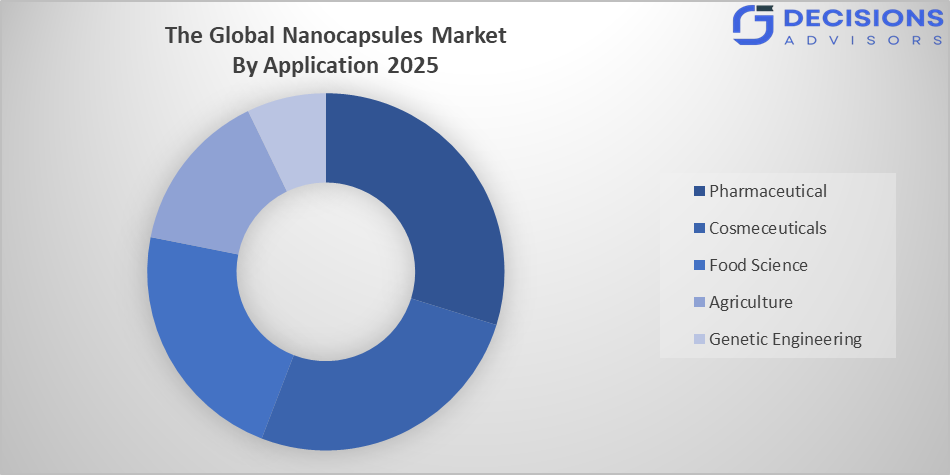
- The pharmaceutical segment dominated the market in 2025, approximately 55%, and is projected to grow at a substantial CAGR during the forecast period.
- The hospitals segment dominated the market in 2025, approximately 40%, and is projected to grow at a substantial CAGR during the forecast period.
- The compound annual growth rate of the Global Nanocapsules market is 8.52%.
- The market is likely to achieve a valuation of USD 20.95Billion by 2035.
What is role of technology in grooming the market?
Technology plays a transformative role in shaping the global nanocapsules market by enabling advanced drug delivery, precision targeting, and enhanced product stability. Innovations in nanotechnology allow the development of smart nanocapsules with controlled and sustained release properties, improving therapeutic efficacy and reducing side effects. Advanced encapsulation techniques, such as polymer-based and lipid-based systems, enhance bioavailability and protect sensitive active ingredients. Integration of artificial intelligence and machine learning supports formulation optimization, predictive modeling, and efficient manufacturing processes. Additionally, advancements in imaging and characterization technologies ensure quality control and consistency. In sectors like pharmaceuticals, cosmetics, and agriculture, nanocapsules enable targeted delivery and improved performance. Scalable production technologies and automation further reduce costs and increase commercialization potential, ultimately driving innovation, expanding applications, and accelerating overall market growth globally.
Market Drivers
The global nanocapsules market operates primarily because these nanocapsules possess the ability to deliver therapeutic agents with exceptional accuracy to specific cells, which results in reduced side effects and improved treatment results. The systems maintain drug stability through protective mechanisms that allow better drug absorption, especially during oral drug delivery processes. The growing number of people who develop chronic illnesses such as cancer, diabetes, and cardiovascular diseases drives the need for new and effective medical treatments. The development of new nanocapsule products depends on the increased funding for nanomedicine and the continuous progress in pharmaceutical research. The technological advances bring about comprehensive healthcare implementation because they enhance patient outcomes and increase drug effectiveness while promoting more effective treatment procedures, which result in continuous growth for the worldwide nanocapsules industry.
Restrain
The global nanocapsules market faces restraints such as high production costs, complex manufacturing processes, and stringent regulatory requirements. Limited large-scale commercialization and concerns regarding toxicity, biocompatibility, and long-term environmental impact further hinder adoption. However, ongoing research and regulatory advancements are gradually addressing these challenges, supporting future market growth.
Competitive Analysis:
The report offers the appropriate analysis of the key organizations/companies involved within the global nanocapsules market, along with a comparative evaluation primarily based on their product offerings, business overviews, geographic presence, enterprise strategies, segment market share, and SWOT analysis. The report also provides an elaborative analysis focusing on the current news and developments of the companies, which includes product development, innovations, joint ventures, partnerships, mergers & acquisitions, strategic alliances, and others. This allows for the evaluation of the overall competition within the market.
Top Companies in Global Nanocapsules market
- BioDelivery Sciences International, Inc.
- Camurus AB
- Carlina Technologies
- Cerulean Pharma Inc.
- Nano Green Sciences Inc.
- NanoNutra Inc.
- NanoSphere Health Sciences Inc.
- Eos Biosciences Inc.
- PolyMicrospheres Inc.
- GAT Food Essentials
- Evonik Industries AG
- BASF SE
Government Initiatives
|
Country |
Key Government Initiatives |
|
US |
The National Nanotechnology Initiative (NNI) Program continues to drive large-scale federal investment in nanotechnology R&D across multiple agencies. This initiative strengthens nanomedicine development, supports advanced drug delivery systems like nanocapsules, and enhances commercialization through coordinated funding, infrastructure, and innovation programs. |
|
Europe |
The European Union has been actively funding nanotechnology under programs such as Horizon Europe, focusing on advanced materials, nanomedicine, and safe nanotechnology integration. Regulatory frameworks for nanomaterials and healthcare applications are improving standardization, safety, and clinical adoption, thereby accelerating research and commercialization of nanocapsule-based therapeutics. |
|
India |
The Government of India, through the Nano Mission (Department of Science & Technology), is promoting research in nanoscience and nanomedicine. The initiative supports development of advanced materials, drug delivery systems, and scalable nanotechnology solutions, boosting innovation, academic collaboration, and industrial adoption of nanocapsules. |
Study on the Supply, Demand, Distribution, and Market Environment of the Nanocapsules Market
The global nanocapsules market demonstrates a dynamic supply-demand balance driven by rising adoption across pharmaceuticals, cosmetics, food, and agrochemical industries. Demand is increasing due to the need for targeted drug delivery, improved bioavailability, and controlled-release systems, especially for chronic disease treatment and advanced formulations. Supply is supported by specialized manufacturers utilizing advanced nanotechnology and scalable production techniques, although complexity in synthesis can limit rapid expansion. Key raw materials include natural and synthetic polymers such as chitosan, alginate, and poly (lactic-co-glycolic acid), along with lipids, surfactants, and high-purity solvents, all requiring stringent quality standards. Distribution channels involve pharmaceutical companies, research institutions, and industrial sectors, ensuring a wide application reach. The overall market environment is innovation-driven, with strong R&D investments, regulatory influence, and growing commercialization shaping sustainable growth.
Price Analysis and Consumer Behaviour Analysis
Price analysis in the global nanocapsules market indicates relatively high costs due to advanced manufacturing technologies, specialized raw materials, and complex formulation processes. However, increasing investments in research, scalable production methods, and growing competition are gradually reducing prices, making nanocapsule-based products more commercially viable. Bulk production and technological advancements are further expected to enhance cost efficiency over time. From a consumer behavior perspective, demand is strongly driven by the need for targeted delivery, improved efficacy, and reduced side effects, particularly in pharmaceuticals and cosmetics. Consumers and industries are increasingly favoring innovative, high-performance solutions despite premium pricing. Additionally, rising awareness of nanotechnology benefits and growing preference for personalized and efficient products are positively influencing purchasing decisions, thereby supporting steady market expansion globally.
Market Segmentation
The Nanocapsules Market share is classified into polymer type, application, and route of administration
- The synthetic segment dominated the market in 2025, approximately 65%, and is projected to grow at a substantial CAGR during the forecast period.
Based on the polymer type, the nanocapsules market is divided into natural and synthetic. Among these, the synthetic segment dominated the market in 2025, approximately 65%, and is projected to grow at a substantial CAGR during the forecast period. The synthetic segment dominated due to its superior stability, scalability, and precise control over physicochemical properties. Synthetic polymers such as PLGA and polyethylene glycol enable controlled drug release, enhanced bioavailability, and reproducibility, making them highly suitable for pharmaceutical applications. Additionally, their compatibility with large-scale manufacturing, longer shelf life, and regulatory acceptance further drive widespread adoption across drug delivery, cosmetics, and industrial applications, supporting strong and sustained market growth.
- The pharmaceutical segment dominated the market in 2025, approximately 55%, and is projected to grow at a substantial CAGR during the forecast period.
Based on the application, the nanocapsules market is divided into pharmaceutical, cosmeceuticals, food science, agriculture, and genetic engineering. Among these, the pharmaceutical segment dominated the market in 2025, approximately 55%, and is projected to grow at a substantial CAGR during the forecast period. The growth of the gel electrophoresis segment is growing due to the increasing demand for advanced drug delivery systems that enhance therapeutic efficacy and patient outcomes. Nanocapsules enable targeted and controlled drug release, improving bioavailability and reducing side effects, which is crucial in treating chronic diseases such as cancer and cardiovascular disorders. Strong R&D investments, growing adoption of nanomedicine, and rising regulatory approvals for novel formulations further support segment growth. Additionally, the expanding pipeline of nanotechnology-based therapeutics and increasing focus on personalized medicine are accelerating the integration of nanocapsules in pharmaceutical applications, ensuring sustained demand and significant future growth.
- The parenteral route segment dominated the market in 2025, approximately 50%, and is projected to grow at a substantial CAGR during the forecast period.
Based on the route of administration, the nanocapsules market is divided into the parenteral route, oral route, and topical route. Among these, the hospitals segment dominated the market in 2025, approximately 50%, and is projected to grow at a substantial CAGR during the forecast period. The growth of the parenteral route companies segment is growing due to its ability to deliver drugs directly into systemic circulation, ensuring a rapid onset of action and higher bioavailability. This route bypasses gastrointestinal degradation and first-pass metabolism, making it highly effective for sensitive and complex therapeutics such as biologics and anticancer drugs. Additionally, increasing use in hospital settings, growing prevalence of chronic diseases, and rising demand for precise and controlled drug delivery systems further contribute to its dominance. Continuous advancements in injectable nanocapsule formulations and sterile delivery technologies are expected to support strong future growth.
Strategies to Implement for Growth of the Market in Non-Leading Regions
Expanding the global nanocapsules market in non-leading regions requires strategic focus on accessibility, affordability, and awareness. Governments should establish supportive regulatory frameworks and funding programs to encourage adoption in the pharmaceuticals, agriculture, and cosmetics sectors. Promoting local manufacturing and partnerships with regional players can reduce costs and improve supply chain efficiency. Increasing investment in research and development, along with technology transfer from developed markets, will enhance product innovation and scalability. Educational campaigns and industry training programs can raise awareness about the benefits of nanocapsules, driving demand among end users. Collaborations with international organizations and research institutions can further strengthen market penetration. Additionally, adopting cost-effective production techniques and expanding distribution networks will ensure wider availability, ultimately fostering sustainable growth in emerging and underpenetrated regions.
Regional Segment Analysis of the Nanocapsules Market
- North America (U.S., Canada, Mexico)
- Europe (Germany, France, U.K., Italy, Spain, Rest of Europe)
- Asia-Pacific (China, Japan, India, Rest of APAC)
- South America (Brazil and the Rest of South America)
- The Middle East and Africa (UAE, South Africa, Rest of MEA)
North America is anticipated to hold the largest share of approximately 42% the nanocapsules market over the forecast period.
North America is anticipated to hold the largest share of approximately 42% the nanocapsules market over the forecast period. The dominance of this region is primarily driven by its robust pharmaceutical and biotechnology landscape, substantial R&D funding, and prompt embrace of innovative nanotechnology applications. The area gains from a strong healthcare framework, supportive regulatory conditions, and ample funding for advancements in nanomedicine. Moreover, the significant occurrence of chronic illnesses and the involvement of major industry leaders boost the demand and commercialization of nanocapsule drug delivery systems, guaranteeing ongoing market leadership.
Asia Pacific is expected to grow at a rapid CAGR of approximately 12.5% in the nanocapsules market during the forecast period.
Asia Pacific is expected to grow at a rapid CAGR of approximately 12.5% in the nanocapsules market during the forecast period. This growth is driven by expanding pharmaceutical manufacturing capabilities, increasing healthcare investments, and rising awareness of advanced drug delivery systems. Growing prevalence of chronic diseases, supportive government initiatives, and improving research infrastructure are further accelerating market adoption across emerging economies in the region.
Europe is the 3rd largest region to grow in the nanocapsules market during the period.
Europe is the third-largest region in the nanocapsules market, supported by well-established pharmaceutical and biotechnology industries, strong research and development capabilities, and increasing focus on advanced drug delivery technologies. Favorable regulatory frameworks, rising prevalence of chronic diseases, and growing adoption of nanotechnology in healthcare and cosmetics are driving steady market growth across the region.
Future Market Trends in Global Nanocapsules Market: -
1. Growing Adoption of Targeted Drug Delivery Systems
The future of the nanocapsules market will be strongly driven by increasing demand for targeted drug delivery, especially in oncology and chronic disease treatment. Nanocapsules enable site-specific drug release, improving therapeutic efficiency and reducing side effects, making them a preferred solution in advanced healthcare and personalized medicine applications.
2. Shift Toward Biodegradable and Biocompatible Materials
A key trend is the rising focus on biodegradable and biocompatible nanocapsules to meet regulatory and sustainability requirements. Manufacturers are developing polymer- and lipid-based systems that ensure safety, reduced toxicity, and environmental compatibility, which will enhance acceptance across pharmaceuticals, cosmetics, and food industries.
3. Expansion Across Multi-Industry Applications
Nanocapsules are increasingly being adopted beyond healthcare into cosmetics, food, and agriculture sectors. Their ability to improve stability, bioavailability, and controlled release of active ingredients supports innovation in multiple industries, creating new revenue streams and driving long-term market expansion globally.
Recent Development
- In February 2025, BASF launched a new grade of Kollicoat polymer optimized for lipid–polymer hybrid nanocapsules, enhancing drug loading and stability for oral oncology and endocrinology applications, directly supporting innovation and growth in the global nanocapsules market.
- In February 2024, Syngenta collaborated with an agri-biotech partner to develop nanoencapsulated insecticides with controlled-release properties, supporting advancements in the global nanocapsules market.
How is Recent Developments Helping the Market?
Recent developments in the global nanocapsules market are significantly enhancing innovation, scalability, and commercial adoption. Advances in nanotechnology and material science have led to the creation of more efficient, biocompatible, and targeted delivery systems, improving performance across pharmaceuticals, cosmetics, and agriculture. Increased investment in research and development has accelerated the introduction of novel formulations with controlled and sustained release properties. Strategic collaborations, partnerships, and mergers among key industry players are strengthening technological capabilities and expanding global reach. Additionally, improvements in manufacturing techniques and automation are reducing production costs and enabling large-scale commercialization. Regulatory progress and growing acceptance of nanotechnology-based products are further supporting market expansion. These developments collectively enhance product efficiency, accessibility, and affordability, thereby driving demand and ensuring sustained growth in the global nanocapsules market.
Market Segment
This study forecasts revenue at global, regional, and country levels from 2020 to 2035. Decision Advisors has segmented the nanocapsules market based on the below-mentioned segments:
Global Nanocapsules Market, By Polymer Type
- Natural
- Synthetic
Global Nanocapsules Market, By Application
- Pharmaceutical
- Cosmeceuticals
- Food Science
- Agriculture
- Genetic Engineering
Global Nanocapsules Market, By Route of Administration
- Parenteral Route
- Oral Route
- Topical Route
Global Nanocapsules Market, By Regional Analysis
- North America
- US
- Canada
- Mexico
- Europe
- Germany
- UK
- France
- Italy
- Spain
- Russia
- Rest of Europe
- Asia Pacific
- China
- Japan
- India
- South Korea
- Australia
- Rest of Asia Pacific
- South America
- Brazil
- Argentina
- Rest of South America
- Middle East & Africa
- UAE
- Saudi Arabia
- Qatar
- South Africa
- Rest of the Middle East & Africa
Frequently Asked Questions (FAQ)
Q Which emerging end-use sectors beyond pharmaceuticals are expected to create new revenue streams for the global nanocapsules market?
A. Beyond pharmaceuticals, cosmetics, nutraceuticals/functional foods, and agriculture are forecast to generate strong demand, as nanocapsules improve stability, taste masking, and controlled release of active ingredients in these products.
Q. How are sustainability requirements influencing nanocapsule development worldwide?
A. Sustainability pressures are pushing manufacturers toward biodegradable and biocompatible polymers, reducing long-term toxicity and environmental impact while easing regulatory approval for food, cosmetic, and healthcare uses.
Q. What key challenge could slow down commercialization of nanocapsule-based therapies?
A Complex and evolving regulatory frameworks for nanomedicines, combined with limited standardized toxicity and biosafety data, can delay product approvals and increase development costs for companies.
Q. Which strategic moves are market players adopting to strengthen their position in the nanocapsules industry?
A. Leading firms are focusing on new product launches, collaborations with pharma and cosmetic companies, and geographic expansion into high-growth Asia–Pacific markets to boost sales and share.
Check Licence
Choose the plan that fits you best: Single User, Multi-User, or Enterprise solutions tailored for your needs.
We Have You Covered
- 24/7 Analyst Support
- Clients Across the Globe
- Tailored Insights
- Technology Tracking
- Competitive Intelligence
- Custom Research
- Syndicated Market Studies
- Market Overview
- Market Segmentation
- Growth Drivers
- Market Opportunities
- Regulatory Insights
- Innovation & Sustainability
Report Details
| Scope | Global |
| Pages | 240 |
| Delivery | PDF & Excel via Email |
| Language | English |
| Release | Apr 2026 |
| Access | Download from this page |