
Global Ocular Hypertension Market
 |
Author:
Disha B
|
Pages:
250
|
Author:
Disha B
|
Pages:
250
Global Ocular Hypertension Market Size, Share, and COVID-19 Impact Analysis, By Product Type (Pharmaceuticals, Medical Devices, Surgical, and Minimally Invasive Options), By Type (Intraocular Hypertension, and Glaucoma), By Route of Administration (Oral, Parenteral, and Others), and By Region (North America, Europe, Asia-Pacific, Latin America, Middle East, and Africa), Analysis and Forecast 2025-2035
CAGR
3.66%
REVENUE 2024
USD Billion 3.53
FORECAST 2035
USD Billion 5.24
REPORT COVERAGE
Global
Global Ocular Hypertension Market Size Insights Forecasts to 2035
- The Global Ocular Hypertension Market Size Was Estimated at USD 3.53 Billion in 2024
- The Market Size is Expected to Grow at a CAGR of around 3.66 % from 2025 to 2035
- The Worldwide Ocular Hypertension Market Size is Expected to Reach USD 5.24 Billion by 2035
- Europe is expected to grow the fastest during the forecast period.
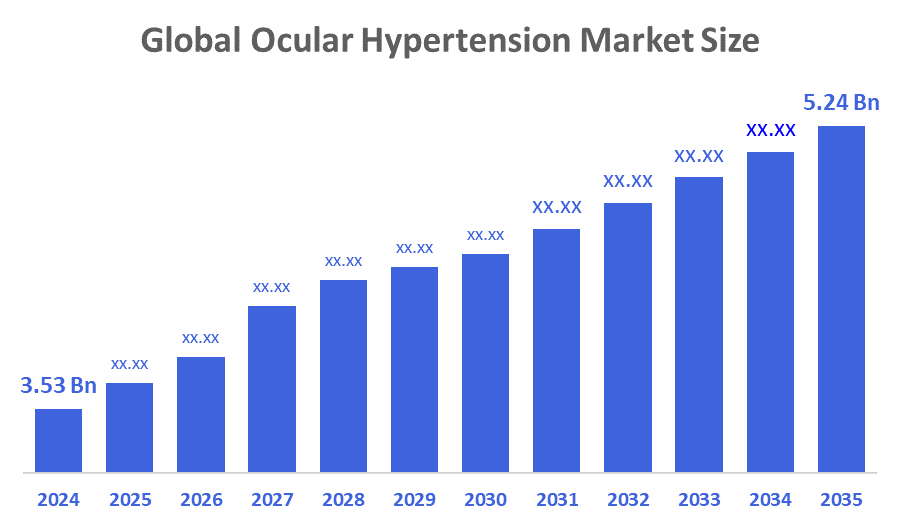
According to a research report published by Decisions Advisors and Consulting, The Global Ocular Hypertension Market Size Was Worth Around USD 3.53 Billion In 2024 And Is Predicted To Grow To Around USD 5.24 Billion By 2035 With A Compound Annual Growth Rate (CAGR) Of 3.66 % From 2025 To 2035. Increasing technological advancements associated with ocular hypertension treatment and diagnostics are boosting the growth of the market. Technologies such as medical imaging, selective laser trabeculoplasty (SLT), visual fields, micro-invasive glaucoma surgery (MIGS), optical coherence tomography (OCT), and progression analysis software will increase patient preference and boost the market growth.
Market Overview
Ocular hypertension refers to a condition marked by higher-than-normal intraocular pressure (IOP) in the eye. Intraocular pressure is the fluid pressure inside the eye. It is maintained by the balance between the production and drainage of a fluid called aqueous humour. Ocular hypertension does not show symptoms, but some may occasionally feel mild discomfort, including a sense of pressure or aching in the eye. In rare cases, ocular hypertension may lead to mild headaches, especially around the temples or forehead. Doctors usually diagnose ocular hypertension during a complete eye exam. The main criterion for diagnosis is measuring intraocular pressure with a device called a tonometer. Generally, an IOP reading of 21 mmHg or higher indicates elevated pressure and suggests ocular hypertension. The eye care professional may also check the optic nerve using techniques like ophthalmoscopy and optical coherence tomography (OCT). In addition, a detailed examination of the anterior chamber angle may be done to evaluate the drainage structures of the eye.
SpyGlass Pharma officially priced its $150 million IPO to advance its late-stage ophthalmic pipeline. SpyGlass Pharma is positioning itself as a biotech innovator in ophthalmology drug delivery systems, with a clear focus on chronic eye conditions like glaucoma and ocular hypertension.
PolyActiva successfully raised $40 million in Series C financing to accelerate development of its PREZIA Platform Technology, a novel approach to sustained ocular drug delivery. PolyActiva’s PA5108 implant, built on the PREZIA™ platform, is designed to maintain intraocular pressure (IOP) control for six months or longer.
Report Coverage
This research report categorises the ocular hypertension market based on various segments and regions, forecasts revenue growth, and analyzes trends in each submarket. The report analyses the key growth drivers, opportunities, and challenges influencing the ocular hypertension market. Recent market developments and competitive strategies, such as expansion, product launch, development, partnership, merger, and acquisition, have been included to draw the competitive landscape in the market. The report strategically identifies and profiles the key market players and analyzes their core competencies in each sub-segment of the ocular hypertension market.
Driving Factors
The rising number of eye problems like inflammation, scarring or damage from injury or surgery is going up, which can stop the eye from draining and boost the novel treatment for ocular hypertension market. The ocular hypertension market is growing due to the ageing population and health problems like diabetes, along with corticosteroids for the long term, which is not good for their eyes. The use of eye drops to reduce pressure in the eyes is becoming more popular, and their eyes drain better or to make less of it. The treatment called cyclophotocoagulation is also getting more popular. This treatment uses a laser or very cold temperatures to target the part of the eye that makes fluid. By doing this, it helps reduce the amount of fluid made by the eye. This is also making things look good for the market of eye pressure treatments. Apart from this, the escalating utilisation of selective laser trabeculoplasty on account of its several associated benefits, such as targeted treatment without damaging surrounding tissues, minimal downtime and quick recovery, potential long-term advantages with sustained intraocular pressure control, etc., is expected to drive the ocular hypertension market in the coming years.
Restraining Factors
The Global Ocular Hypertension Market Size has two main challenges. A shortage of skilled healthcare professionals limits the ability to provide proper care and slows growth. High costs for surgeries and diagnostic procedures create financial barriers, making it harder to expand the market even as demand for effective treatments rises.
Market Segmentation
The ocular hypertension market share is classified into product type, type and route of administration.
- The pharmaceuticals segment accounted for the largest market share in 2024 and is anticipated to grow at a substantial CAGR over the forecast period.
Based on the product type, the ocular hypertension market is differentiated into pharmaceuticals, medical devices, surgical, and minimally invasive options. Among these, the pharmaceuticals segment accounted for the largest market share in 2024 and is anticipated to grow at a substantial CAGR over the forecast period. This sector is still the backbone of ocular hypertension treatment. Prostaglandin analogues remain first-line, while beta-blockers, carbonic anhydrase inhibitors, and alpha agonists are used as alternatives or adjuncts. Increasingly, fixed-dose combinations are reducing drop burden for patients. Sustained-release drug implants and depot injections are gaining ground, particularly for patients struggling with adherence.
- The glaucoma segment accounted for the largest share in 2024 and is anticipated to grow at a significant CAGR during the forecast period.
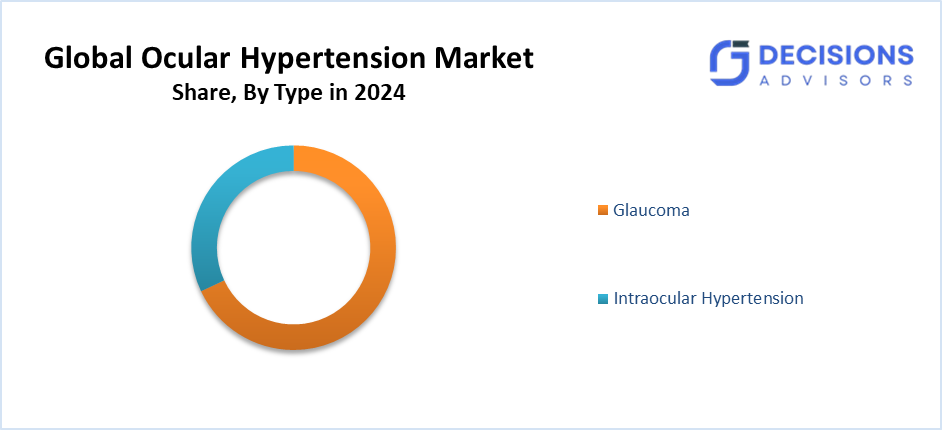
Based on the type, the ocular hypertension market is differentiated into intraocular hypertension and glaucoma. Among these, the glaucoma segment accounted for the largest share in 2024 and is anticipated to grow at a significant CAGR during the forecast period. Its global prevalence is far higher than isolated intraocular hypertension, and progressive optic nerve damage makes treatment essential. Long-term management needs and innovation focus further reinforce glaucoma’s dominant market position.
- The oral segment accounted for the highest market revenue in 2024 and is anticipated to grow at a significant CAGR during the forecast period.
Based on the route of administration, the ocular hypertension market is divided into oral, parenteral, and others. Among these, the oral segment accounted for the highest market revenue in 2024 and is anticipated to grow at a significant CAGR during the forecast period. Oral medications dominate the ocular hypertension market due to their convenience, ease of administration, and better patient compliance compared to parenteral routes. They are widely prescribed for long-term management, especially in early cases, and are more accessible through retail and hospital pharmacies.
Regional Segment Analysis of the Ocular Hypertension Market
- North America (U.S., Canada, Mexico)
- Europe (Germany, France, U.K., Italy, Spain, Rest of Europe)
- Asia-Pacific (China, Japan, India, Rest of APAC)
- South America (Brazil and the Rest of South America)
- The Middle East and Africa (UAE, South Africa, Rest of MEA)
Asia Pacific is anticipated to hold the largest share of the ocular hypertension market over the predicted timeframe.
Asia Pacific is anticipated to hold the largest share of the ocular hypertension market over the predicted timeframe. This regional market is growing dominantly at a substantial pace. Japan is still a leader when it comes to using rho-kinase inhibitors, which were first made here. At the time, China is spending a lot of money on programs to check for glaucoma all over the country because more and more people are getting myopia. India is a reason why this region is growing so fast, and that is because the people are getting older really quickly, and more people can go to special eye hospitals. South Korea and Singapore are trying to be the places where new ideas for eye care are tested, such as using intelligence to take pictures of eyes and checking the pressure in eyes at home. In India and Southeast Asia, many patients still rely on older generics due to cost and access gaps.
Santen Pharmaceutical Co., Ltd. has launched SETANEO® Ophthalmic Solution 0.002% (generic name: sepetaprost) in Japan for the treatment of glaucoma and ocular hypertension.
Europe is expected to grow at a rapid CAGR in the ocular hypertension market during the forecast period. Western Europe reflects a balance between innovation and regulation. The UK, Germany, and France have early adoption of nitric oxide–donating prostaglandins and generics-driven competition in legacy drug classes. The European Medicines Agency (EMA) actively supports accelerated reviews for ophthalmic innovations, but national pricing negotiations create delays. Southern and Eastern Europe lag slightly, with higher dependence on generics and less penetration of device-based sustained-release solutions. Here, affordability often trumps innovation.
Competitive Analysis:
The report offers the appropriate analysis of the key organisations/companies involved within the ocular hypertension market, along with a comparative evaluation primarily based on their product offering, business overviews, geographic presence, enterprise strategies, segment market share, and SWOT analysis. The report also provides an elaborate analysis focusing on the current news and developments of the companies, which includes product development, innovations, joint ventures, partnerships, mergers & acquisitions, strategic alliances, and others. This allows for the evaluation of the overall competition within the market.
List of Key Companies
- AbbVie, Inc
- Aerie Pharmaceuticals, Inc.
- Angelini Pharma S.p.a.
- Bausch Health Companies Inc.
- Chong Kun Dang pharmaceutical Corp
- Laboratorios Sophia
- Lee Pharma Ltd
- Neurim Pharmaceuticals LTD
- Nicox
- Novartis AG
- Ocular Therapeutix, Inc.
- Sylentis, S.A
- Taejoon Pharm
- Takeda Pharmaceutical Company Limited
- Others
Key Target Audience
- Market Players
- Investors
- End-users
- Government Authorities
- Consulting and Research Firm
- Venture capitalists
- Value-Added Resellers (VARs)
Recent Development
- In April 2025, Akums Drugs & Pharmaceuticals launched a new topical solution combination therapy for the treatment of glaucoma and ocular hypertension in India. Ripasudil enhances aqueous humour outflow via the trabecular meshwork, while Timolol reduces aqueous humour production. Together, they effectively lower intraocular pressure, which is the primary treatment goal in managing glaucoma and ocular hypertension.
- In October 2024, the National Institute for Health and Care Excellence (NICE) officially recommended Santen’s Roclanda (latanoprost–netarsudil) for the treatment of primary open-angle glaucoma (POAG) and ocular hypertension (OHT) in adults. Exactly Roclanda® is a fixed-dose combination (FDC) therapy that unites two complementary mechanisms. This is significant because it marks the first new glaucoma treatment approved by NICE in over 25 years.
- In March 2024, the bimatoprost implant is a sustained-release therapy designed to lower intraocular pressure (IOP) in patients with glaucoma and ocular hypertension. This innovation highlights a shift toward long-acting drug delivery systems, offering convenience and better adherence compared to traditional eye drops.
Market Segment
This study forecasts revenue at global, regional, and country levels from 2020 to 2035. Decisions Advisors has segmented the ocular hypertension market based on the below-mentioned segments:
Global Ocular Hypertension Market, By Product Type
- Pharmaceuticals
- Medical Devices
- Surgical
- Minimally Invasive Options
Global Ocular Hypertension Market, By Type
- Intraocular Hypertension
- Glaucoma
Global Ocular Hypertension Market, By Route of Administration
- Oral
- Parenteral
- Others
Global Ocular Hypertension Market, By Regional Analysis
- North America
- US
- Canada
- Mexico
- Europe
- Germany
- UK
- France
- Italy
- Spain
- Russia
- Rest of Europe
- Asia Pacific
- China
- Japan
- India
- South Korea
- Australia
- Rest of Asia Pacific
- South America
- Brazil
- Argentina
- Rest of South America
- Middle East & Africa
- UAE
- Saudi Arabia
- Qatar
- South Africa
- Rest of the Middle East & Africa
Frequently Asked Questions (FAQ)
- What is the projected size and growth rate of the global ocular hypertension market?
The market was valued at USD 3.53 billion in 2024 and is expected to reach USD 5.24 billion by 2035, growing at a CAGR of 3.66% from 2025 to 2035.
- What are the main product types in the ocular hypertension market?
Segments include pharmaceuticals (largest share in 2024), medical devices, surgical options, and minimally invasive options like micro-invasive glaucoma surgery (MIGS).
- Which market segment by type holds the largest share?
The glaucoma segment dominated in 2024 and is projected to grow at a significant CAGR, due to its higher prevalence and need for long-term management compared to isolated intraocular hypertension.
- What drives the growth of the ocular hypertension market?
Key drivers include an ageing population, rising diabetes and corticosteroid use, popularity of eye drops and procedures like selective laser trabeculoplasty (SLT) and cyclophotocoagulation, plus advancements in diagnostics like OCT and sustained-release implants.
- What are the main challenges restraining market growth?
Shortages of skilled healthcare professionals and high costs of surgeries and diagnostics create barriers to access and expansion.
- Which region is expected to lead the ocular hypertension market?
Asia-Pacific is anticipated to hold the largest share, driven by ageing populations in India, Japan's rho-kinase inhibitors, and China's glaucoma screening programs, though Europe is poised for the fastest growth.
- What is the dominant route of administration, and why?
Oral medications led revenue in 2024 with a strong projected CAGR, thanks to their convenience, better patient compliance, and accessibility for long-term use compared to parenteral or other routes.
- Who are some key players and recent developments in the market?
Major companies include AbbVie, Novartis, Aerie Pharmaceuticals, and Santen. Highlights: Akums' ripasudil-timolol launch (April 2025), NICE approval for Santen's Roclanda (Oct 2024), and bimatoprost implant advancements (March 2024).
Check Licence
Choose the plan that fits you best: Single User, Multi-User, or Enterprise solutions tailored for your needs.
We Have You Covered
- 24/7 Analyst Support
- Clients Across the Globe
- Tailored Insights
- Technology Tracking
- Competitive Intelligence
- Custom Research
- Syndicated Market Studies
- Market Overview
- Market Segmentation
- Growth Drivers
- Market Opportunities
- Regulatory Insights
- Innovation & Sustainability
Report Details
| Scope | Global |
| Pages | 250 |
| Delivery | PDF & Excel via Email |
| Language | English |
| Release | Feb 2026 |
| Access | Download from this page |